
Why Training Your Puppy Early Is the Best Decision You’ll Ever Make
So you’ve just brought home the most adorable furry tornado you’ve ever seen, and somewhere between the midnight whimpering and the shredded toilet paper roll, you’re wondering — when exactly am I supposed to start training this creature? The answer might surprise you: right now, from day one. Puppies are eager learners. Their brains are like sponges, ready to absorb everything you teach them. The key is starting early, staying consistent, and making training an enjoyable experience for both of you. Think of your puppy’s brain as freshly poured cement — it’s moldable, impressionable, and sets faster than you’d expect. The habits you build in these first weeks will harden into lifelong behaviors, for better or worse.
Here’s the thing that most first-time dog owners don’t fully appreciate until it’s almost too late: every single interaction you have with your puppy is a training moment. “Every minute, with every interaction, one of the two of you is being trained. Make sure it’s the puppy, not you,” says certified dog trainer Heather Gillihan of Zoom Room. That’s a perspective shift that changes everything. It means you’re not just “doing training sessions” — you’re constantly shaping behavior through how you respond to your puppy’s actions throughout the entire day. The good news? Once you understand how puppies learn, training stops feeling like a chore and starts feeling like one of the most rewarding parts of dog ownership.
Puppies are constantly learning, whether it’s from their environment, from socializing with people or other animals, or from direct training. This creates a critical foundation that will set the stage for their adulthood. Providing puppies with the appropriate socialization and basic puppy training allows them to grow into confident adult dogs. The stakes here are genuinely high — a well-trained puppy becomes a dog you can take anywhere, trust around children, and enjoy for 10 to 15 years. A poorly trained one becomes a source of stress, property damage, and difficult vet visits. Investing your time now pays dividends every single day for the rest of your dog’s life.
Before You Start: Setting Up for Training Success
Great training doesn’t start with your first “sit” command — it starts with preparation. Just like you wouldn’t attempt to cook a complex meal without having your ingredients ready, you shouldn’t dive into puppy training without setting up the right environment and assembling the tools that will make the whole process faster and smoother. The preparation phase is where most first-time owners cut corners, and it shows.
What You’ll Need Before Day One
Before teaching any commands, you need to establish the right environment and mindset for training success. Create a safe space: set up a designated area with a crate, bed, and water bowl where your puppy feels secure. Stock up on supplies: high-value treats, a properly fitted collar, and a 6-foot leash. Establish a routine: puppies thrive on predictability — set consistent times for feeding, potty breaks, play, and rest. Choose your command words: decide on specific words for each command and ensure all family members use the same terms. That last point is critically important and frequently overlooked. If you say “down” to mean lie on the floor, your partner says “down” to mean stop jumping, and your kids don’t use it at all, your puppy is going to be thoroughly confused. Hold a family meeting before the puppy comes home and agree on the exact words you’ll use for every command.
When it comes to treats, think small and high-value. You’re going to be rewarding your puppy dozens of times per training session, so the treats need to be bite-sized — think the size of a pea — and irresistible enough to hold your pup’s attention even when there are distractions. Freeze-dried chicken, small pieces of cheese, or commercial training treats all work beautifully. Most people use small pieces of a “high-value” food for training treats — something special, such as freeze-dried liver or even just kibble. You’ll also want to train before mealtimes rather than after, when your puppy is slightly hungry and maximally motivated by food rewards.
Choosing the Right Training Mindset
This might sound like the soft, fluffy part of a training guide, but your mindset going into puppy training genuinely determines your results. Puppies don’t respond to frustration, rushing, or punishment — they respond to calm, clear, consistent communication. It’s important to remember that we can’t expect dogs to know what they don’t yet know — just like you wouldn’t expect a 2-year-old child to know how to tie their shoes. Patience will go a long way in helping your new puppy learn how to behave. When your puppy makes a mistake — and they will make hundreds of mistakes — it’s not defiance or stubbornness, it’s simply a creature that hasn’t yet been taught what you expect. Shift your perspective from “why isn’t my puppy listening?” to “how can I communicate this more clearly?” and your training results will transform almost immediately.
Step 1: Potty Training — The First Battle Every Owner Faces
Let’s be honest — potty training is the reason most people frantically Google “how to train a puppy fast” at 11 pm on a Tuesday. There’s nothing quite as humbling as finding a puddle on your freshly cleaned floor for the third time in one day. But here’s the reassuring truth: potty training is primarily a management and consistency game, not a battle of wills. Your puppy isn’t doing this to spite you — they simply have a tiny bladder and zero concept of “inside vs. outside” until you teach them.
Building the Potty Routine
The fastest way to potty train a puppy is to establish a routine and be as consistent as possible. Inconsistency may confuse your puppy, which will draw out the potty-training process. The core of the routine is simple: take your puppy outside at predictable intervals, and celebrate enthusiastically when they go in the right place. Take your puppy outside every 2 hours, immediately after eating, drinking, and waking up. Go to the same spot every time. Praise enthusiastically when they go outside. Using the same outdoor spot is a clever trick that many beginners don’t know about — the residual scent from previous trips actually signals to your puppy that this is where bathroom business happens, making it more likely they’ll go quickly rather than spending ten minutes sniffing around.
Watch your puppy like a hawk for signs that a bathroom break is imminent. Signs your puppy needs to go include sniffing the ground, circling, squatting, or heading toward the door. The moment you see any of these signals, immediately — and we mean immediately — scoop up your puppy and head outside. Speed is everything here. The window between “puppy is about to go” and “puppy already went on your carpet” is measured in seconds, not minutes. Most puppies develop reliable bladder control somewhere between 4 and 6 months of age, so expect several weeks of close supervision before you can relax.
How to Handle Accidents Without Losing Your Mind
Never punish accidents — just clean them up with an enzymatic cleaner to remove the scent. This is non-negotiable. Scolding your puppy for an accident they had even five minutes ago — let alone one they had while you weren’t watching — accomplishes absolutely nothing except damaging your puppy’s trust in you. Puppies cannot connect a delayed punishment to a behavior they’ve already forgotten about. If you catch your puppy in the act, a calm, firm “No” and immediate redirection outside is perfectly appropriate. But if you find the evidence after the fact, clean it up and move on. The enzymatic cleaner is crucial because regular household cleaners don’t fully eliminate the scent markers that tell your puppy “this spot smells like a bathroom.” Look for an enzymatic cleanser to eliminate the odor and make the location less appealing.
Step 2: Crate Training — Your Puppy’s Safe Haven
Mention crate training to someone who’s never tried it and watch their face — there’s often an initial flash of guilt, a sense that putting a puppy in a crate is somehow unkind. This is one of the most persistent and damaging myths in dog ownership, and it’s time to retire it for good. When introduced correctly, a crate becomes your puppy’s favorite spot in the entire house — a den, a sanctuary, and a place where they genuinely choose to nap on their own. It also happens to be one of the most powerful tools for fast-tracking potty training.
Making the Crate a Happy Place
The keyword in crate training is “positive.” The crate should never, ever be used as punishment. It should be associated exclusively with good things — meals, treats, comfort, and rest. Make it cozy with a blanket and a chew toy. Start with short periods (5–10 minutes) and gradually increase. Never force the puppy in. Feed meals inside the crate so they associate it with good things. A properly crate-trained puppy will voluntarily go to their crate to rest. The progression is gradual and deliberate: start by tossing treats near the crate while the door is open, then inside with the door open, then with the door briefly closed, then for longer periods. Never skip steps in an effort to move faster — a puppy that develops crate anxiety will be much harder to train than one that you take the time to introduce properly.
Those first few nights in a new place can be anxious ones for your puppy. Put a stuffed animal designed to give comfort in your puppy’s crate. Some even have a heartbeat and can be warmed up to make your pup feel like he’s still sleeping with company. During nighttime crate training, keep the crate close to your bed initially. If your puppy cries during the night, take them straight outside for a quick bathroom break, then immediately back into the crate — no play, no cuddles, no lingering. You’re teaching your puppy that nighttime is for sleeping, not for getting attention.
Step 3: Teaching Basic Commands
Basic obedience commands are the language through which you and your dog will communicate for the rest of your lives together. Think of each command as a word in a shared vocabulary — the more words you both know, the richer and safer your relationship becomes. Puppies can begin very simple training starting as soon as they come home, usually around 8 weeks old. Always keep training sessions brief — just five to 10 minutes — and always end on a positive note. The magic of short sessions cannot be overstated. A five-minute focused training session with a fully engaged puppy will produce far better results than a 30-minute marathon where both of you end up frustrated.
How to Teach “Sit”
“Sit” is the foundation of all puppy training, and it’s usually the first command owners tackle because it’s the most natural motion to lure. To teach “sit,” start with your dog standing. Hold a treat close to their nose and slowly move it upward and back. As their head follows the treat, their body will naturally lower into a seated position. The moment they sit, reward them immediately. The timing of the reward is everything — you want to mark the exact moment the bottom hits the floor, not a second after. Many experienced trainers use a clicker or a verbal marker word like “Yes!” to bridge the gap between the behavior and the reward. Most puppies master “sit” within 1–2 weeks of consistent practice. Once they respond reliably, gradually reduce treat frequency while maintaining verbal praise.
How to Teach “Stay”
Once “sit” is solid, “stay” is the natural next step, and it’s a command that could genuinely save your dog’s life one day — keeping them from bolting into traffic, charging toward an aggressive dog, or running out an open front door. To teach “stay,” ask your dog to sit first. Hold your hand up, say “stay,” and take a small step back. If they remain in place, reward them. Gradually increase distance and duration as your dog improves. The common mistake here is increasing the difficulty too quickly. Owners often jump from “stay for 3 seconds” to “stay for 30 seconds” without the incremental steps in between, then get frustrated when the puppy breaks the stay. Build duration and distance slowly, rewarding each successful attempt generously.
How to Teach “Come”
The recall command — “come” — is arguably the most important cue you’ll ever teach your dog, and it’s worth investing serious time and energy to make it absolutely bulletproof. Get your puppy’s attention, then take a few steps backward. In an excited, happy voice, say “Come!” while opening your arms. When they reach you, reward generously with treats and praise. Practice during play, calling them at random moments. Never use “come” when something unpleasant follows (like baths or leaving the park) — this teaches them to avoid you. That last point is one of the most important and most violated rules of recall training. Every time you call your puppy to you and something unpleasant follows — like crating them against their will or ending a play session abruptly — you’re teaching them that “come” is a trap. Make coming to you the best thing that has ever happened to your puppy, every single time.
Step 4: Bite Inhibition — Teaching Your Puppy Mouth Manners
Every puppy bites. This is not a character flaw or a sign that you have a “mean” puppy — it’s how puppies explore the world, communicate, and play. But what starts as adorable little nips from an 8-week-old pup quickly becomes a genuine problem when your 5-month-old is drawing blood during play. Teaching bite inhibition early — the understanding that teeth must be gentle with human skin — is one of the most important things you’ll do during the puppy phase.
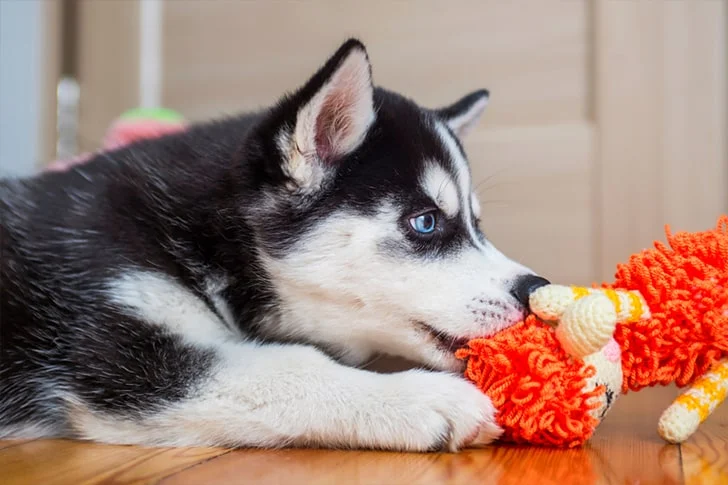
Puppies explore the world with their mouths. When they bite too hard, yelp loudly and stop playing for 30 seconds. This teaches them that biting ends the fun. Redirect biting to appropriate chew toys. Never use your hands as play toys or the puppy will always see hands as things to bite. This approach mimics the feedback puppies receive from their littermates — when a pup bites too hard during play, the other puppy yelps and the game stops. Your dramatic yelp and withdrawal of attention sends exactly the same message. Be consistent — every single person in the household needs to respond the same way, every single time. A puppy that gets mixed messages (some people yelp, some laugh and keep playing) will take much longer to learn appropriate bite pressure.
Step 5: Socialization — The Training Step Most Owners Skip
If potty training is the most urgent training challenge, socialization is the most important long-term investment you’ll make in your puppy’s future. A poorly socialized dog — one that wasn’t exposed to a wide variety of people, animals, environments, and sounds during the critical window — often becomes a fearful, reactive, or aggressive adult. The behavioral problems that stem from inadequate socialization are among the most common reasons dogs are surrendered to shelters, making this step one of the highest-stakes training decisions you’ll make.
Between 3 and 14 weeks is the critical socialization window. This is the period when your puppy’s brain is uniquely primed to process new experiences and file them under “normal” rather than “scary.” Socialization not only involves exposing your puppy to other dogs, but new people, noises, environments, and teaching them how to behave appropriately in each situation. Proper socialization can prevent behavior problems and help your puppy develop into a well-adjusted, confident adult dog. Think deliberately about the experiences you want your adult dog to handle calmly — children running and screaming, men with hats, bicycles, thunderstorms, car rides, vet offices, busy streets — and start exposing your puppy to safe, positive versions of all of those things right now. The goal is not to flood your puppy with overwhelming experiences, but to introduce new things gradually and pair them with treats and praise so your puppy associates novelty with good things.
The Science of Positive Reinforcement Training
Let’s take a moment to talk about why positive reinforcement works so extraordinarily well with puppies — because once you understand the science, you’ll never be tempted to try any other method. Positive reinforcement is built on a simple but powerful principle: behaviors that are rewarded get repeated. When you reward your puppy for sitting, the puppy’s brain registers a connection between the behavior and the pleasurable outcome, making that behavior more likely to happen again in the future. It sounds almost too simple, and yet it’s the most rigorously tested and consistently validated approach in all of animal learning science.
The use of punishment — including harsh corrections, correcting devices such as shock, choke, and prong collars, and dominance-based handling techniques — should be avoided. These methods can produce long-term consequences that result in fear and anxiety for your dog as an adult. This isn’t just an ethical stance — it’s backed by decades of behavioral science. Dogs trained with punishment-based methods often display more anxiety, more aggression toward strangers, and less reliable responses to commands compared to those trained with positive reinforcement. Your puppy will learn to associate good behavior with praise, affection, or treats. Punishment as a form of training may lead to stress and anxiety, which may weaken your relationship with him. The relationship between you and your dog is built on these early training interactions — make them positive, and you’ll build a bond that lasts a lifetime.
Common Puppy Training Mistakes to Avoid
Even the most well-intentioned first-time owners fall into predictable training traps that slow progress and create confusion. Knowing these mistakes in advance is like having a cheat code for faster, smoother puppy training.
The biggest mistake? Training sessions that are too long. When training a basic cue, keep the sessions short — about five minutes each — and try to average a total of no more than 15 minutes per day. End your session on a positive note so they’re excited for the next session. Pushing a puppy past their attention span doesn’t build perseverance — it builds frustration and negative associations with training. A second major mistake is inconsistency in commands and rules. If your puppy is allowed on the couch sometimes but not others, or hears “off” from one family member and “down” from another, they’re being set up to fail. Consistency across all family members, all the time, is non-negotiable for fast results. A third common error is using the recall command punitively. Never use “come” when something unpleasant follows (like baths or leaving the park) — this teaches them to avoid you. Protect the power of “come” with your life — it’s too important to compromise.
Puppy Training Timeline: What to Expect by Age
One of the most anxiety-inducing aspects of puppy training is not knowing whether your puppy is progressing normally. Every puppy learns at their own pace, but having a general roadmap of what’s typically achievable at each developmental stage helps you calibrate expectations and celebrate genuine progress.
Training Milestones by Age
| Age | Training Focus | What to Expect |
|---|---|---|
| 8–10 weeks | Name recognition, Sit, Come, potty basics | Short 2–5 minute sessions; huge learning capacity |
| 10–12 weeks | Stay, crate comfort, bite inhibition | Responds well to luring; socialization window wide open |
| 12–16 weeks | Down, Leave it, leash introduction | Attention span growing; ready for puppy classes |
| 4–6 months | Reliable potty training, all basic commands | Adolescent distractions begin; reinforce everything |
| 6–12 months | Advanced commands, leash manners, off-leash recall | Hormonal changes may cause regression; stay consistent |
You can begin basic training as early as 7–8 weeks of age. Puppies are capable of learning simple commands like sit and come at this stage. The key is keeping sessions short (2–5 minutes) and making them fun. More complex training can begin around 4–6 months when their attention span increases. Expect some regression during the adolescent phase (roughly 6–12 months) — this is completely normal and not a sign that your training has failed. Your puppy’s brain is undergoing significant hormonal and neurological changes, and behaviors that seemed solid may temporarily wobble. Stay the course, maintain your consistency, and the regression will pass.
Most puppies can start puppy socialization by 8 weeks of age and actual training classes by 12–16 weeks. Classes typically last 4 to 6 weeks and focus on positive reinforcement. Puppy classes offer something that home training alone simply cannot: a controlled, supervised environment with other puppies and people, combining socialization and obedience work simultaneously. If you can enroll in a class with a certified positive reinforcement trainer, it will accelerate your progress dramatically.
Conclusion
Training a puppy fast isn’t about rushing through steps or finding shortcuts — it’s about being so consistent, so positive, and so well-prepared that progress feels effortless. The secret that experienced dog owners know, and first-timers discover, is this: the time you invest in training during those first few weeks and months pays off every single day for the next decade or more. A trained dog is a free dog — one that earns off-leash time, restaurant patio visits, road trips, and the trust of every person they meet.
Start with potty training and crate training as your urgent priorities. Build in the five basic commands — sit, stay, come, down, and leave it — through short, positive, daily sessions. Socialize aggressively during that critical early window. Avoid punishment, maintain consistency across everyone in the household, and remember that every interaction is a training opportunity. Your puppy is not trying to challenge your authority — they’re trying to understand a brand new world with your help. Be the clear, patient, encouraging teacher they need, and the well-behaved, joyful companion you’ve always dreamed of is closer than you think.
Frequently Asked Questions (FAQs)
1. At what age should I start training my puppy? You can and should start training from the very first day your puppy comes home, typically around 8 weeks of age. At this stage, keep sessions to just 2–5 minutes and focus on simple commands like “sit” and “come,” as well as beginning potty training. The earlier you start, the better — those first weeks are a critical window for learning and habit formation.
2. How long does it take to fully train a puppy? Basic commands like sit, stay, and come can be reliably learned within 1–2 weeks of consistent practice. Reliable potty training typically takes 4–6 months. Full obedience training — including off-leash reliability and advanced commands — is an ongoing process throughout your dog’s first year and beyond. Every puppy is different, and breed, individual temperament, and consistency of training all play significant roles.
3. What is the most effective puppy training method? Positive reinforcement is the only scientifically validated training method and is universally recommended by professional trainers and veterinary behaviorists. It involves rewarding desired behaviors with treats, praise, or play, rather than punishing unwanted ones. Punishment-based methods have been shown to increase anxiety and aggression in dogs and should be avoided entirely.
4. How do I stop my puppy from biting? When your puppy bites too hard, give a sharp yelp and immediately withdraw all attention for 30 seconds. This mimics the feedback puppies receive from littermates and communicates that biting ends the fun. Consistently redirect biting toward appropriate chew toys, and never use your hands as play objects. Most puppies develop good bite inhibition by 5–6 months with consistent reinforcement.
5. Should I enroll my puppy in a training class? Absolutely — puppy classes are one of the best investments you can make. They provide professional guidance, consistent structure, and, critically, socialization with other dogs and people in a controlled environment. Most puppies can start puppy socialization classes at 8 weeks and formal obedience classes at 12–16 weeks. Look for a class that uses positive reinforcement methods exclusively and ask to observe a session before enrolling.


Leave a Comment