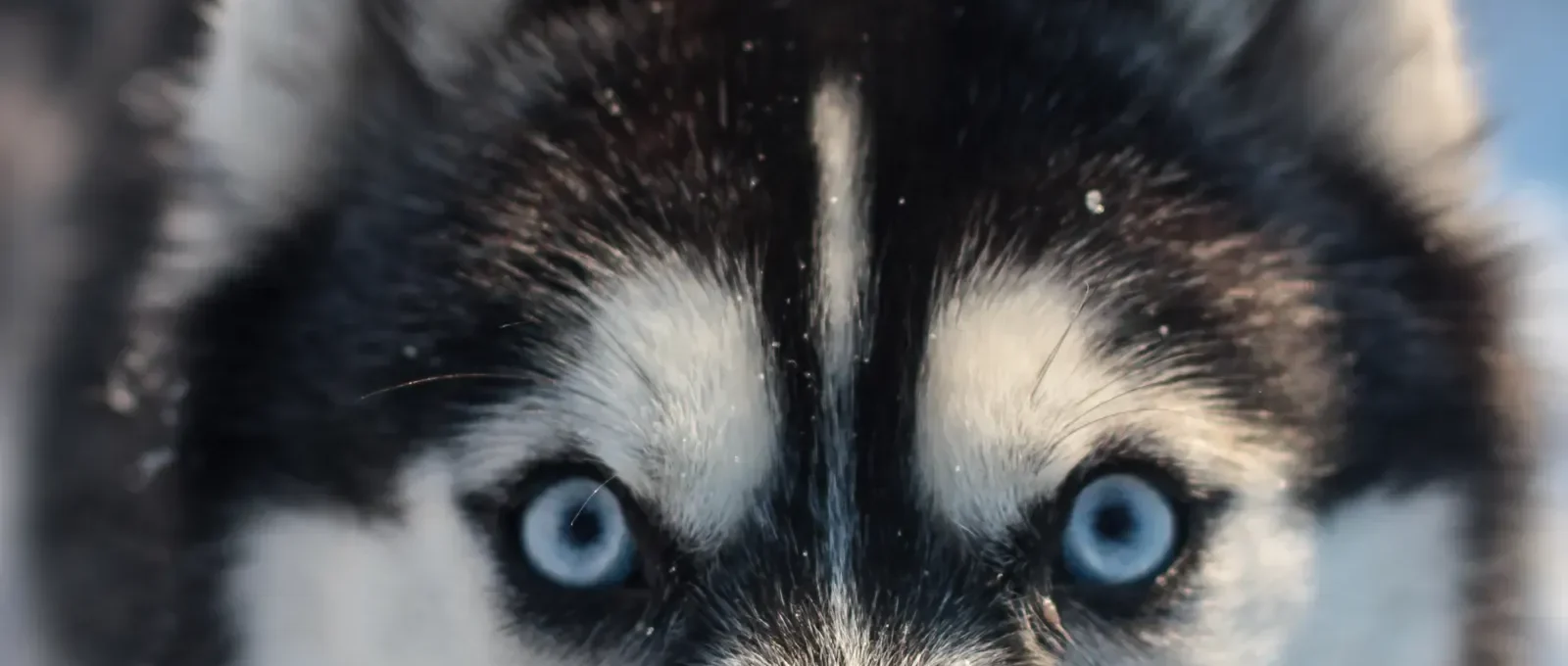

There is a moment — you’ve probably experienced it — where a dog catches your eye from across a room or down the street, and something about the way the light hits their face makes you stop completely. Your brain registers it before you consciously process what you’re seeing: those eyes. Not brown, not amber, not hazel — but blue. A pale, glacial, otherworldly blue that seems to hold the sky inside it. Or a deep, vivid azure like the ocean on a clear day. Or a shimmering pale gray-blue like ice over a frozen lake. Whatever the shade, the effect is immediate and total — you cannot look away.
Blue eyes in dogs are one of nature’s most spectacular genetic gifts, and they are extraordinarily rare. Studies have shown that only about 5% of dogs have a blue eye variant. In a world where brown eyes are the overwhelming canine default — practical, beautiful in their own warm way, but familiar — a blue-eyed dog commands attention the way a comet commands attention. They look like something out of a painting, or a dream, or a mythology. When you spot a dog with blue eyes, it’s hard not to pause and stare. Those icy peepers are captivating, but they’re also relatively rare — fewer than 5% of adult dogs naturally have them.
This guide celebrates the 20 most breathtaking blue-eyed dog breeds in the world — with the same depth, detail, and genuine admiration that these extraordinary animals deserve. We’ll cover the genetics behind this stunning trait, the personality and care profile of each breed, and everything else that makes these azure-eyed beauties so completely, undeniably captivating.
Why Blue Eyes in Dogs Are So Rare — and So Captivating
Before we meet the dogs themselves, it’s worth appreciating why blue eyes in dogs are so visually powerful and why they’ve become one of the most sought-after aesthetic traits in the canine world. The answer has everything to do with contrast, rarity, and a little bit of neuroscience.
Brown eyes are the default because melanin — the pigment that gives eyes their color — naturally accumulates in the iris as a dog matures, producing the warm amber and rich brown tones we associate with most dogs. Blue eyes occur when that melanin accumulation doesn’t happen — when, for any of several genetic reasons, the iris retains its low-melanin state, allowing light to scatter in a way that produces the appearance of blue. Blue-eyed dogs are certainly on the rarer side — with albinism, lack of pigment and other genetic factors like breed leading the way as the main causes.
The visual impact of blue eyes against a dark or contrasting coat creates one of the most striking aesthetic experiences in the entire animal kingdom. Blue eyes in dogs are like a lot of aesthetic traits. They’re striking, and they really stand out. The hypothesis is that it’s a genetic mutation that developed naturally and then became a desired trait. Evolution didn’t design blue dog eyes for beauty — but humans noticed the beauty, selected for it, and in doing so, gave us the breathtaking gallery of azure-eyed animals in this guide.
The Science Behind Why Some Dogs Have Blue Eyes
The Genetics of Blue Eyes in Dogs
The genetic mechanisms behind blue eyes in dogs are more varied and complex than most people realize — and understanding them helps explain why some breeds consistently produce blue-eyed individuals while others only occasionally do so. According to the studies, for some breeds, blue eyes result due to a genetic mutation that is passed on through a recessive gene, meaning that both parent dogs pass the gene on to their offspring. Similarly, albino dogs lack melanin pigmentation and are blue-eyed.
The Siberian Husky is one of the few breeds in which blue eyes occur naturally. While many dogs with blue eyes carry the merle gene, the Siberian Husky doesn’t actually have it. Instead, it’s thought that the ALX4 canine chromosome is to thank, which commonly presents as a loss of pigmentation in the dog’s irises, but not in its coat. The merle gene — responsible for the mottled, patchy coat pattern seen in Australian Shepherds, Border Collies, and Catahoula Leopard Dogs — frequently reduces pigmentation in the iris alongside the coat, producing the blue and multi-colored eyes that make merle dogs so visually spectacular. The piebald gene, which creates large white patches in coats, can also reduce iris pigmentation and contribute to blue eyes.
What Is Heterochromia in Dogs?
One of the most mesmerizing phenomena in the entire blue-eyed dog world is heterochromia — the condition where the two eyes are different colors. Some Huskies have two blue eyes, while others might have one blue and one brown eye. This trait is called heterochromia. Studies show that around 15% of Huskies have this eye condition, making it fairly common in the breed.
Breeders must be careful to prevent unwanted combinations, such as double merles with two copies of the dominant M allele, which often result in complete deafness, blindness, and other significant health defects. Heterochromia in dogs is not a defect or a health concern in most cases — it’s simply uneven distribution of melanin between the two irises, and it produces one of the most dramatically beautiful appearances in the dog kingdom. A Husky with one ice-blue eye and one rich amber eye, or an Australian Shepherd with one brown eye and one split between blue and brown, are living examples of nature’s willingness to experiment in its most extraordinary artistic direction.
The 20 Most Breathtaking Blue-Eyed Dog Breeds
1. Siberian Husky — The Undisputed King of Blue Eyes
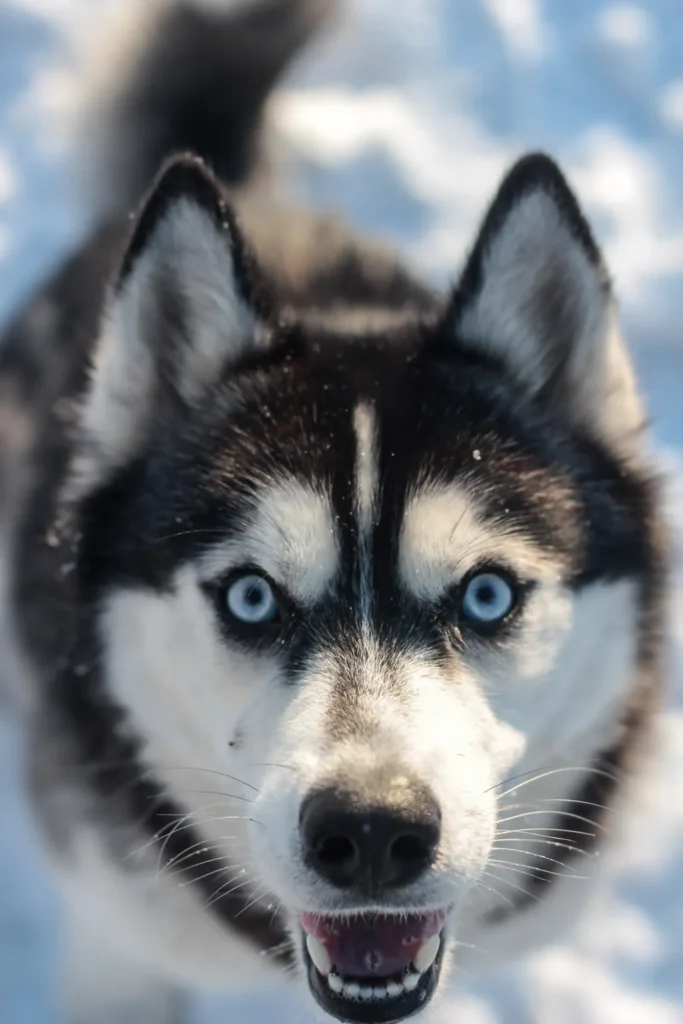
If there’s one breed that owns blue eyes in the popular imagination — the one whose face comes to mind the instant someone says “blue-eyed dog” — it is, without question, the Siberian Husky. Known for its thick coat, high energy and endurance, the Siberian Husky is probably the best-known dog with blue eyes. Their blue eyes are especially striking against their white, gray and black coats.
The Siberian Husky is the most notable of all blue-eyed dog breeds, with a dominant genetic tendency toward pigment-free peepers. Up to 40% of Siberian Huskies have blue in both eyes. That’s an extraordinary statistic — nearly half the breed carries these stunning pale eyes. Originating from the harsh climates of Siberia, these dogs were bred to pull sleds over long distances. Huskies are not only known for their endurance and friendly disposition but also for their striking appearance, which often includes a thick double coat, distinctive facial masks, and iconic pale blue eyes.
What makes the Husky’s blue eyes so specifically breathtaking is their particular shade — a pale, icy blue that seems to contain the frozen tundra of their Siberian homeland. It’s not the deep azure of tropical water; it’s the blue of a glacier, of a clear Arctic sky, of ice lit from within by pale winter sunlight. Against their striking wolf-like facial markings of black, white, and gray, those eyes create a visual impact that stops people cold and keeps them staring. The Husky is, quite simply, the most visually dramatic dog on Earth — and those blue eyes are the reason.
2. Australian Shepherd — Marble-Eyed Magic
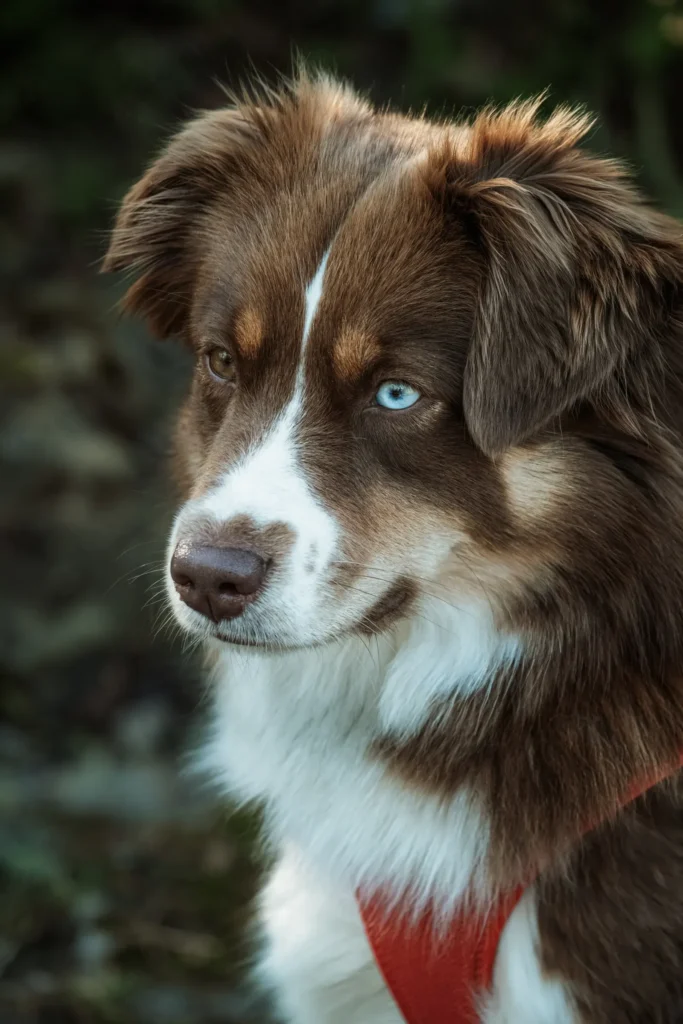
The Australian Shepherd brings something to the blue-eyed conversation that no other breed quite replicates: eyes that don’t just present a single striking color but contain entire landscapes within them. Australian Shepherds can boast stunning blue eyes, sometimes even in a heterochromatic combination where one eye differs in color from the other. This breed’s eye color can range from pale blue to a deep, vivid azure, adding to the Aussie’s eye-catching appearance.
Also known as the Aussie, the Australian Shepherd naturally carries the gene for blue eyes. A high-energy working breed, the Aussie is beloved for its unique coloring — and not just its eyes! The recognized colors are blue merle, red merle, solid black, and solid red, all with or without white markings. The Australian Shepherd’s blue eyes are at their most magnificent in combination with the blue merle coat — that extraordinary marbling of steel blue, black, white, and tan that makes each Aussie a one-of-a-kind visual experience. An Aussie in full blue merle coloring with pale blue eyes is one of the most breathtaking sights the dog world produces — a living watercolor painting of extraordinary complexity and beauty.
3. Border Collie — Intelligence Behind a Piercing Gaze
The Border Collie is widely regarded as the most intelligent dog breed in the world, and when the eyes behind that legendary gaze happen to be blue, the effect is genuinely extraordinary. Border Collies can control sheep with little more than their intense stare, and their gaze becomes all the more stunning through a set of blue eyes that you may see in merle-coated dogs.
These dogs are known to be one of the most intelligent breeds with a thoughtful, intense gaze. The eyes of a Border Collie can be different shades of brown, gold, or blue. Blue eyes are generally common in Merle-Coated Border Collies. There is something uniquely unnerving about a Border Collie’s gaze even with brown eyes — that focused, penetrating stare that seems to calculate and evaluate simultaneously. When those evaluating eyes are blue, the intensity increases tenfold. A merle Border Collie staring at you with pale blue eyes conveys a depth of intelligence and purpose that is unlike anything else in the animal kingdom. It’s not just beautiful — it’s almost eerie in the best possible way.
4. Weimaraner — The Silver Ghost With Steel-Blue Eyes
The Weimaraner is one of the most elegant dogs in existence — that sleek, silvery-gray coat of short, close-lying fur, those long, velvety ears, that noble, aristocratic bearing — and their pale blue-gray eyes complete a visual package of breathtaking unity. The Weimaraner is a medium-sized pooch with a sleek, silvery-gray coat that often has a small white spot on the chest. Its eyes are pale in color too — usually amber or a steel-like blue-gray. The AKC recommends having this sporting dog’s eyes, hips and thyroid function evaluated. It calls any Weimaraner eye color other than gray, blue-gray or light amber a “very serious defect.”
The Weimaraner earned their nickname “the Gray Ghost” from that otherworldly combination of silver coat and pale eyes — a dog who seems to materialize rather than arrive, whose coloring makes them look simultaneously like a shadow and a presence. The Weimaraner, often referred to as the “Gray Ghost” due to its sleek, silver coat, is another breed known for its potential to have piercing blue eyes, though this is more commonly seen in puppies. Adult Weimaraners usually have light amber or blue-gray eyes, but the young ones can captivate you with their deep blue gazes. A Weimaraner puppy with full deep-blue eyes against that silver coat is one of the most photographed and shared images in dog photography — and for absolutely good reason.
5. Great Dane — Gentle Giant, Stunning Eyes
The Great Dane is already one of the most visually arresting dogs in existence purely by virtue of scale — these magnificent animals stand as tall as some tables and move with a stately, almost cinematic grace. When a Great Dane has blue eyes, the effect is amplified to something approaching theatrical. Great Danes are the gentle giants of the Canidae family. These gentle giants turn heads with their size alone — however, a Great Dane with beautiful blue eyes is definitely a stunner. The majestic and noble-looking Great Dane has a lean, broad build with distinguished oversized pointed ears. Most Great Dane puppies are born with blue eyes, but their eye color usually changes to amber or brown as they mature.
The Great Danes most likely to retain blue eyes into adulthood are merle-coated individuals — those extraordinary dogs whose coats display the same mottled, marbled patterns seen in Aussies and Border Collies, but on a canvas of truly imposing scale. A blue merle Great Dane with blue eyes looking down at you with that characteristic gentle, slightly bemused expression is one of those experiences that stays with you — the combination of sheer physical magnificence and unexpected delicacy of color is genuinely breathtaking.
6. Alaskan Klee Kai — The Miniature Husky With Maxi Impact
The Alaskan Klee Kai is one of the best-kept secrets in the blue-eyed dog world — a relatively rare breed that most people haven’t encountered but that produces blue eyes with consistency and intensity that rivals the Siberian Husky. The Klee Kai is essentially a miniature version of the Husky in appearance — the same wolf-like face, the same striking facial markings, the same thick double coat — compressed into a package that ranges from toy-sized (under 10 lbs) to standard (up to 23 lbs).
Those blue eyes on a Klee Kai face appear even more dramatic than on a full-sized Husky simply because of the proportional effect — large, pale blue eyes on a small, sharp face with black and white markings create an almost cartoon-like visual intensity that is simultaneously adorable and genuinely spectacular. For people who want the stunning visual impact of a Husky’s blue eyes in a smaller, more apartment-compatible package, the Klee Kai is one of the most exciting breeds available.
7. Dalmatian — Spots and Sapphires
The Dalmatian is already one of the most visually distinctive dogs in the world — those iconic black or liver spots against a brilliant white coat are instantly recognizable across cultures and generations — and a blue-eyed Dalmatian takes that distinctiveness to an entirely new level. Spotted dogs have appeared in various records for millennia, blurring the precise origins of the polka-dotted Dalmatian. The Dalmatian was a genuine jack-of-all-trades that could dispatch vermin, track and retrieve game, and pull carts.
The Dalmatian’s blue eyes are most commonly associated with the piebald gene that creates their spotted coat — the same genetic mechanism that reduces pigmentation in the coat also reduces it in the iris. The effect of those pale blue eyes against the brilliant spotted coat is extraordinary — like finding sapphires set in a black-and-white painting. Blue-eyed dogs are certainly on the rarer side, with albinism, lack of pigment, and other genetic factors like breed leading the way as the main causes. The caveat worth noting is that in Dalmatians, the same genetic pathway that produces blue eyes is associated with increased risk of deafness — which is why responsible Dalmatian breeders conduct BAER (Brainstem Auditory Evoked Response) testing on all puppies.
8. Cardigan Welsh Corgi — The Merle Corgi With Surprising Blue Eyes
Most people picture the Pembroke Welsh Corgi when they think of the breed — those spunky, royal-associated dogs with their round haunches and stub tails — but it’s the Cardigan Welsh Corgi’s merle coloration that produces one of the most surprising and beautiful blue-eyed appearances in the entire small-dog world. A blue merle Cardigan Welsh Corgi — with that marbled gray coat, the long fluffy tail, and pale blue eyes — is one of the most unexpectedly stunning small dogs you will ever encounter.
The combination of the Corgi’s compact, low-to-the-ground body, those enormous satellite-dish ears, and those pale blue eyes creates a visual experience of charming contradiction — a dog who looks simultaneously like a woodland sprite and a serious working herder, accessorized with eyes the color of a morning sky. Blue merle Cardigans are not the most common variation of the breed, which makes encountering one even more of a visual event.
9. Dachshund — The Unlikely Blue-Eyed Sausage
The Dachshund is not a breed that springs to mind in blue-eyed dog conversations — and yet blue-eyed Dachshunds exist, are genuinely stunning, and represent one of the most delightful visual surprises in the dog world. Blue eyes are generally not a desirable characteristic in the show Dachshund, but they are still a beautiful feature. The dapple-coated Dachshund — the variation with a mottled, spotted coat pattern similar to merle — is most likely to carry blue eyes, and the combination of that characteristic long body, those short powerful legs, and those unexpected pale eyes creates an appearance of extraordinary charm and individuality.
A dapple Dachshund with blue eyes is a dog that consistently produces double-takes — the comically beloved body shape paired with eyes that belong, visually, to a completely different kind of dog. It’s the kind of combination that makes people laugh and stare at the same time, and the Dachshund carries the whole thing with their characteristic blend of self-importance and good humor.
10. Shetland Sheepdog — Tiny Stature, Tremendous Gaze
The Shetland Sheepdog — the Sheltie — is one of the most elegant small breeds in existence: that gorgeous flowing double coat in sable, tricolor, or blue merle, that refined, narrow face, those expressive eyes. And in the blue merle variation, those eyes are frequently a stunning pale blue that creates an appearance of miniature, refined majesty. Energetic and totally cuddly, Border Collies naturally carry the blue-eyed gene — and the Shetland Sheepdog, as a close relative of the collie family, can also exhibit blue eyes in merle-coated individuals.
The Sheltie’s small size — typically 15–25 lbs — means those blue eyes appear proportionally large on their delicate face, creating an almost fawn-like quality of wide-eyed expressiveness that is deeply appealing. A blue merle Sheltie with pale blue eyes and that flowing, silky coat is one of the most refined and beautiful small dogs imaginable — the kind of dog that makes everyone who sees them ask, slightly breathlessly, “What breed is that?”
11. Catahoula Leopard Dog — The Cracked Glass Eye Breed
The Catahoula Leopard Dog is one of the most visually extraordinary dogs on this entire list — and not just for the eyes, although the eyes are genuinely unlike anything else in the dog world. The Catahoula’s spotted or “leopard” coat, the result of the merle gene expressing with particular drama in this breed, already makes them visually unforgettable. But it’s their eyes — sometimes called “cracked glass eyes” or “marbled eyes” — that elevate them to a completely different category of visual spectacle.
A Catahoula can have eyes that are a single color (including blue), or eyes where multiple colors appear in the same iris — a central brown surrounded by blue, or vice versa, or a swirl of colors that genuinely resembles cracked glass or the surface of a marble. Combined with that dramatic merle coat and their athletic, powerful build, the Catahoula with fully or partially blue eyes is one of the most arrestingly beautiful dogs in existence — and one of the most genuinely rare visual experiences in the entire dog world.
12. Pitbull — Blue Eyes in an Unexpected Package
The Pitbull as a blue-eyed dog consistently surprises people who haven’t encountered it — because the image most people carry of a Pitbull doesn’t typically include pale blue eyes. But blue-eyed Pitbulls exist, they are beautiful, and they represent one of the most striking contrasts between perceived and actual appearance in dog breeds. The Pitbull is another dog often born with blue eyes that change color as they mature.
With a high energy quotient and intelligence, these dogs take on mental and physical challenges, including agility competitions. A Pitbull — that broad, muscular, powerful body; that wide, expressive face built for smiling; that legendary enthusiasm for human affection — with pale blue eyes creates a visual contradiction that is powerfully attractive. The expected toughness of the build set against the unexpected delicacy of those blue eyes produces an appearance of complexity and depth that makes blue-eyed Pitbulls among the most photographed and admired dogs in online dog communities.
13. English Setter — Rare Blues on a Stunning Coat
The English Setter is one of the most elegant sporting breeds — that beautifully feathered coat in white with blue, orange, lemon, or liver belton markings; that graceful, flowing movement; that gentle, aristocratic bearing. And on rare occasions, an English Setter’s eyes are blue — a combination that the AKC breed standard technically discourages but that is, objectively, extraordinarily beautiful. It’s clear these blue-eyed setters are adorable, but don’t think yours will win Best in Show. This is one of several breeds for which the American Kennel Club breed standard doesn’t allow blue eyes. In this case, it calls for “brown eyes, the darker the better.”
The English Setter’s blue belton coat — white with fine blue flecking distributed across the body — paired with pale blue eyes creates a cohesive, silvery-cool visual aesthetic that is genuinely breathtaking. Show standards may not favor them, but a blue belton English Setter with matching pale eyes is the kind of dog that makes you reconsider the entire concept of what beauty looks like.
14. Husky Mix (Huskador / Pomsky) — Designer Blue Eyes
The Siberian Husky’s blue eye gene is dominant enough to pass through to many mixed-breed offspring, and this has produced some of the most visually spectacular hybrid dogs in existence. Have you ever heard of a Huskador or Labsky? Well, now you have! This breed is a mix of a Husky and a Labrador — and because of their Husky heritage, they can be known to have blue eyes.
The Pomsky — a cross between a Pomeranian and a Siberian Husky — deserves particular attention, because the combination of the Pomeranian’s fluffy, compact appeal and the Husky’s facial markings and blue eyes produces an animal of frankly absurd visual impact. Pomskies with blue eyes look like someone combined a stuffed animal and a wolf and made it real — the fluffiness and the blue gaze together create a visual experience that consistently goes viral on social media, and for entirely understandable reasons.
15. Merle French Bulldog — Controversial But Captivating
The merle French Bulldog is one of the most controversial entries on this list — many breed organizations do not recognize merle as an acceptable French Bulldog color, and there are legitimate health concerns associated with irresponsible merle breeding in this already health-compromised brachycephalic breed. With those important caveats fully stated: a responsibly bred merle French Bulldog with blue eyes is one of the most visually striking small dogs in existence.
Those blue eyes set in the broad, wrinkled, bat-eared face of a French Bulldog create a visual combination of the comically adorable and the genuinely beautiful that is unlike anything else in the dog world. The merle coat adds another layer of visual complexity — the mottled, patchy coloring across that compact, muscular little body. For those considering this variation, the responsibility to research health testing and find genuinely responsible breeders cannot be overstated — the beauty is real, but so are the health risks of poorly bred merle Frenchies.
16. Old English Sheepdog — Hidden Blues Behind the Fringe
The Old English Sheepdog is famous for their shaggy, floor-length coat that frequently covers their eyes entirely — which means the revelation of blue eyes beneath that fringe is one of the great surprise moments in dog ownership. When you gently part that curtain of gray and white fur and discover two pale blue eyes looking back at you with gentle, slightly surprised warmth, the effect is genuinely magical. Celebrating beautiful blue-eyed dogs includes the Old English Sheepdog among some of the most beautiful blue-eyed dog breeds.
The Old English Sheepdog’s blue eyes are more commonly seen in the merle-influenced lines of the breed. Combined with their extraordinary coat — one of the most distinctive and voluminous in all of dogdom — those hidden blue eyes create a discovery experience that is part of what makes this breed so endearing. You don’t just see their eyes; you find them.
17. Cocker Spaniel — Unexpected Blues on an Old Classic
The Cocker Spaniel — those long, silky ears, that sweet and gentle face, that flowing feathered coat in a rich variety of colors — is one of the most classically beloved dog breeds in the world. And in their merle variation, a rare but existing coat type, Cocker Spaniels can carry blue eyes that create a genuinely unexpected and beautiful departure from their traditional warm-eyed appearance.
A merle Cocker Spaniel with blue eyes represents one of those genetic surprises that make dog breeding constantly fascinating — the same gentle, affectionate personality in a visual package that no one entirely anticipated. The long, silky ears and flowing coat remain, but the eyes have been replaced by something completely different — something that makes a very familiar dog suddenly feel extraordinary and new.
18. Drentsche Patrijshond — The Rare Blue-Eyed Beauty Most People Have Never Heard Of
The Drentsche Patrijshond, also called a “Drent,” is highly intelligent and adaptable to many circumstances. They love to hunt and help with tracking tasks, but they’re also great at gentle play. The Drent is one of the rarest breeds on this entire list — a Dutch hunting dog of ancient lineage that is virtually unknown outside the Netherlands — but their blue-eyed individuals are so striking that they’ve begun attracting global attention through social media.
A rare breed with movie star energy is exactly the right description. The Drent’s muted, earthy coat coloring — whites, browns, and oranges in a soft, feathered package — makes those blue eyes appear with extraordinary impact against an unexpected backdrop. Most people encountering a blue-eyed Drentsche Patrijshond for the first time have never seen the breed before and find themselves completely captivated by the combination of gentle, refined beauty and those mesmerizing blue eyes.
19. Husky German Shepherd Mix — Two Legends, One Stunning Gaze
The cross between a Siberian Husky and a German Shepherd — sometimes called a Gerberian Shepsky or a Husky Shepherd — combines two of the most visually dramatic dog breeds in existence into a single animal whose appearance is often genuinely jaw-dropping. When the Husky’s blue eye gene expresses in this mix, the result is a dog with the powerful, intelligent face of a German Shepherd and the pale, otherworldly eyes of a Husky.
The contrast between the Shepherd’s typically darker, more dramatic facial markings and those unexpected blue eyes creates a visual tension that is powerfully attractive — a dog that looks simultaneously like a working partner and a wild animal, with eyes that seem to contain something ancient and knowing. The Husky Shepherd mix is one of the most popular designer crosses in existence, and the blue-eyed individuals consistently top the charts of dog photography and social media engagement.
20. Merle Border Collie — The Most Breathtaking Eyes in the Entire Dog World
We began with the Siberian Husky, but we end with what many who have encountered one in person will tell you is the single most breathtaking visual experience in the blue-eyed dog world: the merle Border Collie, particularly the blue merle variation with pale blue eyes. Border Collies can control sheep with little more than their intense stare, and their gaze becomes all the more stunning through a set of blue eyes that you may see in merle-coated dogs.
Everything converges in this dog: the marbled, complex merle coat in steel blues, blacks, whites, and silvers. The athletic, perfectly proportioned body of the world’s most intelligent breed. The legendary intensity of the Border Collie stare, used to control livestock, magnified to almost supernatural effect through pale, glacial blue eyes. And the intelligence behind those eyes — demonstrably the highest of any dog breed — giving the gaze a quality of penetrating awareness that brown-eyed dogs simply cannot replicate. A blue merle Border Collie with blue eyes is, to many who have encountered one, the single most visually extraordinary dog that exists. It is beauty, intelligence, and ancestral wildness combined into one breathtaking package.
Blue-Eyed Dogs at a Glance: Quick Reference
| Breed | Eye Color Likelihood | Most Common in | Eye Shade |
|---|---|---|---|
| Siberian Husky | Up to 40% have blue eyes | All coat types | Pale icy blue |
| Australian Shepherd | Common in merle | Blue merle, red merle | Blue to vivid azure |
| Border Collie | Common in merle | Merle coat | Pale to vivid blue |
| Weimaraner | Very common | All adults | Steel blue-gray |
| Great Dane | Merle adults, all puppies | Merle coat | Ice blue |
| Alaskan Klee Kai | Common | All coat types | Pale icy blue |
| Dalmatian | Occasional | White-heavy coats | Clear pale blue |
| Cardigan Welsh Corgi | Common in merle | Blue merle | Pale blue |
| Dachshund | Dapple coats | Dapple coloration | Blue to blue-gray |
| Catahoula Leopard Dog | Very common | Merle/leopard | Cracked glass effect |
Are Blue Eyes in Dogs a Health Concern?
The Connection Between Blue Eyes, White Coats, and Deafness
This is a question that deserves an honest, straightforward answer — because the beauty of blue eyes in dogs does come with certain health considerations that prospective owners need to understand. Other causes of blue eyes in dogs include the merle gene, heterochromia, and albinism. It’s also worth noting that dogs with light eyes — from lack of pigment — may also experience hearing sensitivity.
Breeders must be careful to prevent unwanted combinations, such as double merles with two copies of the dominant M allele, which often result in complete deafness, blindness, and other significant health defects. The key concern is specifically with double merle dogs — animals who inherit two copies of the merle gene — who face very high rates of hearing and vision impairment. Responsible merle breeders never breed merle to merle for exactly this reason. A single-copy merle dog (bred from a merle parent and a non-merle parent) does not face these elevated risks.
For breeds like the Siberian Husky, where blue eyes have a completely different genetic origin unrelated to the merle gene, there is no documented association between blue eye color and any health issue. These often-stubborn dogs are not prone to deafness, says Dreger. The health conversation around blue eyes is specific to certain genetic mechanisms in certain breeds — not a blanket concern about all blue-eyed dogs.
Tips for Finding a Responsible Breeder for Blue-Eyed Dogs
The extraordinary visual appeal of blue-eyed dogs has unfortunately attracted irresponsible breeders who prioritize appearance over health, welfare, and ethical breeding practices. Finding a genuinely responsible breeder requires due diligence that goes beyond looking for puppies with the right eye color.
Always ask breeders what health testing they conduct on parent dogs. For merle breeds, ask specifically whether they ever breed merle to merle — a responsible breeder will say no, emphatically. Ask to see the parent dogs. Ask for references from previous puppy buyers. Research the breed’s parent club health recommendations and verify that the breeder follows them. To understand more about how and why some dogs inherit blue eyes, canine geneticists emphasize that blue eyes in dogs are like a lot of aesthetic traits — striking, and they really stand out. The hypothesis is that it’s a genetic mutation that developed naturally and then became a desired trait.
A beautiful blue-eyed puppy from a responsible, health-focused breeder is one of life’s great gifts. The same blue-eyed puppy from an irresponsible breeder may carry hidden health burdens that emerge in heartbreaking ways over the following months and years. The extra diligence in finding a responsible source is always worth it.
Conclusion
Blue eyes in dogs are one of nature’s most extraordinary gifts — a rare, genetically fascinating, visually stunning trait that transforms an already beautiful animal into something that stops people in their tracks and lingers in memory long after the encounter ends. When you spot a dog with blue eyes, it’s hard not to pause and stare. Those icy peepers are captivating, but they’re also relatively rare.
Whether it’s the legendary icy gaze of a Siberian Husky, the marbled complexity of a blue merle Australian Shepherd, the penetrating intensity of a merle Border Collie, or the gray-ghost elegance of a Weimaraner, each blue-eyed dog on this list represents a different expression of the same miraculous genetic phenomenon — light bouncing through an iris with reduced melanin and producing something that looks, quite simply, like the sky has been set into a dog’s face.
These are not just beautiful animals. They are walking reminders that nature, when it decides to be extravagant, does it better than anything we could design. If you’ve ever looked into the blue eyes of a dog and felt something shift — something quiet and profound — then you already know what all the words in this article have been trying to describe. You’ve been seen by something ancient and brilliant and completely extraordinary. And you were right to stop and stare.
Frequently Asked Questions
1. What is the rarest dog eye color? Green is actually rarer than blue in dogs. Blue eyes affect approximately 5% of adult dogs, while true green eyes are even less common. Brown is by far the most prevalent eye color, with amber being a secondary common color. Blue and green eyes occur when melanin production in the iris is reduced or absent through specific genetic mechanisms.
2. Can a dog’s blue eyes change color as they age? Yes — many puppies are born with blue eyes that change to their permanent color by 9–16 weeks of age, as melanin production begins and accumulates in the iris. Dogs don’t produce the melanin needed to give their eyes color for several weeks after they’re born. Most newborn puppies subsequently have blue eyes. Eye color tends to come in around 9–12 weeks, though it can take up to 16 weeks to develop fully. Blue eyes that remain after 16 weeks are considered permanent.
3. Do blue eyes affect a dog’s vision? In most cases, blue eye color itself does not impair vision. The concern is specifically with certain genetic combinations — particularly double merle dogs — where the same genetic pathway that produces blue eyes also reduces the development of retinal cells, potentially causing vision impairment. For breeds like the Siberian Husky whose blue eyes have a different genetic origin, there is no association between blue eye color and vision problems.
4. Which breed is most likely to have two different colored eyes (heterochromia)? The Siberian Husky is the most commonly cited breed for heterochromia, with approximately 15% of the breed having one blue eye and one brown (or amber) eye. Australian Shepherds, Border Collies, and Catahoula Leopard Dogs also commonly display heterochromia, particularly in merle-coated individuals.
5. Are blue-eyed dogs more expensive than brown-eyed dogs? In many breeds, particularly those where blue eyes are less common (such as Dalmatians, Pitbulls, and Dachshunds), blue-eyed individuals may be priced higher by breeders due to the visual appeal of the trait. However, in breeds where blue eyes are standard (Siberian Huskies, Weimaraners), eye color alone doesn’t typically influence price significantly. Always be cautious of breeders who charge dramatically elevated prices purely for eye color — this can sometimes be a sign of irresponsible breeding practices that prioritize appearance over health.


1 Comment