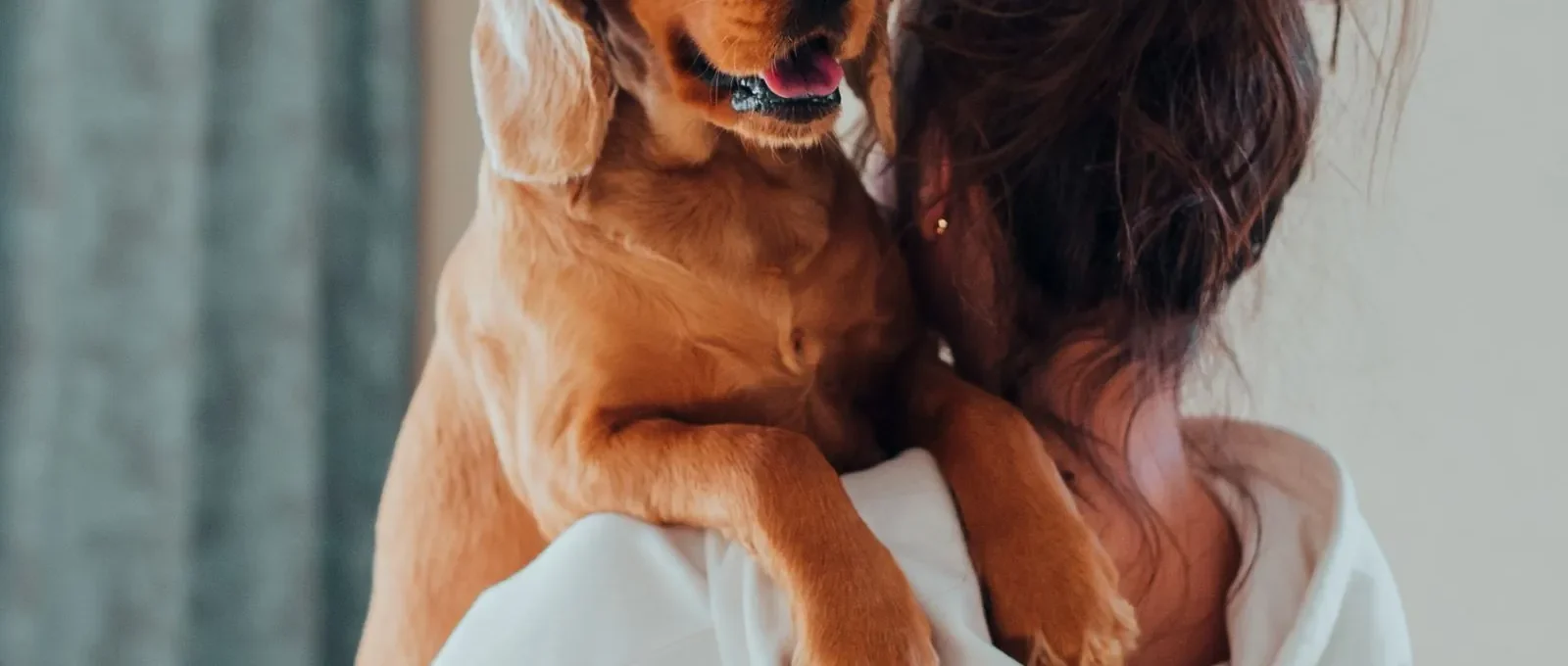

You’ve been there. You spend all day taking care of your dog — filling their bowl, booking their vet appointments, buying their treats, washing their bedding — and then your partner walks through the door after a ten-hour workday and your dog completely loses their mind with joy. Tail spinning like a helicopter, full-body wiggles, following them from room to room like a devoted shadow. And you’re left standing there wondering: seriously? After everything I do?
If this has happened to you, you are in excellent company. It’s one of the most commonly reported — and secretly most wounded — experiences in dog ownership. The person who does the most doesn’t always get the most in return. And that’s because how dogs choose their favorite person has almost nothing to do with fairness, and almost everything to do with a rich, complex interplay of biology, psychology, early experience, personality compatibility, and the specific emotional language your dog speaks best.
The short answer is yes — most dogs do have favorite people. As social animals, dogs tend to be happiest and healthiest with company. And because domesticated pets depend on their people to meet virtually all their needs — food, shelter, and even access to the bathroom — these dog-human bonds are strong. This guide is going to take you deep into that world — explaining the science, the psychology, and the practical factors that determine whose name your dog would write on a Valentine’s card if they could hold a pen. And yes — we’ll tell you exactly what you can do to tip those scales in your favor.
Yes, Your Dog Absolutely Has a Favorite Person — And Here’s Why It Matters
Let’s settle the foundational question before anything else: do dogs genuinely play favorites, or are we projecting our human social dynamics onto an animal that loves everyone equally? All three experts who spoke for this article agree that yes, our dogs definitely tend to claim a person in their household — and that once they’ve made their choice, it’s unlikely to change.
The favoritism is real, it’s behavioral, and it’s rooted in genuine emotional attachment rather than simple conditioned response. Research claims that 60% of dogs show preferences, underscoring the complexity and individuality of these bonds. But here’s the part that often surprises people: the favorite isn’t always the person who does the most caretaking. It isn’t always the primary feeder or the main walker. What it comes down to for all dogs is they decide their very favorite family member by who gives the most consistent, high-quality attention, play, and physical affection: ear rubs, scratches, that sort of thing. Dogs get positive associations from being around people who consistently provide positive experiences, including treats, meals, play that they enjoy, and remember also that early association in those first six months can influence who a dog may like better later on.
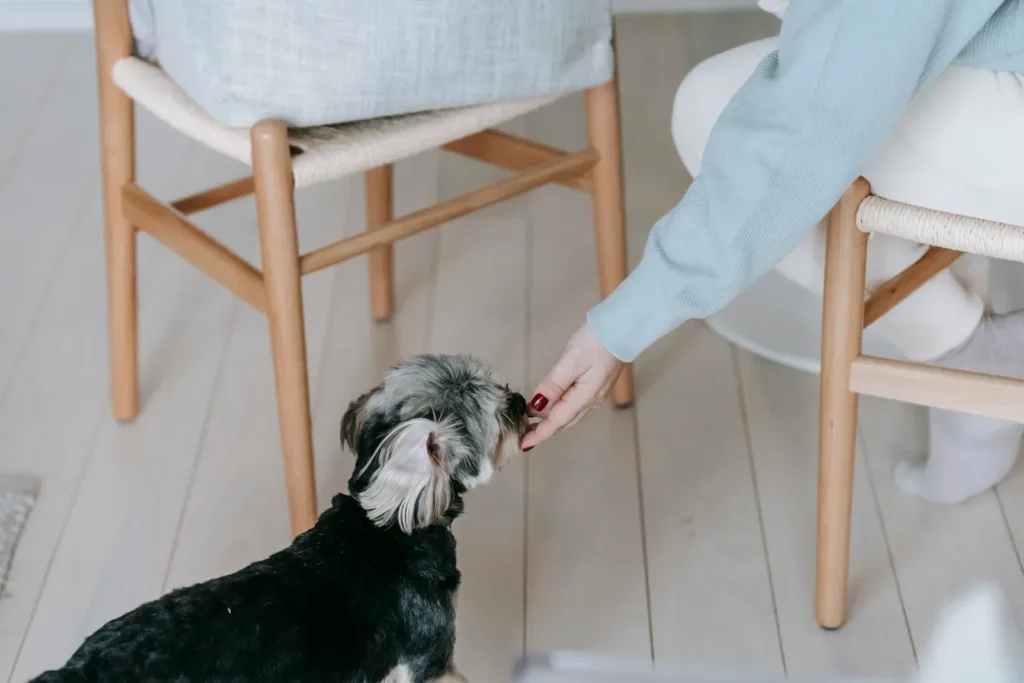
Understanding why your dog has made the choice they’ve made isn’t just satisfying from an intellectual standpoint — it’s practically empowering. Once you understand the factors involved, you have real, actionable insight into how to build a deeper bond with your dog, regardless of where you currently sit in their personal hierarchy.
The Science Behind Canine Favoritism
The Role of Oxytocin — The Love Hormone
The neurochemical foundation of a dog’s favorite person relationship is one of the most beautiful things in modern animal behavior science. Research has shown that dogs and humans both release oxytocin, the “love hormone,” when they interact. This hormonal connection fosters trust and emotional bonding.
Oxytocin — the same hormone that floods new parents when they hold their newborn, that bonds couples in the early stages of love, that creates the feeling of warm connection between close friends — is released in both dog and human during positive interactions. Eye contact. Physical touch. Play. Calm companionship. Every one of these interactions triggers a biochemical event in both parties that quite literally makes them feel more attached to each other. The dog who looks at you with soft, adoring eyes and the warmth you feel in your chest when you look back — that’s not sentimentality. That’s oxytocin doing exactly what it evolved to do.
How a Dog’s Brain Builds Attachment
The psychological foundation for how dogs choose their favorite person stems from their need to feel safe and secure within their environment. The process of how dogs choose their favorite person involves multiple factors including early socialization experiences, quality of attention received, positive associations formed, and personality compatibility between dog and human.
Dogs are not making arbitrary social decisions. They are running an extraordinarily sophisticated internal calculation — one that factors in every interaction, every emotional signal, every experience of safety or discomfort associated with each person in their life — and arriving at a conclusion about who represents maximum security, maximum positive experience, and maximum trustworthiness. The result of that calculation is their favorite person. Even though the domestication of dogs happened between 27,000 and 40,000 years ago, canines have retained survival instincts that influence their behavior. They gravitate toward the people and places that provide them with the food, water, and shelter they need. Ancient survival instinct dressed in the warm clothes of emotional attachment — that’s what a dog’s love for their favorite person really is.
The 10 Real Reasons Dogs Choose Their Favorite Person
1. The Critical Socialization Window: Early Bonds That Last a Lifetime
Early socialization experiences create lasting impressions that shape how dogs choose their favorite person later in life. Puppies who are primarily exposed to one gender, age group, or personality type may find it more challenging to bond with different types of people as adults.
The period between 3 and 12 weeks of age is neurologically unlike any other time in a dog’s life — the brain is building foundational templates that define what “normal,” “safe,” and “trustworthy” look like for the rest of their years. Puppies are especially impressionable during their first six months of early brain development. They’re likely to form strong bonds with anyone who interacts with them in a positive way. The importance of this critical period explains why many dogs maintain lifelong preferences for their primary puppy caregiver, even when other family members provide equal or greater amounts of daily care.
This is why a dog who spent the first weeks of their life primarily with one person — a breeder, a rescue foster, the first owner in a multi-person household — may show a lasting preference for that person or for people who share their characteristics, long after many other loving relationships have been formed. Those early neural impressions run deep and hold strong.
2. Positive Associations — It Goes Way Beyond Treats
Positive associations are the foundation of cementing a dog’s choice of their favorite person. A good owner gives their pet many reasons to form these associations, whether long walks, treats for behaving, or a safe place to sleep. But the concept of positive association in canine attachment is considerably more nuanced than simply “the person who gives the most treats wins.”
Dogs form their strongest attachments to people who consistently provide positive experiences and fulfill their basic needs for safety, comfort, and enjoyment. The concept of positive association is fundamental to understanding how dogs choose their favorite person — they naturally prefer individuals who are linked with good things happening in their lives. However, it’s not just about meeting physical needs — emotional fulfillment matters equally. Dogs bond most strongly with humans who engage them in activities they enjoy, whether that’s playing tug-of-war, going for adventures, or simply providing calm, comforting presence during stressful situations.
Equally important — perhaps more important — is the absence of negative associations. While building positive associations is important, avoiding negative associations can be just as crucial for bonding with dogs. It makes sense for a dog to shy away from someone who stepped on their tail or poked and prodded them, like the veterinarian. Every negative interaction — a harsh correction, an accidental injury, a frightening experience in someone’s presence — registers in the same system that tracks positive ones, and it pulls the balance in the other direction.
3. Quality Time vs. Quantity Time
Here’s one of the most important distinctions in understanding canine favoritism — and one of the most commonly misunderstood by the person who spends the most time with the dog but somehow isn’t the favorite. It’s easy to understand that dogs choose the people who give the most attention, affection, and one-on-one time. High quality is key here. If your dog spends hours in someone’s presence, but that person ignores them most of the time, that time won’t matter.
Keep in mind, however, that it’s not just about the amount of time you spend with your pooch, but also the quality of attention you give them. Sitting on the couch watching TV together isn’t really the same as playing fetch or tug-of-war in the backyard. Turn the tube off and play a game, rub their tummy, or have a ‘chat’ with them. They know the difference. This type of attention really counts! Ten minutes of fully present, actively engaged interaction — eye contact, play, physical affection, genuine attention — registers more powerfully in a dog’s attachment system than two hours of passive coexistence in the same room. This is why the person who “doesn’t even like dogs” but sits quietly on the floor and lets the dog sniff them often ends up being the one the dog follows around.
4. Who Speaks “Dog” the Best
Dogs tend to choose the person who spends the most time with them, rewards them in ways that they like, and best speaks their language — whatever that might be. And this concept of “speaking dog” is one of the most genuinely fascinating factors in canine favoritism, because it has nothing to do with effort or intention and everything to do with natural behavioral style.
Typically, the person who’s the most avoidant is giving the really nice, positive doggie language. Think about that for a moment. The person who doesn’t rush toward the dog, doesn’t reach over their head, doesn’t make intense eye contact, doesn’t crowd their space — is, from a dog’s perspective, communicating in respectful, non-threatening body language that signals safety and trustworthiness. Meanwhile, the person trying hardest to win the dog’s affection — rushing toward them, looming over them, making direct eye contact and reaching out with both hands — is accidentally using approach signals that dogs find alarming. It’s one of the great ironies of canine social dynamics.
5. Personality Compatibility — Like Attracts Like
Research has shown that people tend to choose dogs that are physically similar to them in some way, and same for personality. Whether laidback, hyper, or somewhere in-between, dogs and the people they love to spend time with frequently have similar energy levels and dispositions. Just like with human relationships, the more you have in common with a dog, the more likely you are to become close friends. For instance, a Golden Retriever might get along best with an extroverted, energetic person, while a more mellow Basset Hound would likely feel more comfortable with someone who is more aloof or quiet.
A study found dogs often prefer individuals who share similar personalities. Dogs with calm temperaments might gravitate toward relaxed people, while active dogs might prefer energetic owners. This matching of personalities can lead to more harmonious relationships. A high-energy Border Collie who loves to run and work will naturally gravitate toward the person in the household who takes long hikes and engages in active outdoor activities. A gentle, slow-moving Cavalier King Charles Spaniel will likely prefer the household’s most serene, physically gentle member. The dog isn’t making a calculated choice — they’re simply finding the person whose natural behavioral style matches their own most comfortably.
6. Emotional Tone and Consistency
Dogs also take emotional cues from us. If a person is stressed, loud, or inconsistent, a dog may avoid bonding deeply with them. On the other hand, someone who offers reassurance and stability often earns the title of “favorite” without even realizing it. Dogs are extraordinarily sensitive emotional barometers — they can detect the subtle physiological changes associated with human stress, anxiety, and anger, and they respond to those signals by creating distance or by seeking proximity depending on whether they associate the person with safety or threat.
Dogs also respond to emotional connection, tone of voice, and even body language. Their preferences are shaped by a mix of familiarity, trust, and how well a person understands their needs. The person in the household who maintains the most consistent emotional tone — whose behavior is predictable, whose moods don’t swing dramatically, whose presence is reliably calm — is the person the dog finds most restful and trustworthy to be around. Consistency isn’t just a training concept. It’s one of the most powerful bonding forces available to any dog owner.
7. Physical Affection — The Right Kind
Physical touch is a primary bonding mechanism between dogs and humans — but not all physical affection is created equal in a dog’s assessment. Many forms of human-initiated affection that feel loving to us register as neutral or even uncomfortable to dogs. While positive experiences play a big role, a dog’s favorite person isn’t always just the one holding the treat bag. Dogs also respond to emotional connection, tone of voice, and even body language.
Hugging, for instance — one of the most natural human expressions of affection — is not something most dogs naturally enjoy, because it mimics a restraining behavior. Reaching over a dog’s head to pat them feels threatening because it comes from above. But scratching behind the ears, rubbing under the chin, stroking the chest — these are forms of physical contact that dogs consistently respond to with positive emotional engagement. The person who instinctively offers the right kind of touch without having to be taught — who naturally gravitates toward the spots dogs love — will earn favoritism points with impressive speed.
8. Who Feeds, Walks, and Cares for Them
This is the factor most people assume is the primary driver of canine favoritism — and while it matters, its influence is more complicated than a simple “feeder = favorite” equation. Although dogs occasionally favor a family member who isn’t their primary companion, they often especially like the person who feeds and walks them. Throw in lots of one-on-one play and regular pampering sessions and you’re virtually guaranteed to be their favorite family member.
Canines are social animals, with many species living in groups or packs. When you give your pup attention, you’re reinforcing this bond. The caretaking role absolutely creates and maintains attachment — it’s just that it creates attachment through the positive associations it generates rather than through some direct transactional mechanism. In other words, feeding the dog matters because it’s a positive experience for the dog, and positive experiences build attachment. If the feeding were neutral or stressful, it wouldn’t produce the same bonding effect. The act is not the cause — the positive emotional experience is.
9. Gender, Age, and Voice — Surprising Factors That Matter
As someone who’s witnessed a fair number of dogs getting growly at men in particular, I had to wonder if certain demographics tend to be more popular among the canine contingent than others. The answer is “yes,” but once again, which groups often depends on the individual dog. Dogs are often more hesitant around men than women, which can stem from each gender’s physical build. Tone of voice can play a factor: a 2023 study used brain scans to show that dogs responded more to dog- and infant-directed speech, especially from women. Age can inform dogs’ preferences as well — kids seem to connect better with younger dogs and puppies.
The reasons for gender differences in canine preferences are primarily physical rather than truly gender-based: men tend to be taller, have deeper voices, and move with less predictability than women, all of which can feel more alarming to dogs — particularly those whose early socialization was primarily with women. Vocal pitch matters significantly — higher, warmer voices tend to produce more positive responses in dogs, which is partly why the exaggerated “dog voice” that most dog owners unconsciously adopt actually serves a genuine social function.
10. The Mysterious Role of Scent
Dogs have an incredibly refined sense of smell. This doesn’t just help them locate their favorite toy under the couch but also plays a role in how they perceive their human companions. They might associate certain scents with positive experiences. A dog’s olfactory processing of the world is so sophisticated and so different from our own that it’s genuinely difficult to fully appreciate its role in social bonding — but research strongly suggests that dogs build detailed scent profiles of the people in their lives and use those profiles as part of their emotional memory.
Certain scents become associated with safety and positive experience, others with stress or threat. A person whose natural scent has been consistently paired with good things — food, play, calm handling — carries a sensory identity that triggers positive emotional responses in the dog before any behavior or interaction has even begun. This is why a dog often recognizes and responds positively to a returning family member before the person has even entered the room.
How to Tell If You’re Your Dog’s Favorite Person
The Signs That Give It Away
These behaviors include following you around the house, leaning on you, and getting excited when you return home. Some dogs will bring their favorite toys to the person they prefer. Dogs may also choose to sleep next to the person they are most attached to.
The full constellation of signs is beautiful in its clarity once you know what you’re looking for. Your dog seeks you out when they have the freedom to go anywhere. They bring you toys — not because they want to play, but as an offering, a gesture of sharing their best things with you. They rest their chin on your knee during quiet moments. They position their body to face you even when they’re resting. They make frequent, soft eye contact throughout the day — those brief check-ins that are, in dog language, an affirmation of connection.
If you’re your dog’s favorite person, chances are they’ll greet you at the door like you’ve been away for weeks rather than just a few hours. The homecoming greeting is perhaps the most dramatic indicator — the specific quality of joy your dog displays when you specifically walk through the door, versus anyone else. If the greeting is disproportionately enthusiastic — and you can recognize that it is by comparison — you are almost certainly the favorite. And if that realization makes you feel something warm and a little bit proud — that’s the oxytocin doing its thing on your end too.
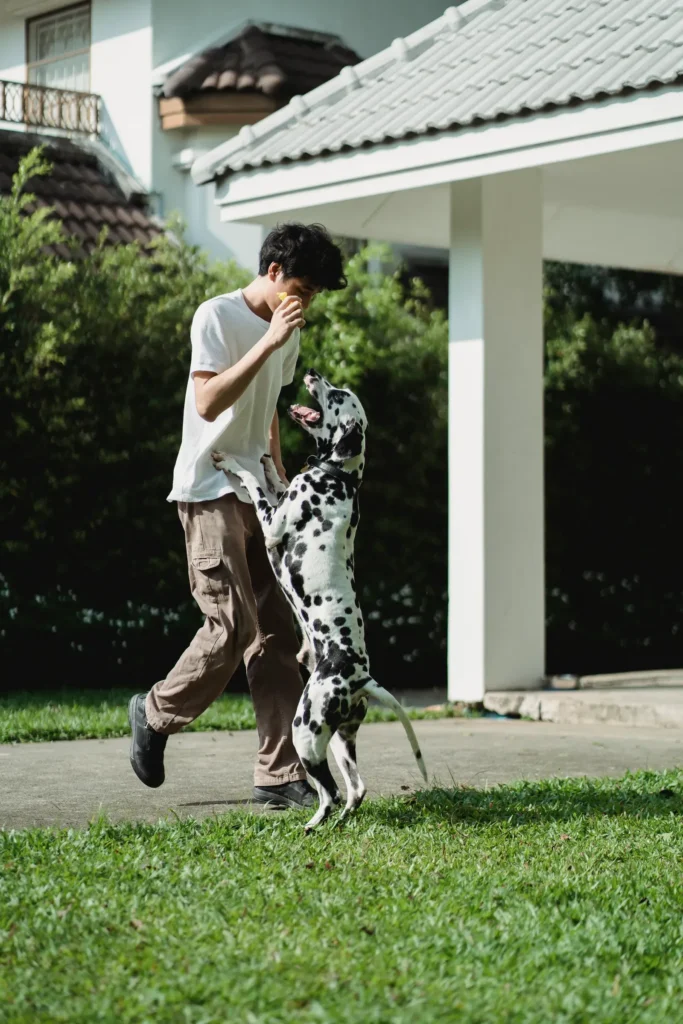
Dogs Who Favor One Person More Than Others: Which Breeds Do It Most
Not all breeds distribute their love equally across the household, and some are significantly more inclined to bond deeply with a single person than others. Understanding your breed’s typical attachment style helps set realistic expectations for household dynamics.
Breeds historically developed for close one-on-one working partnerships — sheepdogs, sight hounds, sled dogs, and many terriers — tend to be the most “one-person” in their attachment styles. German Shepherds, Belgian Malinois, Doberman Pinschers, Vizslas, Akitas, and Shiba Inus are all known for forming intense, exclusive-feeling attachments to a single primary person. Greyhounds and Whippets, despite their gentle demeanor, also often show strong single-person preferences.
A Golden Retriever might get along best with an extroverted, energetic person, while a more mellow Basset Hound would likely feel more comfortable with someone who is more aloof or quiet. Golden Retrievers, Labrador Retrievers, Beagles, and Cavalier King Charles Spaniels, by contrast, tend to spread their affection more generously — a household full of people is genuinely a more appealing social landscape to these breeds than a single devoted human. Their love may be less exclusive, but it’s no less genuine.
Can a Dog’s Favorite Person Change Over Time?
Once dogs have made their choice, it’s unlikely to change. Still, the selection process might not be what you think. The baseline of canine favoritism — particularly when it’s rooted in early socialization experiences — tends to be remarkably stable over time. Pets don’t just wake up one day, lift their heads off the dog bed, and think, “I don’t like that person anymore.” When they offer their affection and loyalty, it’s for life.
That said, significant life changes can shift preferences. A new person who enters the dog’s life and consistently provides the high-quality engagement described throughout this guide can absolutely earn a place in the top tier of the dog’s attachment hierarchy. A previously favored person who is absent for a long period, or whose interactions become less positive for any reason, may find their position gradually supplanted. Change in environments, like moving houses or even introducing new family members, can shift a dog’s preference. The favorite person relationship is more stable than most, but it is not entirely immutable — it responds, slowly and incrementally, to the ongoing reality of lived experience.
How to Become Your Dog’s Favorite Person: Practical Tips That Actually Work
What To Do — and What To Avoid
If you want to be your dog’s bestie, being consistent with affection, actions, and even training and grooming will get you there a lot faster than treats alone. Dogs aren’t trying to be persnickety; just like humans, they enjoy being around people who show them that they enjoy their company — and maybe some treats.
The most impactful things you can do to build your way toward favorite person status are: engage in frequent, active, interactive play — not passive coexistence, but genuine shared activity where you’re both participants. Take over some of the feeding duties, and do it in a warm, positive way that turns mealtime into a bonding ritual. Enroll in a training class together — the teamwork, communication, and shared success of training sessions builds attachment with remarkable efficiency. Learn to read your dog’s body language and respond to it — the experience of being genuinely understood is powerfully bonding for any social animal.
Equally important — perhaps more so — is what to avoid. Whatever you do, avoid negative interactions and punishment. Dogs respond much better to positive reinforcement than to negative. Fill their life with positive associations and they’ll reward you with their heart. Harsh corrections, losing your temper, inadvertently causing physical discomfort, using a loud or angry voice around your dog — all of these register in the negative association ledger with a permanence that is difficult to reverse. Building toward favorite person status is cumulative and relatively slow. Destroying the progress of that building is dramatically faster. Be patient, be consistent, be positive, and be genuinely present — and watch the balance shift, one interaction at a time.
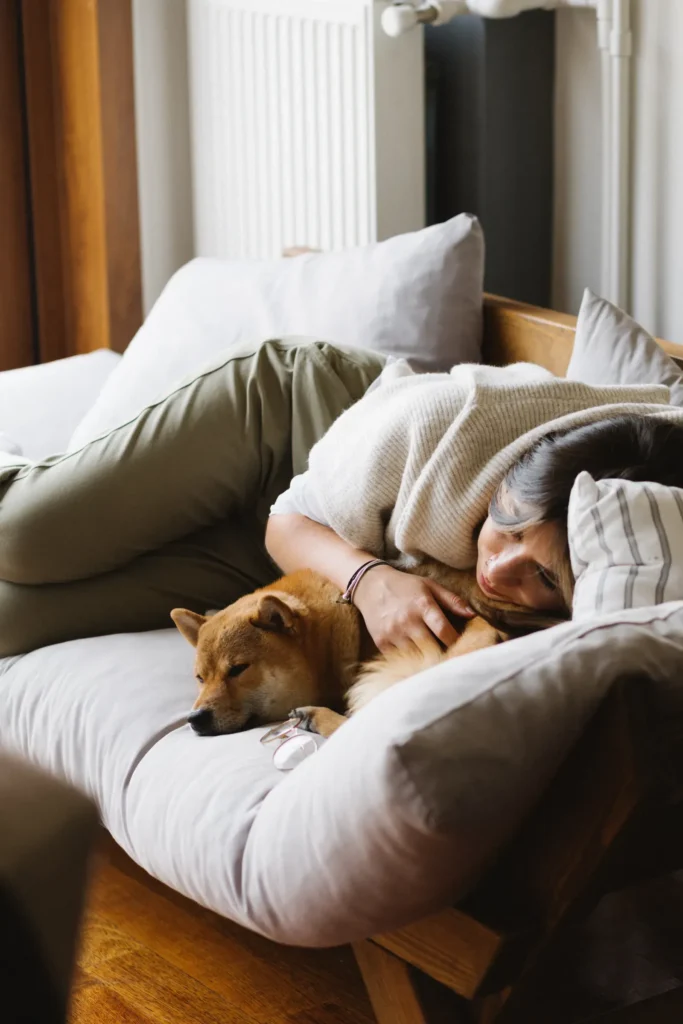
Conclusion
The question of how dogs choose their favorite person turns out to be one of the most beautifully complex questions in the entire world of human-animal relationships — because the answer reveals not just something fascinating about dogs, but something profound about the nature of attachment itself. Dogs don’t choose their favorite person through a transaction of treats and services. They choose based on trust, compatibility, consistency, genuine understanding, and the accumulated weight of a thousand moments where a specific person made them feel safe, loved, and completely themselves.
In short, dogs don’t play favorites to be dramatic. Their preferences reflect a blend of consistency, comfort, and positive reinforcement. If you’re not the favorite, don’t take it personally — it just means there’s room to grow that connection. And if you are the favorite — if your dog’s face lights up specifically for you, if they seek you out across a room, if they bring you their best toy as an offering of their purest affection — then you know something extraordinary. You know that an animal who couldn’t possibly be fooled by social obligation or politeness has looked at all the available options and chosen you. Not because they had to. Because of everything you are to them.
That’s not just a nice feeling. That’s one of the greatest honors in the world.
Frequently Asked Questions
1. Do all dogs have a single favorite person, or do some love everyone equally? Most dogs do show preferences, but the intensity of that single-person attachment varies significantly by breed and individual personality. Breeds developed for close one-on-one working relationships — German Shepherds, Vizslas, Akitas — tend to bond most exclusively. Breeds developed for broad social engagement — Labradors, Golden Retrievers, Beagles — tend to distribute their affection more evenly across multiple household members, though even these breeds usually have a slight preference.
2. Why does my dog prefer my partner even though I do everything for them? This is one of the most common and frustrating experiences in multi-person households — and the answer is almost always about quality of interaction and body language rather than quantity of care. Your partner may naturally use body language that dogs find non-threatening and appealing, or may engage in the specific types of play and physical affection your dog finds most rewarding. Understanding what your dog specifically responds to and adjusting your approach accordingly is the most effective path to improving your ranking.
3. Can my dog’s favorite person be someone who doesn’t live with us? Absolutely. Sometimes their favorite people don’t live in their house. A dog walker, a grandparent who visits regularly, or a neighbor who consistently provides wonderful interactions can all rank extremely highly in a dog’s attachment hierarchy — sometimes above household members who are physically present more often but provide lower-quality interactions.
4. Is it unhealthy for a dog to be too attached to one person? Strong attachments are normal and healthy — but extreme over-attachment can produce separation anxiety, which is genuinely distressing for the dog and challenging for the owner. If your dog cannot be left alone without significant distress, or if they show anxiety symptoms when their favorite person is simply in another room, working with a veterinary behaviorist or certified trainer on separation-tolerance training is advisable.
5. How long does it typically take to become a dog’s favorite person? There’s no fixed timeline — it depends on the dog’s age, history, temperament, and the consistency and quality of your interactions. Puppies during the socialization window can form deep attachments in weeks with consistent positive engagement. Adult rescue dogs may take months of patient, positive relationship-building before strong preferences emerge. The principle that applies universally is that consistent, high-quality, positive engagement accumulates over time into genuine attachment — and there are no shortcuts that replace it.
Leave a Comment