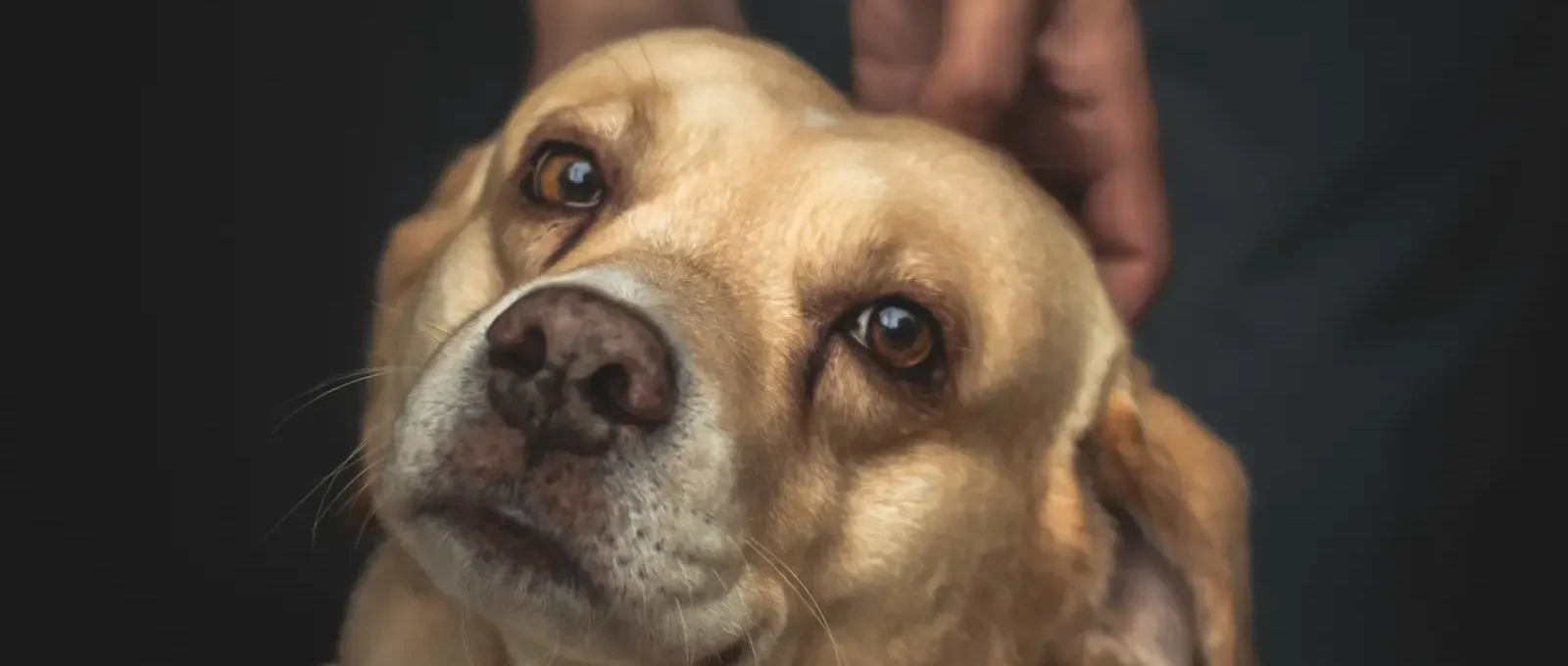

Your Dog Is Talking to You Constantly — Are You Listening?
Right now, at this very moment, your dog is communicating with you. They’re doing it with the angle of their ears, the position of their tail, the tension in their body, the direction of their gaze, and a dozen other subtle signals that most owners absorb unconsciously — or miss entirely. Dogs are extraordinary communicators, running a continuous broadcast of their emotional state, needs, intentions, and responses to their environment. The only question is whether you have the vocabulary to receive what they’re transmitting.
Without the gift of gab, dogs are left to rely on a bark, a tail wag, or sometimes even a snarl to communicate with their two-legged companions. However, as we attempt to connect with our canine friends, understanding the unspoken becomes immensely important in recognizing their wants and needs. This is not a minor communication challenge — it’s the central challenge of the human-dog relationship. Your dog cannot speak your language, and you were not born knowing theirs. But here’s the extraordinary thing about this cross-species communicative gap: it’s entirely closeable. Dogs are remarkably skilled at learning human signals, and humans who invest time in learning canine body language discover that their dog has been speaking eloquently all along — they just needed someone to learn how to listen.

Dogs use a mix of body language, vocalizations, and scents to communicate effectively with humans. Their skills in this area are thought to be a result of domestication and selection processes over time. The depth, sophistication, and intentionality of canine communication consistently surprise people who have only thought of dog communication as “barking” or “tail wagging.” This guide will transform your understanding of what your dog is telling you, every single day, in every interaction you share.
The Science Behind Dog-Human Communication
Before we dive into specific signals and what they mean, it’s worth taking a moment to appreciate the extraordinary scientific story behind why dogs communicate with humans the way they do. This isn’t accidental, and it’s not simply a matter of training or domestication reshaping wild instincts. The ability of dogs to communicate across species lines with humans is the result of one of the most remarkable co-evolutionary relationships in natural history.
How Domestication Shaped Canine Communication
Dogs have lived closely with humans for thousands of years, and their ability to understand us is nothing short of fascinating. Scientists tested hundreds of dogs to find genetic markers linked to communication skills. By analyzing these genes, they discovered connections between genetics and the dogs’ abilities to interpret and respond to human signals. This genetic foundation helps explain how dogs have become so adept at interacting with people. Over approximately 15,000–40,000 years of co-evolution alongside humans, dogs didn’t just learn to tolerate human presence — they evolved specific cognitive and communicative adaptations that make them uniquely suited to reading and responding to human signals. No other species on Earth has developed this level of human-directed communicative sophistication.
Domestication has played a significant role in shaping how dogs communicate. Over thousands of years, dogs have evolved alongside humans, leading to changes in their communication methods. The result is an animal whose communicative repertoire spans three distinct channels simultaneously: visual body language (posture, tail, ears, eyes, facial expression), acoustic signals (barks, whines, growls, howls), and olfactory signals (scent marking, pheromones). Dogs have a vast and flexible repertoire of visual, acoustic, and olfactory signals that allow an expressive and fine-tuned conspecific and dog-human communication.
People Are Listeners, Dogs Are Watchers
Understanding this fundamental difference between human and canine communication styles is the key that unlocks everything else in this guide. Unlike in people, canine body postures and olfactory cues are significant components of dog language, and vocal communications are less significant. People are listeners; dogs are watchers. This means that when you’re trying to communicate something to your dog, your words matter far less than you think — and your body language, posture, tone, and energy matter far more. Conversely, when your dog is communicating with you, the bark is the least informative channel available. Their body — every inch of it — is speaking far more precisely and honestly than any vocalization.
Dog communication involves the use of characteristic body posturing and shows emotional states, but not always specific intent or actions. Communication between dogs and people does not occur through a tangible “language,” so the messages that are shared across species tend to be more general in nature or can be missed or misinterpreted. The practical implication of this insight is simple but transformative: to genuinely understand your dog, you need to shift from primarily listening to primarily watching.
The Tail: Your Dog’s Most Expressive Communication Tool
The tail is the first thing most people look at when they want to read a dog’s emotional state, and with good reason — it’s one of the most visually prominent and continuously active communication structures on your dog’s body. But most people’s understanding of tail communication stops at “wagging = happy” — a simplification so dramatic it routinely leads to serious misreading of dog emotional states and the bite incidents that sometimes follow from those misreadings.
Tail Position: What Height Tells You
High, stiff tails indicate arousal, alertness, or dominance displays. Low tails suggest submission, fear, or uncertainty. Neutral tail positions — roughly level with the back — indicate relaxed, normal emotional states. Think of your dog’s tail as a vertical dial with a full emotional range from maximum submission at the bottom to maximum arousal at the top. When a tail moves from neutral to taut vertical, to a tight arch over the back, it indicates increased arousal. This tail position is an assertive posture that can progress to an intense aggressive display.
A frightened dog may tuck its tail, while an alert or nervous dog will carry its tail high and possibly wag it vigorously. This is the distinction that trips up so many dog owners: a high, fast, vigorous wag can actually accompany aggressive arousal rather than friendliness. The position of the tail provides the emotional context; the speed provides information about intensity. Reading both together gives you a far more accurate read on what your dog is communicating. A tucked tail is a sign of nervousness. Dogs displaying this tail position may also lower their ears or cower.
Tail Wagging Speed and Direction: The Hidden Science
Here is one of the most fascinating and least known facts about dog communication: the direction in which a dog wags their tail carries specific, scientifically documented emotional meaning. Studies show that dogs wag their tails to the right when they are happy or confident, and to the left when they are frightened. This left-right asymmetry in emotional tail wagging reflects the lateralization of the dog’s brain — the right hemisphere (which controls the left side of the body) processes negative emotions, and the left hemisphere (controlling the right side) processes positive ones.
Research has shown that dogs tend to wag their tails to the right when experiencing positive emotions and to the left when feeling negative or uncertain. By paying close attention to these subtle movements, pet owners can gain deeper insights into their dog’s emotional state. Beyond direction, speed tells you about intensity. A wide, fast-moving tail wag usually indicates excitement and happiness. Dogs display this type of wag when they see their favorite humans, are about to receive treats, or are engaging in playtime. This is often accompanied by other friendly body language, such as a relaxed face, wiggling body, and perky ears. It’s a common misconception that tail wagging always means happiness. The truth is more nuanced. Tail speed, direction, and rigidity all offer clues.
Ear Positions: The Mood Barometer on Your Dog’s Head
After the tail, the ears are the most expressive and continuously active communication structure on your dog’s body — and they move with extraordinary speed and precision in response to every change in your dog’s emotional state and environmental attention. Learning to read ear positions fluently gives you real-time access to what your dog is feeling and focusing on at any given moment.
Pinned-back ears usually indicate fear, submission, or stress. Ears that constantly swivel show a dog monitoring their environment for potential threats or changes. Forward-facing, alert ears indicate focused attention and engagement — your dog is interested in something and directing maximum sensory resources toward it. Slightly forward ears paired with a relaxed body and neutral tail indicate a happy, curious dog who is enjoying their environment. If you look carefully, you’ll notice that dogs slightly tip their ears in the direction of the object or person that piqued their curiosity.
The complicating factor with ears is breed variation — dogs with naturally floppy ears (Basset Hounds, Cocker Spaniels, Bloodhounds) can’t communicate with ear position as clearly as dogs with erect ears (German Shepherds, Siberian Huskies, Corgis). For floppy-eared breeds, focus more attention on the base of the ear and the tension in the surrounding facial muscles rather than the ear tip position. Despite this breed limitation, even subtle shifts in floppy ear position — the slight forward lean of engagement, the tight backward press of fear — are usually visible with attentive observation and provide valuable emotional information.

Eye Contact and Facial Expressions: What Your Dog’s Face Is Saying
The eyes may be windows to the human soul, but in dogs, the entire face is a communication canvas — one that conveys emotional information with remarkable precision when you know how to read it. When a dog is relaxed, their ears may be natural and their tail neutral. Conversely, a hard stare or intense eye contact can be a warning signal.
The Soft Eye vs. The Hard Stare
The distinction between a soft eye and a hard stare is one of the most critical skills in reading dog communication, because getting it wrong can put you in physical danger. A soft eye — where your dog’s gaze is relaxed, slightly squinted, with normal-sized pupils and a generally warm, unfocused expression — indicates a comfortable, relaxed emotional state. When your dog gazes at you with soft eyes, often paired with a slow blink or head tilt, they’re communicating contentment and trust. This is the look of a dog who is happy and at ease in your presence.
A hard stare is something fundamentally different — direct, unblinking, fixed eye contact with wide-open eyes, dilated pupils, and the whites of the eye potentially visible (called “whale eye”). Their body language should be read like a complex sentence, not separately. A hard stare, particularly when paired with a stiff body, raised tail, and tense posture, is a serious warning signal that should never be ignored or challenged with direct staring back. Warning signs or threats typically present first. How well these signs can be read by people varies both in the dog’s skill at expressing himself and the humans’ skillful attention to these cues.
The Eyebrow Raise and Facial Softness
Raised eyebrows and a relaxed face usually indicate a calm and happy dog. A wrinkled brow or intense stare can be a sign of worry, confusion, or aggression. Recent research has revealed something remarkable about dog eyebrow movement: dogs specifically raise their inner eyebrow muscle — creating the “puppy dog eyes” expression — when interacting with humans, and this expression triggers a powerful caregiving response in people. Fascinatingly, wolves do not do this, and even dogs raised with minimal human contact do it far less than normally socialized pet dogs. The puppy dog eyes expression appears to be a specifically human-directed communication tool that dogs have evolved — or developed through domestication — to facilitate their relationship with us. Canine communication has recognised structures and intentional behaviours.
Body Posture: Reading the Full Canine Picture
Individual signals — tail, ears, eyes — are valuable, but they become truly meaningful only when read in the context of your dog’s overall body posture. The whole-body picture is where professional animal behaviorists spend the most time, because it’s the integration of all simultaneous signals that provides the most accurate reading of a dog’s emotional state and communicative intent.
The Play Bow: An Unmistakable Invitation
If there’s one piece of dog body language that is nearly impossible to misread, it’s the play bow — that joyful, unmistakable posture where a dog drops their front end to the ground with chest touching or near the floor, hindquarters raised high, tail wagging enthusiastically, mouth open and relaxed, and eyes bright with invitation. Dogs exhibit pawing, sniffing, licking, running, barking, play-fighting, mounting, object-play, chasing, wrestling, and play-jumping as part of their communicative repertoire, but the play bow stands apart in its clarity and universality. It means exactly one thing: I want to play with you right now, and I’m happy. This is an honest, exuberant communication that requires absolutely no experience to interpret — and responding to it with play is one of the best investments you can make in your bond with your dog.
Whale Eye, Lip Licking, and Calming Signals
Beyond the more dramatic expressions of emotion, dogs constantly communicate through subtle signals that many owners miss entirely — what behaviorists call “calming signals” or “stress signals.” Rapid breathing when not hot or after exercise can indicate stress or excitement. Flared nostrils might indicate high arousal or intense focus on scents. Lip licking — a quick flick of the tongue over the lip when there’s no food present — is a stress signal and a calming gesture. Yawning without apparent tiredness is another. Turning the head or body away, sudden sniffing of the ground, and slow blinking are all communication signals that your dog is feeling some degree of social or environmental pressure and is attempting to manage it through displacement behavior.
If the situation allows, dog body language is communicated on a graduated scale. Benign, subtle postures usually come before more aggressive, bold communications, but an individual dog may skip subtle signals or progress through graduated signals extremely rapidly, depending on his perception of the situation and past experiences. Recognizing these early, subtle signals allows you to intervene — removing your dog from a stressful situation, giving them space, or modifying the interaction — before the signals escalate to more dramatic expressions of discomfort.
Vocalizations: The Many Languages of the Bark
While dogs are fundamentally visual communicators rather than acoustic ones, vocalizations provide an additional channel of emotional and intentional expression that complements body language beautifully. The key to reading vocalizations accurately is to always interpret them in the context of the simultaneous body language — a bark is never just a bark.
Barking and What Different Barks Mean
Understanding how dogs communicate can help owners recognize their pet’s emotions and needs. Dogs bark in meaningfully different ways depending on what they’re communicating, and attentive owners can learn to distinguish these with practice. A rapid, mid-pitched repetitive bark typically signals alerting — your dog is telling you something has changed in their environment and they want you to know about it. A high-pitched, excited bark accompanying a play bow or enthusiastic greeting is pure joyful vocalization — your dog is so pleased to see you or so excited about play that the body language alone isn’t sufficient outlet for their emotional state. Play barking — high-pitched yips — keep things energetic but not aggressive. A single sharp bark is often a startle response. A low, sustained bark is worth taking seriously as a warning.
Whining, Growling, and Howling
Whining is typically a vulnerability signal — your dog is communicating need, discomfort, excitement, or frustration, depending on context. A dog who whines at the door needs to go outside. A dog who whines when left alone is expressing separation distress. A dog who whines during greeting is so pleased to see you that they can barely contain themselves. Growling is a communication that most owners instinctively and understandably find concerning — but it’s essential to understand that growling is important, honest communication that should never be punished. A growling dog is telling you that something is wrong and they’re reaching the limit of their comfort. Punishing the growl suppresses the warning signal without addressing the underlying discomfort — and a dog that has learned not to growl may bite without warning.
Howling is one of the most ancestrally rooted vocalizations dogs produce — it’s the long-distance communication call that wolves use to locate pack members across large distances, and domesticated dogs retain it in various forms. Dogs howl in response to sirens, music at certain frequencies, or when they hear other dogs howling. Some breeds (particularly hounds and Nordic breeds) are much more naturally inclined to howl than others. Howling in your absence is often an expression of separation distress — your dog is calling for their pack.

Touch and Physical Communication: What Your Dog Feels
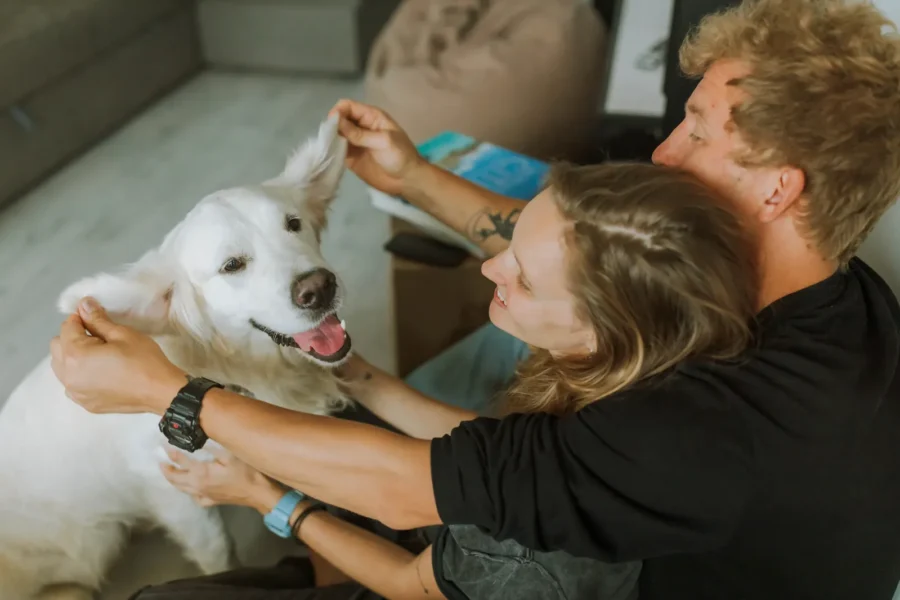
Dogs communicate not just through the signals they send visually and acoustically, but through physical contact — both seeking it and initiating it in specific ways that convey emotional meaning. Affectionate behaviours include licking someone’s hands or face, leaning against their owner, and cuddling with them — all signs of affection and a secure dog-human bond. When your dog leans their full body weight against your legs, they’re communicating closeness and trust — a request for physical proximity and the reassurance it provides. When they rest their head on your lap, they’re expressing contentment and choosing you as the most comfortable, safest resting place available to them.
Pawing — placing a paw on your leg or arm — is one of the most versatile physical communication gestures dogs use with humans, carrying different meanings depending on context and the simultaneous body language. A gentle paw placed on your arm during a petting session often means “please don’t stop.” A paw placed on your leg while you’re sitting and ignoring your dog typically means “pay attention to me.” During play, pawing is an invitation to continue. Dogs exhibit pawing as part of their intentional communicative behaviours. Bumping you with their nose — a nose nudge — carries similar communicative versatility, typically meaning “I want something from you” or “I’m here and I want your attention.”
Scent and Olfactory Communication
Of the three channels through which dogs communicate — visual, acoustic, and olfactory — scent is the one humans are most poorly equipped to receive, which is why it’s the most underappreciated dimension of canine communication in the dog-owner relationship. There are relatively few studies about the role of olfaction in dogs’ communication with both conspecifics and humans, despite its importance. Dogs possess approximately 300 million olfactory receptors compared to humans’ approximately 6 million — making their world of scent information so rich and detailed that it’s almost impossible for humans to conceptually grasp its complexity.
When your dog sniffs your hands, clothes, or face on greeting, they’re reading an extraordinarily detailed olfactory biography of where you’ve been, who you’ve been with, what you’ve eaten, and potentially even what emotional state you’re in. Dogs can detect subtle changes in human biochemistry associated with fear, stress, illness, and even specific diseases — capabilities that are being formalized into medical detection training programs for conditions like diabetes, cancer, and epilepsy. When your dog marks territory with urine or rubs their face against objects, they’re leaving scent communications for other dogs. When they roll in something smelly, they may be carrying scent information back to their social group — an ancient behavior that domesticated dogs retain despite its considerable inconvenience to their human families.
10 Specific Ways Dogs Communicate With Their Owners Every Day
Here are 10 concrete, specific ways your dog is communicating with you in your daily shared life — behaviours you’ve certainly seen but may not have fully understood:
1. Bringing you their toys. When your dog drops a toy at your feet or brings you their favorite possession, they’re not just asking to play. They’re offering you something valuable — a gift that communicates trust and affection as well as an invitation to interact.
2. The head tilt. That irresistibly adorable head tilt your dog does when you’re speaking — tilting their head to one side — is your dog actively trying to hear you better and process what you’re saying. Their ear position shifts to optimize sound collection, and they’re genuinely engaged in trying to understand you.
3. Making eye contact during walks. Dogs who regularly check in with eye contact during walks aren’t being distracted — they’re maintaining connection. This behavior, sometimes called “checking in,” is a communication of partnership and trust that says, “I’m aware of you and we’re doing this together.”
4. The “zoomies.” Those explosive bursts of running in circles or figure-eights your dog occasionally engages in (formally known as Frenetic Random Activity Periods or FRAPs) are a form of emotional release and pure joy communication — your dog is so happy they literally can’t contain it.
5. Sitting on your feet. Leaning against their owners and cuddling with them are all signs of affection and a secure dog-human bond. Sitting directly on your feet takes this a step further — your dog wants maximum physical contact and is simultaneously claiming you as theirs.
6. Yawning when you yawn. Research has shown that dogs yawn contagiously in response to human yawns — a behavior that indicates empathy and emotional attunement. If your dog yawns when you yawn, they’re demonstrating a sophisticated social mirroring behavior.
7. The guilty look. The “guilty face” your dog makes when they’ve done something wrong — lowered head, ears back, soft eyes, possibly exposing belly — is actually a submission and appeasement signal in response to your body language, not a genuine expression of guilt. Your dog is reading that you’re displeased and responding with social softening signals.
8. Sniffing everything on walks. Your dog’s insistence on stopping to sniff every fire hydrant, lamppost, and patch of grass is information-gathering behavior — reading the scent newspapers left by other dogs in the neighborhood. It’s communication by reception rather than transmission.
9. The pre-walk excitement dance. When you reach for the leash and your dog erupts into spinning, barking, leaping excitement — that is unambiguous anticipatory joy communication. Your dog has learned the association between the leash and one of their favorite activities, and they’re communicating that anticipation with every cell of their body.
10. Sleeping touching you. A dog that responds well to given signals and is receptive to training shows a happy willingness to cooperate and please their owner. A dog who actively seeks physical contact during sleep — pressing against you, resting their head on you — is communicating trust, bonding, and the deepest comfort they know.
Misread Signals: Common Communication Mistakes Owners Make
Despite the best intentions, most dog owners routinely misread certain common canine signals in ways that create confusion, stress, and sometimes safety issues. Understanding these specific misreadings is as important as learning what signals mean correctly.
The “guilty look” misread is probably the most universal. Research has conclusively shown that the “guilty face” dogs display when owners return home to find destruction or accidents is not an expression of guilt at wrongdoing — it’s an appeasement response to the owner’s body language. Dogs display the same “guilty face” whether or not they were responsible for the thing their owner is reacting to. Communication between dogs and people does not occur through a tangible language, so the messages that are shared across species tend to be more general in nature or can be missed or misinterpreted.
The wagging tail = happy dog misread creates genuine safety issues. As we’ve detailed, tail wagging is a communication of arousal and intent to interact — not necessarily of friendly intent. A wagging tail doesn’t always mean a happy dog! To truly understand your dog’s message, look at their whole body and the context. The growling = bad dog misread leads to suppression of an important honest warning signal. Dogs who have been punished for growling become dogs who bite without warning — a far more dangerous outcome. And the belly display = request for belly rubs misread: not every dog who rolls onto their back and exposes their belly is requesting a belly rub. Many dogs display belly submission in response to perceived threat or overwhelming social pressure — reaching in for a belly rub in those cases can trigger a defensive bite.
How to Communicate Better With Your Dog
Understanding how your dog communicates with you is only half the equation — improving the two-way quality of your inter-species communication requires applying that knowledge to how you signal to your dog as well. Observe: Pay attention to your dog’s body language and sounds. Respond Appropriately: Acknowledge their signals and provide comfort or space as needed. Consistent Training: Use positive reinforcement to encourage desired behaviors.
Be consistent with your own body language. Since dogs are watchers rather than listeners, your posture, movement, and energy communicate far more to your dog than your words do. Tense, anxious, or unpredictable body language creates uncertainty and stress in dogs who are constantly reading your physical signals. Calm, consistent, deliberate movement and posture communicate safety and trustworthiness. Make eye contact intentionally. This technology has revealed that dogs pay close attention to human faces and can follow eye movements, further confirming their ability to understand us. Soft, warm eye contact with your dog — not a hard stare — releases oxytocin in both you and your dog, literally bonding you chemically through the act of mutual gaze. Respond to their signals. When your dog communicates stress through calming signals, respond by reducing the stressor rather than pushing through. When they communicate joy with a play bow, play. When they communicate need through pawing or whining, address the need. Consistent, appropriate responses to your dog’s communications build the trust and reliability that forms the foundation of a deep bond.
Quick Reference: Dog Communication Signals at a Glance
| Signal | What It Means | Context to Consider |
|---|---|---|
| Tail high and stiff | Arousal, alertness, potential aggression | Watch full body posture |
| Tail neutral and loose | Relaxed and content | Positive baseline state |
| Tail low or tucked | Fear, submission, anxiety | Reduce stressors |
| Tail wagging right | Positive emotions, happiness | Direction indicates valence |
| Tail wagging left | Negative emotions, uncertainty | Context and body language crucial |
| Ears forward | Alert, engaged, curious | Attention directed at stimulus |
| Ears flat back | Fear, submission, stress | Needs space or reassurance |
| Soft eyes | Relaxed, comfortable | Positive emotional state |
| Hard stare | Arousal, warning, potential aggression | Do not challenge; give space |
| Whale eye | Stress, discomfort, conflict | Back off; reduce pressure |
| Play bow | Invitation to play | Pure positive communication |
| Lip licking (no food) | Stress signal, calming gesture | Note context and triggers |
| Yawning (not tired) | Stress, calming signal | Monitor for further escalation |
| Body leaning | Affection, seeking closeness | Trust and bonding behavior |
| Growling | Warning — discomfort or threat | Never punish; address cause |
| High-pitched bark | Excitement, play | Positive vocalization |
| Low sustained bark | Warning, alerting | Investigate stimulus |
| Nose nudge | Attention seeking, wanting something | Respond appropriately |
| Play zoomies | Joy, emotional release | Positive emotional overflow |
Conclusion
Your dog has been speaking to you every single day since they entered your life — through the angle of their tail, the position of their ears, the expression in their eyes, the tension in their body, the quality of their bark, and a hundred other signals that constitute a rich, sophisticated, and entirely learnable language. The investment you make in learning that language pays dividends that compound continuously: fewer misunderstandings, earlier recognition of stress signals before they escalate, deeper responsiveness to your dog’s needs, and the profound mutual trust that develops between two beings who genuinely understand each other.
For family members who want to understand their dog’s behavior, recognition of these body signals can serve as a useful tool for interpreting dog language. But it’s more than a useful tool — it’s the foundation of a genuinely reciprocal relationship. Your dog already understands an impressive amount of what you’re communicating through your body language, your tone, and your consistency. Now you have the knowledge to meet them halfway — to watch as carefully as they watch you, to respond as attentively as they respond to you, and to build a bond grounded in genuine mutual understanding rather than guesswork and projection. Start today, with whatever signal your dog is showing you right now. They’ve been waiting for you to learn their language.
Frequently Asked Questions (FAQs)
1. Why does my dog tilt their head when I talk to them? The head tilt is one of the most endearing and genuinely communicative behaviors dogs display toward humans. When your dog tilts their head during speech, they’re actively trying to optimize their hearing — repositioning their ear canals to better capture the sounds you’re making — and genuinely working to process and understand what you’re saying. Research suggests that head tilts are more common in dogs who have learned to associate specific words with specific objects or actions, indicating active semantic processing rather than simple sound detection.
2. Does my dog actually understand what I’m saying? Dogs understand considerably more than most owners expect — but in different ways than human-to-human language comprehension. Research has shown that dogs can learn hundreds of individual words, particularly nouns associated with specific objects or actions. They also process the emotional content of human speech with surprising sophistication, distinguishing between praise and neutral tones even in unfamiliar languages. However, dogs extract most of their understanding from your tone, body language, and consistent associations between specific words and outcomes rather than comprehending the grammatical or semantic structure of speech.
3. What does it mean when my dog brings me their toy? Bringing you a toy is one of the most charming and multifaceted communications in the canine repertoire. It can mean “I want to play” (the most common interpretation), “I’m so excited to see you that I need to carry something in my mouth” (often seen during greetings), or “I’m offering you something valuable as a gift” — a genuine expression of affection rooted in the social behavior of bringing resources to valued group members. Context and the simultaneous body language will tell you which interpretation applies in any specific moment.
4. Is it bad if my dog growls at me? A dog growling at you is not a sign of a bad dog or a failed relationship — it’s an honest, important warning communication that something in the interaction is causing your dog discomfort. The appropriate response is to identify and address the source of discomfort, not to punish the growl. Punishing growling teaches your dog that warning vocalizations lead to punishment, which suppresses the growl without eliminating the discomfort — resulting in a dog who bites without warning. If your dog growls regularly during specific interactions, consult a certified professional dog trainer or veterinary behaviorist to identify and address the underlying issue.
5. How can I tell if my dog is happy? A genuinely happy dog displays a characteristic cluster of signals: a loose, wiggly body without tension or stiffness; a tail wagging at a moderate height with wide, relaxed sweeps; soft, relaxed eyes with a relaxed, open mouth; ears in a natural, relaxed position rather than pressed back or standing rigidly forward; and a general willingness to engage with you and their environment. A happy dog approaches interactions with loose, bouncy movement rather than stiff, cautious movement. They eat well, sleep normally, engage enthusiastically with play, and show consistent interest in their environment and in you. The presence of all these signals together — not any single one — is the reliable indicator of genuine canine contentment.


2 Comments