
Your Sleeping Dog Is Telling You Something — Are You Paying Attention?
There’s something undeniably captivating about watching a dog sleep. Whether they’re curled into a neat little ball on their bed, stretched across the entire sofa like they own the place, or sprawled upside down with all four paws in the air, dogs manage to make even their most unconscious moments into something simultaneously adorable and intriguing. But here’s what most dog owners don’t realize: those sleeping positions are not random. Every pose your dog chooses carries genuine information about how they feel, how much they trust their environment, and sometimes — crucially — how their body is doing physically.
Dogs have limited ways to communicate feelings but often use body language. Sleeping positions are one form of body language dogs tend to use subconsciously. Because each position tells a story, it’s crucial you pay attention if your pet has a sudden change in consistent sleeping positions. Recognizing changes in how dogs sleep could be the first indication that a dog feels stressed or there’s been an environmental change that’s upsetting it. This insight transforms the way you look at your dog’s sleep — from passive observation of something cute into active reading of ongoing communication. These dog sleeping positions aren’t random. They often reflect your dog’s comfort level, personality, emotional state, and even overall health. Understanding what these positions mean can help you become more attuned to your dog’s behaviour and needs.
Think of your dog’s preferred sleeping position as a daily health and happiness update — delivered wordlessly, completely honestly, and repeated multiple times every single day. The more fluent you become in reading these positions, the better equipped you are to respond to your dog’s needs, catch early signs of discomfort or stress, and appreciate just how deeply their body language reflects their inner life. This comprehensive guide gives you everything you need to become truly fluent in the language of dog sleep.
The Science of Dog Sleep: How Your Dog’s Sleep Actually Works
Before we decode the positions themselves, understanding the basic science of how dogs sleep dramatically enriches everything else in this guide. Dog sleep is not simply a smaller, furrier version of human sleep — it has its own architecture, its own cycles, and its own fascinating characteristics that explain many of the sleeping behaviors and positions you observe in your dog every day.
The Dog Sleep Cycle: NREM and REM Explained
A dog’s sleep cycle is composed of two main primary stages: non-REM (NREM) and REM (Rapid Eye Movement). Dogs usually cycle through both of these several times each night — in shorter, more frequent bursts. During NREM, a dog’s body temperature, breathing, and heart rate decrease greatly. This stage is crucial for physical restoration and recovery. In NREM, the body repairs tissues, strengthens the immune system, and builds bone and muscle. This makes it especially vital for growing puppies. Physically, a dog in NREM sleep will appear calm and relaxed, with minimal movement.
A single sleep cycle usually lasts around 20 minutes in dogs, most of which is spent in the drowsy and slow-wave sleep stages. But for about six of those 20 minutes, your dog will be in REM sleep, when most dreaming occurs. This is significantly shorter than human sleep cycles, which typically run 90 minutes. The practical implication of this shorter cycle is that dogs are much more easily roused from sleep than humans — their sleep is naturally lighter, more interruptible, and more responsive to environmental changes. Dogs naturally sleep more than humans because their sleep architecture allocates only 10–12% of sleep time to REM — the most restorative stage — compared to 20–25% in humans. This means dogs need more total sleep to achieve adequate deep rest.
How Much Do Dogs Sleep?
Dogs sleep between 12 and 14 hours every day — roughly twice as much as most humans. But this figure varies considerably across life stages and individual circumstances. Puppies often snooze for 18 to 20 hours a day. This extensive rest is crucial for their rapid physical growth and significant mental development. Senior dogs similarly trend toward the higher end of the sleep spectrum, with some older dogs sleeping 16–18 hours daily. Large breeds generally sleep more than small breeds, and working or highly active dogs need more recovery sleep than sedentary indoor companions. Unlike humans, dogs don’t sleep for long uninterrupted stretches. Instead, they nap frequently throughout the day and night, cycling through light and deep sleep. This polyphasic — multiple nap — pattern is completely natural and healthy, even if it sometimes seems like your dog is always asleep.
Do Dogs Dream? The Fascinating Science
Because the pattern of electrical activity that occurs during REM sleep in people is also seen during REM sleep in dogs, it’s a pretty good bet that dogs have dreams during REM sleep — just like we do. The scientific evidence for canine dreaming is compelling and consistent across multiple research streams. Research from MIT confirmed that dogs replay daytime experiences during REM sleep, similar to humans. Twitching paws, soft barking, and rapid eye movement are all signs of active dreaming.
A toy poodle may dream every 10 minutes, while a Labrador Retriever may only dream once every 60–90 minutes. However, the poodle’s dreams may last only a minute, while the Labrador’s dreams may be 5–10 minutes long. What do dogs dream about? Researchers believe dogs dream about chasing rabbits and squirrels and playing fetch with their owners. Because dogs are so bonded to their humans, it’s highly likely they dream about the people they love. The twitching paws, soft whimpers, and gentle tail wags you see during your dog’s REM sleep are the physical expressions of a brain actively processing and replaying the experiences of their day. About 6% of dog bites occur while waking a dog from REM sleep, so it’s best to let your dog wake up on their own. This is perhaps the most practically important piece of sleep science for dog owners — never wake a dreaming dog abruptly, and teach children the same rule.
10 Dog Sleeping Positions and What They Reveal
1. The Side Sleeper — The Contentment Classic
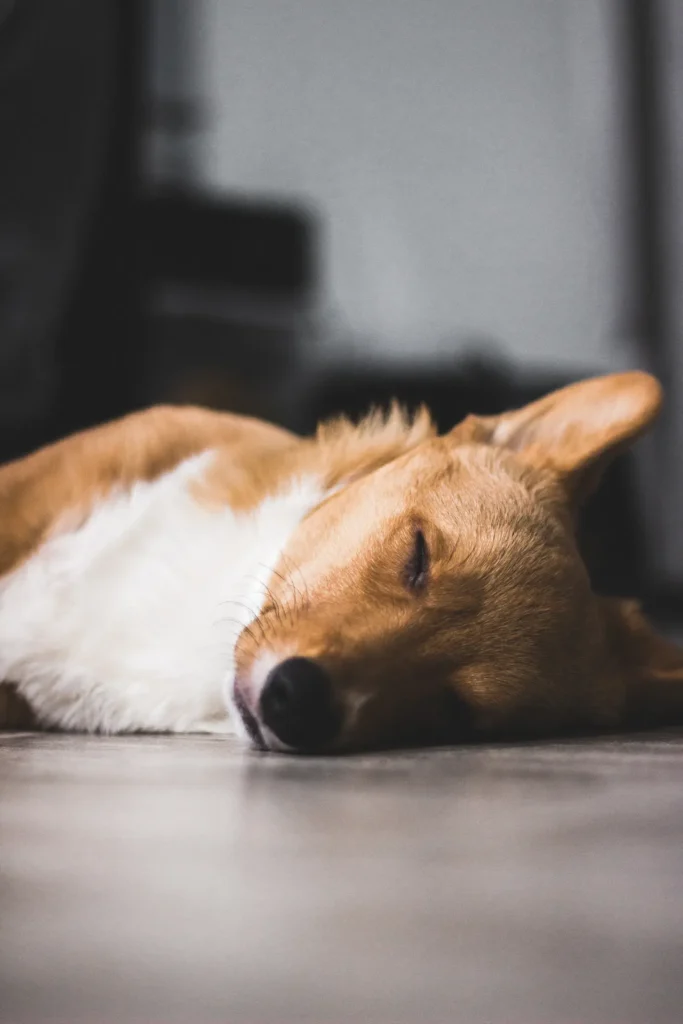
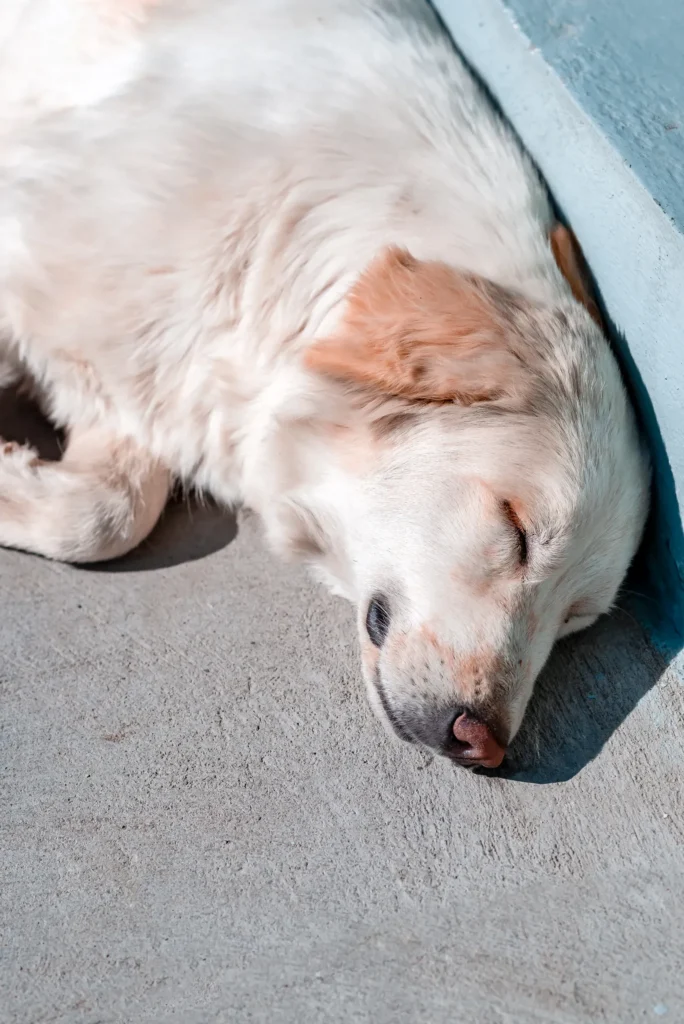
The side sleeper is the sleeping position that most eloquently communicates your dog’s emotional state — and what it communicates is overwhelmingly positive. This is the most common posture that doggies adopt when they sleep: on their side, legs extended. This is a comfortable, relaxed, and happy doggo! They’re clearly very trusting of their surroundings. Think about what the side sleeping position actually requires from your dog: they’re exposing their belly and vital organs completely, their legs are extended with no ability to spring quickly to their feet, and their entire muscular system is fully relaxed. This is only possible for an animal that feels entirely safe.
This dog sleep position also indicates a deeper stage of sleep, and you may even catch your pooch dreaming in this dog sleeping position. The side sleeper is the position most associated with REM sleep and active dreaming — those twitching paws, paddling legs, and soft dream-barks are most commonly observed in dogs sleeping on their side, because this is the posture that allows the deepest muscular relaxation and the most unguarded sleep state. Dogs sleeping on their side or belly-up often dream — paw movements, tail flicks, soft barks are all indicators of active REM activity. If your dog regularly sleeps on their side, congratulations — you have a dog who feels genuinely secure, happy, and completely at home in their environment.
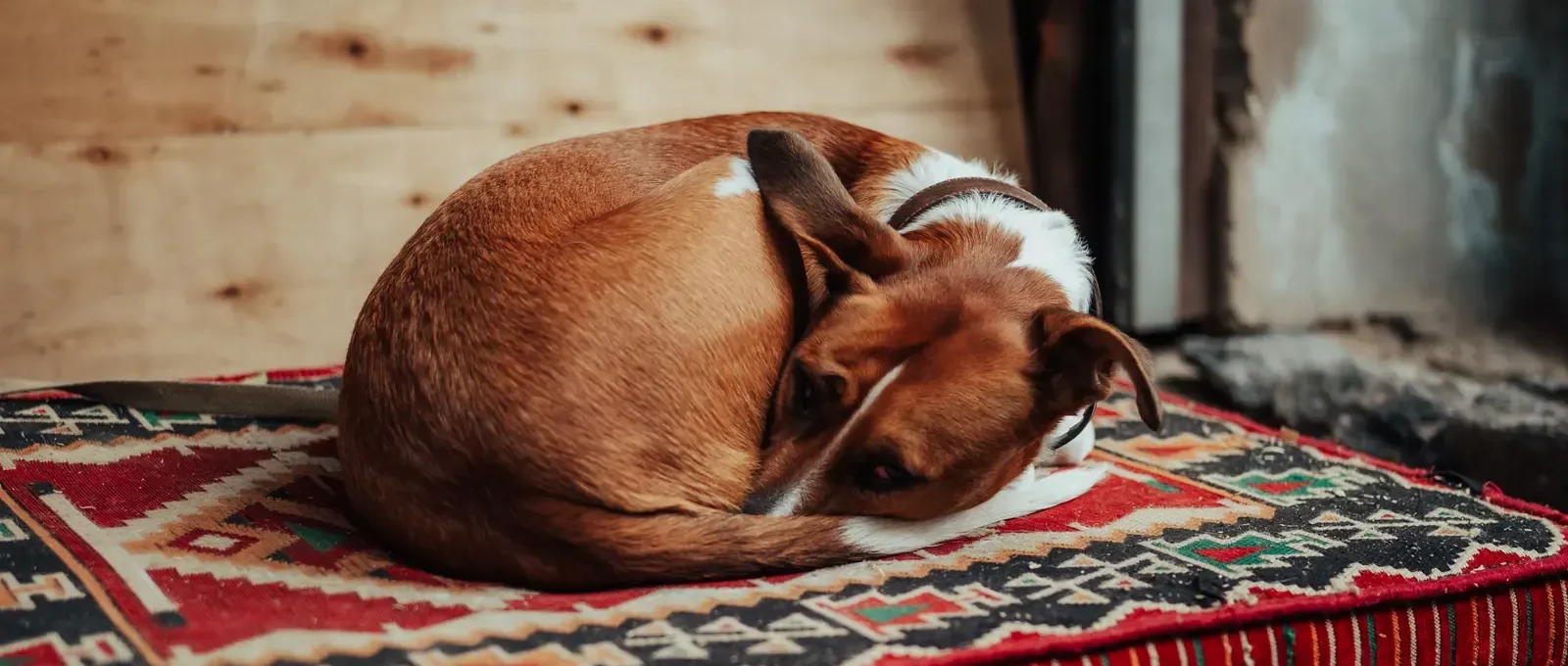
2. The Donut or Curled Ball — The Warmth-Seeker
The donut position — where your dog curls their body into a tight circle, nose tucked toward tail, all four limbs folded close to their body — is one of the most ancient and instinctually deep sleeping positions in the canine behavioral repertoire. This position may indicate they are cold or feeling insecure. It serves two simultaneous biological functions: heat conservation and organ protection. By curling tightly, a dog minimizes the body surface area exposed to the environment — dramatically reducing heat loss in cold temperatures. Simultaneously, the curled position draws the legs and belly inward, providing a degree of natural protection to the most vulnerable anatomical regions.
A relaxed, belly-up position may indicate complete trust, while a curled-up posture might suggest a need for security. This doesn’t mean a dog who curls up is necessarily anxious or distressed — many dogs simply prefer this position as their default comfort pose regardless of temperature or emotional state. The important distinction is between a relaxed donut (soft muscles, loose curling, peaceful facial expression) and a tight, tense donut (stiff curling, slightly raised head, alert ears) — the latter more clearly signals that your dog is feeling some degree of discomfort, anxiety, or cold. Cold weather: Curling conserves warmth. On cold nights, even the most confident dogs who typically sprawl out may curl up — a straightforward thermoregulation response rather than an emotional signal.
3. The Superman or Belly Sploot — The Energy Recharger
The Superman position — where your dog lies flat on their stomach with all four legs stretched out, front legs extended forward and back legs splayed behind, looking remarkably like a dog mid-flight — is one of the most energetic and personality-revealing of all dog sleeping positions. Superman shows energy and readiness to play. This position is disproportionately common in puppies and younger, high-energy dogs who can’t quite bring themselves to fully commit to unconsciousness even when they need rest — they want to be ready to spring back into action at a moment’s notice.
The Superman pose is actually a light sleep position rather than a deep sleep one. Dogs in this position are typically in the early drowsy stages of sleep rather than deep NREM or REM, which is why they can go from Superman sprawl to full alert play mode in approximately zero seconds flat. Heat: Belly-up or sprawled-out helps cool. The belly sploot also serves a thermoregulatory function — the belly skin has relatively sparse fur compared to the rest of the body, and pressing it against a cool floor surface efficiently draws heat away from the body core on warm days. If you notice your dog regularly sleeping in the Superman position on your tile or hardwood floors during summer, they’re probably doing their own temperature regulation quite effectively.
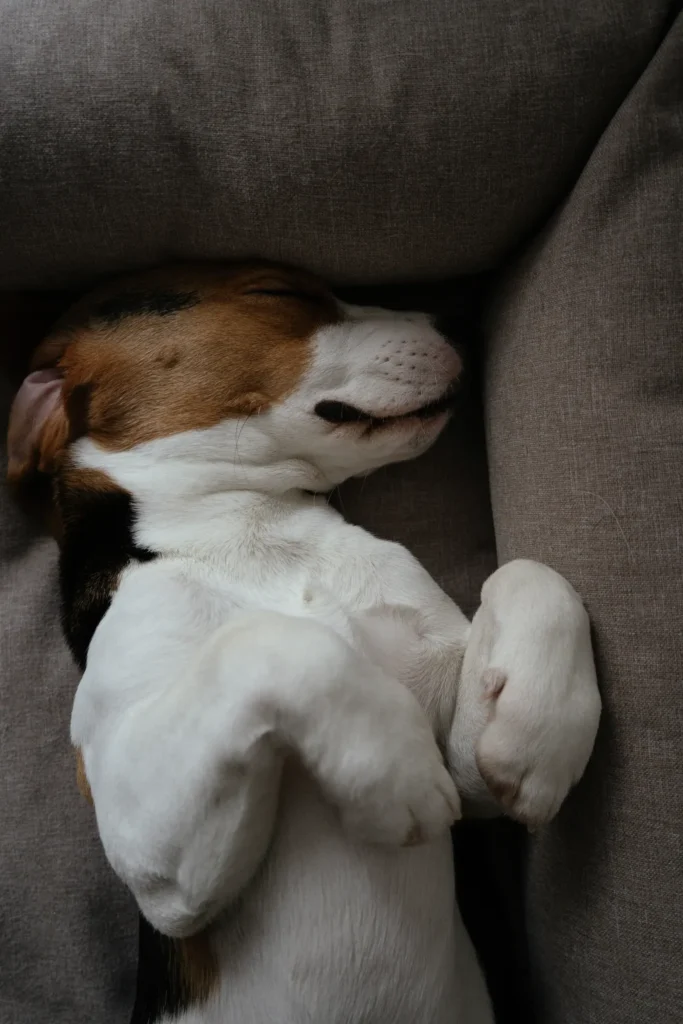
4. The Belly Up — The Ultimate Trust Position
If the side sleeper is the contentment classic, the belly-up position is the ultimate vulnerability statement — a posture that communicates total, absolute trust in the safety of the dog’s environment and the people within it. Dogs who sleep on their back can often signify that they feel very secure and content in their surroundings. This position also allows for maximum relaxation and can help them cool down, as the belly is exposed.
The belly-up position requires your dog to do something that every animal instinct they possess argues against: expose the softest, most vulnerable, least protected part of their body to the open environment while simultaneously placing themselves in a position from which they cannot rapidly defend themselves or escape. Only an animal that has achieved a profound sense of safety and security will consistently adopt this position. A relaxed, belly-up position may indicate complete trust. When your dog rolls onto their back and sleeps belly-up in your home, they’re giving you a compliment that goes deeper than words: you have created an environment so safe, so trustworthy, and so comforting that their deepest evolutionary instincts for self-protection are completely quiet. Heat: Belly-up or sprawled-out helps cool. Like the Superman, the belly-up position also provides efficient heat dissipation on warm days — the exposed belly skin releases body heat effectively.
5. The Lion’s Pose — The Alert Rester
The Lion’s Pose — where your dog lies with their front paws stretched forward and their head resting on or near their paws, resembling the classic lion statue position — occupies a fascinating middle ground between alertness and rest. The lion pose can signal alertness, anxiety, or a need for warmth. This is the sleeping position of a dog who hasn’t fully committed to unconsciousness — they’re resting their body and closing their eyes, but they’re maintaining a posture from which they can be immediately responsive to anything that requires their attention.
Lion’s pose indicates a dog is resting but remains alert. Dogs who favor this position tend to be naturally watchful, protective personalities — dogs who take their monitoring responsibilities seriously and want to be immediately available should something require their attention. It’s commonly seen in dogs who have a strong guarding instinct or who are the self-appointed sentinels of their household. It’s also commonly the position dogs adopt in new environments or during periods of mild uncertainty — not anxious enough to be truly distressed, but not relaxed enough to fully let go. If your dog typically sleeps in open, relaxed positions at home but switches to the Lion’s Pose at a friend’s house or in a new location, they’re simply maintaining appropriate vigilance while they process the unfamiliar environment.
6. The Back-to-Back Snuggler — The Bond Builder
The back-to-back position — where your dog sleeps pressed against you, another dog, or any trusted companion with their back making contact — is one of the most socially meaningful sleeping positions in the canine repertoire. This “Back-to-Back” or “Snuggled Up” position means that your dog shares a deep connecting and trusting level with whomever they are snuggling up to. It’s also a protective stance, allowing both dogs (or a dog and person) to cover each other’s backs — literally.
Back-to-back sleeping is rooted in pack behavior — in the wild, dogs and wolves sleep in physical contact with pack members for warmth, mutual protection, and the social bonding that physical proximity facilitates. This at times arises from anxiety or even reassurance-seeking behavior, especially when animals are placed in a new or stressful environment. They find physical closeness to their pack member reassuring and sometimes safer. When your dog sleeps back-to-back with you, they’re placing you firmly within their innermost circle of trust — the trusted pack members worth literally sleeping with their back turned to. It’s one of the most genuine expressions of social bonding available to your dog, and experiencing it is one of the quiet joys of living with a deeply bonded dog.
7. The Burrower — The Security Seeker
The burrower — that dog who disappears under blankets, burrows into piles of laundry, or wedges themselves into the narrowest possible gaps between sofa cushions — is engaging in behavior that is simultaneously adorable, deeply instinctual, and informationally rich. Dogs that dig into their mattresses, burrow under blankets, or snuggle into piles of clothing are exhibiting behavior that is professionally identified as “burrowing.” In the wild, small canids and foxes create underground dens that provide insulation from temperature extremes and protection from predators — the enclosed, dark, surrounded feeling of a burrow activates a deep sense of security.
Burrowing — head buried under blankets — represents seeking extra comfort and security. Dogs who burrow frequently tend to be dogs who benefit from that sense of being enclosed and surrounded — it reduces their environmental awareness in a way that promotes deeper, more restful sleep. This behavior is particularly common in certain breeds — Dachshunds, Terriers, and Nordic breeds have strong natural burrowing instincts — and in dogs who are anxious, cold, or simply prefer the sensory experience of sleeping surrounded and cocooned. Providing a cave-style dog bed or a blanket specifically designated for your burrower supports this natural behavior and promotes better sleep quality for dogs with this preference.
8. The Head Resting on Paws — The Gentle Watchman
The head-on-paws position — where your dog rests their chin on their front paws while lying down, eyes soft but slightly open — is the quintessential relaxed watchfulness pose. Your dog is comfortable enough to lie down and rest their head, signaling relaxation and ease, but keeping their eyes partially open indicates they’re maintaining some degree of environmental awareness. This is the dog equivalent of the Sunday afternoon drowse — comfortable, peaceful, and content, but not fully disconnected from the world around them.
This position is often accompanied by a soft, gentle gaze directed toward their favorite person — and when it is, it’s one of the most heartwarming expressions of canine affection you’ll witness. Research has shown that mutual gaze between dogs and their owners releases oxytocin — the bonding hormone — in both species. When your dog rests their head on their paws and looks at you with soft, half-closed eyes, they’re engaging in a quiet but genuinely meaningful bonding behavior. The position communicates security, contentment, and a gentle desire to remain connected with you even during their rest time.
9. The Passed-Out Sprawl — The Exhausted Explorer
Every dog owner knows the Passed-Out Sprawl — that glorious, chaotic pose where your dog has apparently stopped caring about any specific position and simply collapsed wherever they were when exhaustion finally caught up with them. Legs at random angles, body splayed with magnificent disregard for conventional geometry, sometimes mouth slightly open, often snoring. From the relaxed side sleeper to the tightly curled donut, each pose tells a subtle story about how your pet feels, physically and emotionally.
The Passed-Out Sprawl is the sleeping position of a well-exercised, stimulated, genuinely tired dog — and it’s one of the healthiest and most positive positions to observe. It means your dog has expended enough physical and mental energy during their waking hours that their body is demanding maximum rest with minimal concern for positioning. The complete muscular disorganization of this pose is possible only in a dog that feels completely safe and has absolutely nothing left to prove or protect. If your dog regularly sprawls out after exercise or enrichment activities, you’re doing an excellent job of meeting their physical and mental activity needs.
10. Sleeping on You — The Ultimate Compliment
When your dog chooses your body as their sleeping surface — draping themselves across your legs, resting their head on your chest, or tucking themselves into the curve of your body — they are communicating something profoundly personal and specific. Sleeping on you: Deep bonding behavior — your pup trusts and loves your company. Also provides warmth and comfort. You are not simply the most convenient warm surface available. You are the most trusted, most comforting, most beloved presence in your dog’s world — the pack member they want maximum physical proximity to during their most vulnerable state.
Because dogs are so bonded to their humans, it’s highly likely they dream about the people they love. When your dog sleeps on you and you watch their paws twitch gently in the depths of REM sleep, there’s a reasonable scientific basis for thinking that the dream playing out in their brain might feature you prominently. The physical warmth, familiar scent, and rhythmic breathing of their trusted human creates the ideal sleep environment for a deeply bonded dog — and choosing to sleep on you is the most unambiguous possible statement of that bond.
What Factors Influence How Your Dog Sleeps?
Understanding why your dog chooses the positions they do requires appreciating the multiple intersecting factors that shape their sleep behavior. Position preference is not random, and it’s not fixed — it responds dynamically to a complex combination of biological and environmental variables.
Age and Life Stage
Puppies are flexible and restless, while senior dogs tend to assume positions that reduce joint pressure. Puppies tend toward more chaotic, energy-preserving light sleep positions like the Superman — they need quick access to their enormous reserves of playful energy. Senior dogs increasingly favor positions that minimize joint discomfort, often gravitating toward side sleeping on soft surfaces or choosing elevated positions that reduce pressure on arthritic joints. Health changes: A sudden shift — especially to tight curling — may warrant vet attention in older dogs, as it can signal increasing joint pain or discomfort that’s driving a change in position preference.
Breed, Size, and Physical Build
Different dog breeds have their own styles of sleeping based on their size and shape. Big dogs often spread out because they’ve got room, while small dogs tend to curl up to keep warm. Short-nosed breeds might sleep with their heads raised to help them breathe easier. Brachycephalic breeds — Bulldogs, Pugs, French Bulldogs, Boston Terriers — have anatomically compromised airways that make lying with their head low during deep sleep genuinely difficult. These dogs are commonly seen sleeping with their heads slightly elevated or in positions that keep their airways maximally open. This is not a quirk or a preference — it’s a physiological necessity driven by their skull shape.
Temperature and Environment
Dogs often change their sleeping positions based on factors like temperature, comfort, and mood. For example, a dog might stretch out on warm days to cool off or curl up tightly when it’s chilly. Temperature is one of the most immediate and reliable predictors of sleeping position. On hot days, observe your dog seeking cool floors and sprawling into maximum-surface-area positions. On cold nights, watch them curl tightly and potentially seek burrowing opportunities. On something cool or raised: To regulate body temperature or avoid soreness and joint pain, especially in seniors. Understanding this temperature-position relationship allows you to support your dog’s comfort proactively — providing warm, enclosed bedding options in winter and cool, breathable surfaces in summer.
Personality and Emotional State
A dog’s character influences their sleeping habits. Confident dogs might lie on their backs, whereas shy dogs usually prefer to curl up for a sense of safety. Persistent alert sleeping, tight curling, or sudden changes may indicate stress or discomfort. Your dog’s baseline personality creates their default sleep position preferences, while day-to-day emotional state creates variations around that baseline. A naturally confident dog who typically sleeps belly-up may curl tightly after a stressful encounter at the dog park. A naturally anxious dog who typically curls may occasionally manage a relaxed side sprawl on particularly good days when they feel especially safe. These variations are informative — they’re your dog’s body broadcasting their current emotional state.
What Your Dog’s Sleeping Position Reveals About Their Health
A dog’s sleeping position can indicate comfort, health, or their emotional state. Reading sleeping positions as health signals is one of the most valuable skills you can develop as a dog owner — not because every position change signals illness, but because your familiarity with your dog’s normal sleep behavior makes genuine deviations from that normal immediately apparent.
Understanding your dog’s sleeping positions can also provide insight into their health. Curled up (donut): This position may indicate they are cold or feeling insecure. Side sleeper: Generally a sign of a relaxed and happy dog. Dogs in pain often avoid positions that place pressure on the painful area — a dog with hip dysplasia may stop sleeping on their side and begin sleeping only in positions that keep weight off their hips. A dog with a respiratory condition may avoid positions that compromise their airway, sleeping with head elevated or in positions that keep their chest open. Joints or arthritis: Elevated or stretched positions ease discomfort.
When to Be Concerned About Sleeping Position Changes
The key is consistency: know what’s normal for your dog, and pay attention when that normal changes. A short-term change is often harmless. If the change persists or is accompanied by other symptoms, it’s worth investigating. Specific warning signs that warrant veterinary attention include persistent sleeping in unusual positions your dog has not previously favored, particularly when combined with other behavioral changes; sleeping in a position that appears to provide abdominal support (possibly indicating abdominal discomfort); reluctance to lie down at all, or obvious difficulty rising from a sleeping position; twitching during sleep that is unusually intense, prolonged, or followed by disorientation (which may indicate seizure activity rather than dreaming); and any sudden dramatic shift in sleep habits in a senior dog that might indicate cognitive dysfunction syndrome.
A sudden increase in sleeping, however, may indicate pain, hypothyroidism, or depression and warrants a veterinary check. The combination of knowing your dog’s normal sleep patterns and knowing what position changes can signal health issues makes you an extraordinarily effective first-line health monitor for your dog.
Dog Sleeping Positions Quick Reference Chart
| Position | What It Signals | Common In | Health Note |
|---|---|---|---|
| Side Sleeper | Relaxed, happy, fully trusting | Most adult dogs | Deepest sleep; dreaming likely |
| Curled Ball/Donut | Warmth-seeking, mild security need | Small breeds, cold weather | Tight tension may signal anxiety |
| Superman/Sploot | Energy-filled, light rest | Puppies, high-energy breeds | Also effective for cooling |
| Belly Up | Complete trust, maximum security | Confident dogs | Also helps with heat regulation |
| Lion’s Pose | Alert rest, watchful | Guardian breeds, new environments | Normal in unfamiliar settings |
| Back-to-Back | Deep social bond | Dogs with strong attachments | Very positive bonding signal |
| Burrower | Security-seeking, warmth | Dachshunds, Terriers, anxious dogs | Normal for instinct-driven breeds |
| Head on Paws | Relaxed watchfulness | Many breeds | Gentle bonding behavior |
| Passed-Out Sprawl | Fully exhausted, well-exercised | Active dogs post-exercise | Sign of good activity level |
| Sleeping on Owner | Deep bond, trust, affection | Bonded dogs | Ultimate sign of attachment |
How to Ensure Your Dog Gets the Best Sleep Possible
Understanding your dog’s sleep positions and preferences gives you actionable information for improving their sleep quality — which directly impacts their health, mood, immune function, and quality of life. To ensure your dog gets the best sleep possible, consider investing in a high-quality dog bed that supports your pet’s size and sleeping preferences. Orthopaedic beds are ideal for older dogs or those with joint issues, while memory foam beds offer comfort for all ages.
Match the bed to the position preference. If your dog is a committed curler, a round, bolstered bed with raised sides gives them the enclosed, supported surface that matches their instinct. If they’re a side sprawler, they need a flat, generously sized bed with room to extend fully without falling off the edge. If they’re a burrower, a cave-style bed or a designated blanket fulfills their instinct to be surrounded and enclosed. If your dog likes to sleep on their side, make sure they have ample room to do so and that their dog bed isn’t too small.
Establish a consistent sleep routine — regular feeding times, exercise, and a predictable wind-down period help regulate your dog’s circadian patterns and promote deeper, more restorative sleep. It’s important to allow your dog ample time to sleep uninterrupted every day. This means educating children in the household about not waking sleeping dogs — both for the dog’s wellbeing and for safety, given that startled awakenings from REM sleep can cause defensive reactions. Provide a sleep environment that supports your dog’s temperature regulation needs — warm, enclosed options for dogs who curl, and cool, breathable surfaces for dogs who sprawl. And monitor sleep position patterns as part of your ongoing health observations, noting any significant changes and discussing them with your veterinarian at regular check-ups.
Conclusion
Every time your dog curls into a ball, stretches out in blissful abandon, or drapes themselves across your feet with complete confidence, they’re communicating something real and specific about how they feel. From the cozy curled-up ball to the carefree belly-up position, every sleep pose tells a story about your dog’s mood, comfort, and security. By paying attention to these subtle cues, you can ensure that your dog stays healthy, happy, and well-adjusted, and you can offer the care and comfort they need when it matters most.
The ten positions in this guide represent the full vocabulary of dog sleeping communication — a language that, once learned, gives you constant, honest, wordless updates on your dog’s physical comfort, emotional state, sense of security, and depth of social bonding. A dog who sprawls belly-up in your living room is telling you that you’ve created something extraordinary: an environment so safe and trusting that every ancient instinct for self-preservation is completely at peace. A dog who curls against you in the night is telling you that you are their home. A dog whose sleeping positions suddenly change is asking you — without words — to pay closer attention to how they’re feeling.
The most attentive, empathetic, and informed dog owners are the ones who learn to read these communications fluently. And the reward — a deeper, richer, more genuinely reciprocal relationship with the dog who trusts you with their most vulnerable moments — is one of the most profound gifts that sharing your life with a dog can offer.
Frequently Asked Questions (FAQs)
1. What is the most common dog sleeping position and what does it mean? The side sleeper — lying on the side with legs extended — is generally considered the most common sleeping position in adult domestic dogs. It communicates that the dog feels completely safe and relaxed in their environment, as it exposes the belly and vital organs and places the dog in a position from which they cannot quickly spring to their feet. It’s also the position most associated with REM sleep and active dreaming, meaning you’re most likely to see the twitching paws and dream behaviors in a dog sleeping on their side.
2. Should I be worried if my dog always sleeps curled up in a ball? Not necessarily — many dogs simply prefer this position as their default comfortable pose, regardless of temperature or anxiety level. However, if your dog has recently shifted to this position from previously more open sleeping positions, or if the curling appears tense and tight rather than relaxed and loose, it’s worth considering whether something has changed in their environment or health. Tight, tense curling combined with other behavioral changes — reduced appetite, less engagement with activities, apparent discomfort when rising — merits a veterinary conversation.
3. Is it safe to let my dog sleep in bed with me? This is a personal decision with no universal right answer. From a health and safety perspective, it’s generally safe for most healthy adults to share sleep space with their dog. Dogs who sleep in their owners’ beds often show strong social bonding behaviors and tend to be well-adjusted. Potential considerations include sleep quality disruption if your dog is restless, hygiene factors if your dog goes outdoors and tracks in dirt or parasites, and the fact that some dogs may become resource-guardy about bed space over time. If co-sleeping works well for both you and your dog, it’s a perfectly valid and genuinely bonding choice.
4. Why does my dog twitch and make noises while sleeping? Twitching, paddling paws, soft vocalizations, and rapid eye movement during sleep are the normal physical expressions of REM sleep and dreaming. During REM, the brain is highly active and sends movement signals to the muscles — but a mechanism in the brain stem suppresses full muscle activation, preventing dogs from physically acting out their dreams. What you observe as twitching is the partial leakage of these movement signals past that suppression mechanism. It is completely normal and healthy. Do not wake a twitching, dreaming dog — the disoriented awakening from REM sleep is the context most associated with defensive, startled biting.
5. How do I know if my dog’s sleeping position changes indicate a health problem? The key indicator is persistence and combination with other symptoms. A single night of unusual sleeping position is almost always meaningless — dogs, like humans, simply sometimes find a different position comfortable. A persistent, consistent change in position preference — particularly in a dog who is also showing changes in appetite, energy level, mobility, grooming habits, or social engagement — is worth discussing with your veterinarian. Specific positions that particularly warrant attention include consistent sleeping with head elevated (possible respiratory difficulty), consistent avoidance of previously comfortable positions (possible pain in specific areas), and positions that appear to brace or support the abdomen (possible abdominal discomfort).
1 Comment