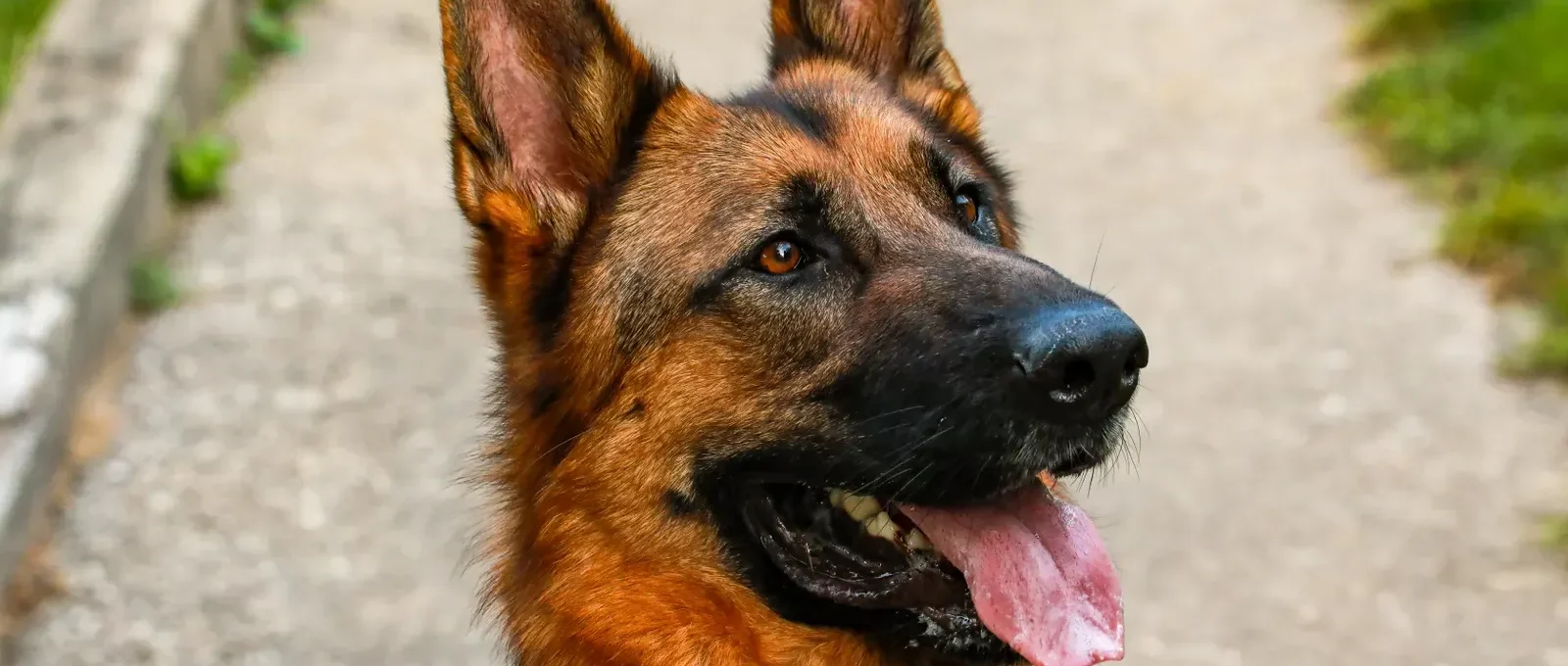

There is a moment that happens to almost everyone who meets a German Shepherd for the first time. You notice the ears first — enormous, perfectly triangular, standing at alert attention as if receiving signals from frequencies humans can’t detect. Then the eyes catch you — deep, amber, and disturbingly intelligent, the kind of eyes that make you feel briefly examined rather than the one doing the examining. Then the whole magnificent animal comes into focus: the powerful sloping back, the dense double coat, the confident, purposeful way they carry themselves — like a dog who has been briefed on their own reputation and decided it was accurate.
German Shepherds are, by almost any measure, one of the most remarkable animals on Earth — not just in the dog world, but in the entire animal kingdom. They are elite athletes, cognitive superstars, emotional geniuses, battlefield heroes, Hollywood legends, and devoted family companions simultaneously, and they manage all of it with a physical presence that turns heads everywhere they go. The German Shepherd is one of the most admired dog breeds in the world — and for good reason. Known for their intelligence, loyalty, and versatility, these dogs excel as family companions, working dogs, and true everyday heroes. But beyond their impressive reputation lies a breed full of surprising traits, fascinating history, and lesser-known abilities.

Whether you already share your life with one of these extraordinary animals or you’re simply someone who has always been quietly fascinated by them, the 20 facts in this guide will deepen your appreciation for a breed that continues to astonish everyone who encounters them. Buckle up — because some of these are genuinely jaw-dropping.
Why German Shepherds Capture Hearts Like No Other Breed
Few dog breeds inspire the kind of fierce, almost reverential devotion that German Shepherds generate in their owners and admirers. You’ll find German Shepherd enthusiasts who will tell you, with absolute sincerity, that no other dog compares — and after spending any meaningful amount of time around one, you begin to understand exactly what they mean. Few dogs command admiration quite like the German Shepherd. They’re the perfect blend of elegance, power, and presence, wrapped in a stunning package of fur that radiates confidence. People fall for them not just because of their striking looks, but because of their spirit — their unbeatable loyalty, sharp minds, and surprisingly goofy charm.
What makes the German Shepherd truly special — truly different from other highly regarded breeds — is the combination of qualities they bring to every relationship and every role they fill. Intelligence without tractability is frustrating. Loyalty without intelligence is limiting. Beauty without substance is hollow. The German Shepherd brings all of it: the mental firepower, the emotional depth, the physical capability, the loyalty that runs bone-deep and never wavers. Experts agree that their character includes loyalty, bravery, confidence, and readiness to risk their lives to protect those they love. They make loving family dogs and dependable protectors. When you understand all twenty of the facts in this article, you’ll understand why the German Shepherd doesn’t just occupy a place in the hearts of dog lovers — they occupy the top floor.
A Brief Look at Where It All Began
Before we dive into the facts themselves, a brief origin story is in order — because the German Shepherd’s beginning is one of the most intentional and fascinating breed creation stories in canine history. Captain Max Emil Friedrich von Stephanitz and his friend Artur Meyer developed the German Shepherd Dog in the mid-19th century. The creators wanted a sheepdog of German heritage who possessed superior working ability. Today, the large, confident, and super-intelligent German Shepherd Dog is a loyal herding dog and beloved family companion who is well-known throughout the world.
With their wolfish appearance, it’s all too easy to make the mistake of thinking German Shepherds are an ancient breed of dog. It may even come as a surprise to some, but the German Shepherd breed has only been around since the late 19th century. In just over 125 years, this breed has gone from a working sheepdog in rural Germany to one of the most recognized, respected, and beloved dog breeds on the entire planet. That is one of the most remarkable ascents in canine history — and every one of the facts below helps explain exactly how and why it happened.
The 20 Most Amazing Facts About German Shepherds
1. They Are the World’s Third Smartest Dog Breed
Let’s start with the fact that German Shepherd owners love to lead with — and that they are entirely justified in leading with. The American Kennel Club ranked the German Shepherd third in intelligence out of a survey of 100 different dog breeds. These dogs are easy to train and pick up lessons quickly, which may explain why so many of them are appearing in professions like law enforcement. The ranking comes from the work of canine psychologist Stanley Coren, whose landmark research into dog intelligence established the framework that’s still used today. Only the Border Collie and the Poodle rank above the German Shepherd — which means your GSD is essentially in the cognitive top tier of the entire species.
According to canine psychologist Stanley Coren, they are the third brightest breed of dog regarding obedience and job intelligence. Nevertheless, their intellectual instincts and capacity for adaptive learning make them more intelligent than almost all canines. What makes this practically meaningful is that this intelligence is paired with a genuine desire to work with humans — making German Shepherds not just smart but collaboratively smart, which is an entirely different and far more useful quality than raw intelligence alone.
2. The Entire Breed Traces Back to One Single Dog
Here’s a fact that stops most people in their tracks: every German Shepherd alive today is a descendant of a single dog. When Stephanitz and Meyer saw a 4-year-old dog with a wolf-like appearance at a German dog show in 1899, they bought it for 200 German gold marks. Naming it “Horand von Grafrath,” the dog became the foundation of the German Shepherd Dog.
The first German Shepherd’s name was Hektor Linksrhein. This German Shepherd was the dog that a breeder Max von Stephanitz saw in western Germany during a dog show. The breeder fell in love with the dog — not only its looks got him, but the intelligence and discipline as well. He was so impressed that he purchased the dog. Then Hektor Linksrhein became Horand von Grafrath, and the rest was history. Think about that for a moment — the millions of German Shepherds working in law enforcement, serving in the military, and living in family homes across every continent on Earth all share that single ancestral thread back to one magnificent dog purchased at a German show in 1899. The scope of that legacy is genuinely staggering.
3. They Can Run Faster Than Usain Bolt
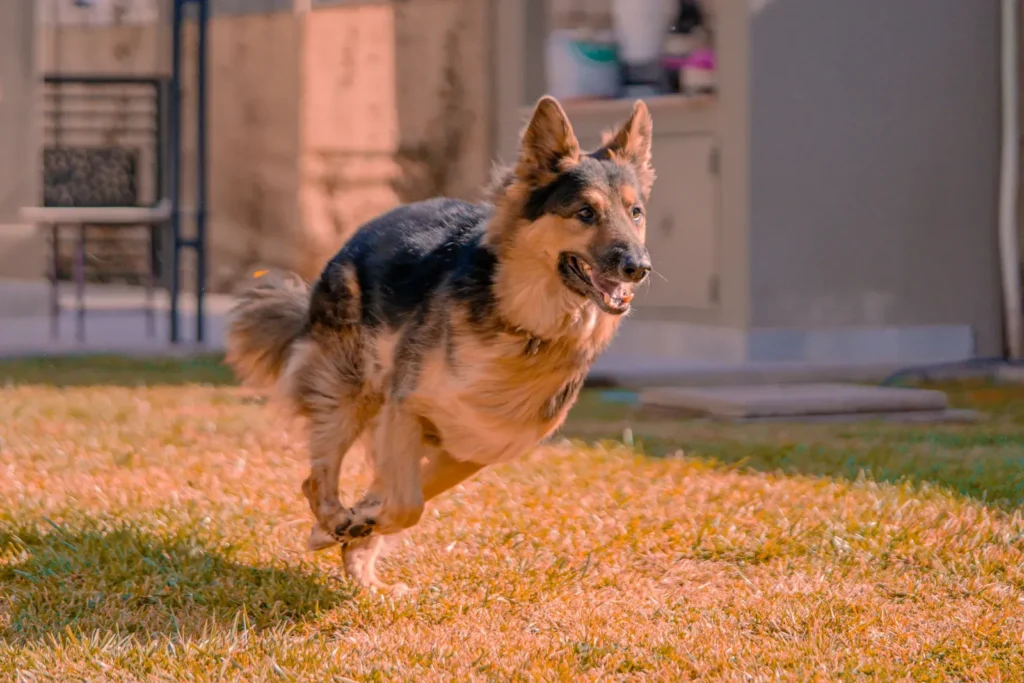
The German Shepherd’s physical capabilities are as impressive as their mental ones — and perhaps no single statistic captures this better than their top speed. German Shepherds are capable of reaching speeds of 30–32 mph at full sprint. To put that in perspective, they could easily outrun Usain Bolt, who tops out at 27.78 mph. However, they prefer to trot rather than run while herding. Their speed and agility have made them a go-to dog for herding sheep.
The world’s fastest human — arguably the greatest sprinter in recorded history — would lose a footrace to a German Shepherd without it being particularly close. That speed isn’t just athletically impressive; it’s functionally critical for a breed historically tasked with covering large areas of terrain, responding instantly to threats to the herd, and in modern working roles, pursuing fleeing suspects or covering ground quickly in search and rescue operations. A German Shepherd at full sprint is one of the most breathtaking sights in the animal kingdom — power and grace in perfect, flowing combination.
4. Their Nose Is a Supercomputer
If the German Shepherd’s brain is impressive, their nose is in an entirely different category of biological engineering. Humans have around 400 different types of scent receptors located in the nasal cavity responsible for identifying smells. Dogs, on the other hand, can have up to 300 million scent receptors. Compared to many other dog breeds, the German Shepherd possesses a truly world-class sense of smell, which explains why they excel as police dogs and tracking dogs.
German Shepherds are well-known for their work in search and rescue, tracking, and detecting bombs and drugs, among many other tasks. Because they have millions more scent receptors than humans, dogs have a sense of smell that is 10,000 to 100,000 times better than ours. To give that number some human context: if you could smell a single drop of vanilla extract in a room, a German Shepherd could detect that same drop diluted into a swimming pool. They can identify specific individuals from scent traces days old, detect cancer in early stages with accuracy that rivals clinical testing, and locate survivors buried under several feet of earthquake rubble. Their nose is not just impressive — it’s genuinely miraculous.
5. A German Shepherd Saved Warner Bros. From Bankruptcy
This might be the most entertainingly improbable fact on this entire list. A German Shepherd didn’t just become a Hollywood star — a German Shepherd saved one of Hollywood’s most iconic studios from financial ruin. After World War I, an American soldier called Corporal Lee Duncan brought a German Shepherd back with him to the US. He’d discovered the dog as a puppy in a bombed-out kennel in France and instantly bonded with him, naming him Rin Tin Tin. Upon his return to the US, he took the dog to several dog shows, amazing all who witnessed the dog’s physical prowess and incredible temperament. He managed to get Rin Tin Tin into show business and badgered Warner Bros. — a failing film studio at the time — into casting Rin Tin Tin in a film. He played his part so well that the film became an instant success — and Rin Tin Tin went on to drag Warner Bros out of bankruptcy.
The dog’s athleticism and intelligence earned him starring roles in 23 silent Warner Bros. films, and he became Hollywood’s number-one star. Rin Tin Tin reportedly received more fan mail at the height of his fame than any human actor in Hollywood. The dog who was found in a bombed-out kennel in war-ravaged France became the biggest movie star on the planet and saved a studio that would go on to produce some of the most celebrated films in cinema history. It’s the kind of story that sounds like fiction — but it isn’t.
6. They Were Heroes on the Battlefields of Both World Wars
The German Shepherd’s military service is one of the most important and least celebrated chapters in their history. The German army used German Shepherd Dogs in World War I and II as guard, attack, and messenger dogs. Fearless on the battlefield, the breed protected troops and carried medical supplies. During World War I, they served on both sides of the conflict — the German army deploying them extensively, and Allied soldiers becoming so impressed with the breed’s capabilities that they began importing and training GSDs for their own forces.
While World War I taught us many things, it also made the German Shepherd famous among the Allies. Used by the German army for a variety of tasks, soldiers fighting against the Kaiser were impressed by the loyalty, tenacity, and intelligence of Germany’s most common military dog. These were not ceremonial roles — German Shepherds served in genuine combat support capacities that saved human lives. They ran messages through artillery fire, located wounded soldiers in no man’s land, detected gas attacks before humans could smell them, and stood guard in conditions that would break lesser animals. Their service in both World Wars represents some of the most extraordinary acts of courage and loyalty in the history of any working animal.
7. They Learn New Commands in as Few as Five Repetitions
Here is a number that makes dog trainers’ eyes light up: five. That’s all it takes for many German Shepherds to learn a new command — five repetitions and they’ve got it. German Shepherds are actually the world’s third smartest dog! They need only five repetitions to learn something, and they respond correctly to a task 95% of the time. There are only two breeds that are smarter than a German Shepherd — Poodle and Border Collies.
To put that in context: the average dog needs 25 to 40 repetitions to learn a new command. German Shepherds learn it in five — and then execute it correctly nearly every single time thereafter. This learning speed is not just convenient for training; it fundamentally changes what’s possible with the breed. Complex multi-step tasks, sophisticated discrimination tasks (distinguishing specific scents from hundreds of others), nuanced behavioral cues — all of these become achievable training goals with a dog whose learning curve is this steep and whose retention is this reliable.
8. Their Bite Force Is Nearly Three Times Stronger Than a Human’s
For a breed entrusted with protection and law enforcement duties, having a formidable physical deterrent matters — and the German Shepherd delivers. German Shepherds are capable of biting with 238 pounds of force. To put that in perspective, a human’s bite delivers about 86 pounds of force, which means the shepherd’s bite is nearly three times more powerful. This bite force sits in a range that makes the German Shepherd a genuine physical deterrent and an effective apprehension tool in law enforcement applications.
What makes this fact particularly interesting is that a properly trained, well-socialized German Shepherd almost never needs to deploy this capability — they use it as a last resort in working roles and virtually never in family settings. Dangerous, aggressive, and difficult to control dogs would be passed over as recruits who don’t have the right stuff for those jobs. German Shepherds, properly trained and socialized, tend to be friendly and, aside from being nervous around new people entering their territory, they make ideal family dogs. The bite force is the physical capability. The training and temperament determine when — and how rarely — it’s ever used.
9. They Are the Most Versatile Working Dog on Earth
No other breed on the planet fills as many professional roles as the German Shepherd — and the breadth of what they do is genuinely staggering. Nowadays, you are more likely to see a German Shepherd that is a police dog. They use their agility, sense of smell, intelligence, and strength to find missing persons, track criminals, help in search and rescue missions, detect drugs, and search for explosives.
But that list barely scratches the surface. German Shepherds also serve as guide dogs for the visually impaired, hearing dogs for the deaf, medical alert dogs for diabetics and epileptics, therapy dogs in hospitals and schools, cadaver dogs in disaster recovery operations, and conservation detection dogs trained to locate endangered species. Participating in dog sports, such as agility, herding, scent work, is also something German Shepherds excel at. Name a task that requires intelligence, physical capability, trainability, and reliability under pressure — there’s almost certainly a German Shepherd doing it somewhere in the world right now.
10. They Have an Emotional Intelligence That Will Astound You
For a breed with such an imposing physical presence and such a formidable working reputation, the emotional sensitivity of German Shepherds consistently catches new owners completely off guard. Behind their confident exterior lies a dog with deep feelings. German Shepherds are very tuned into human emotions, often curling up beside you when you’re sad and sticking close when something feels off.
This emotional attunement is not anthropomorphism or wishful thinking — it’s a documented behavioral reality. German Shepherds genuinely monitor and respond to the emotional states of their people, adjusting their own behavior in response to human stress, sadness, fear, and joy with a consistency that suggests real empathic processing rather than simple learned response. They will find you when you’re crying before you call them. They will press against your leg before you’ve registered your own anxiety. They know. And they show up, every time, in exactly the way you need them to.
11. German Shepherds Come in More Colors Than Most People Realize
Ask most people what color a German Shepherd is and they’ll describe the classic black and tan pattern — the saddle-backed coat of police dogs and Hollywood heroes. But the reality of German Shepherd coloring is far more varied and fascinating. The color of a German Shepherd’s coat can vary. In addition to the classic black and tan, German Shepherds can appear in solid black, solid white, sable (a stunning mix of black-tipped hairs over a lighter base coat), black and red, black and cream, liver, and blue — a diluted color variation that produces a striking silvery-gray coat.
The white German Shepherd deserves particular mention — all-white GSDs have faced controversy within some breed organizations (some registries have historically excluded them) but have passionate devotees who consider their pure, dramatic coloring one of the most beautiful variations in all of dog breeds. The sable coloring, meanwhile, is considered by many GSD enthusiasts to be the most authentic and historically true to the breed’s working origins — it was the predominant coat pattern in early German Shepherds before selective breeding emphasized the black and tan pattern that dominates today.
12. They Wear a Built-In Weather Protection System
That magnificent, dense coat is not just about aesthetics — it’s a highly functional piece of biological engineering that allows German Shepherds to work effectively across a remarkable range of environmental conditions. The thick, coarse double coat of this breed helps insulate the dog, keeping it cool in the summer and warm in the winter. To maintain it properly, never shave or trim your German Shepherd’s coat. Comb it or use a deshedding tool every other day to easily remove loose fur.
The undercoat is a dense, soft layer that provides insulation in cold weather and traps cool air close to the skin in warm weather. The outer coat is made of tougher, slightly water-resistant guard hairs that protect against rain, snow, and debris. The combined system is sophisticated enough that German Shepherds can work effectively in temperatures ranging from arctic cold to desert heat — which is part of why they’ve been deployed as military and working dogs in virtually every climate on Earth. The trade-off, of course, is legendary shedding. When the shedding season comes, they shed a lot. So much so, that you will not only find their hair on your clothing, but in all corners of your house as well.
13. They Are Convinced They Are Lap Dogs
For all their imposing physical presence, their police-dog reputation, and their battlefield heroics, German Shepherds are, at their emotional core, deeply people-oriented velcro dogs who want nothing more than to be physically close to the humans they love. Despite their police-dog reputation, many German Shepherds are convinced they are lap dogs. Whether it’s laying on your feet, leaning their whole body against you, or gently placing a paw on your knee — affection is their love language.
This characteristic — the tendency to press against people, lean their full considerable weight into you, follow you from room to room, and try to occupy the same physical space you’re currently using — is one of the most universally reported and universally endearing traits in the breed. A 65-pound German Shepherd who is deeply committed to being a lap dog is simultaneously completely impractical and absolutely irresistible. Most German Shepherd owners will tell you, with the look of someone who has made peace with something they never saw coming, that their dog considers the entire couch — and possibly the entire house — personal territory dedicated to their comfort and proximity to you.
14. Their Tail Is a Fully Functioning Emotional Barometer
German Shepherds communicate with exceptional richness and precision through their tails, and learning to read that communication is one of the great pleasures of life with this breed. A German Shepherd’s tail tells you everything: helicopter wags for excitement, slow swooshes for focus, and that adorable tucked wiggle when they’re feeling playful. It’s a furry emotional barometer in your home.
The full range of tail expression in a German Shepherd is genuinely impressive — from the broadly sweeping, full-body wag of exuberant greeting to the slow, deliberate side-to-side movement of focused concentration; from the lowered, rapid wag that communicates uncertainty to the high, stiff tail that signals alertness; from the fully tucked tail that expresses fear or submission to the relaxed, gently curved tail of a dog who is comfortable and content. Reading your German Shepherd’s tail is like having a real-time emotional dashboard — and once you start paying attention, you’ll be amazed how much they’ve been saying all along.
15. They Were Trained to Detect COVID-19
Among the most astonishing recent applications of the German Shepherd’s extraordinary olfactory capabilities is one that became particularly relevant in the aftermath of the global pandemic. They are training German Shepherds to detect coronavirus in people as well! Studies conducted in multiple countries demonstrated that dogs — including German Shepherds — could be trained to detect COVID-19 infection from sweat samples with accuracy rates exceeding 90%, sometimes rivaling or surpassing standard PCR testing.
This capability is not magic — it’s the same extraordinary nose that detects drugs, explosives, and cancer being applied to a new target scent. The human body produces distinctive volatile organic compounds when infected with specific pathogens, and the German Shepherd’s nose can distinguish those compounds from the background noise of everything else a human body produces. The practical applications — rapid, non-invasive screening at airports, hospitals, and large events — represent a genuinely exciting frontier in how we might deploy canine olfactory capability to protect human health in the future.
16. They Have Starred in Some of the Most Famous Roles in Hollywood History
Beyond Rin Tin Tin, the German Shepherd’s presence in film, television, and popular culture has been disproportionate to their relative youth as a breed and speaks to the profound impact they’ve had on human imagination and storytelling. When an American soldier, Lee Duncan, found a GSD puppy in France during World War I, he called it “Rin Tin Tin” and brought it home after the war. The dog’s athleticism and intelligence earned him starring roles in 23 silent Warner Bros. films, and he became Hollywood’s number-one star.
But Rin Tin Tin was only the beginning. German Shepherds have appeared as Bullet (Roy Rogers’ companion), Blaze (on Lassie), Rex (the Austrian TV detective dog), and countless other iconic roles that have shaped how generations of people think about dogs, loyalty, and intelligence. Their physical presence is naturally cinematic — that combination of beauty, power, and obvious intelligence reads powerfully on screen — and their trainability makes them among the most capable animal actors available. When you see a dog doing something remarkable in film, there’s a statistically reasonable chance it’s a German Shepherd.
17. They Are as Intellectually Advanced as a Young Child
The cognitive comparison between German Shepherds and human children is one of the most striking and thought-provoking facts in this entire list — because it reframes the way we think about what we’re actually dealing with when we share our lives with these animals. According to scientists, German Shepherds are at least as smart as a 2–3 year old in terms of understanding language and can learn at least as much math as a 4–5 year old.
According to scientists, German Shepherds are at least as smart as a 2–3 year old child in terms of understanding language and can learn at least as much math as a 4–5 year old. A child at the age of three or four is a fully communicative, emotionally complex, problem-solving little person who understands a substantial vocabulary, processes simple mathematical relationships, and navigates social situations with growing sophistication. The fact that a German Shepherd operates at a comparable cognitive level in multiple domains of intelligence is not just impressive — it’s the kind of fact that makes you look at your dog slightly differently when they fix you with that searching, amber gaze.
18. They Are One of America’s Most Consistently Popular Breeds
Popularity rankings for dog breeds shift constantly as trends come and go — but the German Shepherd is one of the remarkable exceptions. Unsurprisingly, the German Shepherd Dog has remained in the top 10 of the most popular breeds in the U.S. for decades. Through the rise and fall of countless breed trends — from Dalmatians to Chihuahuas to French Bulldogs — the German Shepherd has maintained its position in America’s heart with remarkable consistency.
This is the truest measure of a breed’s genuine quality — not a spike of trend-driven popularity but sustained, decades-long love from generation after generation of dog owners who choose to share their lives with these animals and then spend the rest of those lives utterly convinced that no other dog compares. Once a German Shepherd waltzes into your world, your life will never be boring again. That’s not marketing copy — it’s the consensus testimony of millions of people who have found out firsthand.
19. They Thrive on Having a Job — Any Job
The German Shepherd is, at its fundamental core, a working breed — and that identity runs so deep that it shapes everything about how they need to live to be truly happy. Give a German Shepherd a task and they’re happy. In fact, the German Shepherd is bred to work! Fetching the newspaper, carrying a backpack on a hike, learning new tricks — it’s all part of their “employee of the day” mindset.
If there’s a job to be done, all you have to do is ask your dog. German Shepherd owners are well aware that their dogs were developed as true working dogs. What makes this practically meaningful for pet owners is that the “job” doesn’t need to be police work or military service — it just needs to be something with structure, purpose, and clear goals. Carrying a loaded dog pack on hikes, participating in obedience trials, learning new tricks, doing puzzle feeders, taking on agility coursework — any activity that engages both the mind and body satisfies the German Shepherd’s deep need for purposeful engagement and keeps them mentally healthy and behaviorally stable.
20. Once a German Shepherd Chooses You, It’s for Life
Save the best for last. Of all the remarkable facts in this article — the speed, the intelligence, the heroism, the Hollywood fame — this is the one that German Shepherd owners will tell you matters most. When a German Shepherd chooses you, it’s for life. They become equal parts watchdog, best friend, and constant companion, hovering nearby with quiet devotion — always alert, just in case you need them.
The loyalty of a German Shepherd is not a passive, background quality — it’s an active, present force that shapes every day of life with this breed. They watch you move through the house with quiet attention. They position themselves between you and anything they perceive as a potential threat without being asked. They wait for you at the window, at the door, at the top of the stairs — with a patience and dedication that would be humbling if it wasn’t so deeply moving. Life with a German Shepherd means waking up with a personal security team, a drama queen, and a stand-up comedian all in one. They’ll guard your house, your snacks, and your bathroom trips. Their intelligence will impress you daily and their judgmental looks will humble you even faster. But the laughs, loyalty, and love they bring will make every moment unforgettable.
German Shepherd Facts at a Glance: Quick Reference
| Fact | Detail |
|---|---|
| Intelligence Ranking | 3rd in the world (behind Border Collie and Poodle) |
| Top Running Speed | 30–32 mph (faster than Usain Bolt) |
| Scent Receptors | Up to 300 million (vs. 400 in humans) |
| Bite Force | 238 lbs (nearly 3x human bite force) |
| Command Learning | As few as 5 repetitions |
| Task Accuracy | 95% correct response rate |
| Breed Founded | 1899, Germany |
| Founding Dog | Horand von Grafrath |
| Hollywood Legacy | 23 Warner Bros. films (Rin Tin Tin) |
| Cognitive Level | Equivalent to a 2–5 year old child |
The German Shepherd’s Remarkable Working Legacy
The breadth of roles the German Shepherd fills in modern society is something that deserves its own extended appreciation — because it speaks not just to the breed’s capabilities but to the depth of partnership that exists between these animals and human civilization. They work alongside police officers in cities across every country on Earth. They serve with military units in combat zones. They guide visually impaired individuals through the complexity of daily life with patience and precision. They alert diabetic owners to dangerous blood sugar changes before any medical equipment detects them. They locate disaster survivors buried under rubble when every other search technology has been exhausted.
These brave dogs will fight to protect their herd, and these instincts make them loyal and fierce working guard dogs. Every single one of these roles draws on the same core package of qualities that Max von Stephanitz identified in that first dog at a German show in 1899 — the intelligence, the trainability, the physical capability, the loyalty, and the deep-seated desire to be useful to the humans they have chosen. The German Shepherd doesn’t just work for people — they work with people, as genuine partners whose contribution to human society across the past century and a quarter has been incalculable.
Tips for Owning a German Shepherd: What Every Potential Owner Should Know
The German Shepherd’s extraordinary qualities come paired with equally significant responsibilities, and potential owners deserve an honest picture of what life with this breed actually requires. These are dogs who need substantial daily exercise — at minimum an hour, and preferably more — because a German Shepherd whose physical energy has nowhere to go will find creative and often inconvenient outlets for it. Mental stimulation is equally non-negotiable. A German Shepherd who is physically exercised but mentally bored is still an unsatisfied dog. Puzzle feeders, training sessions, scent games, and structured tasks are all part of keeping a GSD genuinely content.
Like most pure-bred dogs, these pups are susceptible to some common inherited and genetic diseases: Degenerative Myelopathy, a degenerative weakness in the hind legs; Hip Dysplasia and elbow dysplasia, painful joint problems that can make walking difficult; and Bloat, a life-threatening condition where the dog’s stomach fills with gas and fluid. Purchasing from health-tested parents and maintaining regular veterinary care throughout your dog’s life gives you the best possible foundation for managing these breed-specific health risks. The thick, coarse double coat of this breed helps insulate the dog — to maintain it properly, never shave or trim your German Shepherd’s coat. Comb it or use a deshedding tool every other day to easily remove loose fur. And prepare — with genuine psychological readiness — for the hair. It will be everywhere. That is simply the price of admission to one of life’s greatest experiences.
Conclusion
Twenty facts, and we’ve still barely scratched the surface of what makes the German Shepherd one of the most extraordinary animals on Earth. From the battlefield heroics to the Hollywood glamour, from the nose that detects what no instrument can find to the loyalty that never wavers — the German Shepherd is a breed that rewards every ounce of attention and admiration you’re willing to give them, and then returns it a hundredfold in devotion, companionship, and the particular joy of sharing your life with an animal who is genuinely, staggeringly remarkable.
They’ll guard your house, your snacks, and your bathroom trips. Their intelligence will impress you daily and their judgmental looks will humble you even faster. But the laughs, loyalty, and love they bring will make every moment unforgettable. If you already have a German Shepherd, you already know that every fact in this list is merely a shadow of the living, breathing reality sleeping across your feet right now. And if you’re still on the outside looking in, wondering whether all the fuss is justified — it is. It absolutely is. Once a German Shepherd waltzes into your world, nothing will ever be quite the same. And you will never want it to be.
Frequently Asked Questions
1. Are German Shepherds good family dogs? Absolutely — when properly socialized and trained from an early age, German Shepherds are outstanding family dogs. They are gentle and protective with children they know well, deeply loyal to their family unit, and naturally watchful of the home environment. They do best in active families who can meet their substantial exercise and mental stimulation needs.
2. How intelligent is a German Shepherd compared to other dogs? German Shepherds rank third in canine intelligence according to canine psychologist Stanley Coren’s landmark research — behind only the Border Collie and the Poodle. They can learn a new command in as few as five repetitions and respond correctly to known commands approximately 95% of the time. Scientists have compared their cognitive abilities to those of a 2–5 year old human child across various domains of intelligence.
3. How much exercise does a German Shepherd need? German Shepherds are a high-energy working breed that requires substantial daily exercise — a minimum of one to two hours per day for most adults, combining physical activity with mental stimulation. They thrive with activities that engage both body and mind simultaneously, such as structured training, agility, nose work, hiking, and fetch. A German Shepherd whose exercise needs aren’t met will typically find destructive ways to discharge that energy.
4. Do German Shepherds shed a lot? Yes — significantly, and all year round, with two major “blow coat” seasons annually in spring and autumn where the shedding becomes truly spectacular. Regular brushing (every other day with a deshedding tool during heavy shedding periods) dramatically reduces the amount of fur that ends up on furniture, clothing, and every other surface in your home. Most German Shepherd owners consider this a worthwhile trade-off.
5. Are German Shepherds aggressive? A properly bred, well-socialized, and appropriately trained German Shepherd is not aggressive — they are confident, watchful, and reserved with strangers, but not hostile. Their protective instincts make them natural guardians, and they can be trained to distinguish genuine threats from normal social situations with precision. Problems with aggression in German Shepherds almost always trace back to inadequate socialization, poor breeding, or abusive/punitive training methods — not to any inherent tendency toward aggression in the breed itself.





Leave a Comment