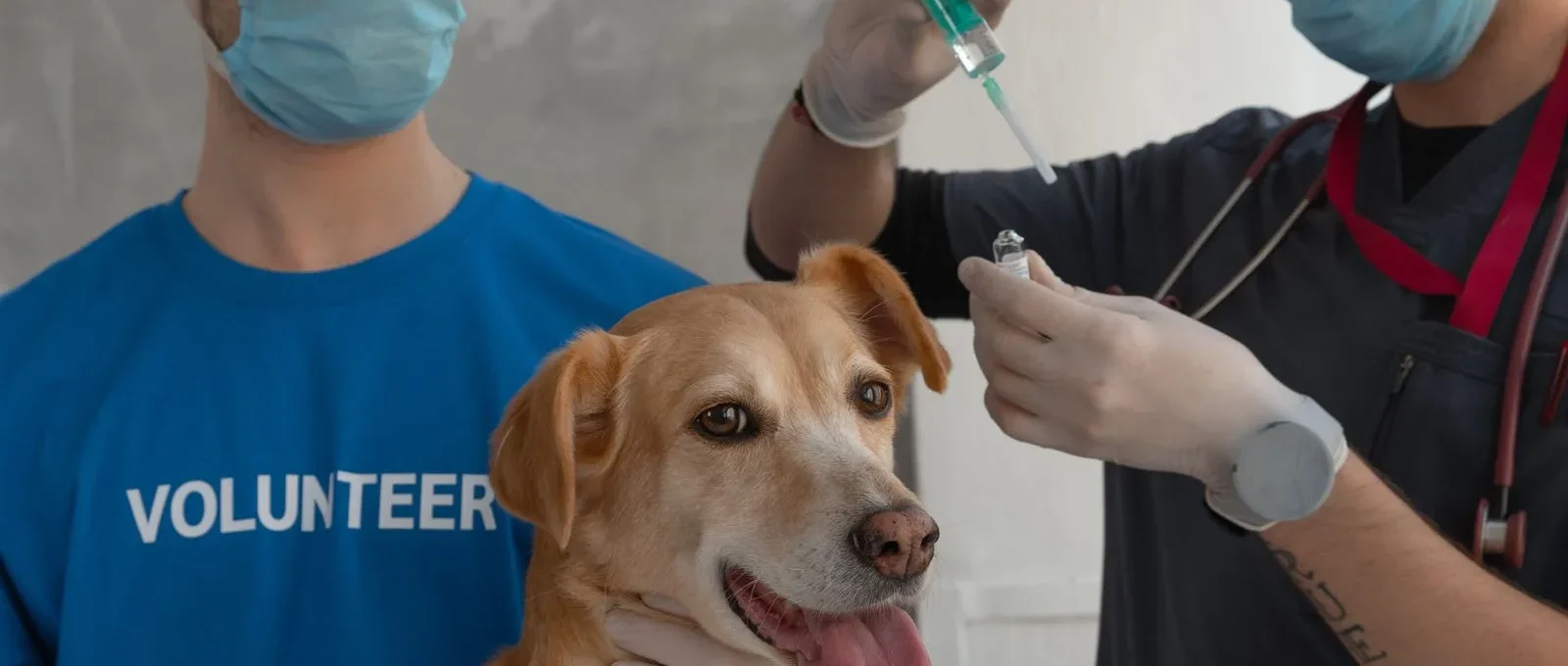

Does pet insurance cover vaccines? Standard accident-and-illness policies do not — vaccines are classified as routine preventive care, not insurable medical events. But that’s not the end of the story: wellness add-ons and preventive-care plans do reimburse vaccines, and whether they’re worth buying is a math question you can answer in about two minutes. This guide breaks down real vaccine costs, what wellness plans actually pay, and when the add-on earns its keep.
Educational only — not financial advice. Plan terms and vaccine prices vary by provider and region; confirm specifics before enrolling.

Does Pet Insurance Cover Vaccines? The Short Answer
No — not under a standard policy. Pet insurance is built for the unpredictable and expensive: accidents, illnesses, emergencies, hereditary conditions. Vaccines are the opposite: predictable, scheduled, and (relatively) cheap. Insurers treat them the same way health insurers treat your annual physical — expected maintenance, not an insurable risk.
What does cover vaccines: wellness add-ons (also called preventive-care plans or wellness riders). These are optional extras, typically $20–$35/month on top of your base premium, that reimburse a scheduled menu of routine care: vaccines, annual exams, flea/tick prevention, and sometimes dental cleanings or spay/neuter. If vaccines are your goal, the wellness add-on — not the base policy — is the product you’re shopping for.
What Vaccines Actually Cost (So You Can Do the Math)
Before judging the add-on, you need the underlying prices. Typical U.S. ranges in 2026:
Core dog vaccines (rabies, DHPP/DAPP, canine parvovirus combo): roughly $20–$60 per shot at a private vet; low-cost clinics often charge $15–$30. A puppy’s full initial series — multiple rounds between 8 and 16 weeks — typically totals $75–$200 depending on region and clinic.
Core cat vaccines (rabies, FVRCP): roughly $20–$50 per shot; a kitten series typically runs $75–$150 total.
Non-core / lifestyle vaccines (bordetella, Lyme, leptospirosis, feline leukemia): roughly $20–$60 each, recommended based on your pet’s exposure risk.
Annual boosters for an adult pet: most adult dogs and cats need $50–$150/year in routine vaccinations — less than one month of a wellness add-on in many cases. Keep that number in mind; it’s the crux of the whole decision.
How Wellness Add-Ons Work

Wellness plans aren’t insurance in the technical sense — there’s no deductible math or reimbursement percentage. They work more like a prepaid schedule with caps:
Annual allowance per category. A typical plan might reimburse up to $150/year for vaccines, $150 for flea/tick/heartworm prevention, and $50–$100 for the annual exam. You pay the vet, submit the receipt, and get reimbursed up to each cap.
No waiting games on routine care. Unlike illness coverage, wellness benefits usually start quickly — there’s little adverse-selection risk in a scheduled rabies shot.
Use-it-or-lose-it. Unused allowance doesn’t roll over. If your pet only needed $80 of vaccines this year against a $150 cap, the remaining $70 evaporates.
Stacked on the base premium. The $20–$35/month is in addition to your accident-and-illness premium. A $45/month comprehensive plan becomes $65–$80/month with wellness attached — a 40–75% increase in what you pay.
The Math: When Wellness Add-Ons Pay Off (and When They Don’t)
Run your own numbers with this 60-second test. Take a typical adult dog year:
Wellness add-on cost: $25/month × 12 = $300/year.
Routine care you’d buy anyway: annual exam ($60–$120) + core boosters ($50–$150) + flea/tick prevention ($150–$250/year) + heartworm prevention ($100–$150/year) = roughly $360–$670/year in real spending.
If your plan’s caps cover most of that menu, the add-on roughly breaks even or wins slightly — provided you actually use every category. That’s the honest best case: wellness plans are a budgeting tool that smooths predictable costs, not a money machine.
When it loses: puppies in year one can actually be the sweet spot (the full vaccine series + spay/neuter on some plans concentrates a lot of reimbursable care into 12 months) — but for a healthy adult pet in a low-cost region, many owners find they spend $300 on the add-on to get $250 back. The plans are priced so the house usually wins by a little.
The decision rule: add up your pet’s actual annual routine costs (not the plan’s maximum caps), compare against 12 months of the add-on premium, and buy only if the gap is small or positive. Our puppy insurance cost guide runs the same math for first-year puppy expenses specifically.
Puppies and Kittens: The One Case Where It Often Works

The first year of a pet’s life is the exception that proves the rule. A puppy’s first 12 months typically include: a multi-round vaccine series ($75–$200), 2–3 wellness exams, spay/neuter ($200–$600 — covered under some wellness plans, not all), microchipping, and a full year of parasite prevention. Total first-year routine spending often lands between $500 and $1,000+.
Against that concentrated spending, a $25–$35/month wellness add-on ($300–$420/year) with solid caps can genuinely come out ahead — especially if the plan includes spay/neuter reimbursement. If you’re enrolling a new puppy anyway (which you should — early enrollment locks in the lowest premiums and fewest exclusions), adding wellness for year one and then dropping it is a legitimate strategy. Just confirm the spay/neuter and vaccine caps before you count on them.
Cheaper Ways to Handle Vaccine Costs
If the wellness math doesn’t work for you, vaccines are one of the easiest pet costs to economize without cutting corners:
Low-cost vaccine clinics. Humane societies, shelters, and pet-store clinic days routinely offer core vaccines at $15–$30 per shot — often half the private-vet price, same vaccines.
Ask about 3-year vaccines. After the initial series and first annual booster, many core vaccines (rabies, DHPP) are labeled for 3-year intervals. Fewer shots per year means lower annual cost — ask your vet what’s appropriate for your pet.
Don’t skip — space intelligently. Skipping vaccines entirely to save money is a false economy: parvovirus treatment runs $2,000–$5,000, and that is what your base accident-and-illness policy is for. The insurance covers the disease; your wallet (or the add-on) covers the $25 shot that prevents it.
Bundle smart. Some vets discount vaccine packages for puppies/kittens or multi-pet households. Ask — the package price is often unpublished.
For the full framework on what base policies do and don’t cover, see our complete 2026 pet insurance cost guide.
Frequently Asked Questions
Does any standard pet insurance cover vaccines without an add-on?
Essentially no. Base accident-and-illness policies exclude routine and preventive care by definition. If vaccines matter to you, you need the wellness add-on or a separate preventive-care plan.
Are wellness plans worth it for an adult dog?
Sometimes — run the math. Add up your actual annual routine spending (exam, boosters, parasite prevention) and compare it to 12 months of the add-on premium. It roughly breaks even for pets that use every category, and loses for pets with minimal routine needs.
Do wellness add-ons cover spay/neuter?
Some do, some don’t — this is the highest-variance benefit in wellness plans. Given spay/neuter costs $200–$600, a plan that includes it can single-handedly justify year one. Verify the cap in writing.
Can I buy a wellness plan without base insurance?
With most insurers, no — wellness is a rider on an accident-and-illness policy. A few companies sell standalone preventive-care plans. Compare both if you only want routine-care help.
Do I still need vaccines if my pet is insured?
Absolutely. Insurance pays for treatment after illness strikes; vaccines prevent the illness in the first place. An unvaccinated pet with parvovirus faces a $2,000–$5,000 treatment bill that insurance may partially cover — or a $25 vaccine that would have prevented it entirely.
Will skipping non-core vaccines affect my coverage?
It can. Some policies exclude illnesses that a recommended vaccine would have prevented (kennel cough is the classic example). Read the exclusions — “preventable illness” clauses are real.
Petsofweb content is educational only and is not financial advice. Wellness plan terms and vaccine prices vary — compare live quotes and local clinic prices before deciding.





Leave a Comment