

Every pet insurance policy has a ceiling — the maximum amount the insurer will pay you back each policy year. It's called the annual limit (also known as the annual maximum payout or annual benefit limit), and it's one of the three numbers that determine how much value you actually get from a plan, alongside the deductible and the reimbursement rate.
Choose the wrong limit and you could end up paying thousands out of pocket after a serious illness, even with insurance in force. Choose well, and you'll barely notice the cost of a $5,000 emergency vet visit.
This guide explains exactly what a pet insurance annual limit is, how it interacts with your deductible and reimbursement rate, the difference between annual, per-incident, and lifetime limits, and how to pick the right ceiling for your pet and your budget.
What Is a Pet Insurance Annual Limit?
Your annual limit is the maximum total amount your insurer will reimburse you during one policy year. Once your approved claims add up to that number, the insurer stops paying until the next policy year begins and the limit resets.
Think of it as a bucket that refills once a year. If your plan has a $10,000 annual limit and your dog racks up $12,000 in covered vet bills in a single year, the insurer will pay out at most $10,000 (minus your deductible and the co-pay portion). The remaining $2,000 comes out of your pocket.
Common annual limit tiers you'll see when shopping for policies include $5,000, $10,000, $15,000, and unlimited options. Some insurers offer finer gradations — $7,500, $20,000, $25,000 — but those four are the most common tiers across the market. The higher the limit, the higher your monthly premium will be, all else being equal.

One important detail: the limit applies to reimbursements paid to you, not to the total vet bill. Your deductible and your share of each bill (the co-pay) never count against the limit — only the insurer's payments do.
How the Annual Limit Works With Your Deductible and Reimbursement Rate

The annual limit is only meaningful together with the other two numbers on your policy. Here's how the three work in sequence on every claim:
1. You pay the deductible first. Most plans have an annual deductible (commonly $250–$1,000) that you must meet before the insurer pays anything. 2. The insurer reimburses at your rate. After the deductible, the insurer pays the agreed percentage of the covered bill — usually 70%, 80%, or 90%. You cover the rest. 3. Reimbursements stop at the annual limit. Once the insurer's total payouts hit your annual limit for the year, you pay 100% of any further bills until renewal.
Let's walk through a worked example with real arithmetic. Suppose your policy has:
- Annual limit: $10,000
- Annual deductible: $500
- Reimbursement rate: 80%
Your cat needs emergency surgery costing $4,000. Here's the math:
- Step 1 — deductible: $4,000 − $500 = $3,500 in eligible costs
- Step 2 — reimbursement: 80% of $3,500 = $2,800 back to you
- Step 3 — your share: $500 (deductible) + $700 (your 20% of $3,500) = $1,200 out of pocket
Now suppose later that same year your cat needs a second procedure costing $10,000. Running the same math: ($10,000 − $500) × 80% = $7,600 reimbursed — but wait. You've already used $2,800 of your $10,000 annual limit, so only $7,200 of headroom remains. The insurer pays $7,200, and you pay the other $2,800 plus your $700 deductible-equivalent share… actually, more precisely: your deductible is already met for the year, so your bill would be $10,000 − $7,200 = $2,800 out of pocket for the second procedure.
Total for the year: insurer paid $10,000 (the limit), you paid $4,000. That's the limit doing its job — and exactly why choosing it carefully matters.
If you want a deeper breakdown of the deductible side of this equation, read our guide on pet insurance deductibles.
Annual vs. Per-Incident vs. Lifetime Limits: What's the Difference?
Pet insurance policies can cap payouts three different ways, and it's easy to confuse them:
Annual limit — the maximum the insurer pays across all claims in one policy year. Resets each year. This is the most common structure today, and it's what most shoppers will be comparing.
Per-incident (per-condition) limit — a cap on how much the insurer will pay for each separate condition or incident. For example, a $3,000 per-incident limit means one broken leg can generate at most $3,000 in reimbursements, but a new illness later in the year starts its own $3,000 allowance. Most modern accident-and-illness plans use annual limits instead, but some budget or accident-only plans still use per-incident caps — always check the policy details.
Lifetime limit — a cap on everything the insurer will ever pay over your pet's life. These are increasingly rare, and frankly they're a red flag: a lifetime cap of, say, $20,000 can be eaten up by one major illness early on, leaving your pet effectively uninsured for years. Most reputable insurers no longer impose lifetime limits on their flagship plans.
When comparing quotes, make sure you're comparing the same type of limit. An 80% reimbursement plan with a $10,000 annual limit is a very different product from an 80% plan with a $10,000 lifetime limit.
What Happens When You Hit Your Annual Limit Mid-Year?
It's one of the most stressful scenarios a pet owner can face: your pet needs ongoing treatment, and the insurer tells you the annual limit is exhausted. Here's what actually happens:
- The insurer stops reimbursing any further claims until the policy year resets. This includes claims filed late — if the treatment date falls after the limit was exhausted, it won't be paid even if you file it weeks later.
- Your limit resets at renewal, not at the calendar year. If your policy year runs March to March, the counter resets in March regardless of when you started treatment.
- You still pay the premium. Hitting your limit doesn't pause or refund your monthly payments — the contract continues, and the deductible resets too.
- You cover the gap yourself. There is no appeal process that raises the limit mid-year. Your options are paying out of pocket, asking your vet about payment plans, or, if treatment can be safely staged, scheduling some care after the renewal date.
How likely is this to happen to you? For routine care and minor injuries, a $10,000 limit is generous — most policy years never come close. But for cancer treatment, major orthopedic surgery (a TPLO surgery for a large dog commonly runs $3,000–$7,000 per knee), or chronic conditions requiring ongoing medication and monitoring, limits can be tested. Cancer treatment for pets is one of the classic scenarios where a higher limit pays for itself.
Practical tip: if you're approaching your limit and your pet needs expensive but non-urgent care (dental work, for instance), ask your vet whether any part can safely wait until after your renewal date. Never delay urgent or emergency care — but elective procedures can sometimes be scheduled strategically.
How to Choose the Right Annual Limit
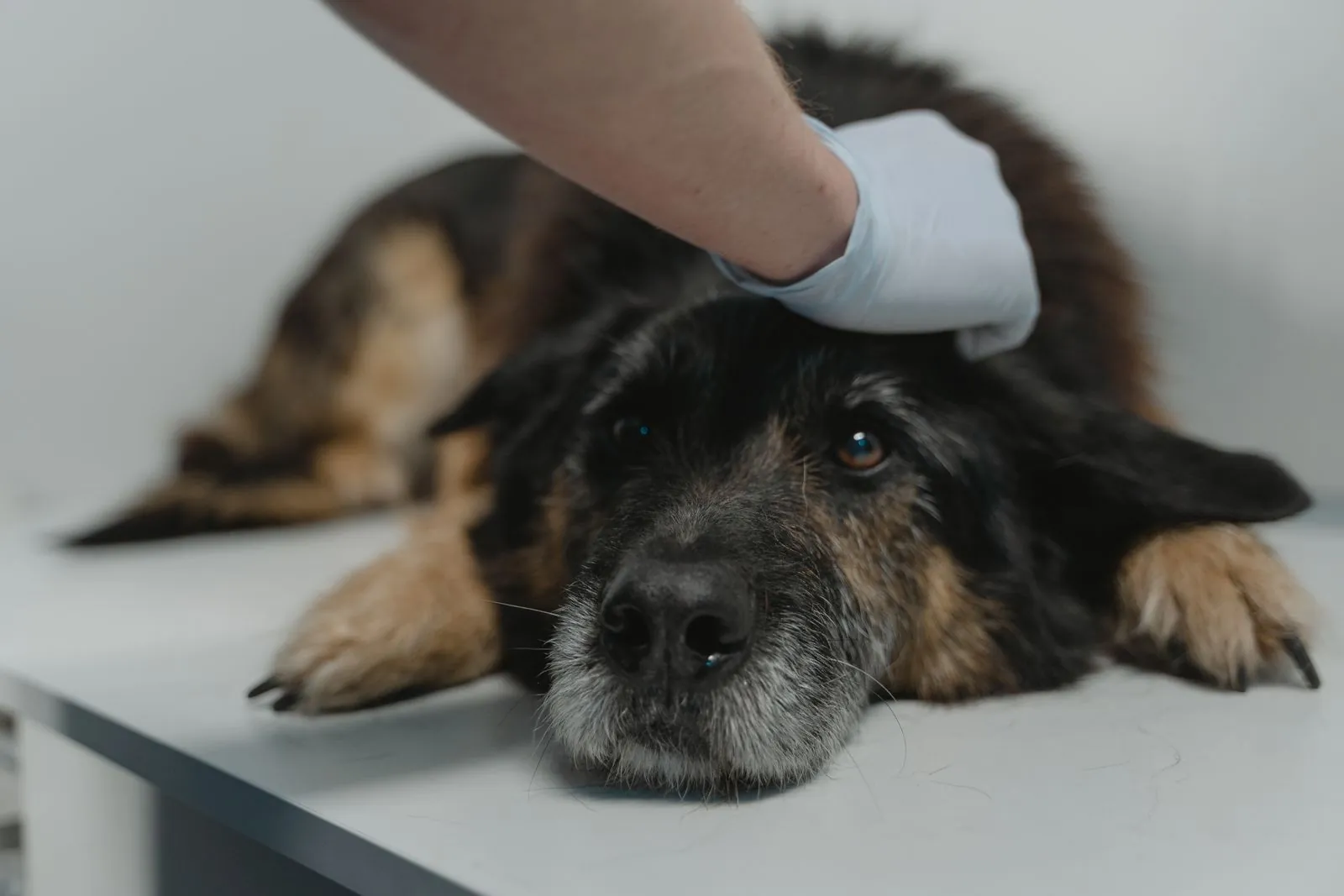
There's no one-size-fits-all answer, but four factors should drive your decision:
1. Your pet's age
Young pets are statistically more likely to have accidents — swallowed toys, broken bones, emergency surgeries. Puppies are also the most expensive to insure over time, so getting this right early matters. See our breakdown of how much pet insurance costs for a puppy for age-based pricing context.
Older pets are more likely to develop chronic illnesses (kidney disease, diabetes, cancer) that generate steady, year-after-year costs. If you're insuring a senior pet, a higher limit protects against the slow accumulation of bills.
2. Your pet's breed risk profile
Some breeds are simply more expensive to treat. Large and giant breeds (Great Danes, German Shepherds, Labrador Retrievers) are prone to costly orthopedic issues like hip dysplasia and cruciate ligament tears, where a single surgery can run several thousand dollars. Brachycephalic breeds (Bulldogs, Pugs, French Bulldogs) have higher rates of respiratory and skin issues. If your breed is on the high-risk list, lean toward a higher limit.
3. Your emergency fund size
Be honest about what you could cover out of pocket tomorrow without financial pain. If you have a $5,000 emergency fund, a $5,000 annual limit leaves you dangerously exposed — one bad year could wipe out your savings and still leave you short. A common rule of thumb: your annual limit plus your emergency fund should cover a worst-case year (a $10,000–$15,000 vet bill), not just an average one.
This is also the right moment to ask whether insurance is the better vehicle than self-insuring. Our pet insurance vs. savings account comparison runs the numbers on both approaches.
4. Plan type
Accident-only plans are cheaper partly because accidents are (usually) one-off events — a lower annual limit can be a reasonable tradeoff there. Comprehensive accident-and-illness plans cover chronic and recurring conditions, which is where annual limits get tested year after year. If you buy comprehensive coverage, don't undercut it with a bargain-basement limit.
Are Unlimited Annual Limit Plans Worth It?
Many insurers now offer an unlimited annual limit option — no cap on yearly reimbursements. It sounds like the obvious choice, but it comes with a real tradeoff: higher premiums, sometimes substantially higher.
Here's how to think about it:
Unlimited makes sense when:
- Your pet is a large breed with known expensive risk factors (orthopedic surgery candidates)
- Your pet has a chronic condition that's likely to need ongoing, costly treatment year after year
- You want true worst-case protection and can afford the premium difference
- You'd lose sleep worrying about hitting a cap — peace of mind has value
A capped limit makes sense when:
- Your pet is young, healthy, and a lower-risk breed
- The premium difference between, say, $15,000 and unlimited is large enough to matter in your budget
- You have a solid emergency fund to cover the tail risk beyond the limit
- You're buying accident-only coverage, where catastrophic multi-thousand-dollar years are rarer
One honest caveat: "unlimited" doesn't mean "everything is covered." Exclusions, waiting periods, pre-existing condition rules, and the deductible/reimbursement structure all still apply. An unlimited limit removes the ceiling, not the fine print. Always read the policy.
Common Mistakes Pet Owners Make With Annual Limits
Mistake #1: Choosing $5,000 for a large-breed puppy. This is the classic error. A single cruciate ligament surgery on a 90-pound dog can cost $4,000–$6,000 — one incident could exhaust the entire year's coverage. Large breeds and high-energy puppies are the worst candidates for the lowest tier.
Mistake #2: Comparing premiums without comparing limits. A $28/month quote looks great next to a $45/month quote — until you notice the cheaper plan caps at $5,000 while the pricier one offers $15,000. Price per dollar of coverage matters more than the monthly number alone.
Mistake #3: Forgetting that limits reset annually, not per incident. Some owners assume a $10,000 limit means $10,000 per illness. It doesn't — it's $10,000 total across everything in the policy year. If your pet develops two separate conditions in one year, they share the same bucket.
Mistake #4: Ignoring the limit when filing claims. Not all vet costs are covered costs — exam fees, for example, are excluded by some plans. But the covered portion still counts against your limit. Keep a running tally of reimbursements received during the year, especially if your pet is undergoing ongoing treatment. When you do file, make sure you file your pet insurance claim correctly so eligible costs aren't rejected and you don't waste limit headroom on paperwork errors.
Mistake #5: Assuming "unlimited" means never reading the policy. Unlimited-limit plans still have exclusions, waiting periods, and bilateral condition clauses. The limit is one line in a multi-page contract.
Verdict: A Simple Decision Framework
If you've read this far, here's a straightforward way to land on your number:
1. Start with your pet's risk profile. Large breed, senior, or chronic-condition-prone? Start at $15,000 or unlimited. Young, small, healthy, low-risk breed? $10,000 is a defensible starting point. 2. Add your emergency fund reality check. If you couldn't comfortably cover $5,000 out of pocket, don't pick a $5,000 limit — that's the coverage doing almost nothing for you. 3. Price the step up. Get quotes at $10,000, $15,000, and unlimited with the same deductible and reimbursement rate. If the jump from $15,000 to unlimited is only a few dollars a month, take unlimited. If it's a 40% premium increase, weigh it honestly against your risk profile. 4. Match the limit to the plan type. Comprehensive plans deserve higher limits; accident-only plans can justify lower ones. 5. Revisit annually. Your pet ages, your finances change, and premiums shift. The right limit at age 2 may be the wrong limit at age 10.
For most pet owners, $10,000–$15,000 hits the sweet spot: enough to cover a genuinely bad year — emergency surgery plus follow-up care — without paying the unlimited premium. Owners of large breeds, seniors, and pets with ongoing conditions should seriously consider unlimited.
Frequently Asked Questions
What is a good annual limit for pet insurance? For most pets, $10,000 to $15,000 per year covers a realistic worst-case year, including emergency surgery and follow-up care. Large breeds, senior pets, and pets with chronic conditions are better served by unlimited plans. A $5,000 limit is risky for large dogs, where a single orthopedic surgery can approach that figure on its own.
Does the annual limit include my deductible? No. The annual limit applies only to what the insurer pays out in reimbursements. Your deductible and your co-pay percentage never count against the limit — only the insurer's payments reduce your remaining headroom for the year.
Do unused annual limits roll over to the next year? No. The limit resets to the full amount at each policy renewal, and any unused portion is lost. It works like a yearly allowance, not a savings account.
Can I increase my annual limit mid-policy? Most insurers only allow coverage changes — including limit increases — at renewal time. If your pet's needs change mid-year, you'll typically have to wait until the next policy year to adjust. Some insurers allow mid-term upgrades with underwriting review, but don't count on it.
Is an unlimited annual limit really unlimited? The payout ceiling is removed, but everything else in the policy still applies: exclusions, waiting periods, pre-existing condition limitations, your deductible, and your reimbursement rate. "Unlimited" refers only to the annual cap — read the full policy terms before assuming full coverage.
Conclusion
The annual limit is the quiet number on your pet insurance policy that only matters on the worst day of the year — which is exactly when it matters most. Understand how it interacts with your deductible and reimbursement rate, match it honestly to your pet's risk profile and your own finances, and revisit it each renewal. Get it right, and the limit is something you'll never have to think about again.