
Bloat is one of the fastest killers in veterinary medicine. A dog can go from perfectly fine at dinner to dying within hours — and the only thing standing between them is an owner who recognizes the dog bloat symptoms early and gets them to a vet fast. This guide walks you through exactly what to watch for, what to do, and how to lower your dog’s risk.
This article is educational only and is not veterinary advice. Bloat is a life-threatening emergency — if you suspect bloat, contact your veterinarian or emergency animal hospital immediately.
What Is Bloat (GDV)?
Bloat, medically called gastric dilatation-volvulus (GDV), is a two-part catastrophe. First, the stomach fills with gas, food, or fluid and swells like a balloon (gastric dilatation). Then, in the deadliest cases, the swollen stomach rotates and twists on itself (volvulus). Once twisted, the stomach is sealed shut at both ends: nothing can escape, and — critically — blood flow to the stomach and surrounding organs is cut off.
With its blood supply trapped, stomach tissue begins to die. The pressure can compress major veins, sending the dog into shock. Spleen damage, heart rhythm problems, and stomach wall rupture can follow. This is why bloat is not a “wait and see” situation. A dog with simple bloat that hasn’t twisted may sometimes stabilize, but a true GDV with a twisted stomach always needs emergency surgery — and without it, the outcome is almost always fatal within hours.
It helps to think of bloat in two stages. Early on, the stomach is distended but still in place, and the dog looks uncomfortable. Hours later — sometimes far sooner — the picture can change to a collapsing, shocky dog. Because you can’t tell from the outside whether the stomach has twisted, if you see dog bloat symptoms, treat it as a full emergency.
Dog Bloat Symptoms: The Emergency Warning Signs
The dog bloat symptoms below often appear suddenly and get worse fast. If your dog shows one or more of the following — especially after a large meal — treat it as an emergency until a vet rules bloat out:
1. Swollen, hard, tight abdomen. The belly may look visibly distended, like a drum, and feel hard and tight to the touch. In some dogs, especially fluffy or overweight ones, the swelling can be subtle — pay attention to a belly that looks fuller than usual or feels tense.
2. Unproductive retching. This is the hallmark sign. The dog repeatedly tries to vomit — gagging, heaving, stretching the neck — but nothing (or only a little foam or mucus) comes up. Because the twisted stomach is sealed at both ends, your dog literally cannot vomit. If your dog is retching and nothing comes out, that is a red flag.
3. Restlessness and pacing. The dog can’t get comfortable. They stand up, lie down, pace the room, shift positions, look back at their belly, and can’t settle. This anxious restlessness is one of the earliest warning signs of bloat and often appears before the abdomen visibly swells.
4. Excessive drooling or hypersalivation. Thick ropes of drool, constant swallowing, or a soaked chin are common as nausea and stomach pressure build.
5. Rapid, labored, or shallow breathing. A racing heart rate and panting that doesn’t settle are the body’s response to pain and shock. If your dog is panting at night or at any odd hour without exercise or heat to explain it, look closely for the other signs on this list.
6. Standing with a hunched or stretched posture. Some dogs stretch out in a “prayer position” (front down, rear up) or stand hunched and unwilling to lie down. Both suggest severe abdominal pain.
7. Pale, white, or blue-tinged gums. Press a finger gently on the gum — color should return in under two seconds. Pale gums and slow refill signal circulatory collapse and shock.
8. Collapse or inability to stand. This is a late, critical sign. A dog that collapses, goes limp, or can’t stand needs an emergency vet now — shock is already underway.
Other warning signs include whining or signs of pain, refusal to eat, a sudden distended belly after eating, and a dog that seems bloated but won’t burp or pass gas normally. You don’t need to see every symptom — any combination of these, especially a hard belly plus unproductive retching, means go. For broader context on reading your dog’s body signals, our general guide to dog symptoms can help you spot trouble earlier.
Which Dogs Are at Highest Risk?
Bloat can strike any dog, but risk is heavily skewed toward large, deep-chested breeds — dogs whose long, narrow rib cages give the stomach room to swing and twist. The breeds most often cited by veterinarians include:
Great Danes (the highest-risk breed by far), German Shepherds, Standard Poodles, Boxers, Doberman Pinschers, Weimaraners, Irish Setters, Gordon Setters, Bloodhounds, Great Pyrenees, and Labrador Retrievers.
Other risk factors research has associated with bloat include:
Age. Older dogs develop bloat more often than young ones, with risk rising notably in middle-aged and senior dogs.
Family history. If your dog’s parents, siblings, or close relatives bloated, your dog’s risk is meaningfully higher — genetics is a real factor.
Eating habits. Dogs fed one large meal per day, dogs that eat extremely fast (gulpers), and dogs that drink large amounts of water right after eating appear at higher risk in observational studies.
Body type and temperament. Lean, deep-chested dogs and anxious, fearful, or high-strung dogs show up more often in bloat statistics.
Exercise around meals. Vigorous activity immediately before or after eating is commonly cited as a risk factor, though the evidence is observational rather than conclusive.
If you own a Great Dane, German Shepherd, Standard Poodle, or another deep-chested breed — especially one with a family history of bloat — talk to your vet about a prophylactic gastropexy before dog bloat symptoms ever appear (see the prevention section below). It’s the single most effective preventive measure available for high-risk dogs.
What to Do Immediately If You Suspect Bloat
Do not wait. Do not try home remedies. Do not “see how he looks in the morning.” Once you recognize dog bloat symptoms, the clock is ticking — the stomach can twist further while you deliberate. Follow these steps now:
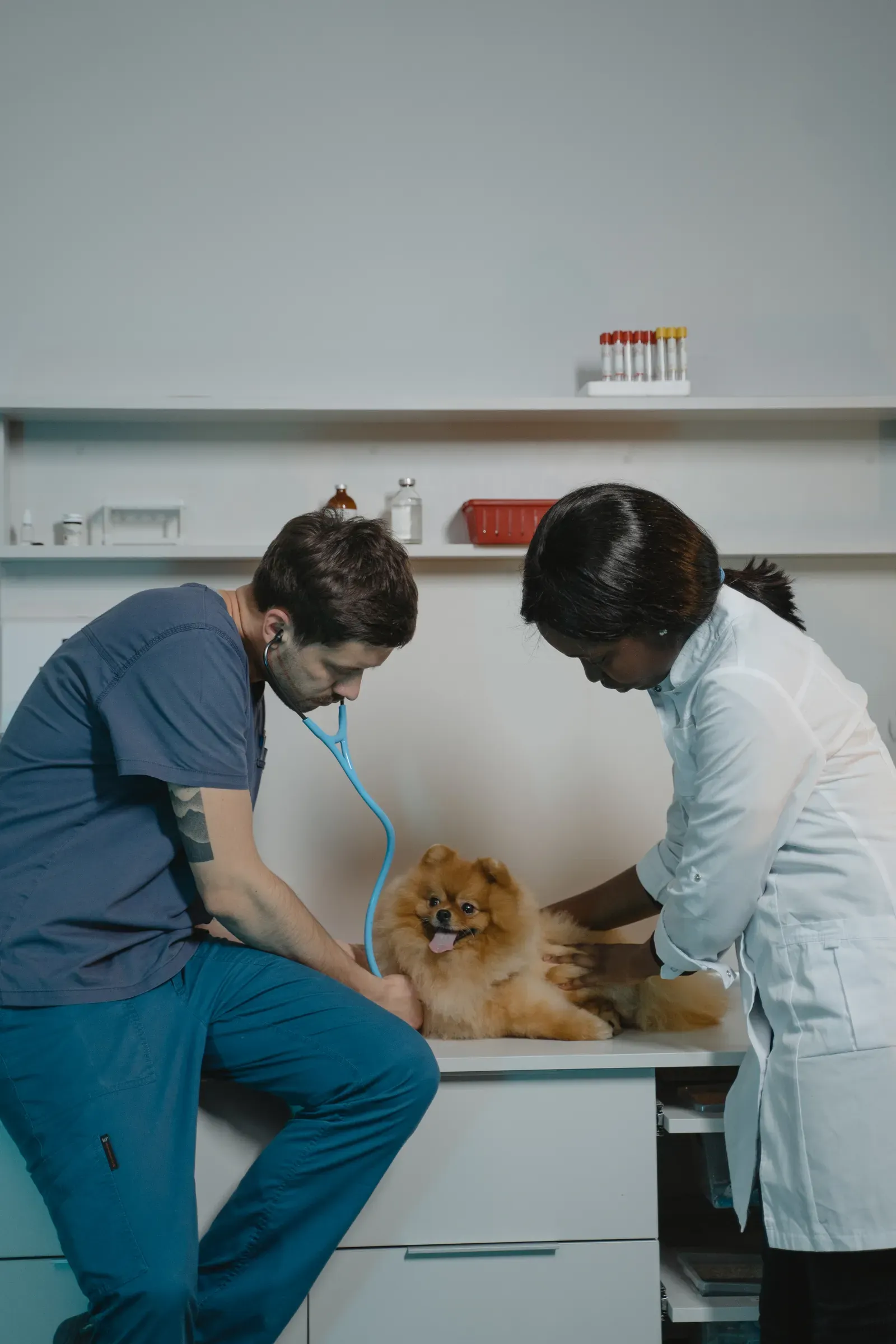
1. Call your emergency veterinarian or the nearest emergency animal hospital right now. Don’t call your regular vet’s office and leave a message — call a line with a live person, say “I think my dog has bloat (GDV),” and follow their instructions. If you don’t have an emergency vet’s number saved, search for one while someone else gets the dog ready to move. Many clinics give instructions over the phone for what to do en route.
2. Get your dog to the clinic immediately. Minutes matter. Have someone else drive so you can keep the dog calm and monitor them. Keep the dog as still and calm as possible — jostling and stress may make things worse, and panicking around the dog panics the dog.
3. Do NOT try to treat it at home. No antacids, no walking it off, no attempts to make your dog vomit, no oils, and absolutely no trying to relieve gas yourself. These can delay real treatment and make things worse. The only fix for a twisted stomach is a veterinarian.
4. Do NOT feed or give water. Anything going in has no way out and adds to the pressure.
5. Note the timeline. Tell the vet when you first noticed symptoms, when the dog last ate and exercised, and which symptoms you’ve seen. That history helps the team prioritize.
At the clinic, the vet will typically confirm bloat with an X-ray, decompress the stomach (often with a tube or a needle through the body wall), and stabilize the dog with IV fluids and shock treatment.
For GDV, emergency surgery follows: the surgeon untwists the stomach, removes dead tissue, and usually tacks the stomach to the body wall (a gastropexy) to prevent recurrence. Catching dog bloat symptoms early is what makes this surgery survivable.
Why Minutes Matter: How Bloat Becomes Fatal
Once you have spotted dog bloat symptoms, understanding the timeline makes the urgency real. Once the stomach twists:
Pressure cuts off blood flow. The twisted stomach traps its own blood supply. Tissue starved of oxygen begins to die — the stomach wall, and often the spleen, which sits attached to it.
Shock sets in. Pressure on the vena cava (the body’s largest vein) chokes off blood returning to the heart. Blood pressure drops, the heart races to compensate, and the dog slides toward shock.
Complications cascade. Heart arrhythmias, stomach wall rupture, and severe blood poisoning from dying tissue can follow. Each complication makes surgery harder and survival less likely.
Without treatment, a dog with GDV can die within hours — in severe cases, shock can become life-threatening far sooner than owners expect. With fast veterinary care, most dogs stabilize for surgery and many go on to recover fully. The single biggest variable in the outcome is how quickly the dog reaches a vet. Every half hour of delay after dog bloat symptoms appear narrows the odds.
Emergency Surgery and Typical Costs
For a true GDV, emergency surgery is not optional — it’s the only definitive treatment. The procedure involves opening the abdomen, untwisting the stomach, assessing and removing any dead (necrotic) stomach or spleen tissue, repositioning everything, and typically performing a gastropexy — surgically tacking the stomach to the abdominal wall so it can’t twist again. A gastropexy doesn’t prevent gas buildup (dogs can still bloat), but it dramatically reduces the chance of the deadly twist happening again.
Surgery also comes with aftercare: usually 24–72 hours of hospitalization, IV fluids, pain management, cardiac monitoring, and sometimes blood transfusions or treatment for arrhythmias.
Typical cost estimates. Emergency GDV surgery commonly runs $1,500 to $7,000+ in the United States, depending on your region, the clinic (emergency specialty hospitals cost more than general practices), the time of day (overnight and weekend emergencies carry surcharges), and complications — if portions of stomach or spleen must be removed, costs climb toward the top of that range and beyond. Diagnostics (X-rays, bloodwork), hospitalization, and medications are typically billed on top of the surgery itself.
These are typical estimates, not quotes — prices vary widely by location. Because bloat strikes without warning and surgery can’t wait, this is exactly the scenario pet insurance exists for. If you have a policy, check whether your policy covers emergency visits before you need it, and keep your insurer’s claims number saved in your phone alongside your emergency vet’s number.
Prevention: Lowering Your Dog’s Bloat Risk
No prevention method is perfect, but veterinarians commonly recommend these evidence-supported steps — especially for deep-chested breeds. If dog bloat symptoms appear despite these steps, get to a vet immediately — prevention lowers risk but never eliminates it.
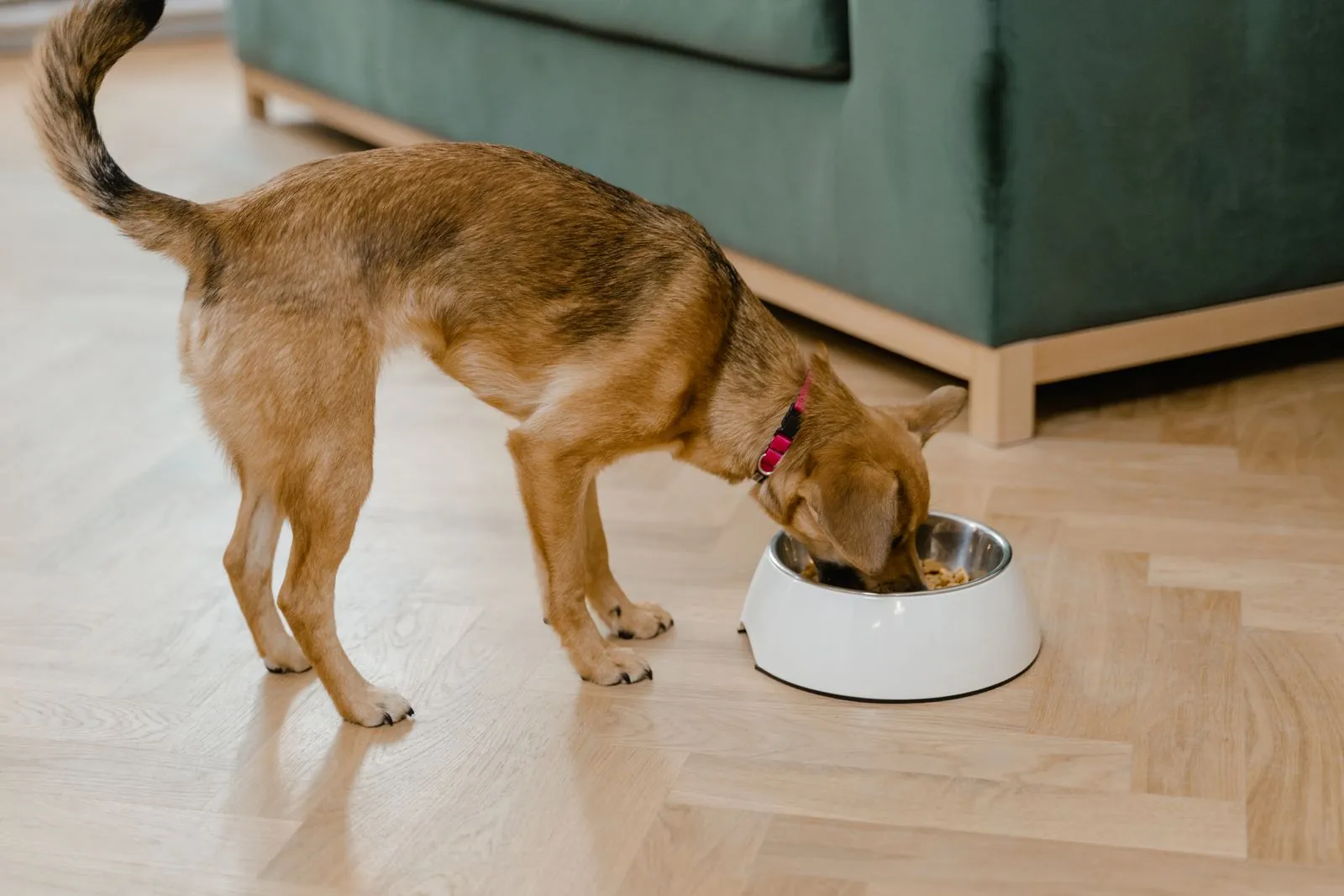
Feed smaller, more frequent meals. Split the daily ration into two or three meals instead of one large feeding. This keeps the stomach from getting overloaded at once.
Slow down fast eaters. If your dog inhales food, a slow-feeder bowl or puzzle feeder makes gulping physically harder and reduces the air swallowed with food.
Avoid vigorous exercise right around meals. Let your dog rest for at least an hour before and after eating — no sprinting, rough play, or intense training sessions on a full stomach.
Limit water gulping right after meals. Allow normal drinking, but don’t let your dog drain a full bowl in one go immediately after eating. Fresh water should always be available.
Avoid elevated food bowls unless your vet recommends them. Raised feeders were once thought to help prevent bloat, but research has linked them to increased risk in some large breeds. Ask your vet what’s right for your dog rather than following old advice.
Manage anxiety and stress around meals. Feed your dog in a calm, quiet place, away from competitive or stressful situations. Anxious dogs eat faster and swallow more air.
Discuss prophylactic gastropexy with your vet. For high-risk breeds — Great Danes in particular — a preventive gastropexy (often done at the same time as spay/neuter) surgically tacks the stomach to the abdominal wall so it cannot twist. It doesn’t prevent the stomach from filling with gas, but it prevents the life-threatening volvulus. Studies show it is highly effective at preventing fatal GDV recurrence and occurrence. This is a conversation to have with your veterinarian, not a decision to make on your own.
Know your dog’s family history. If bloat runs in your dog’s line, tell your vet — it factors into the risk conversation and the gastropexy decision.
Frequently Asked Questions
Can a dog survive bloat without surgery?
A dog with simple bloat (no twist) may sometimes stabilize with veterinary care alone — but you cannot tell from the outside whether the stomach has twisted, and GDV with a twist always requires surgery. Never gamble on “waiting it out.” Get to a vet and let imaging decide.
How fast can bloat kill a dog?
Very fast. An untreated GDV can be fatal within hours as tissue dies and shock sets in. This is a same-day, same-hour emergency — the clock starts when symptoms appear, so don’t delay seeking care.
What does unproductive retching look like?
The dog repeatedly gags, heaves, and stretches the neck as if trying to vomit, but nothing comes up — or only a small amount of foam or mucus. Because the twisted stomach is sealed shut, your dog physically cannot vomit. Repeated dry-heaving is one of the most reliable dog bloat symptoms.
Can small dogs get bloat?
Yes. While large, deep-chested breeds are at far higher risk, bloat has been reported in medium and small dogs too. The dog bloat symptoms are the same regardless of size, so don’t dismiss warning signs just because your dog isn’t a Great Dane.
Does a gastropexy prevent bloat completely?
No — a gastropexy prevents the stomach from twisting (the volvulus), which is the deadly part. A dog with a gastropexy can still develop gastric dilatation (gas buildup), which is uncomfortable and needs veterinary attention, but the twist that kills is prevented. Discuss the procedure with your vet if your dog is high-risk.
Should I keep an emergency vet’s number saved?
Absolutely. Bloat doesn’t respect business hours. Save your emergency animal hospital’s number in your phone now — along with your regular vet and your pet insurance claims line — so you’re not searching frantically while dog bloat symptoms worsen.
Bloat is terrifying precisely because it moves so fast — but that speed is also why knowledge matters. Dogs whose owners recognize the dog bloat symptoms and drive straight to the vet give themselves and their dogs the best possible odds. Learn the signs, know your emergency vet’s number, and if your dog is a deep-chested breed, have the gastropexy conversation with your vet before trouble starts.
This article is educational only and is not veterinary advice. Bloat is a life-threatening emergency — if you suspect bloat, contact your veterinarian or emergency animal hospital immediately.