

If you’re asking when to get pet insurance, here’s the honest answer up front: as early as you can, ideally the week your pet comes home. Not because insurers are running a sale, and not because something terrible is about to happen — but because pet insurance has one hard rule that makes timing matter more than almost anything else.
A condition diagnosed before you enroll is generally excluded forever. That single rule decides more about your policy’s value than the brand you pick, the deductible you choose, or the monthly premium you pay. Every month you wait is a month where a routine vet note — a heart murmur, a limp, a slightly off blood test — can become a permanent exclusion on your pet’s record.
This guide walks through exactly when to get pet insurance for puppies, kittens, adult pets, and seniors, how waiting periods factor into your timing, and the few situations where waiting actually makes sense.
The Short Answer: Enroll Early, Before Anything Shows Up on the Record
Most insurers start accepting puppies and kittens at around 8 weeks old. The ideal enrollment window is between 8 weeks and 6 months — your pet is young, healthy, and statistically at the start of the highest-risk accident years of their life.
Here’s why earlier beats later on every dimension that matters:
- Premiums are lowest for young pets. Insurers price by age and risk. A healthy young pet costs less to insure than an older one, and that lower rate locks in as your baseline while premiums rise with age.
- No pre-existing exclusions. A clean medical record at enrollment means a clean slate. Anything that develops after enrollment (and after the waiting periods) is treated as a covered condition under the plan’s normal terms.
- Waiting periods pass quietly. Accident waits are typically days, illness waits around two weeks, and orthopedic waits up to a year. Enroll early and those clocks run out during your pet’s healthiest period, not when you need coverage urgently.
None of this means a policy bought later is useless — it just means the earlier you buy, the more the policy can do for you.
Why Timing Matters More Than the Plan You Pick
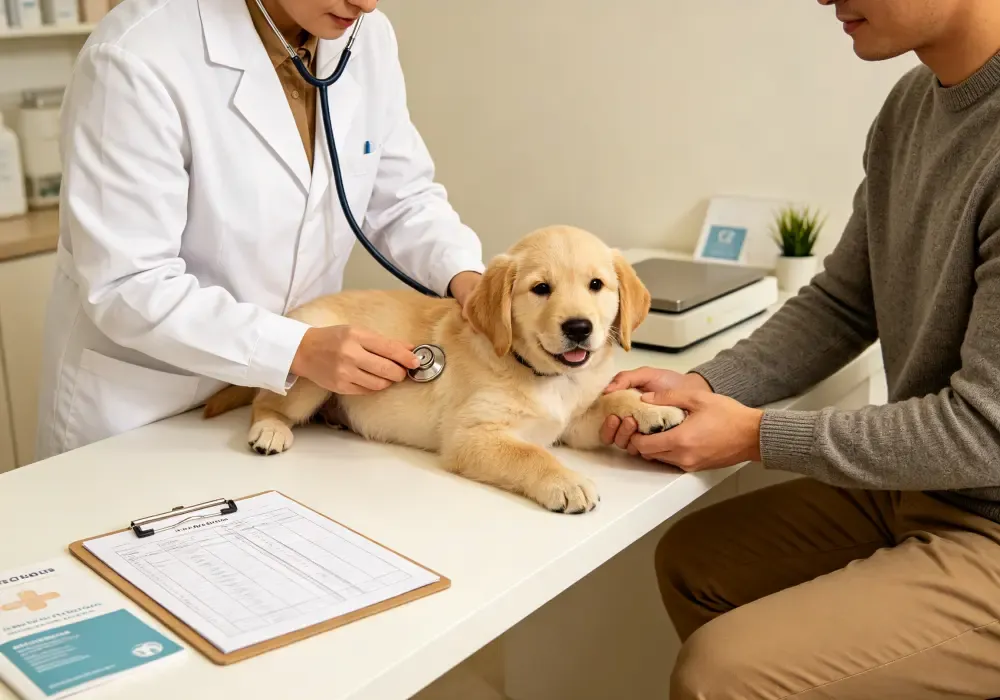
Pet owners spend hours comparing insurers and almost no time thinking about when to sign up. That’s backwards. Two mechanisms make timing the dominant variable.
Pre-existing conditions: the rule that decides everything
The industry standard is blunt: a condition your pet was diagnosed with (or showed symptoms of) before your policy’s start date is generally excluded from coverage. This is true across nearly all pet insurance providers.
It doesn’t matter how severe the condition is or how much you need help. If the diagnosis is already in your vet’s records before enrollment, the insurer will almost certainly not pay claims related to it. And chronic conditions — the expensive ones — are almost always classified as incurable, meaning permanent exclusions. Kidney disease, diabetes, arthritis, allergies, and hip dysplasia diagnosed before day one of your policy stay excluded for the life of the policy.
Some insurers distinguish between curable and incurable pre-existing conditions. A resolved ear infection or a bout of vomiting might become coverable again after a symptom-free period of around 6 to 12 months. But chronic conditions essentially never qualify. For the full breakdown, see our guide to pet insurance pre-existing conditions.
The takeaway: the enrollment date is the whole game. A pet enrolled while young and healthy who later develops a condition at age 10 can have that condition covered. The same pet enrolled after the diagnosis cannot.
Waiting periods: coverage doesn’t start the day you pay
Even a perfect policy has a gap between enrollment and protection. Typical waiting periods:
- Accidents: 2 to 14 days, depending on the insurer
- Illnesses: commonly around 14 days
- Orthopedic / cruciate ligament conditions: commonly 6 to 12 months
Anything that happens during the waiting period isn’t covered — and in some policies, conditions that appear during the waiting period can be treated as pre-existing going forward. That’s a second reason to enroll before you need the policy: so the waiting period is history by the time trouble arrives. Our full guide to pet insurance waiting periods breaks down the details, including how some insurers shorten the orthopedic wait with a clean vet exam.
The Best Age to Enroll: Puppy and Kitten Years

The sweet spot is 8 weeks to about a year old. Here’s what that buys you at each stage:
8 weeks to 4 months: This is the earliest most insurers accept enrollment, and it’s the strongest position you’ll ever be in. Premiums are at their lowest. The medical record is essentially blank. And you’re covered before the chaos of puppyhood and kittenhood — the age when pets are statistically at their most accident-prone. Swallowed socks, broken bones from clumsy jumps, and emergency surgeries cluster in year one, exactly when a young pet is cheapest to insure.
4 months to 1 year: Still excellent timing. Your pet has likely had their first vet visits and vaccinations, which actually helps — a documented healthy baseline strengthens your position if a claim is ever questioned. If your puppy is a large breed, enrolling before 6 months matters more, because orthopedic waiting periods of 6 to 12 months mean a cruciate injury at 14 months might not be covered if you enrolled at 12 months.
A note on spay/neuter timing: A standard accident-and-illness plan doesn’t cover spaying or neutering — insurers classify it as routine, elective care. If you’re enrolling a puppy or kitten partly to help with that bill, read our guide on whether pet insurance covers spaying and neutering first so you budget correctly.
What About Adult Dogs and Cats (Ages 1–7)?
If your pet is past puppyhood, don’t assume you missed the window. Ages 1 to 7 are still strong enrollment years for most pets:
- Premiums are still reasonable compared to senior rates.
- Most adult pets haven’t yet developed the chronic conditions of old age — kidney disease, diabetes, arthritis, and cancer are largely diseases of older animals.
- You’re still ahead of the expensive years. A policy bought at age 3 has years to pay for itself before age-related conditions arrive.
The honest check to run: has your vet diagnosed or noted anything? If your 4-year-old dog has a clean record, enrolling now is nearly as good as enrolling at 4 months. If your vet has already noted hip laxity, a heart murmur, or recurring skin issues, those specific conditions will likely be excluded — but the policy still covers everything new and unrelated. A diabetic cat’s insulin won’t be covered, but a broken leg or a new infection will be.
Is It Too Late for Senior Pets?

Senior pets — roughly 7+ for large dogs, 10+ for cats and small dogs — are the hardest enrollment decision. Be honest about the tradeoffs:
The case for enrolling a senior: Accidents and new illnesses still happen at every age, and they’re expensive at every age. Emergency surgery typically costs $1,500–$7,000, and a single orthopedic surgery on a large dog can run $3,000–$7,000. A policy that excludes your senior’s known arthritis can still pay for the swallowed toy, the new tumor, or the bite wound. Some owners find that peace of mind worth the premium even with exclusions on the books.
The case against: Premiums for seniors are the highest you’ll pay, and the conditions most likely to generate claims — the ones your vet is already monitoring — are exactly the ones excluded as pre-existing. If your 12-year-old cat already has kidney disease and hyperthyroidism, a new policy won’t touch either, and the premium may exceed what you’d spend on the remaining insurable risks.
How to decide: Ask your vet one question — “What are the most likely expensive health events for my pet in the next 2–3 years, and would any of them be new rather than related to existing diagnoses?” If the answer includes plausible new events (dental emergencies, injuries, new masses), insurance may still earn its keep. If every likely expense traces back to an existing diagnosis, a dedicated savings fund is often the more honest tool. Our comparison of pet insurance vs. a savings account runs the math for exactly this situation.
Talk to your vet before enrolling a senior pet — they know your pet’s trajectory better than any article can.
Breed Risk Should Move Your Timeline Up, Not Back
Some breeds are simply more expensive to insure and to treat. If your pet is one of them, enroll earlier, not later:
- Large and giant breeds (Labradors, German Shepherds, Great Danes): prone to cruciate ligament tears and hip dysplasia, where a single surgery can cost several thousand dollars. The 6-to-12-month orthopedic waiting period means late enrollment can leave you exposed right when risk peaks.
- Brachycephalic breeds (Bulldogs, Pugs, French Bulldogs): higher rates of respiratory and skin issues, often appearing young.
- Breeds with known hereditary conditions: some policies carve out breed-specific exclusions, so read the sample policy for your breed’s known conditions before you buy — and before those conditions appear on a vet record.
Higher-risk breeds also pay higher premiums at every age, which is another argument for locking in coverage while your pet is young and the baseline rate is at its lowest.
Adoption Day: The Enrollment Window Most People Miss
Rescue organizations and shelters rarely mention insurance, but adoption day is one of the best enrollment moments there is. Shelter vet records are usually thin — a basic exam, vaccinations, spay/neuter — which means fewer documented issues that could count as pre-existing.
Two practical tips for adopted pets:
- Enroll within the first week, before your own vet’s first full workup. If that workup finds something, you want the policy start date to predate the diagnosis.
- Get the shelter’s medical records and read them before you enroll. Anything documented there — even a noted limp or a treated ear infection — follows your pet. Knowing what’s on the record helps you choose a policy with eyes open.
Time Your Enrollment Around the Waiting Period
Since coverage doesn’t start on day one, work backwards from when you want protection:
- New puppy coming home in 3 weeks? Enroll now. The accident and illness waiting periods will be over (or nearly over) by gotcha day.
- Planning a hiking-heavy summer with your dog? Enroll in spring so the orthopedic waiting period — the long one — is as far along as possible before high-impact season.
- Already noticing a symptom? Enroll immediately anyway. The condition may end up excluded, but every other future condition is still covered, and delaying only adds more potential exclusions to the record.
Mark your calendar with the exact dates each waiting period ends — accident, illness, and orthopedic — so you know precisely when you’re fully protected.
When Waiting Actually Makes Sense
Earlier is usually better, but not always. Be honest about these cases:
- You’re comparing policies properly. A week spent reading sample policies beats a rushed enrollment in the wrong plan. Just don’t let “research” become six months of delay.
- Your pet is already fully covered by an employer benefit or existing policy. Don’t double-insure; coordinate instead.
- You’ve run the numbers and self-insuring wins. For a healthy adult indoor cat with a disciplined owner and a front-loaded emergency fund, saving the premium can beat insuring — our insurance vs. savings breakdown shows when. This is a math decision, not a procrastination decision.
- You’re between paychecks and the choice is rent or premiums. Insurance you can’t sustain lapses, and a lapsed policy means fresh waiting periods when you re-enroll. A short, deliberate delay beats a policy you cancel in three months.
What never makes sense: waiting because your pet “seems healthy.” Health is invisible until it isn’t, and the pre-existing rule doesn’t care that you meant to enroll eventually.
How to Enroll at the Right Time: A Practical Checklist
- Pick your window: 8 weeks to 6 months is ideal; any time before a diagnosis is good.
- Read sample policies first. Check the pre-existing definition, the waiting periods, and any breed-specific exclusions before you pay.
- Enroll before the first full vet workup (for new puppies, kittens, and adopted pets) so the policy start date predates any findings.
- Note your waiting-period end dates the day you enroll.
- Keep every vet record from day one. Itemized invoices and medical notes are the backbone of any future claim — our guide to filing a pet insurance claim explains exactly what to keep.
- Revisit annually. Your pet ages, premiums shift, and annual limits deserve a second look each renewal.
Frequently Asked Questions
What is the best age to get pet insurance?
The best age is as young as possible — ideally when your pet is a puppy or kitten, around 8 weeks old when most insurers start accepting enrollments. Young pets get the lowest premiums, have clean medical records with no pre-existing exclusions, and the waiting periods pass while they’re still in their healthiest years.
Can I get pet insurance for an older dog or cat?
Yes, most insurers accept senior pets, though premiums are higher and any diagnosed conditions will be excluded as pre-existing. A policy can still be worthwhile for a senior pet because it covers new, unrelated accidents and illnesses. Talk to your vet about your pet’s likely health trajectory before deciding.
Does pet insurance cover conditions my pet already has?
No. Conditions diagnosed or showing symptoms before your policy’s start date are considered pre-existing and are generally excluded from coverage. This is the single biggest reason timing matters — enrolling before anything appears on your pet’s vet record locks in the broadest possible coverage.
How long after buying pet insurance can I use it?
It depends on the waiting period: accidents typically carry a 2-to-14-day wait, illnesses commonly around 14 days, and orthopedic or cruciate ligament conditions commonly 6 to 12 months. Enroll early so these waiting periods expire before you actually need the coverage.
Is pet insurance cheaper if I enroll early?
Generally yes. Insurers price premiums by age and risk, so a healthy young pet costs less to insure than an older one, and that lower rate becomes your baseline as premiums rise with age. Enrolling early also avoids pre-existing exclusions that could permanently limit what the policy pays for.
Petsofweb is reader-supported. When you buy through links on our site, we may earn an affiliate commission. This article is for informational purposes only and isn’t financial advice — talk to your vet about what’s right for your pet, and read any policy’s full terms before enrolling.



Leave a Comment