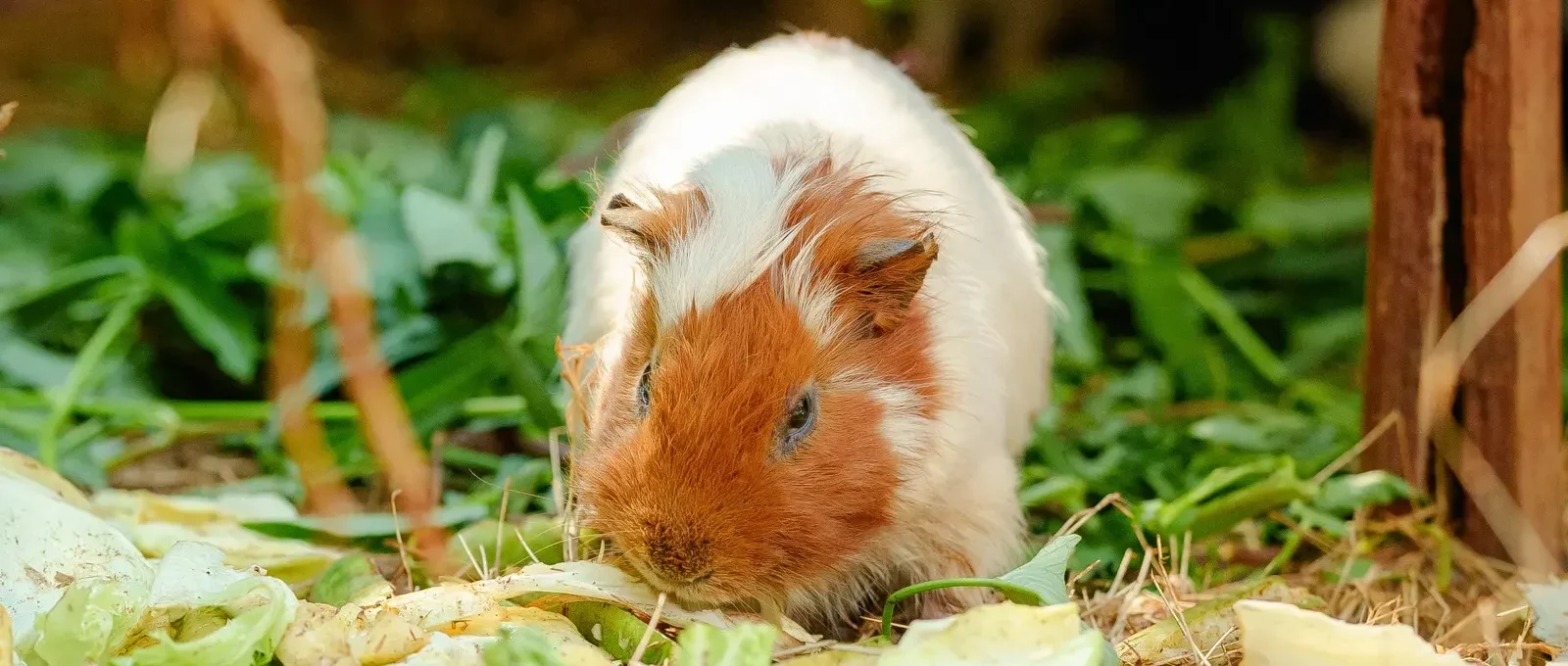

Most pet sites answer “how long do guinea pigs live?” with a single number and move on. That’s a shame, because the difference between a guinea pig that dies at three and one that celebrates eight comes down to care — and almost every early death is preventable. Guinea pigs are a genuine long-term commitment, and understanding what a realistic lifespan looks like is the first step to maximizing it.
This is the honest guide: what guinea pig lifespan actually looks like, why so many pigs die young, and seven specific, vet-backed things you can do to add years to your piggy’s life.
The Honest Lifespan Range: 5–7 Years Typical, 8–10 Possible
Here’s the range as the major authorities state it:
- The RSPCA says guinea pigs typically live five to six years, with some living much longer (RSPCA).
- The Royal Veterinary College puts longevity at 5 to 7 years in captivity (RVC care factsheet).
- RSPCA Queensland gives a slightly wider range of about five to eight years (RSPCA Queensland).
So the realistic expectation for a well-cared-for guinea pig is 5 to 7 years, with the upper end of 7–8 being entirely achievable. What’s the ceiling? A guinea pig named Snowball holds the official Guinness World Record at 14 years and 10.5 months — he died on Valentine’s Day 1979 in Nottinghamshire, England (Mental Floss). That’s an extreme outlier, but well-documented 8-to-10-year pigs are common in the experienced-owner community.
The uncomfortable truth: guinea pigs that die at 2–4 years old usually aren’t victims of bad luck. The most common early killers — vitamin C deficiency (scurvy), dental disease from too little hay, obesity, heatstroke, and untreated respiratory infections — are all care issues. Which means longevity is mostly in your hands. Here’s how.
1. Feed Unlimited Timothy Hay — the Single Biggest Longevity Factor
Hay isn’t bedding and it isn’t a side dish. Unlimited grass hay (timothy, orchard, or oat) should make up the overwhelming bulk of your guinea pig’s diet — the RSPCA notes that a healthy diet is 85–90% hay, fresh vegetables, and pellets supplemented with vitamin C (RSPCA).
Why it adds years:
- Teeth: Guinea pig teeth grow continuously. The constant grinding of coarse hay wears them down naturally. Without enough hay, teeth overgrow and develop painful spurs — dental disease is one of the most common and deadly conditions in pet guinea pigs, and it usually starts with a hay shortage.
- Digestion: The fiber keeps the gut moving. Guinea pigs have sensitive digestive tracts, and low-fiber diets lead to GI stasis and bloat, which can kill fast.
- Weight: Hay is low-calorie bulk. Pigs with hay always available graze naturally instead of filling up on calorie-dense pellets.
The practical setup: fill a large hay rack or hay area fresh daily (hay goes stale and pigs eat less of it). Don’t skimp — a guinea pig can eat roughly its own body weight in hay weekly. For adult pigs, use timothy or orchard grass hay; alfalfa is too rich in calcium for adults and should be reserved for pups under 6 months.
Petsofweb is reader-supported. When you buy through links on our site, we may earn an affiliate commission.
A good bag of Oxbow Western Timothy Hay is the gold standard most rescues and exotic vets recommend — Oxbow’s own guinea pig care guidance is built around unlimited farm-fresh hay as the dietary foundation.
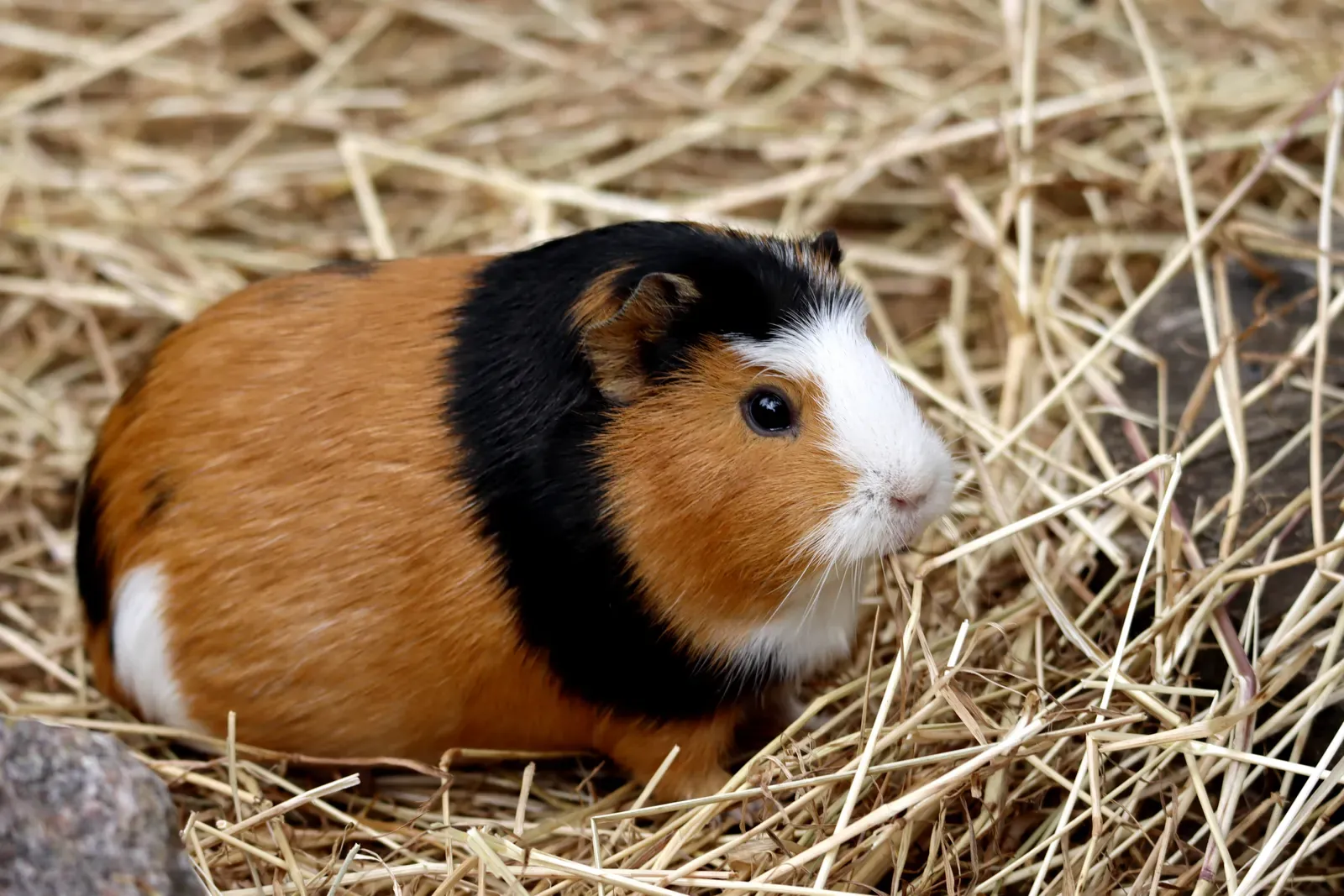
2. Give Vitamin C Every Day — They Can’t Make Their Own
This is the longevity factor most owners get wrong. Guinea pigs are one of the few mammals (along with humans and other primates) that cannot synthesize their own vitamin C — they lack the enzyme gulonolactone oxidase. No dietary vitamin C means scurvy: swollen joints, poor coat, lethargy, weight loss, wounds that won’t heal, and eventually death.
Oxbow’s care sheet states that normal healthy adult guinea pigs need 10 mg/kg of vitamin C per day to prevent scurvy, rising to 30 mg/kg for growing, pregnant, or nursing animals, and up to 50 mg/kg for sick animals (Oxbow care sheet). In practical daily terms, that works out to roughly 20–25 mg a day for a typical adult, per PetCoach’s vet-written nutrition guide.
The how-to:
- Feed about a cup of fresh vegetables per pig per day, built around high-C choices: bell pepper (red/orange/yellow is highest — a quarter of a pepper covers most of an adult’s daily need), kale, parsley, cilantro, and romaine.
- Don’t rely on pellets alone. Pellets lose vitamin C potency within about 90 days of manufacture, so the bag’s label is not a guarantee.
- Don’t put vitamin C in the water bottle. The vitamin degrades in light and moisture, and if your pig dislikes the taste, they’ll drink less water.
For pigs that are picky eaters, ill, or recovering — or as insurance on top of fresh veg — a dedicated supplement works well. Oxbow Natural Science Vitamin C tablets are made specifically for guinea pigs, and Oxbow’s own care sheet recommends supplementing in times of stress when vitamin C needs fluctuate.
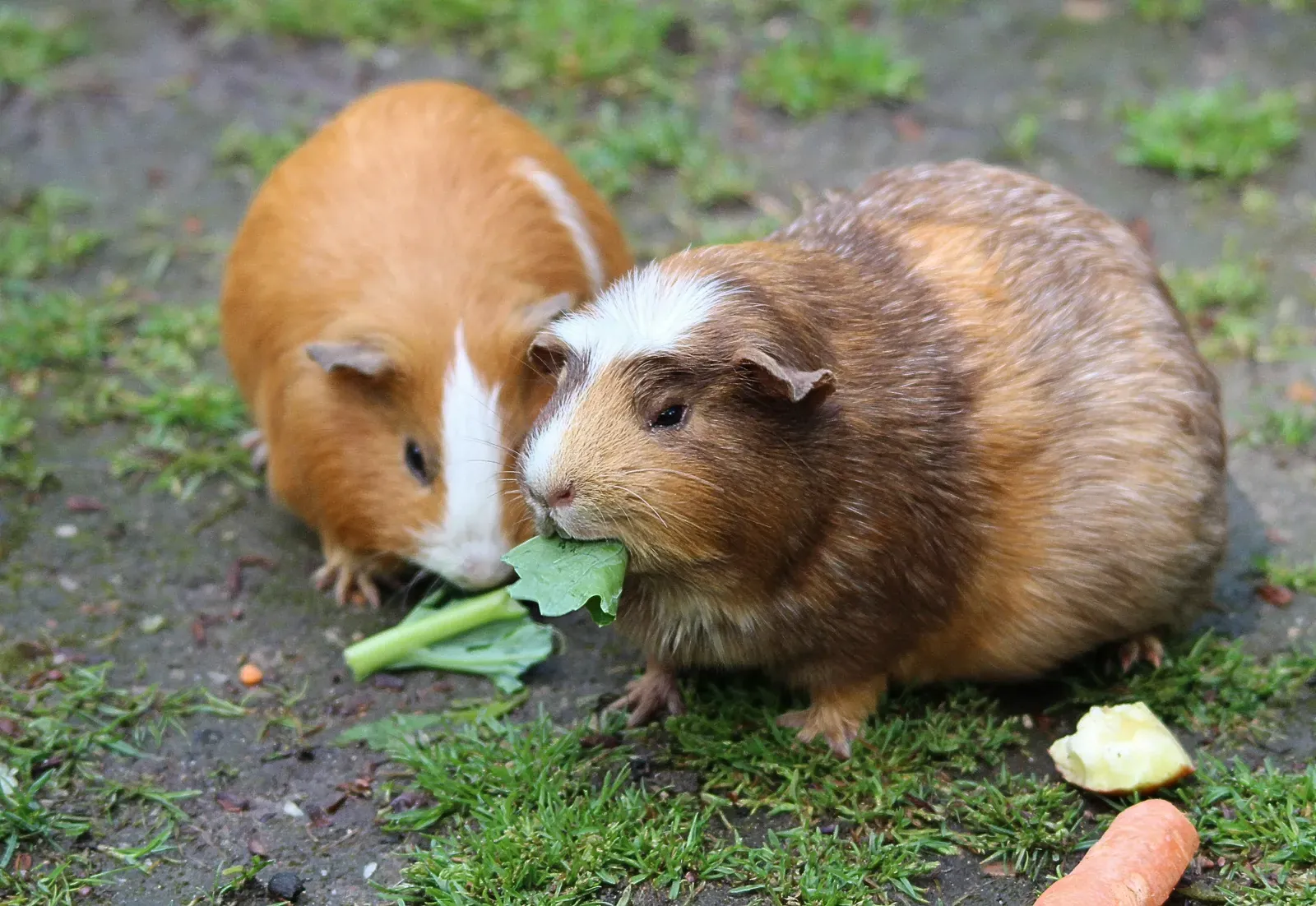
3. Measure Pellets — Obesity Shortens Lives
Pellets are the supplement, not the meal. The classic longevity mistake is a bowl that’s always full: guinea pigs will happily overeat calorie-dense pellets while ignoring their hay, and obesity follows. Overweight pigs develop heart disease, bumblefoot (pododermatitis), and arthritis — all of which cut years off a life.
The concrete rule: about 1/8 cup of plain, timothy-based pellets per adult pig per day. Choose a plain formula with no colored bits, seeds, or dried fruit — those are fat traps. Oxbow Essentials Adult Guinea Pig Food is the timothy-based staple most rescues use; pair it with unlimited hay and the daily veg, and you’ve got the complete vet-recommended diet.
Watch the calcium too: high-calcium diets (alfalfa hay, calcium-rich veg in excess) contribute to bladder stones, which are painful and can be fatal without surgery. Timothy-based everything for adults.
4. Give Them Space: A Big Cage Plus Daily Floor Time
Sedentary, cramped guinea pigs get fat, stressed, and sick. Active pigs with room to run stay lean and engaged — and the Humane Society’s minimums are bigger than most pet-store cages: 7.5 square feet for one pig (bare minimum) and 10.5 square feet preferred for a pair (Humane Society guidance via Littlegrabbies). Most store cages are half that.
Practical longevity setup:
- Use a C&C-style cage or large indoor pen that is actually big enough for the number of pigs you have — check our full cage-size guide for exact dimensions per pair, trio, and herd.
- Give daily floor time: an hour of supervised roaming in a pig-proofed room or pen. Popcorn (those joyful jumps) isn’t just cute — it’s exercise.
- One hidey per pig, plus tunnels and enrichment. Boredom and stress suppress the immune system over time.
Exercise is also joint insurance: mobile pigs develop fewer mobility problems as seniors.
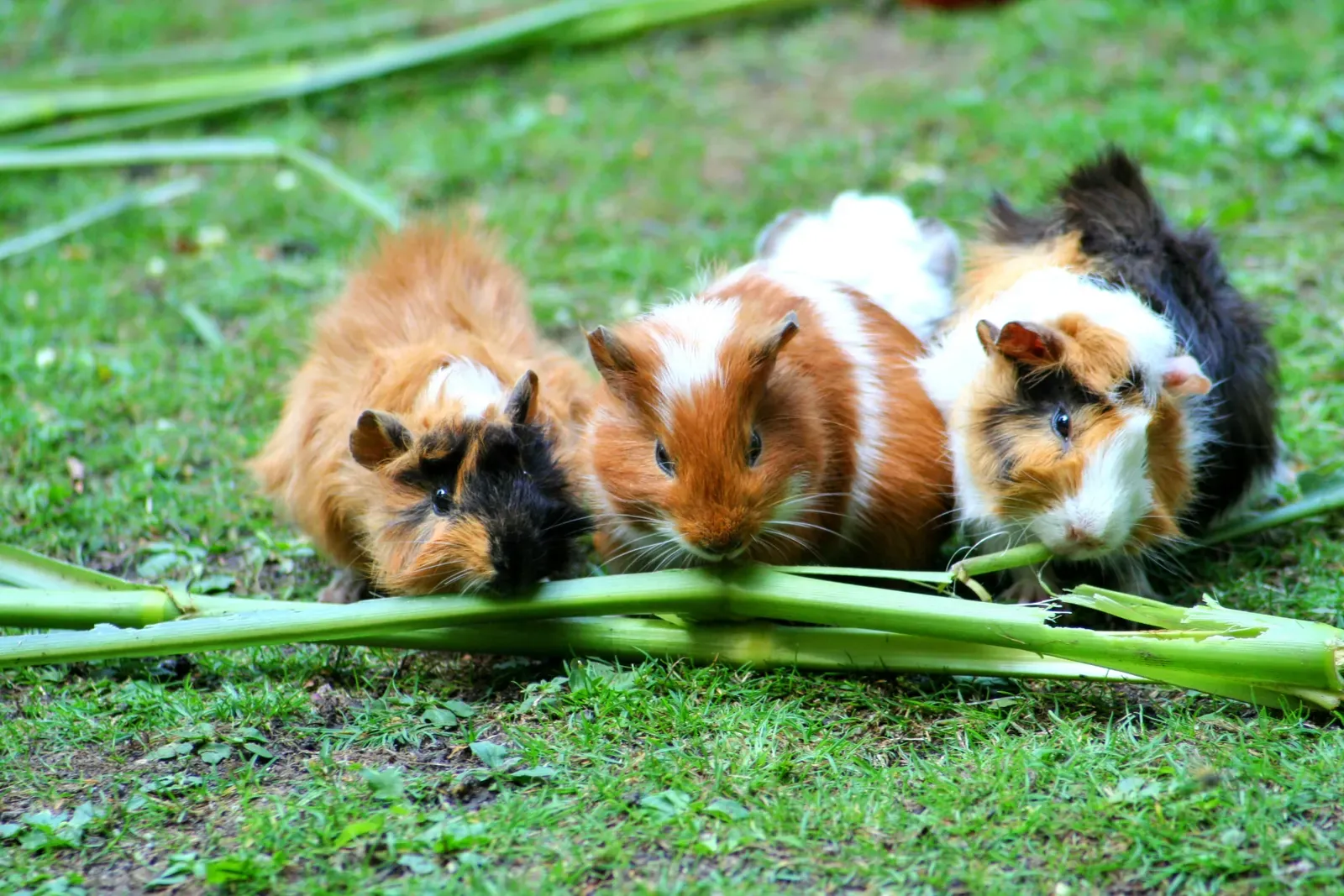
5. Keep Them Never Alone — Companionship Is a Health Intervention
Guinea pigs are herd animals. In the wild they live in family groups of five to ten, and the RSPCA is explicit: they should never be kept alone — companionship is vital for their mental wellbeing (RSPCA).
This isn’t sentimentality; it’s medicine. Lonely guinea pigs eat less, move less, and show measurable signs of depression and stress. Chronic stress weakens the immune system, making pigs more vulnerable to the respiratory infections that are a leading cause of early death. A same-sex pair (or a neutered male with females) is the minimum social unit.
If you’re worried about one pig outliving the other and being left solo, that’s a real scenario worth planning for — read our full breakdown of why guinea pigs should never live alone and what to do when you’re down to one.
6. Find an Exotic Vet Early — and Weigh Weekly at Home
Guinea pigs are prey animals: they hide illness until it’s advanced. By the time a pig looks sick, the problem is often serious. Two habits catch trouble early:
Annual checkups with a qualified exotics vet. Oxbow’s care sheet recommends visiting a qualified exotic veterinarian at least once a year for diet, health, and dental assessment — and locating one before you need one (Oxbow). Not every small-animal vet is comfortable with guinea pigs, so confirm exotic experience when you book. Pigs over 3–4 years old benefit from twice-yearly visits.
Weekly weigh-ins on a kitchen scale. This is the single most powerful at-home health tool in guinea pig care. Gradual weight loss is the earliest detectable sign of dental disease, kidney problems, and many other slow killers — and you’ll see it on a scale weeks before you see it with your eyes. Weigh at the same time each week, log it, and treat a steady downward trend as a vet-visit trigger. (Vet-written care guides recommend weekly weighing as standard monitoring (Vocal Media guinea pig care guide).)
Health disclaimer: This article is for education, not diagnosis. If your guinea pig stops eating, loses weight, breathes noisily, or behaves unusually, see an exotic vet promptly — guinea pigs deteriorate fast once they show symptoms.
7. Protect Them From Temperature Extremes — Heat Kills Fast
Guinea pigs are terrible at handling heat. They barely sweat and have dense coats, which makes them extremely prone to heatstroke — one of the fastest killers in the species. The RVC’s care guidance is blunt: guinea pigs do not tolerate temperatures above 26°C (79°F), with an ideal range of 20–22°C (68–72°F) and humidity of 40–70% (RVC).
On the cold end, the RSPCA advises moving guinea pigs indoors when temperatures drop below 15°C (59°F) (RSPCA winter advice).
The longevity playbook for climate:
- Keep the cage indoors, out of direct sun, away from radiators and drafty windows.
- In summer heat: frozen water bottles wrapped in a towel, ceramic tiles to lie on, good ventilation — and never, ever leave a pig in a car or a sunny hutch.
- In winter: indoor housing; if outdoor is unavoidable, insulated, draft-free hutches raised off the ground with deep bedding — but indoor is always safer.
A pig that survives a heatstroke episode often has lasting organ damage, so prevention genuinely adds years.
Signs Your Guinea Pig Is Becoming a Senior
Guinea pigs are generally considered seniors from around 4–5 years old. Extra years are a gift, but they come with extra care needs:
- Gradual weight loss or muscle wasting along the spine and hips
- Less popcorning, slower movement, stiffness getting up — early arthritis
- Thicker, duller coat and sometimes cataracts (a blue-white haze in the eyes)
- Eating more slowly, dropping food, or preferring softer veg — have teeth checked promptly
- Sleeping more, less interest in floor time
Senior pigs often need more vitamin C (aging bodies use it less efficiently) and more frequent vet checks. Keep the weekly weigh-ins religious — in seniors, the scale is your early-warning system.
Guinea Pig Lifespan: FAQ
What’s the average guinea pig lifespan?
About 5–7 years with good care. The RSPCA says five to six years is typical, the RVC says 5–7 in captivity, and well-cared-for pigs regularly reach 7–8. Anything under 4 is usually a care or health issue, not old age.
Can a guinea pig live 10 years?
Yes — it’s uncommon but documented. Healthy, well-kept pigs reaching 8–10 is realistic; beyond that is rare. The official Guinness record is Snowball at 14 years and 10.5 months.
What do guinea pigs usually die from?
The most common early killers are scurvy (vitamin C deficiency), dental disease from inadequate hay, respiratory infections, heatstroke, and urinary/bladder stones. In seniors, tumors, heart disease, and kidney failure become more common. Most of the early list is preventable — which is exactly why the seven steps above matter.
Do guinea pigs live longer in pairs?
There’s no formal lifespan study comparing single vs. paired pigs, but every major welfare authority agrees solitary pigs suffer chronic stress and reduced appetite and activity — all of which shorten lives. Keeping them in pairs or groups is one of the most evidence-aligned things you can do.


Leave a Comment