
Vet disclaimer: This guide is for information only and isn’t a substitute for veterinary advice. Every claim below is verified against RSPCA, GuineaLynx, or vet-authored sources, but if your pig is pregnant, ill, prone to bladder stones, or on medication, check with an exotic vet before changing its diet.
Figuring out what vegetables can guinea pigs eat is one of the most searched — and most confused-over — questions new owners ask. Get it right and your pigs get vitamin C, hydration, and daily enrichment; get it wrong and a single wrong vegetable can mean a vet emergency.
This guide lays it all out the way the experts do: daily staples, weekly rotation, occasional treats, and the never-feed list.
What vegetables can guinea pigs eat every day? (Daily staples)
- Bell peppers (any color) — the single best daily vegetable. High in vitamin C, low in calcium, and most pigs go wild for them.
- Romaine lettuce — a reliable daily leafy green.
- Gem lettuce — another mild, crunchy lettuce on the RSPCA’s daily list.
- Cucumber — mostly water, great for hydration, safe daily.
- Celery — on the RSPCA’s daily list (stalks and tops). Chop into small pieces for smaller pigs.
- Parsley — safe often per the RSPCA, and rich in vitamin C. Rotate it rather than making it the only green.
- Coriander (cilantro) — a favorite safe herb on the RSPCA’s daily fresh-greens list.
What vegetables can guinea pigs eat weekly? (Rotate these)
- Carrot (small pieces) — safe, but sugary; keep portions small and weekly.
- Broccoli — nutritious and vitamin C–rich, but can cause gas. Small amounts only.
- Kale — nutrient-dense but high in calcium; overfeeding is linked to bladder stones.
- Spinach — fine in rotation, risky as a staple because of calcium.
- Tomato — ripe fruit fine a couple of times a week; never the leaves or stems (poisonous).
- Cabbage and cauliflower — fine occasionally in tiny portions; gas-formers.
Occasional treats and fruit (rare, tiny portions)
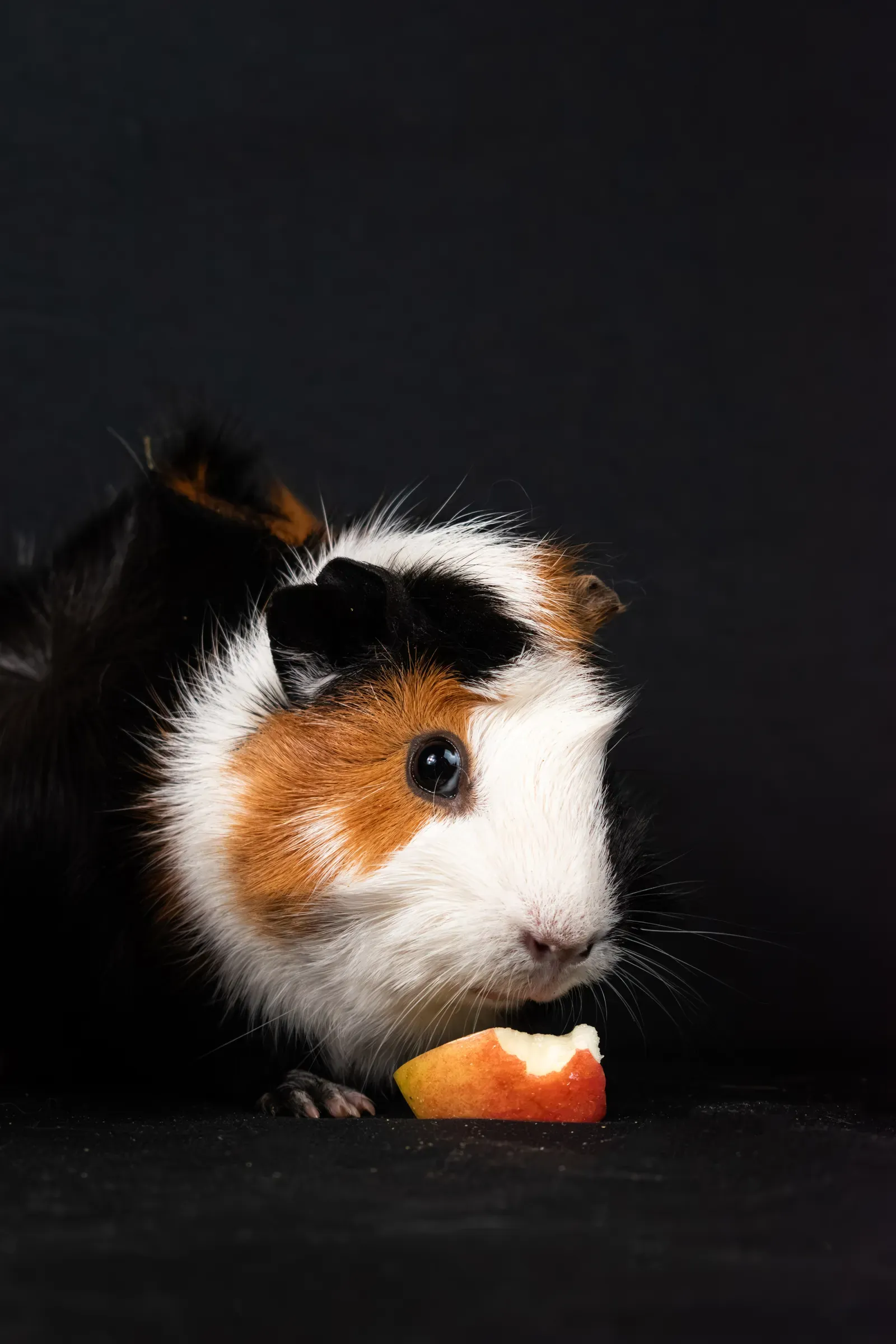
- Apple — thin wedge, no seeds (seeds are poisonous).
- Blueberries — a few berries as a tiny treat.
- Banana — thin slice occasionally.
- Strawberries — a berry or two, rare treat.
- Melon — small chunk as a very occasional treat.
- Grapes — one or two, rarely; high in sugar.
Foods guinea pigs must never eat
| Never feed | Why |
|---|---|
| Onion, garlic, chives, leeks | Sulfur compounds damage red blood cells — life-threatening anemia. No exceptions. |
| Potato (any kind) | Contains solanine, a toxin. |
| Iceberg lettuce | Causes diarrhea; choose romaine instead. |
| Avocado | Listed as poisonous for guinea pigs by the RSPCA. |
| Rhubarb | Extremely high in oxalic acid; dangerous for kidneys. |
| Tomato leaves and stems | Contain the toxin tomatine. |
| Chocolate, seeds, beans, cereals | Toxic or indigestible. |
| Citrus fruits | Too acidic for guinea pigs. |
If your pig eats onion or garlic: treat it as an emergency and call your vet immediately.
The vitamin C rule: why bell peppers matter
Guinea pigs cannot make their own vitamin C. Without a daily supply they develop scurvy. The RSPCA recommends about 20 mg of vitamin C daily, and vets rank red bell peppers as one of the best food sources. For the full breakdown see our upcoming vitamin C guide (forthcoming).
How much vegetables per day? 5 feeding rules
- About a cup of vegetables per pig per day, split morning and evening.
- Wash everything and remove uneaten veg before it wilts.
- Introduce new vegetables gradually — one at a time.
- Rotate, don’t repeat. Two or three different vegetables per day.
- Hay first, always. Unlimited timothy or meadow hay should be ~85% of the diet.
Reminder: This guide is informational, not veterinary advice. If your guinea pig stops eating, has soft droppings, shows signs of pain, or may have eaten something from the never-feed list, contact an exotic vet right away.



Leave a Comment