
Vet disclaimer: This guide is for information only and isn’t a substitute for veterinary advice. Every food below is verified against RSPCA, GuineaLynx, or vet-authored sources — but if your guinea pig has eaten something on this list, don’t wait to see what happens. Call an exotic vet immediately. Guinea pigs can’t vomit, so “wait and see” is never a safe strategy.
If you’re wondering about the foods guinea pigs can’t eat, you’re asking the single most important diet question a new owner can ask. Guinea pigs explore the world with their mouths. A dropped onion slice, a curious nibble of a houseplant, a well-meaning child sharing chocolate — any of these can turn into a genuine emergency, because a guinea pig’s digestive system is built for one thing only: grass hay and fresh vegetation.
The good news: the dangerous list is short, specific, and well documented. The RSPCA publishes an explicit avoid list for guinea pigs. GuineaLynx, the vet-reviewed care resource exotic vets have pointed owners to for decades, backs it up item by item. This guide gives you the full 15 foods guinea pigs can’t eat, with the actual reason each one is dangerous — not folklore, not “my cousin’s pig was fine,” but the mechanism, so you remember it.
Print this list. Stick it on the fridge. Everyone in the house who feeds the pigs — kids included — should know it. For what they can eat every day instead, see our safe vegetable list. And good nutrition starts with the right habitat too — check their cage setup to make sure they have enough space.
The 15 foods guinea pigs can’t eat (toxic list)
1. Chocolate
Why it’s dangerous: Chocolate contains theobromine and caffeine, two stimulants that are toxic to guinea pigs (the same reason chocolate is dangerous for dogs and cats). Even a small piece can cause a racing heart, tremors, and seizures. Dark and baking chocolate are the worst, but no chocolate is safe in any amount.
Common mistake: A child sharing a treat, or chocolate dropped during floor time.
2. Onions
Why it’s dangerous: Onions — raw, cooked, or powdered — contain thiosulfate compounds that damage red blood cells and cause hemolytic anemia in guinea pigs. The RSPCA lists onions on its explicit avoid list. Cooking doesn’t make them safe; the damaging compounds survive heat.
3. Garlic
Why it’s dangerous: Garlic is in the same allium family as onions and carries the same thiosulfate risk to red blood cells. It’s more concentrated than onion, so even a small amount matters. The RSPCA’s avoid list names garlic alongside onions, and Guinea Pigs Australia flags the whole allium group — onions, garlic, chives, and spring onions.
4. Potatoes (white, gold, or red — especially raw or green)
Why it’s dangerous: Potatoes contain solanine, a glycoalkaloid toxin concentrated in green skin, sprouts, and eyes. Guinea Pigs Australia lists white, gold, and red potatoes as outright unsafe. Raw potato is the biggest risk, but cooked potato is still a starchy, low-fiber food a guinea pig’s gut isn’t built to handle.
Don’t confuse with: Orange sweet potato, which Guinea Pigs Australia lists as an occasional treat — but never white potatoes.
5. Avocado
Why it’s dangerous: Avocado contains persin, a fungicidal toxin that birds and small mammals are sensitive to, and it’s extremely high in fat. The RSPCA’s avoid list includes avocados explicitly. The flesh, skin, pit, and leaves are all off-limits.
6. Iceberg lettuce
Why it’s dangerous: Iceberg lettuce isn’t acutely poisonous, but it earns its place on every vet avoid list for good reasons: it’s almost entirely water with negligible fiber, and it causes diarrhea in guinea pigs. Guinea Pigs Australia specifically notes iceberg lettuce can cause diarrhea, and the University of Guelph’s pet nutrition service lists it among low-fiber foods to avoid.
Safe swap: Romaine, red leaf, green leaf, and butterhead lettuces are all fine daily staples.
7. Nuts and seeds
Why it’s dangerous: Two separate problems. First, seeds in husks (sunflower seeds especially) are a choking hazard — GuineaLynx explicitly warns that husks can get stuck. Second, nuts and seeds are extremely high in fat and nearly indigestible for a hindgut fermenter built for hay. Despite being sold in some pet-shop “treat mixes,” GuineaLynx’s diet page says mixes with nuts and seeds are too rich and not recommended.
This includes: Peanuts, almonds, walnuts, sunflower seeds, pumpkin seeds — and peanut butter, which is both a nut product and a sticky choking hazard.
8. Dairy products (milk, cheese, yogurt)
Why it’s dangerous: Guinea pigs are lactose intolerant after weaning. They don’t produce enough lactase to digest milk sugar, so dairy causes severe digestive upset — bloating, gas, and diarrhea. GuineaLynx’s care guide is blunt: do not give dairy products, period. That includes the yogurt drops sold as “guinea pig treats” — GuineaLynx specifically calls these out as detrimental.
9. Meat and eggs (any animal products)
Why it’s dangerous: Guinea pigs are strict herbivores. Their digestive system cannot process animal protein or fat at all. GuineaLynx’s diet guidance states plainly: do not feed dairy and meat products — guinea pigs are herbivores.
10. Bread, biscuits, cereals, and baked goods
Why it’s dangerous: Processed grains are starchy, low in fiber, and usually carry salt, sugar, and preservatives a guinea pig can’t handle. The RSPCA’s avoid list names “bread, biscuits, cakes, etc.” outright. Starches disrupt the delicate gut flora that hindgut fermenters depend on.
11. Rhubarb (leaves and stalks)
Why it’s dangerous: Rhubarb is high in oxalic acid, concentrated most in the leaves. Oxalic acid binds calcium and can contribute to bladder stone formation and kidney stress — a serious concern for a species already prone to urinary stones.
12. Mushrooms
Why it’s dangerous: Wild mushrooms can be outright toxic, and even store-bought mushrooms offer a guinea pig nothing — they’re low in fiber and not part of any natural cavy diet. Guinea Pigs Australia lists mushrooms as unsafe.
13. Tomato leaves and stems
Why it’s dangerous: Tomato plants are in the nightshade family, and the leaves and stems contain solanine — the same toxin as in potatoes. Guinea Pigs Australia is explicit: feed tomato flesh if you like, but never the stems or leaves.
14. Raw or dried beans
Why it’s dangerous: Raw and dried beans (especially kidney beans) contain lectins, notably phytohaemagglutinin, which is toxic when uncooked. The RSPCA (NSW) lists raw beans among foods guinea pigs should never eat.
Don’t confuse with: Fresh green beans, which Guinea Pigs Australia lists as safe 2–3 times a week.
15. Caffeine (coffee, tea, cola, energy drinks)
Why it’s dangerous: Caffeine is a cardiac and nervous-system stimulant that’s toxic to guinea pigs even in small amounts. A spilled cup of tea or a cola can left at floor-time height is a genuine emergency.
What to do if your guinea pig eats something toxic
- Remove the food immediately.
- Do NOT try to make them vomit. Guinea pigs physically cannot vomit.
- Note what, how much, and when.
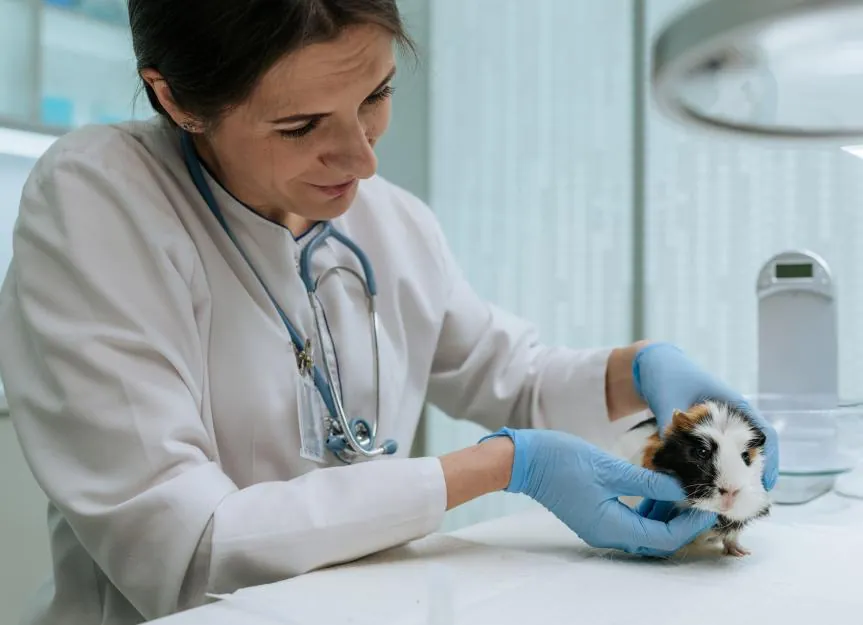
- Call an exotic vet right away.
- Keep them calm, warm, and hydrated. Offer water and hay.
- Watch for warning signs: lethargy, refusal to eat, diarrhea, bloating, tremors, labored breathing, or drooling.
Safe alternatives
- Instead of iceberg lettuce: romaine, red leaf, or butterhead lettuce
- Instead of onion/garlic flavor: fresh herbs like cilantro, parsley, dill, or basil
- Instead of nuts/seeds: small pieces of bell pepper or cucumber
- Instead of potato: a thin slice of carrot or chunk of zucchini
- Instead of yogurt drops: a blueberry or small strawberry, once or twice a week
Diet is only one part of keeping guinea pigs healthy. Explore our complete guinea pig care hub for the full picture, including whether guinea pigs can live alone and how long guinea pigs live with proper care.
FAQ
Can guinea pigs eat grapes? The RSPCA lists grapes and raisins among the foods guinea pigs can’t eat, so no.
Can guinea pigs eat corn? Corn kernels are a choking hazard — never feed them. Husks and silk are safe.
Can guinea pigs eat tomatoes? The ripe flesh, yes, in small amounts. Never the leaves, stems, or vines.
Can guinea pigs eat peanut butter? No — nuts are on the never list, and it’s a choking hazard.
My guinea pig ate chocolate — will it be okay? Call your exotic vet now.
Can guinea pigs eat sweet potato? Orange sweet potato is an occasional treat, but white, gold, and red potatoes are firmly among the foods guinea pigs can’t eat.
Vet disclaimer: This list reflects current guidance from the RSPCA, GuineaLynx, and vet-authored nutrition sources. If your guinea pig eats anything unusual — or shows lethargy, appetite loss, diarrhea, or breathing changes — contact an exotic vet immediately.

Leave a Comment