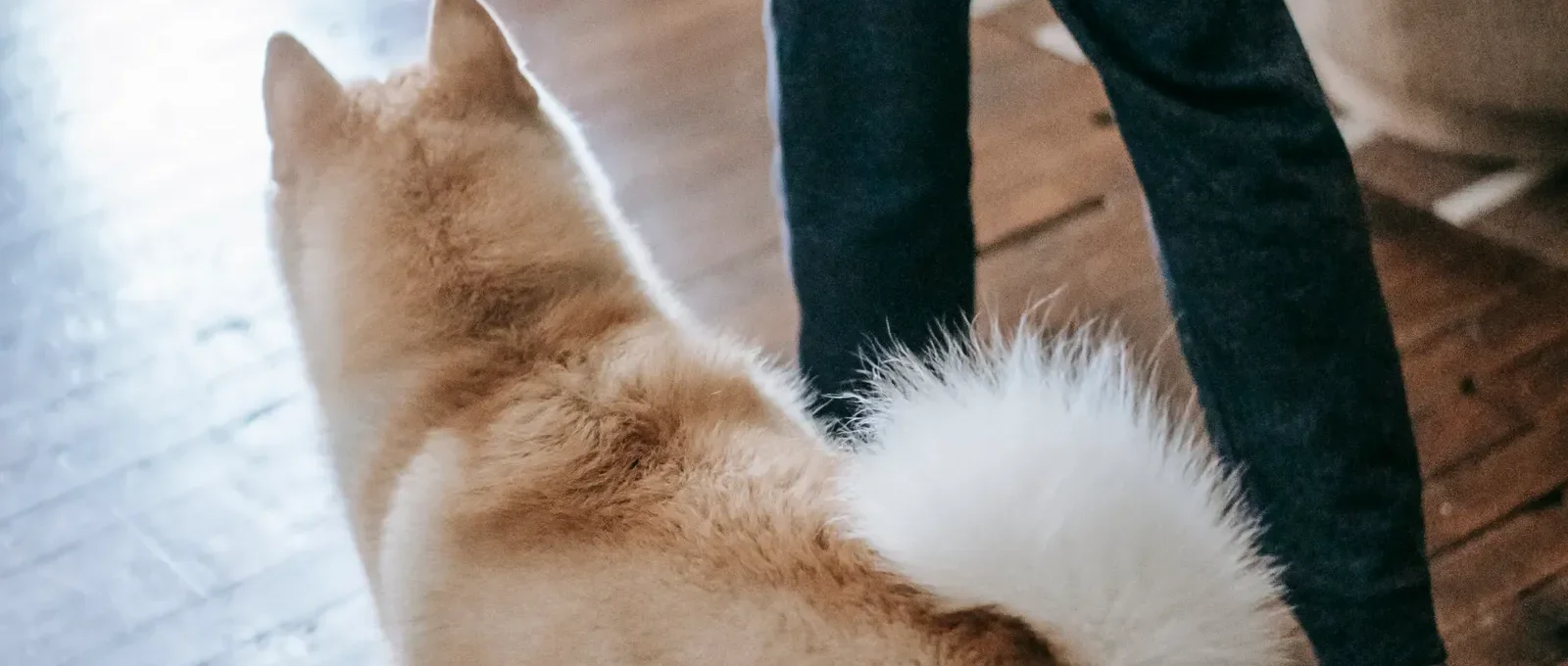

Introduction
If you’ve ever asked “why does my dog follow me everywhere?” — to the kitchen, the bathroom, the three feet between the couch and the fridge — you’re describing one of the most common (and most Googled) dog behaviors. The short answer: following you is usually a compliment. Dogs are social animals wired to stay near their people, and shadowing is often just affection plus habit.
But “usually” isn’t “always.” Sometimes following signals anxiety, boredom, or a medical issue brewing underneath. Here are the 6 reasons, from the most common to the ones worth paying attention to.
Reason 1: You’re Their Pack (Bonding)
Dogs evolved as cooperative social animals. Staying near the social group is deeply wired — in the wild, the group means safety, food information, and warmth. Your dog following you room to room is, at its core, the domestic version of staying with the pack.
This is strongest in the first months after adoption and in puppies, when the bond is actively forming. It’s also why rescue dogs often shadow intensely at first: they’re mapping out who their person is.
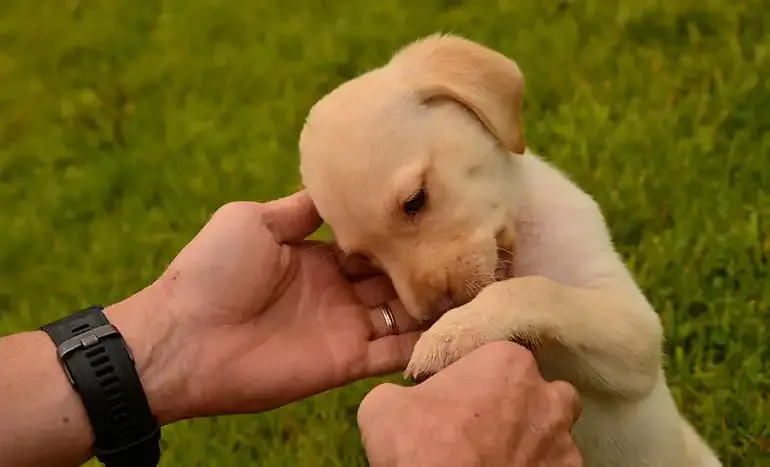
Reason 2: Good Things Come From You
Follow the treats. Dogs are brilliant economists: you are the source of food, walks, play, door-opening, and car rides. Shadowing you is simply good strategy — the human is a vending machine of wonderful outcomes.
This is also why the behavior intensifies around routine times. If dinner is at 6pm, expect a shadow starting at 5:30. Your dog has learned the schedule better than you have.
Reason 3: Breed Tendencies (Velcro Breeds)
Some breeds were literally developed to work in constant contact with humans. The classic “velcro breeds” include Vizslas, Labrador Retrievers, Border Collies, French Bulldogs, and Cavalier King Charles Spaniels — dogs bred to stay close, check in constantly, or work as companions.
If you have a velcro breed, heavy shadowing is breed-typical, not a problem to solve. Expecting a Vizsla to lounge independently in another room is like expecting a retriever not to fetch — you’re fighting genetics.
Reason 4: Boredom and Under-Stimulation
A dog with nothing to do follows you because you’re the most interesting thing in the house. Under-exercised, under-enriched dogs shadow harder — you become their entertainment system.
Test this one easily: after a long walk plus 15 minutes of training or nose work, does the shadowing drop? If yes, the “problem” was an empty schedule, not an emotional disorder. Mental work (sniff walks, puzzle feeders, training games) tires dogs more efficiently than physical exercise alone.
Reason 5: Anxiety (Including Separation Anxiety)
Here’s where shadowing turns clinical. Dogs with developing separation anxiety often start with hyper-attachment: they can’t tolerate you being in another room, panic at closed doors, and escalate when you pick up keys or shoes.
The distinguishing features of anxiety-driven following: the dog can’t settle even when you’re present (pacing, whining, panting), shows distress at barriers (scratching closed doors), and the behavior appeared or worsened suddenly rather than being lifelong.
Reason 6: Medical Causes
Sudden clinginess in a previously independent dog deserves a vet visit. Dogs in pain, with declining vision or hearing, or experiencing cognitive changes often glue themselves to their person — you’re their safe reference point in a world that’s becoming confusing or uncomfortable.
Senior dogs are the classic case: canine cognitive dysfunction (dog dementia) frequently presents as new-onset clinginess, night restlessness, and getting “stuck” in corners. If your 10-year-old suddenly won’t leave your side, book the vet before assuming it’s sweet.
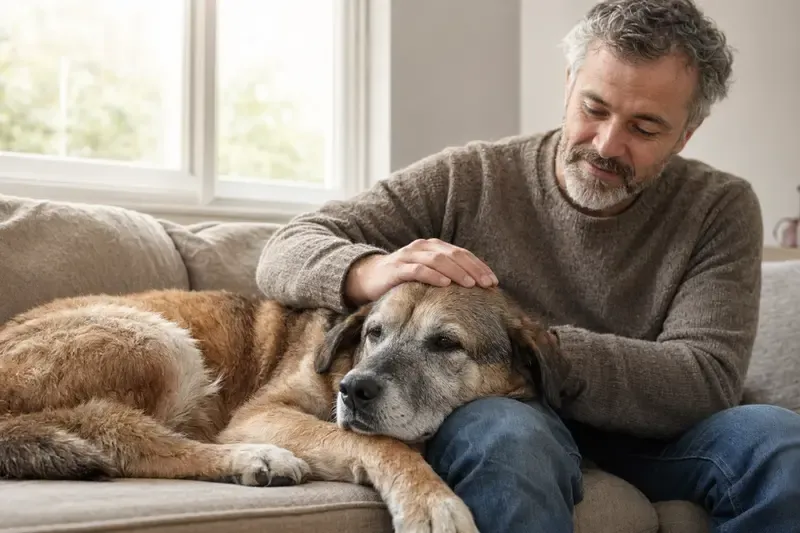
Why Does My Dog Follow Me Everywhere? When to Worry
Healthy shadowing vs. problem clinginess — use this assessment:
Healthy shadowing: the dog follows but settles (lies down near you), can be left with another family member happily, plays independently sometimes, and has done this since puppyhood. Enjoy it.
Worry signs: the dog cannot settle even beside you (pacing, whining), panics at closed doors or baby gates, shows stress signals (panting, drooling, lip-licking) while following, the behavior started suddenly, or it’s paired with appetite/sleep changes. Any sudden behavior change in an adult dog warrants a vet check first, behavior work second.
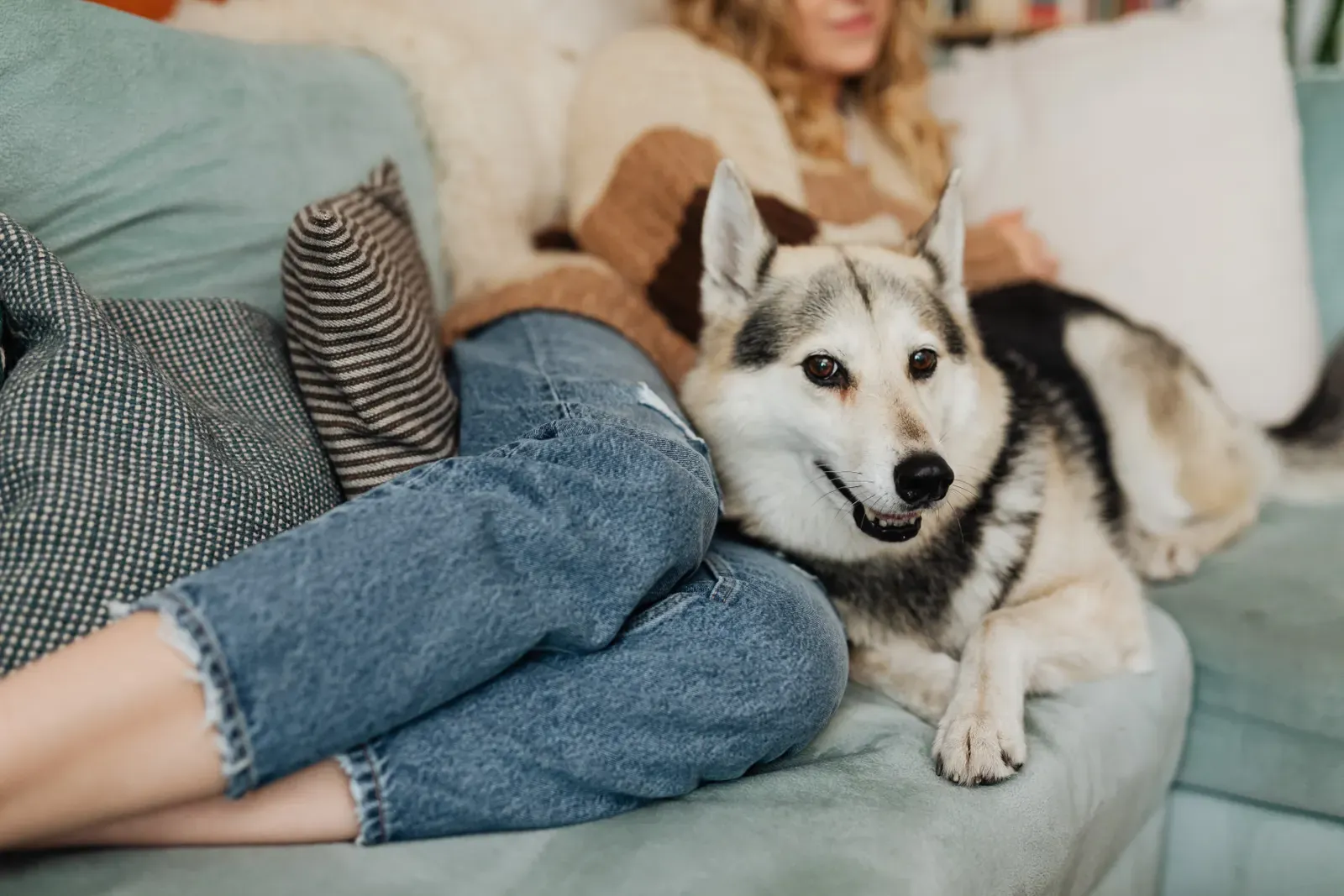
How to Tell Which Reason Fits Your Dog
Still wondering “why does my dog follow me everywhere” after reading the six reasons? Run this 3-question test:
1. When did it start? Lifelong shadowing = temperament or breed. Sudden onset (days to weeks) = something changed — pain, vision, a scare, or a routine disruption. Sudden always deserves a vet check first.
2. Can they settle? A dog who follows you to the couch and then sighs into a nap is shadowing happily. A dog who follows and paces, whines, or can’t lie still is telling you the following is driven by unease, not affection.
3. What happens at barriers? Close the bathroom door. A healthy shadow waits calmly or wanders off to a toy. A dog who scratches, barks, or panics at the closed door is showing barrier frustration or early separation distress — and that’s the version of “why does my dog follow me everywhere” worth addressing with the independence exercises above.
Teaching Healthy Independence (Without Rejecting Your Dog)
You don’t need to fix normal shadowing — but building some independence is good for both of you:
Reward independent settling. When your dog chooses to lie on their bed instead of your feet, quietly place a treat between their paws. You’re paying for the choice you want more of. A comfortable bed in your workspace gives them a great alternative spot.
Practice brief separations. Step into another room for 30 seconds, return calmly. Build duration gradually — this is the same desensitization logic as crate training, applied to rooms.
Don’t punish the following. Scolding a dog for wanting to be near you damages trust without teaching anything. If you need space, cheerfully redirect to a settled spot with a chew — don’t punish the affection. Remember the core answer to “why does my dog follow me everywhere”: in the vast majority of cases, it’s love and habit, not a disorder. Treat it as information about your bond, and only intervene when the assessment above flags a real problem.
Enrich the alone time. A frozen Kong or snuffle mat given when you need space teaches the dog that your absence predicts good things.
Common Mistakes About Velcro Dogs
Assuming it’s always anxiety. Most shadowing is normal social behavior. Pathologizing every shadow creates anxious owners, and dogs read that tension.
Ignoring sudden changes. The flip side: a dog who’s been independent for years and suddenly won’t leave you alone is communicating something. Vet first.
Punishing clinginess. Pushing the dog away, scolding, or shutting doors in their face when the cause is anxiety makes it worse — you’re confirming that the world is unpredictable.
Never teaching alone-time. Even healthy velcro dogs benefit from learning that separations are safe and boring. Dogs who’ve never practiced being alone are the ones who fall apart during the first emergency vet stay or boarding visit.
FAQ
Why does my dog follow me to the bathroom?
Usually habit plus opportunity — the bathroom is a small room where you sit still, making you maximally available for petting. Some dogs also dislike closed doors on principle. It’s normal unless paired with distress behaviors.
Do dogs pick a favorite person to follow?
Yes. Dogs typically shadow whoever provides the most care, food, walks, and positive interaction — which is why the primary caregiver gets the shadow. It’s earned, not random.
Why does my dog suddenly follow me everywhere?
Sudden clinginess warrants attention: check for pain, vision/hearing changes, or cognitive decline (in seniors), and consider whether something scary happened recently. Book a vet visit if there’s no obvious explanation.
How do I get my dog to stop following me?
You mostly don’t need to — but build independence with rewarded settling, brief practice separations, and enrichment. Never punish the following itself.
Is it bad that my dog follows me everywhere?
Not inherently. It’s a sign of a strong bond. It becomes a problem only when the dog can’t cope with any separation — that’s the line between devotion and disorder.
Got a new puppy? Training takes time, but vet bills happen overnight. Find out what pet insurance would cost for your breed with our free calculator: https://petsofweb.com/pet-insurance-cost-calculator/