
Introduction
If you’re asking “why does my dog dig holes?” while staring at a yard that looks like a construction site, here’s the reassuring truth: digging is one of the most normal dog behaviors there is. Dogs don’t dig to spite you. They dig because they’re hot, bored, hunting, anxious, or following instincts that are thousands of years old.
The bad news: yelling at a dog for digging is about as effective as yelling at the tide. The good news: every cause of digging has a specific fix, and for the dogs who just love to dig, there’s a way to give them what they want without sacrificing your lawn. Here are the 5 causes and the fix for each.
Cause 1: Cooling Off (Fix: Give Them a Cooler Option)
Dogs don’t sweat like we do. On a hot day, the top layer of soil is warm — but a few inches down, it’s cool. Digging a shallow pit and lying in it is canine air conditioning, and it’s remarkably effective.
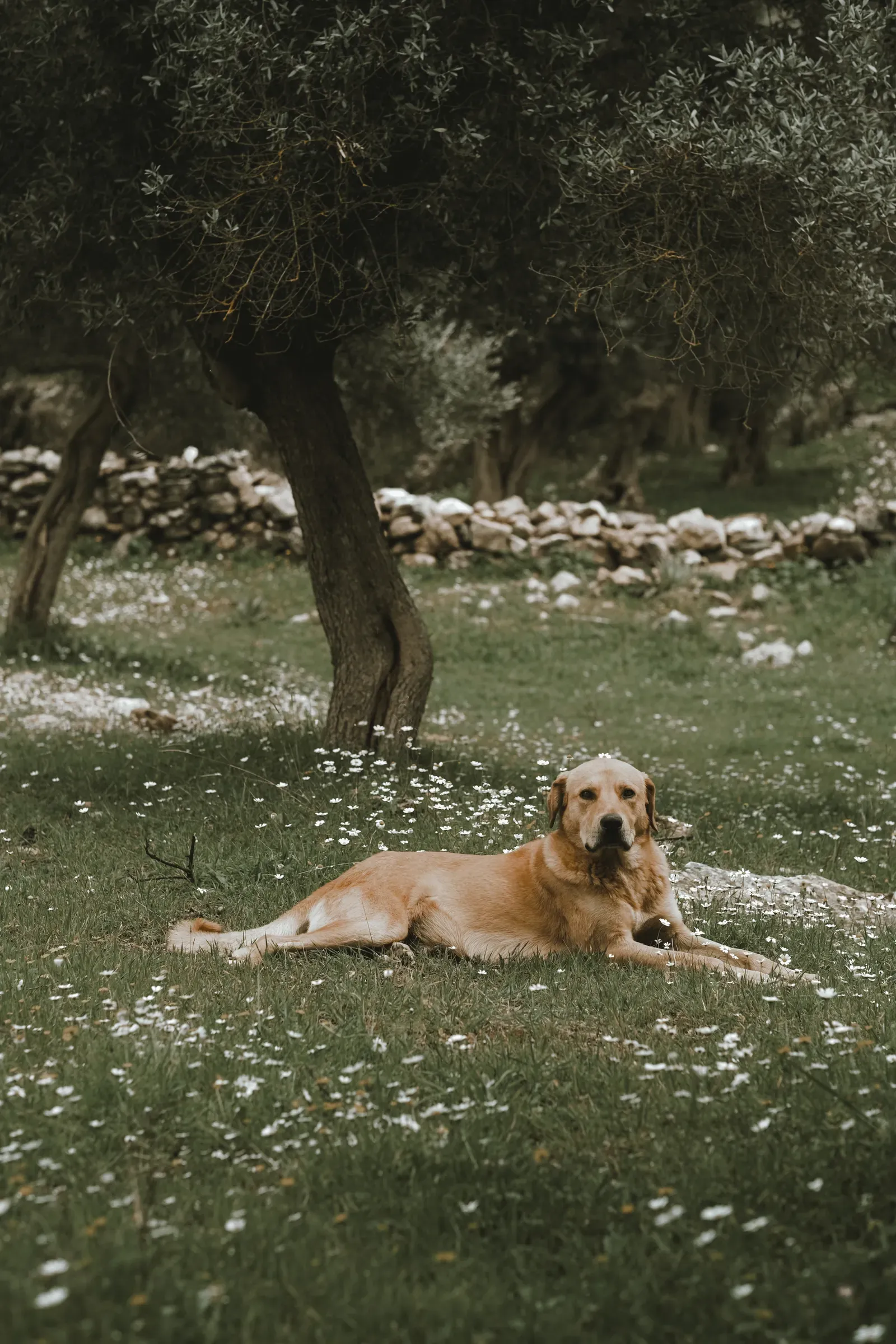
The fix: make the cool option easier than the digging. Provide shade, fresh water, and a cooling mat or a kiddie pool with a few inches of water. Dogs who dig to cool off usually dig shallow lounging pits (not deep tunnels) and do it in the heat of the day — if that matches your dog, heat is the cause. A cool resting spot in the shade often ends the excavation entirely.
Cause 2: Prey Drive (Fix: Remove the Payoff)
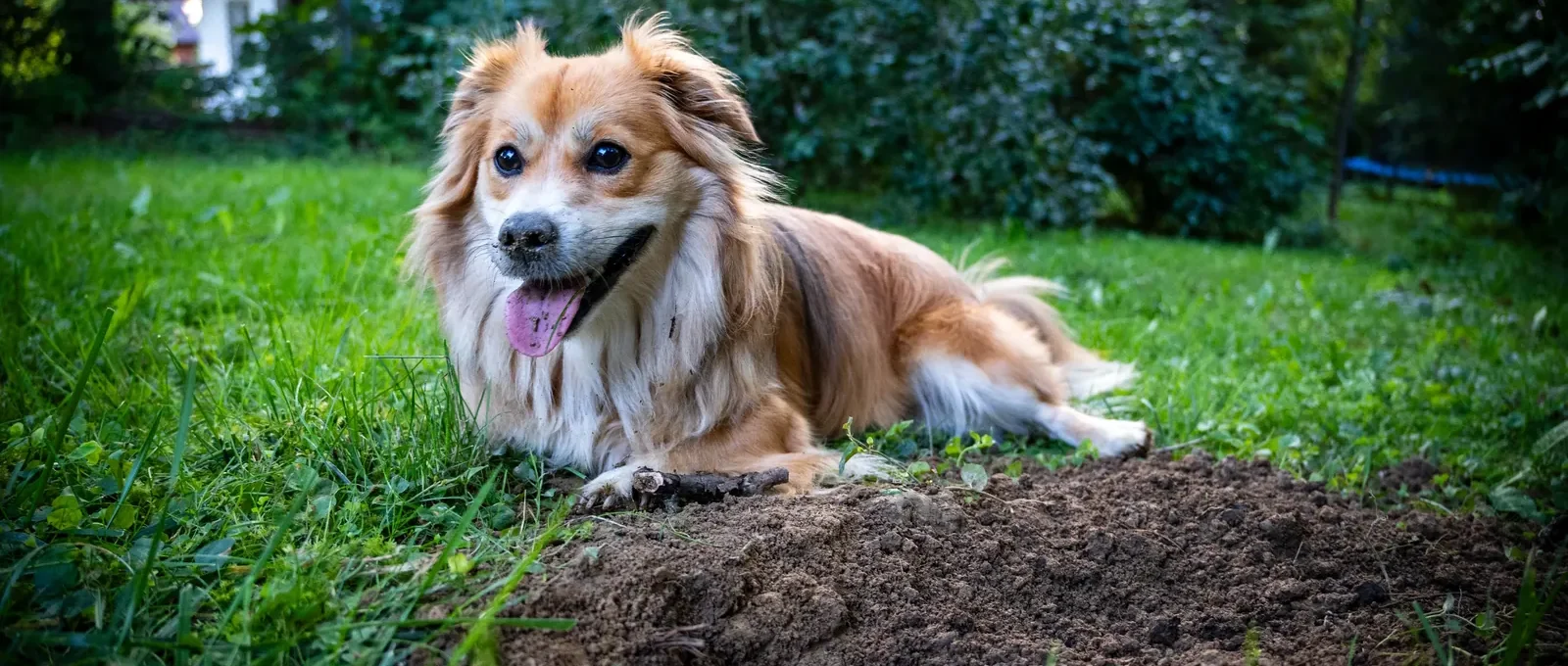
If your dog digs along fence lines, at the base of trees, or in garden beds — and especially if they dig with intense focus, nose down, sometimes pulling out roots — they’re hunting. Moles, voles, grubs, and chipmunks live underground, and your terrier (or terrier-mix) considers your yard a hunting ground.
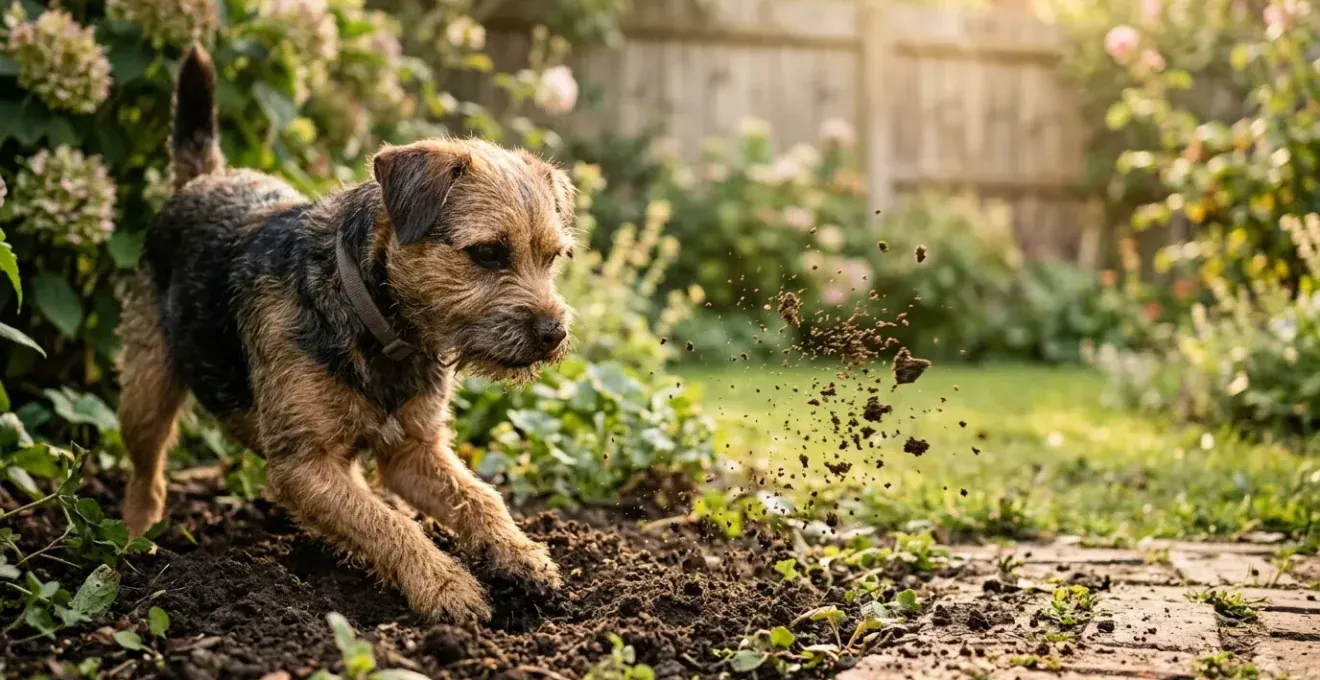
The fix: you can’t train out prey drive, but you can remove the payoff. Clear brush piles and woodpiles near digging zones (rodent habitat), consider pet-safe grub control for the lawn, and supervise yard time during peak digging seasons. For dedicated hunters, the dig zone (below) gives them a legal outlet for the behavior.
Cause 3: Boredom and Excess Energy (Fix: Tire the Brain)
The most common cause. A dog left alone in the yard for hours with nothing to do will invent a job — and digging is a great job: it’s physical, it’s sensory, it changes the environment, and it passes time.
The fix: a tired dog digs less, but note it’s mental tiredness that matters most. A 20-minute sniff walk (where the dog leads with their nose) tires a dog more than an hour of fetch. Add 10 minutes of training (a stay exercise counts), a frozen Kong, or a snuffle mat before yard time. Well-rested, well-exercised dogs simply dig less — the urge drops when the tank is empty.
Cause 4: Anxiety and Stress (Fix: Treat the Anxiety)
Some dogs dig at fences and doors specifically — this is escape-oriented digging, and it’s often anxiety. Dogs with developing separation issues dig where you disappeared: the gate you walked through, the fence line, under the deck.
The fix: this isn’t a digging problem, it’s an anxiety problem — punishing the digging changes nothing. If the digging is focused on exits, happens only when you’re gone, or comes with stress signals like panting and drooling, treat the underlying anxiety first. The digging resolves when the panic does.
Cause 5: Instinct and Breed Drive (Fix: Give Them a Legal Place to Dig)
Some dogs dig because digging is what they are. Terriers were bred to dig out quarry. Huskies and Malamutes dig dens. Dachshunds dig — it’s in the name (dachs = badger, hund = dog; they were bred to dig badgers out of setts).
The fix: for these dogs, suppression fails and management wins. Build them a dig zone — a sanctioned place where digging is not just allowed but rewarded. Details below.
Why Does My Dog Dig Holes? Build a Dig Zone
A dig zone redirects the instinct instead of fighting it. Here’s the spec:
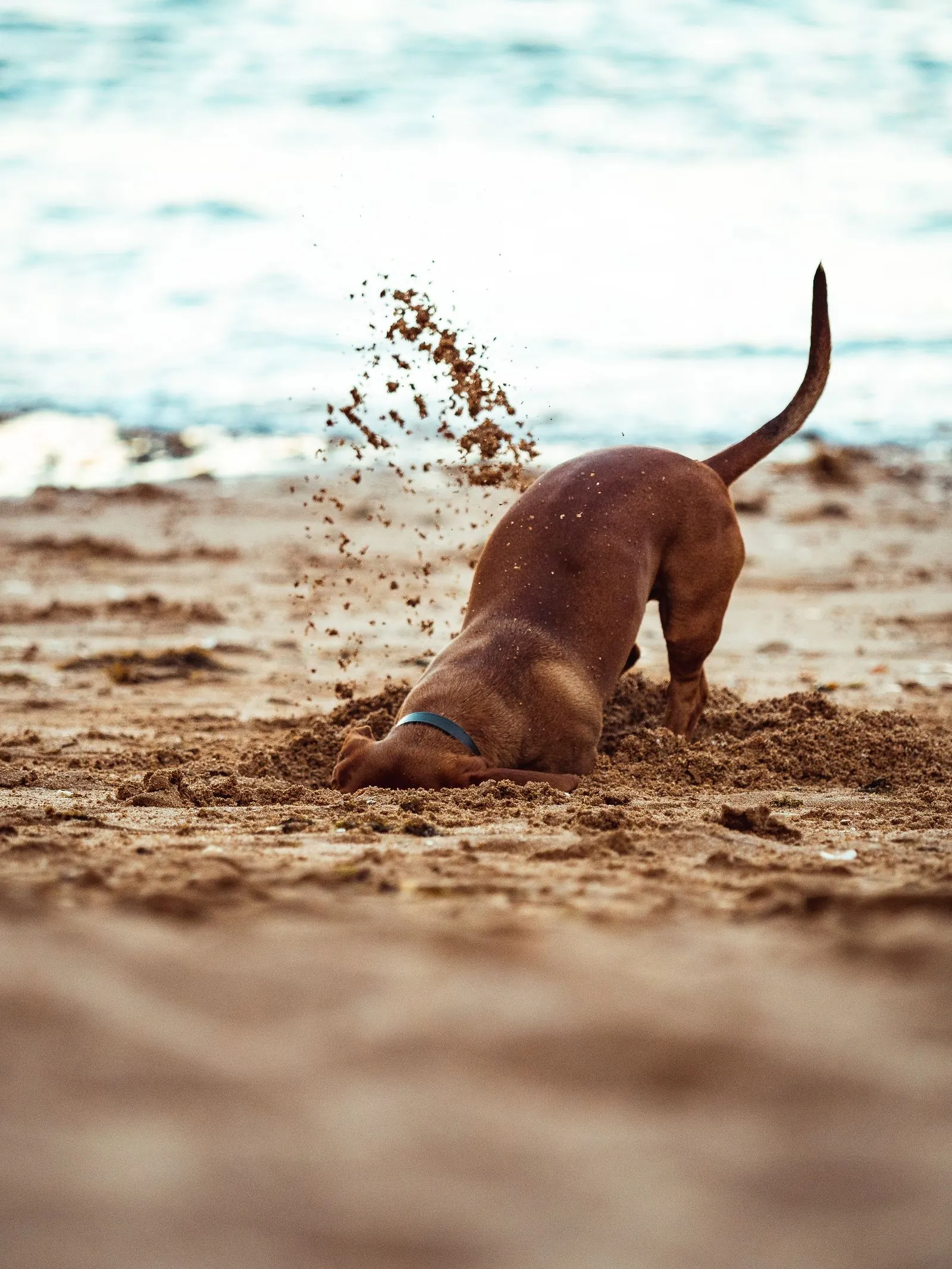
Construction: Frame a 4×4-foot square with landscape timbers or 2×6 boards, 8–10 inches deep. Fill with a 50/50 mix of play sand and loose topsoil — sand alone collapses, soil alone compacts; the mix holds a hole shape, which is the whole point.
Location: A corner of the yard, ideally with partial shade. Not next to the fence (you don’t want to train digging near escape routes).
Training (2-week plan):
- Days 1–3: Bury high-value treats just under the surface. Let the dog “discover” them. Digging in the zone = treasure.
- Days 4–7: Bury a favorite toy deeper. Praise any digging in the zone enthusiastically.
- Days 8–14: When you catch digging outside the zone, cheerfully redirect: “let’s go dig!” and run to the zone together. Reward digging there. Never punish digging elsewhere — just make the zone more rewarding.
Maintenance: refresh buried treasures weekly, or the zone goes stale. Most dedicated diggers transfer 80%+ of their digging to the zone within 2 weeks.
What About Digging Under the Fence?
Fence-line digging deserves its own callout because the stakes are higher — this is escape behavior, and an escaped dog is a dog in traffic. If you’re asking why does my dog dig holes specifically along the fence, the answer is almost always one of two things: prey on the other side, or the dog wants out (boredom, anxiety, or an unspayed/unneutered dog following hormones).
Immediate management: bury chicken wire or hardware cloth in an L-shape along the fence base — 12 inches down, 12 inches out. Dogs hit the wire and give up; it’s the only physical barrier that reliably works.
Longer term: address the motive. Prey digging needs habitat management (see Cause 2). Escape digging from boredom needs the enrichment fixes from Cause 3. Hormonal roaming drops dramatically with spay/neuter — talk to your vet about timing. And if the fence digging happens only when you’re gone, revisit the anxiety section: a dog digging to reach you isn’t a digging problem.
Common Mistakes About Dogs Who Dig Holes
Owners asking why does my dog dig holes tend to make the same five errors — and every one of them makes the digging worse instead of better.
Punishing after the fact. Yelling at a dog next to a hole teaches them that holes + your presence = scary. They’ll just dig when you’re not watching. Dogs can’t connect your anger to an act from hours ago.
Filling holes with the dog watching. Some owners fill the hole while the dog watches, thinking it demonstrates disapproval. The dog sees you digging — apparently digging is a group activity now.
Punishing tools (pepper, balloons, water). Aversive fillers (cayenne pepper in holes, buried balloons) sometimes suppress digging in that exact spot and sometimes create a fearful dog. They never address the cause, so the digging pops up elsewhere.
Ignoring the cause. Every fix above is cause-specific. Cooling diggers need shade; prey diggers need habitat management; bored diggers need enrichment. Generic “stop digging” approaches fail because they treat five different behaviors as one.
Expecting zero digging. For high-drive breeds, some digging is like barking in hounds — you can manage and redirect it, but eliminating it entirely isn’t a realistic or fair goal.
FAQ
Why does my dog dig at blankets and couches?
That’s nesting, not yard digging — the dog is arranging a comfortable spot, an instinct from wild canids circling grass into a bed. It’s harmless; provide a comfortable bed and let them arrange it.
Will neutering stop my dog from digging?
No. Digging isn’t a hormonal behavior — it’s driven by temperature, prey, boredom, anxiety, or instinct. Neutering doesn’t affect any of those causes.
My dog only digs when I’m gone. Why?
That’s the anxiety pattern — digging at exits and fences during absences points to separation distress, not a digging habit. Address the anxiety; the digging follows.
Are there sprays that stop dogs digging?
Bitter sprays work briefly on some dogs for specific spots, but they wash off, need constant reapplication, and don’t address why the dog digs. Management (dig zone, enrichment) beats repellents every time.
Which breeds dig the most?
Terriers (bred to dig out quarry), Dachshunds (bred to dig out badgers), Huskies and Malamutes (den diggers), and Beagles (scent-driven excavators). If you have one of these, plan for a dig zone from day one.
Got a new puppy? Training takes time, but vet bills happen overnight. Find out what pet insurance would cost for your breed with our free calculator: https://petsofweb.com/pet-insurance-cost-calculator/