
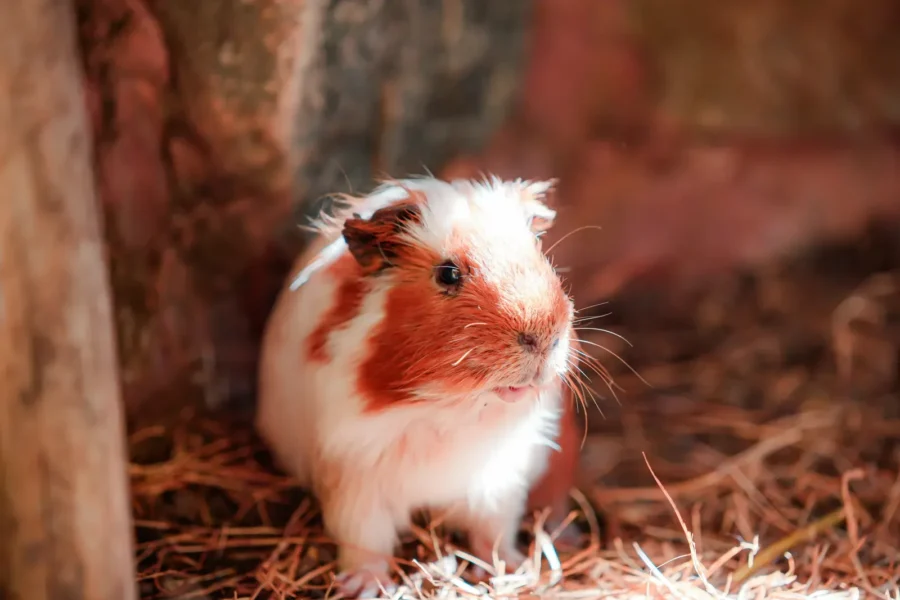
If you’re Googling “can guinea pigs live alone,” there’s a good chance you already have one pig and you’re wondering whether you really need a second. The honest, welfare-science-backed answer is simple: no, guinea pigs should not live alone. They’re one of the few pets where companionship isn’t a nice bonus — it’s a basic welfare need, up there with hay, water, and vitamin C.
This isn’t a guilt trip. It’s a practical guide: why a lone guinea pig is a welfare problem, what loneliness actually looks like, which pairings work, how to introduce a new pig safely, and what to do if you already have a single pig at home.
The herd-animal case: this is how their brains are wired
Wild guinea pigs (Cavia aperea) live in herds — the RSPCA notes they naturally form social groups of 5 to 10, and the PDSA is blunt about the domestic version: “You should always keep guinea pigs in pairs or small groups of their own kind. When kept alone, guinea pigs often become stressed, depressed and bored.”
This isn’t a behavior they’ve trained out of themselves in 3,000 years of domestication. Their entire social toolkit — the wheeking, the popcorning, the rumblestrutting, the shared grazing — only makes sense in a group. A guinea pig alone in a cage is like a person on a long solo night shift: they can function, but the wiring says this is wrong.
And no, you are not the substitute. Guinea pigs absolutely bond with their humans, and daily handling matters. But humans don’t groom each other at 2 a.m., don’t speak guinea pig, and don’t provide the constant, ambient company of another grazing body in the hay pile. Every major welfare organization says the same thing: the companion has to be another guinea pig.
Here’s the detail that stops most skeptics cold: in Switzerland, this isn’t advice — it’s law. Since September 2008, Switzerland’s Animal Protection Ordinance has required that guinea pigs be kept in groups of at least two animals, a fact confirmed by the Swiss Federal Food Safety and Veterinary Office and fact-checked by swissinfo.ch. (Amusingly, it created a small industry of companion-rental services for owners whose surviving pig would otherwise leave them in breach of the law.) The RSPCA puts it even more directly: “Guinea pigs should never live alone.”
Survive vs. thrive: what “living alone” actually costs them
Let’s be precise, because this is where weak articles fudge things. A guinea pig kept alone will not drop dead. They can survive for years as solo pets, and many owners reading this have done everything right — vet care, big cage, daily veggies — except this one thing.
But survival isn’t the bar. A solo guinea pig typically shows a recognizable pattern: less movement, less vocalization, less exploration. They eat and sleep, but the popcorning fades, the wheeking quiets, and the animal becomes a quieter, flatter version of itself. Stress hormones run higher in isolated guinea pigs — which matters because chronic stress weakens the immune system, and in a prey species that hides illness, that’s a real vulnerability.
Companionship also seems tied to longevity. Guinea pigs in compatible pairs tend to be more active and less stress-prone, and while no study hands you a tidy “pairs live X months longer” number, the mechanism is well understood: less stress, more exercise, earlier detection of illness (a pig who normally races a cagemate for veggies and suddenly stops is telling you something). For the full picture on what affects how long guinea pigs live, social housing is one of the factors you control from day one.
The bottom line: a solo guinea pig is surviving. A paired guinea pig is living.
Signs your guinea pig is lonely
Loneliness in guinea pigs is easy to miss because they don’t pine theatrically — they withdraw. These signs are widely reported by rescues and owners, but they also overlap with illness, so treat this list as “rule out a vet visit first, then consider company.” Guinea pigs are prey animals that mask sickness; any sudden behavior change deserves a vet check before anything else.
- Withdrawal and hiding. Spending far more time in the hideout, sitting in corners, losing interest in exploring during floor time.
- Appetite changes. Picking at food, losing interest in favorite veggies, or weight loss over weeks. Weigh your pigs weekly — it’s the single best early-warning tool you have.
- Lethargy and excessive sleeping. All guinea pigs nap a lot, but a lonely pig sleeps through the parts of the day they used to spend active.
- Bar chewing, pacing, or escape attempts. Repetitive cage behaviors are classic signs of a bored, under-stimulated animal.
- Aggression or skittishness out of nowhere. A pig that was handleable and suddenly isn’t — or one that starts nipping — may be stressed rather than “mean.”
- Unusual vocalizing. Either direction: gone silent, or whining and calling out when you leave the room.
If your pig shows several of these and the vet gives a clean bill of health, companionship is the missing piece. Guinea pig rescues see this story constantly — solo pigs surrendered for being “boring” who turn into different animals within weeks of getting a friend.
The right pairings: sows, neutered boar + sow, and the honest truth about boar pairs
Not all pairs are equal. Here’s what the RSPCA actually recommends: “single-sex pairs or groups, or a neutered male with one or more females.”
Two sows (females): the easiest start. This is the lowest-drama pairing and the best default for a first-time owner. Sows can still squabble — the Swiss veterinary office notes disputes actually occur more often in all-female groups than in mixed groups — but serious injury is rare, and intros are usually straightforward.
Neutered boar + sow(s): the gold standard. Many experienced keepers and rescues consider this the most stable combination. The boar gets his girl(s), the sows get a calm companion, and post-neuter there are no pregnancy surprises. But note the crucial detail from the RSPCA’s chief vet: males can remain fertile for four to six weeks after neutering, so he must stay separated from the sows until that window has fully passed. Also find an exotic-savvy vet — guinea pig neutering is routine for experienced vets but not something to hand to a general practice casually.
Two boars: workable, with honest caveats. This is where the internet gets noisy. Boar pairs absolutely can work — rescues rehome bonded boar pairs every day. But they need more space than sows (boars are territorial), they go through a difficult adolescence (roughly 4–14 months) when hormones can break a young pairing, and boar trios are notoriously unstable. If you’re set on boars, adopt an already-bonded pair from a rescue rather than gambling on two strangers, and give them the biggest cage you can manage. Two of everything — hideouts, bottles, hay racks — is non-negotiable.
What never works: an unneutered boar with a sow (pregnancy, fast — sows can breed at a few weeks old and become pregnant within hours of giving birth), and guinea pigs with rabbits. The Guinea Pig Alliance is explicit: guinea pigs should never be kept with rabbits, hamsters, or chinchillas — different species have different needs and can unintentionally hurt each other. A rabbit is not a friend for your guinea pig; it’s a hazard.
How to introduce a new pig: step by step
You cannot just drop a new guinea pig into the resident pig’s cage. That’s the single most common bonding mistake, and it ends in fights. These steps follow the Royal Veterinary College’s exotics guidance and the widely used GuineaLynx introductions protocol (guinealynx.info/introductions.html):
- Quarantine first. If the new pig comes from anywhere other than a trusted rescue or known healthy home, house them in a separate room for about three weeks. This protects your resident pig from mites, fungal infections, and respiratory illness.
- Let them meet through the bars. The RVC recommends housing the newcomer in a cage next to the resident pig for about a week, so they can sniff and interact through the bars before any face-to-face meeting.
- Meet on neutral ground. First proper introduction happens somewhere neither pig has claimed — a bathroom floor, a clean run, a big pen. Never in the resident pig’s cage. Give them plenty of space; crowding creates fights.
- Scatter food, use open-ended hides. Distract them with scattered veggies and provide tunnels or hideouts with multiple exits. Never use a hide with only one entrance — one pig can get cornered and trapped.
- Read the body language. Rumbling, mounting, nose-raising, chasing, and mild nipping are normal dominance sorting, not emergencies. Teeth chattering is a warning. Keep a towel handy — never separate a real fight with bare hands.
- Clean the shared cage thoroughly. Once they’re getting along, move them into a home base scrubbed of both pigs’ scent, with everything rearranged.
- Provide two of everything. Two water bottles, two food bowls, two hay racks, two hideouts — ideally at opposite ends. Most squabbles are resource squabbles.
- Don’t separate over normal bickering. It can take weeks for pigs to settle their hierarchy. Only separate if there’s bullying that prevents eating, blood is drawn, or a serious fight breaks out. Repeatedly separating and reuniting restarts the whole stressful process.
Start introductions in the morning so you have the whole day to supervise — another practical tip from the Guinea Pig Alliance’s companionship guidance.
“I already have one — what now?”
If you’re reading this with a single pig in the next room, here’s your action plan, in order:
1. Don’t panic, and don’t rush. A well-cared-for solo pig is not an emergency. But do make a plan to find them a friend within weeks, not years.
2. Consider your pig’s situation. If your pig just lost a cagemate, they’re grieving — and this is the most time-sensitive case. Bereaved pigs can decline fast. Prioritize finding them company now, and in the meantime, spend extra time with them and keep their routine steady.
3. Go to a rescue or shelter first. This is the single best piece of advice in this article. Guinea pig rescues and shelters are full of single pigs needing homes — and many will do “dating” introductions, letting your pig meet candidates to find a compatible match. That’s something a pet shop can never offer. Search for cavy-specific rescues in your area, or check general shelters’ small-pet listings.
4. Upgrade the cage. Two pigs need meaningfully more space than one — cramming a second pig into a solo-sized cage is how pairs fail. Plan for a cage that gives two pigs enough space, with room for two of every resource.
5. Budget honestly. Two pigs means roughly double the hay, double the veggies, double the bedding — and double the potential vet bills. Exotic vet care is not cheap. If the budget genuinely can’t stretch, rehoming your pig to a home with other guinea pigs is a responsible, loving decision, not a failure.
6. While you search: be the stopgap. Keep the cage in the room where you spend the most time, maintain a strict daily routine (guinea pigs find routine deeply reassuring), offer floor time and foraging games, and handle them gently every day. You can’t replace a pig friend, but you can keep a solo pig from declining while you find one.
Petsofweb is reader-supported. When you buy through links on our site, we may earn an affiliate commission.
One practical note on gear: a pair needs a bigger living space and — this gets forgotten constantly — two hideouts, so neither pig can be cornered or bullied out of the only shelter. A roomy option like the MidWest Guinea Habitat Plus gives two pigs genuine floor space, and adding a second shelter such as the Pawchie Wooden Guinea Pig Hideout means each pig always has somewhere safe to retreat.
Quick answers
Can guinea pigs live alone if I give them lots of attention?
No — not well. Human attention is wonderful and every pig needs it, but it doesn’t replace 24/7 guinea pig company. The PDSA and RSPCA both say pairs or small groups, full stop.
Is it actually illegal anywhere to keep one guinea pig?
Yes — Switzerland. The Animal Protection Ordinance in force since September 2008 requires guinea pigs be kept in groups of at least two. Most countries have no such law, but welfare organizations everywhere recommend the same thing.
Will two males fight?
Not necessarily. Bonded boar pairs are common and happy. But boars need more space, adolescence can break a young pairing, and you should adopt an already-bonded pair from a rescue rather than introducing two strange adult males yourself.
Can I pair a guinea pig with a rabbit?
No. Guinea pigs should never live with rabbits (or hamsters, or chinchillas). Different species, different needs, real risk of injury.
How long after neutering can a boar live with sows?
Four to six weeks, per the RSPCA’s veterinary guidance. He can still be fertile until then — keep them fully separated.
What if my pigs just don’t get along?
It happens, and it doesn’t mean you failed. Some pigs are genuinely incompatible. A rescue can help you try a different match, and in the meantime, side-by-side housing (separate cages next to each other) is a far better fallback than isolation.
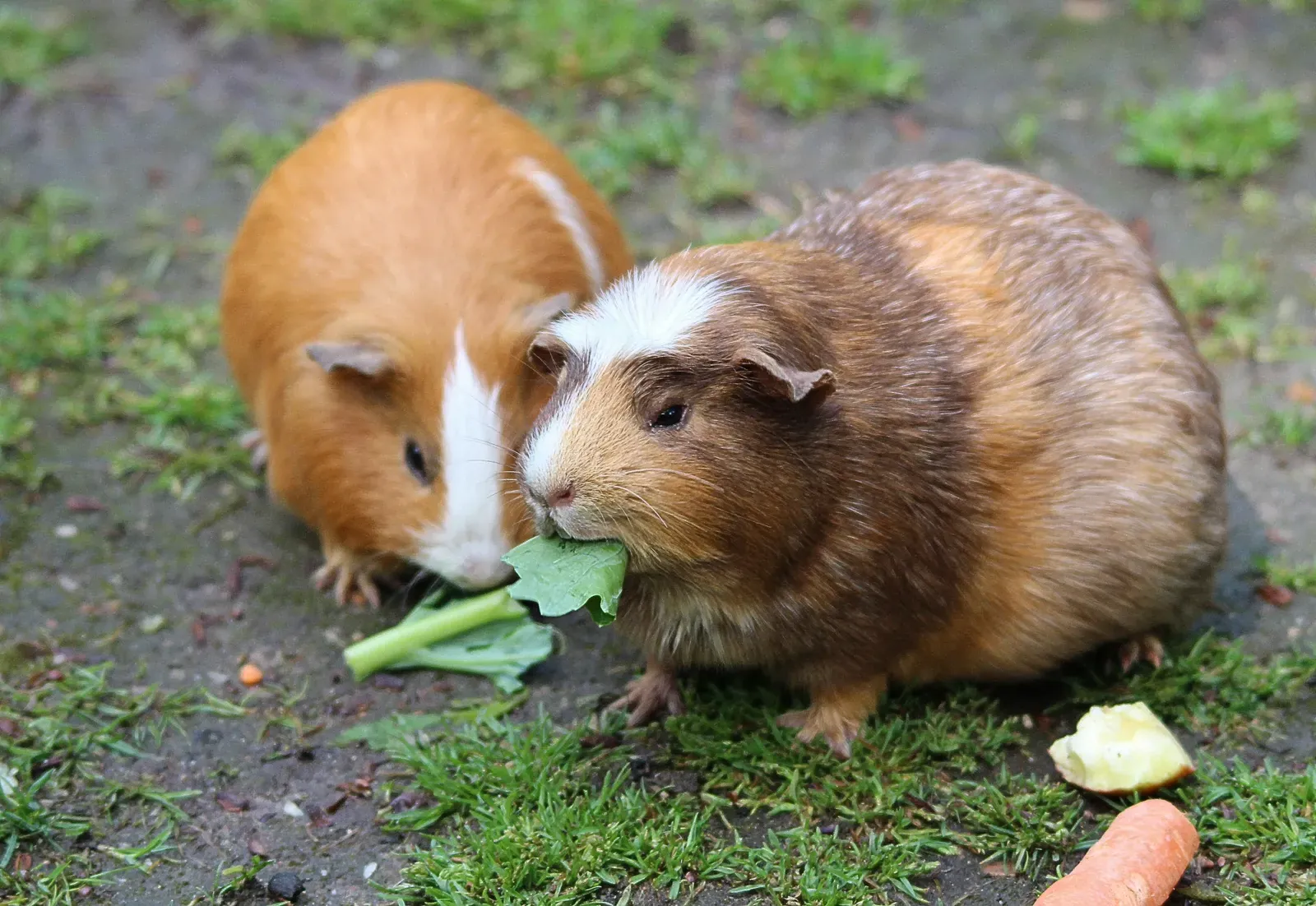
The through-line of all of this is simple: a guinea pig is half of a social animal. Get the pair, do the introduction properly, and you’ll wonder why you ever considered the solo route — because the moment you see two pigs wheeking in stereo at the fridge door, the answer stops being a welfare guideline and becomes obvious.
This article is for general information only and isn’t a substitute for veterinary advice. When introducing guinea pigs — especially rescues, bonded pairs, or post-neutering boars — get guidance from a rescue or an exotics veterinarian.


Leave a Comment