
For the first time ever, veterinarians have documented Marfan syndrome in domestic cats. Researchers at Cornell University’s College of Veterinary Medicine and the Baker Institute for Animal Health published the first molecular characterization of the condition in cats in the September 19 issue of Scientific Reports.
It is the kind of finding that almost didn’t happen: two ordinary shelter kittens, adopted as pets, whose unusually lanky bodies turned out to carry a genetic signature never before seen in any cat — and one that gives veterinarians an entirely new diagnosis to reach for.
What Is Marfan Syndrome?
Marfan syndrome is a disorder of connective tissue — the biological scaffolding that holds the body’s structures together, from blood vessel walls to the ligaments suspending the eye’s lenses. In people, it affects roughly 1 in 4,000 and is most often caused by variants in the FBN1 gene, which carries the instructions for a protein called fibrillin-1.
The classic human picture is distinctive: an unusually tall, slender build with disproportionately long limbs, fingers, and toes; lenses of the eyes that slip out of place (ectopia lentis); and, most seriously, a weakened and enlarged aorta — the body’s largest artery — which can rupture if it goes unmonitored. It is typically inherited in an autosomal dominant pattern, meaning a single altered copy of the gene is enough to cause it in people.
Until now, Marfan syndrome had never been molecularly confirmed in a domestic cat. Vets had the human playbook and scattered suspicions in animals, but no feline case with the genetic proof. That changed with two brothers named Gary and Shaggy.
Meet Gary and Shaggy: The Two Cats Who Made History
Gary and Shaggy were shelter-adopted littermate brothers — ordinary rescue kittens with one extraordinary trait. As kittens they were conspicuously lanky: measurements showed their tibia, radius, and metacarpal bones each ran about 40% longer than the average male domestic shorthair. They didn’t just look leggy; their skeletons were measurably, dramatically elongated.
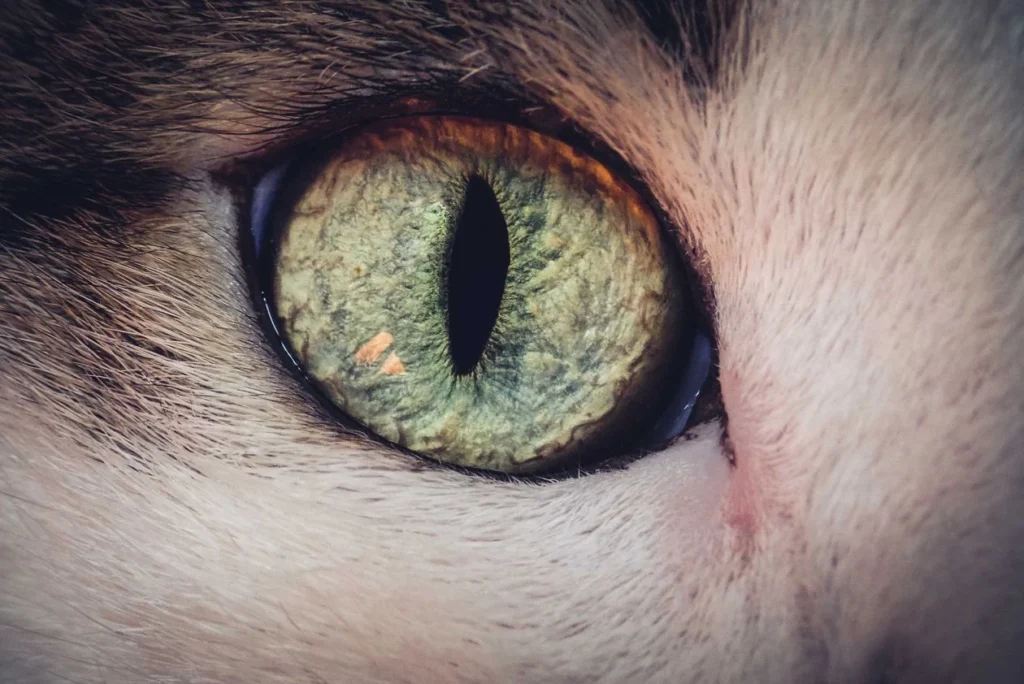
Later veterinary exams uncovered more. Both cats developed bilateral lens luxation — the lenses in both eyes dislocating from their normal position, one of the cardinal features of Marfan syndrome. Imaging also revealed enlargement of the aorta, the same dangerous vascular signature seen in human patients. Taken together, the clinical picture pointed squarely at Marfan syndrome — but the genetics told an even stranger story.
The Genetic Detective Work
Genetic sequencing pinned the condition to the FBN1 gene — the same gene responsible for most human Marfan cases — which codes for fibrillin-1, a building block of connective tissue throughout the body. But there was a twist: both brothers carried two altered copies of the gene, an extraordinarily rare double dose. In people, Marfan syndrome usually needs only one.
By all logic, that double dose should have been devastating. The reason it wasn’t is that their particular variant was “leaky”: a splice-site error in the gene that still lets about a quarter of the gene’s instructions process normally. That residual trickle of working fibrillin-1 was apparently enough to carry both cats into adulthood — a biological near-miss that made the discovery possible at all.
The researchers also screened more than 1,000 other cat genomes and didn’t find the variant once, strong evidence that it was the true culprit rather than harmless background variation. “This gives us a foundation for improved veterinary diagnostics,” said senior author Dr. Jacquelyn Evans — findings that could help vets recognize similar cases and, eventually, support the development of genetic tests.
Why This Matters for Veterinary Medicine
Before this paper, a veterinarian examining a strikingly lanky cat with dislocated lenses had no feline Marfan diagnosis to reach for — the condition simply didn’t officially exist in cats. Now there is a documented precedent: a defined clinical picture backed by a proven genetic mechanism.
That matters in three concrete ways. First, it gives vets a differential diagnosis for unexplained connective-tissue signs — long-bone overgrowth paired with eye or heart abnormalities now has a name. Second, it lays the groundwork for future genetic screening tests, which could identify at-risk cats before symptoms progress. Third, it offers a cross-species window into how the same gene behaves differently across mammals — including why a “leaky” variant that might be catastrophic in one species is survivable in another.
For a field where feline genetics still lags behind canine genetics, a first-of-its-kind molecular diagnosis is a genuine milestone, not just a curiosity.
What Should Cat Owners Actually Do?
Practically speaking: nothing different today. This is a medical rarity — two cats, one extraordinary variant — not something to worry about at home. It isn’t contagious, your cat can’t “catch” it, and the odds of encountering it are vanishingly small.
But the case is one more reason to take unusual body structure seriously. If your cat has strikingly long limbs combined with eye trouble — cloudiness, squinting, a visible change in the eye’s appearance — that combination is worth a veterinary conversation, full stop. Either sign alone is usually nothing; the pairing is what made Gary and Shaggy’s vets look deeper.
It’s also a reminder that cats, like dogs, carry their own roster of hereditary conditions: Maine Coons and hypertrophic cardiomyopathy (heart disease), Persians and polycystic kidney disease, Sphynx and heart issues. Purebred or not, genetics shapes a meaningful share of feline vet bills — and genetic conditions are one reason many owners look into coverage for hereditary issues. Our guide on whether pet insurance is worth it for indoor cats walks through that math honestly.
Could Pet Insurance Cover a Genetic Condition Like This?
The honest answer: it depends on the policy and, critically, the timing. Comprehensive plans that explicitly cover hereditary and congenital conditions will generally cover them — if the condition wasn’t documented before enrollment. Budget plans, by contrast, often exclude hereditary conditions outright or cap them at a few thousand dollars, which would make them nearly useless against a condition like this.
Gary and Shaggy’s story is a perfect illustration of why enrollment timing matters: their lankiness was visible when they were kittens. Had they been insured, anything noted in a vet record before the policy started could have become a pre-existing exclusion. Enrolling young — before the first suspicious vet note — is the single highest-value move an owner can make. Our complete 2026 pet insurance cost guide explains the hereditary-coverage fine print and the enrollment windows that matter most.
Frequently Asked Questions
Can cats get Marfan syndrome?
Yes — as of 2026, two cases have been molecularly documented in domestic cats, both littermates. It remains extraordinarily rare.
Is feline Marfan syndrome contagious?
No. It is a genetic condition caused by a variant in the FBN1 gene. It cannot spread between cats.
What are the signs of Marfan syndrome in cats?
In the documented cases: markedly elongated limb bones (about 40% longer than average), bilateral lens luxation (dislocated lenses), and aortic enlargement. Diagnosis requires veterinary examination and imaging — never guess from appearance alone.
Should I get my cat genetically tested for Marfan syndrome?
There is no commercial test yet. The Cornell findings are a foundation for future diagnostics, not an available screening tool. If your cat shows the combined signs above, see your vet rather than waiting for a test.
Does pet insurance cover hereditary conditions in cats?
Many comprehensive accident-and-illness plans do, provided the condition wasn’t pre-existing at enrollment. Always verify hereditary coverage in writing before buying — exclusions vary widely between insurers.
Petsofweb content is educational only and is not veterinary or financial advice. If your cat shows unusual physical changes, consult your veterinarian. Insurance terms change frequently — compare live quotes before enrolling.
Sources: Cornell CVM news, Cornell Chronicle



Leave a Comment