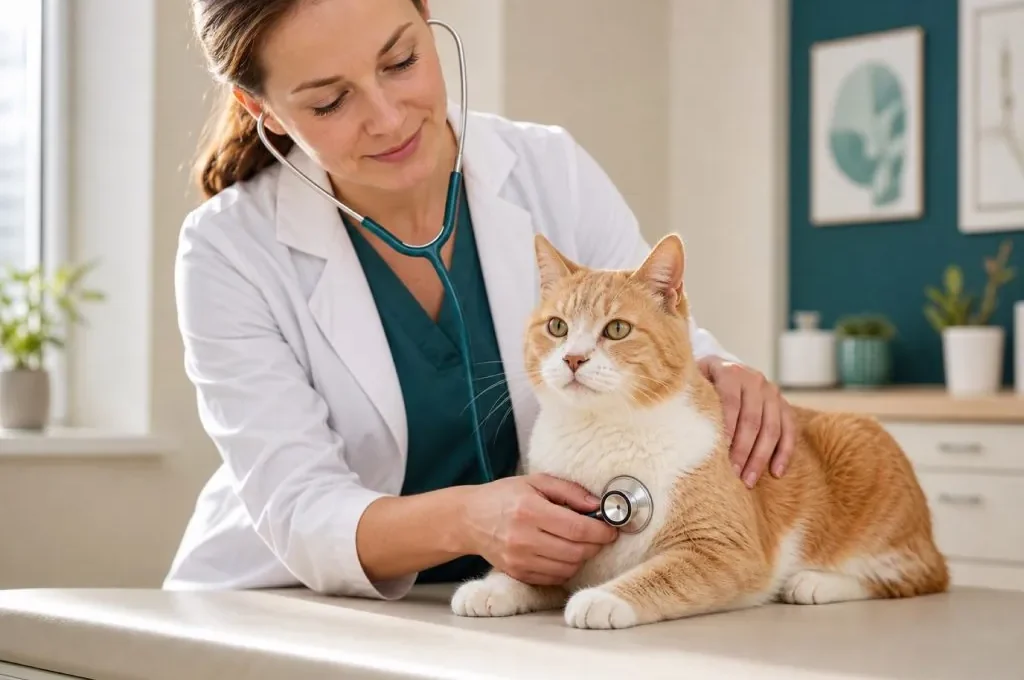

Few things are more stressful for a cat owner than watching a beloved pet battle a long-term illness — and then watching the vet bills pile up month after month. Chronic conditions like kidney disease, hyperthyroidism, and diabetes don't come with a one-time bill. They come with prescription food, bloodwork, medications, and follow-up visits that stretch on for years.
So the question every owner of a sick cat asks is a fair one: can pet insurance still help?
The honest answer is: it depends almost entirely on when you enroll. Pet insurance works on one hard rule — a condition diagnosed before you sign up is generally considered pre-existing and excluded from coverage. That rule decides everything, and understanding it now can save you thousands later.
This guide walks through which chronic conditions cats get most often, how insurers treat them, why the enrollment date matters more than anything else, and what realistic options exist if your cat has already been diagnosed.
The Most Common Chronic Conditions in Cats
Chronic means long-term and ongoing. These are the conditions vets see most often in cats, and the ones that drive the biggest lifetime costs:
Chronic kidney disease (CKD). Extremely common in senior cats — it's one of the leading causes of illness in cats over age 10. The kidneys gradually lose function, and management means special diet, subcutaneous fluids, blood pressure medication, and regular monitoring for the rest of the cat's life.
Hyperthyroidism. An overactive thyroid gland, most common in middle-aged and older cats. Symptoms include weight loss despite a big appetite, restlessness, and vomiting. Treatment options range from lifelong daily medication to a curative radioiodine treatment at a specialty clinic.
Diabetes mellitus. Yes, cats get diabetes. It's often linked to obesity and typically managed with insulin injections, prescription diet, and regular glucose monitoring. Some cats achieve remission, but ongoing management is the norm.
Feline asthma. Similar to human asthma — chronic airway inflammation causing coughing and wheezing. Managed with daily or flare-based inhaled steroids and bronchodilators, sometimes requiring an expensive aero-chamber device.
Inflammatory bowel disease (IBD). Chronic inflammation of the digestive tract causing vomiting, diarrhea, and weight loss. Diagnosis can be expensive (often requiring ultrasound and biopsy), and management involves prescription diet, steroids or immunosuppressants, and long-term monitoring.
All five of these share one feature: they don't go away with a single round of treatment. That persistence is exactly what makes them expensive — and exactly what makes pet insurance rules matter so much.
The Pre-Existing Rule: Timing Decides Everything

Here is the single most important thing to understand, and it's worth repeating:
A condition your cat was diagnosed with (or showed symptoms of) before your policy's start date is generally excluded from coverage. This is true across nearly all pet insurance providers.
It doesn't matter how severe the condition is or how much you need help. If the diagnosis is already in your vet's records before enrollment, the insurer will almost certainly not pay claims related to it. This isn't fine print — it's the foundation of how pet insurance pricing works.
Why are insurers so strict about this? Because insurance is built to spread the risk of future unknowns, not to cover known costs that are already certain. Allowing retroactive coverage of diagnosed conditions would make premiums unaffordable for everyone.
This is why you'll see me repeat this point: the enrollment date is the whole game. A cat enrolled while young and healthy, who later develops kidney disease at age 12, can have that condition covered (subject to waiting periods and plan terms). The same cat enrolled after the kidney disease diagnosis cannot.
If you want the full breakdown of how pre-existing conditions work — including bilateral conditions, symptom-based lookbacks, and what happens when records are incomplete — read our deep dive on does pet insurance cover pre-existing conditions.
Curable vs. Incurable: A Distinction That Actually Matters
Not all pre-existing conditions are treated identically. Most insurers draw a line between curable and incurable conditions:
Curable pre-existing conditions are temporary problems that were fully resolved with treatment — things like an ear infection, a bout of vomiting and diarrhea, or a minor wound. Many insurers will cover these again after a symptom-free waiting period, typically around 12 months (this varies by insurer, so check the policy).
Incurable pre-existing conditions are permanent exclusions. And here's the uncomfortable truth: most chronic conditions in cats fall into the incurable category. Kidney disease, diabetes, hyperthyroidism, asthma, and IBD are long-term or lifelong by definition. Once diagnosed, they're essentially excluded from any new policy, permanently.
This distinction is genuinely useful for young cats with a resolved minor issue in their history — a kitten that had a treated upper respiratory infection, for example, may be eligible for full coverage after the curable waiting period. But for a cat already diagnosed with a chronic condition, the curable path almost never applies.
The takeaway is simple: the earlier you enroll a healthy cat, the more conditions fall on the "covered" side of the line. Every month of delay is a month where a new diagnosis could permanently move your cat into the excluded category.
Why Enrolling a Young, Healthy Cat Is the Winning Move
If there's one piece of advice this entire article exists to deliver, it's this: enroll your cat while it's still healthy, ideally as a kitten or young adult.
Here's why the math works in your favor:
- Premiums are lowest for young cats. Insurers price by age and risk, so a healthy 1-year-old costs far less to insure than a 10-year-old. And that lower rate locks in as your baseline.
- No exclusions to start with. A clean medical record means a clean slate. Any chronic condition that develops after enrollment (and after the waiting period) is covered under the plan's normal terms.
- Waiting periods are short when nothing's wrong. Most plans have an illness waiting period — the time between enrollment and when illness coverage kicks in. Our guide to pet insurance waiting periods breaks down what's typical. The sooner you enroll, the sooner the waiting period is behind you.
- Chronic conditions often develop in middle age and beyond. Kidney disease, hyperthyroidism, and diabetes are largely diseases of older cats. Enrolling at age 2 means you could have a decade of coverage in place before the most expensive conditions ever appear.
Think of it like buying fire insurance for your house: it's cheap and easy before there's smoke, and nearly impossible to get once the kitchen is already burning.
Cost-conscious owners often wonder whether insurance for a young indoor cat is even worth it. Indoor cats absolutely develop chronic conditions — kidney disease and hyperthyroidism don't care whether your cat goes outside. Our analysis in is pet insurance worth it for indoor cats walks through that specific question.
And if budget is the barrier, it helps to know that cat insurance is typically the most affordable kind of pet insurance. Our roundup of the cheapest pet insurance for cats shows what entry-level plans actually cost and what they cover.
What to Do If Your Cat Is Already Diagnosed

Let's be direct: if your cat has already been diagnosed with a chronic condition, no new accident-and-illness policy will cover that condition. Anyone who tells you otherwise is misleading you. But "the condition isn't covered" is not the same as "insurance is useless." Here are your honest options:
1. Consider an accident-only plan. These policies cover injuries — broken bones, bite wounds, swallowed objects, urinary blockages in some cases — but not illnesses at all. They're much cheaper than full plans, and they still protect you from the most sudden, expensive emergencies. For a cat whose chronic condition you manage out of pocket, accident-only coverage fills a real gap.
2. Self-insure with a dedicated savings strategy. Open a separate savings account and auto-transfer a fixed monthly amount into it — the amount you'd pay for a premium. Over a year or two, this builds a real emergency fund that you control completely, with no exclusions and no claim denials. It's not glamorous, but for already-diagnosed cats it's often the most honest financial tool available.
3. Ask your vet about payment plans. Many clinics offer payment plans, accept CareCredit-style financing, or will work out a staged treatment plan that spreads costs over time. Vets see chronic-disease finances every day — they won't be surprised by the question, and many genuinely want to help you afford care.
4. Insure the condition-free parts of your cat's health. A new policy won't cover the diagnosed kidney disease, but it can still cover an unrelated future emergency — a broken leg, an accidental poisoning, an injury from a fall. Just read the terms carefully so you understand exactly what counts as "related" to the excluded condition (insurers can be broad here).
5. For multi-cat households, insure the healthy cats now. If one cat is already diagnosed, that ship has sailed for that cat — but your other cats are still insurable before anything develops. Covering them today protects tomorrow's budget. See our guide to the best pet insurance for multiple pets for how multi-pet discounts work.
None of these options erase a diagnosis from the record. They're practical ways to manage the finances around it — which is what responsible pet ownership actually looks like.
What Managing a Chronic Condition Actually Costs
Costs vary enormously by condition, location, and severity, so treat these as rough estimates, not quotes:
- Chronic kidney disease: Ongoing management typically runs several hundred to over a thousand dollars per year once you factor in prescription diet, subcutaneous fluids, medications, and bloodwork every few months. Late-stage care can cost more.
- Hyperthyroidism: Daily medication is relatively inexpensive on a monthly basis, but the definitive radioiodine treatment at a specialty facility can cost into the low thousands as a one-time expense.
- Diabetes: Insulin, syringes, prescription diet, and regular glucose curves typically add up to roughly a thousand dollars or more per year. Emergency diabetic crises can add large one-time bills.
- Feline asthma: Inhaled medications and monitoring typically run several hundred dollars per year; the initial diagnosis (X-rays, airway workup) can be a significant one-time cost.
- IBD: Diagnosis is often the expensive part — ultrasound and endoscopic biopsy can run into the thousands. Long-term management with prescription diet and medications is typically several hundred to a thousand dollars per year.
Notice the pattern: these are recurring costs, year after year. That's precisely why insurers exclude pre-existing chronic conditions — and precisely why enrolling before diagnosis is worth so much.
Understanding how your out-of-pocket share works matters too. Your pet insurance deductible determines how much you pay before reimbursement starts, which directly shapes how useful a plan is for a condition that generates claims every month.
The Verdict: Enroll Early, Or Plan Around the Diagnosis
Pet insurance and feline chronic conditions have a simple relationship: insurance works beautifully if you buy it before the diagnosis, and barely at all for the diagnosed condition itself.
If your cat is young and healthy, the winning move is obvious — enroll now, before anything shows up on a vet record. Premiums are at their lowest, exclusions are at zero, and you'll have coverage in place when (not if) age-related conditions arrive.
If your cat is already diagnosed, skip the fantasy of retroactive coverage. Look at accident-only plans, build a dedicated savings fund, talk to your vet about payment options, and make sure any other cats in the house are insured while they're still healthy.
And if the time ever comes to use the policy you bought early, knowing how to file a pet insurance claim properly — what documentation you need and what timelines apply — will make the difference between a smooth reimbursement and a frustrating denial.
Chronic conditions are part of life with cats, especially as they age. The financial side doesn't have to be a crisis — as long as you understand the rules and act before you need them.
Frequently Asked Questions
Can I get pet insurance for a cat that already has kidney disease? You can buy a policy, but the kidney disease itself will be excluded as a pre-existing condition. The policy can still cover unrelated accidents and new illnesses, so it may still have value — just not for the kidney disease.
Will any insurer cover a pre-existing chronic condition? Generally, no. Standard accident-and-illness plans across the industry exclude pre-existing conditions, and chronic conditions are almost always classified as incurable — meaning permanent exclusions. Be skeptical of any marketing that suggests otherwise.
If my cat's condition is stable and symptom-free, does the exclusion still apply? Usually, yes. The exclusion is based on the diagnosis existing in the medical record, not on whether symptoms are currently flaring. A "stable" diagnosis is still a diagnosis.
Does pet insurance cover chronic conditions diagnosed after enrollment? Yes — that's exactly what it's for. A condition diagnosed after your policy is active (and after any waiting periods) is treated like any other covered illness, subject to your plan's deductible, reimbursement rate, and annual limits.
Is accident-only insurance worth it for a cat with a chronic illness? For many owners, yes. Accident-only plans are affordable and cover the unpredictable emergencies — fractures, wounds, swallowed objects — that no savings plan for a chronic condition would anticipate. Just confirm what's classed as an "accident" before buying.
Conclusion
Pet insurance is one of the best financial tools a cat owner can have — but only when purchased ahead of illness. Enroll your cat while it's healthy, understand the pre-existing rule before you need it, and if a diagnosis has already landed, pivot to the practical alternatives: accident-only coverage, dedicated savings, and an honest conversation with your vet.




Leave a Comment