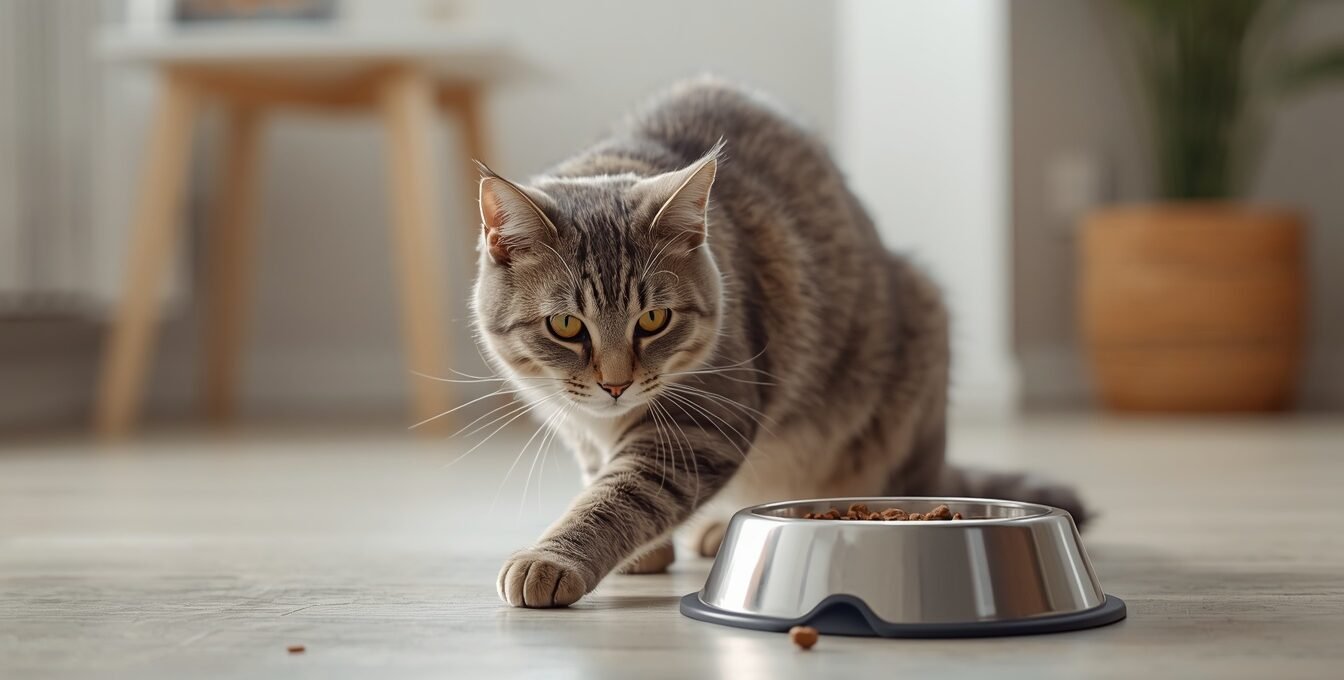

If your cat finishes eating and then starts scratching the floor around the food bowl, you may wonder what they’re trying to do.
It can look as if your cat is trying to bury something—even when there is nothing there.
In many cases, this is a normal feline behavior. Cats may scratch around food because of instinctive behaviors related to hiding or covering food, but individual cats can also develop the habit for different reasons.
Here are seven possible explanations.
1. Your Cat May Be Trying to Cover Leftover Food
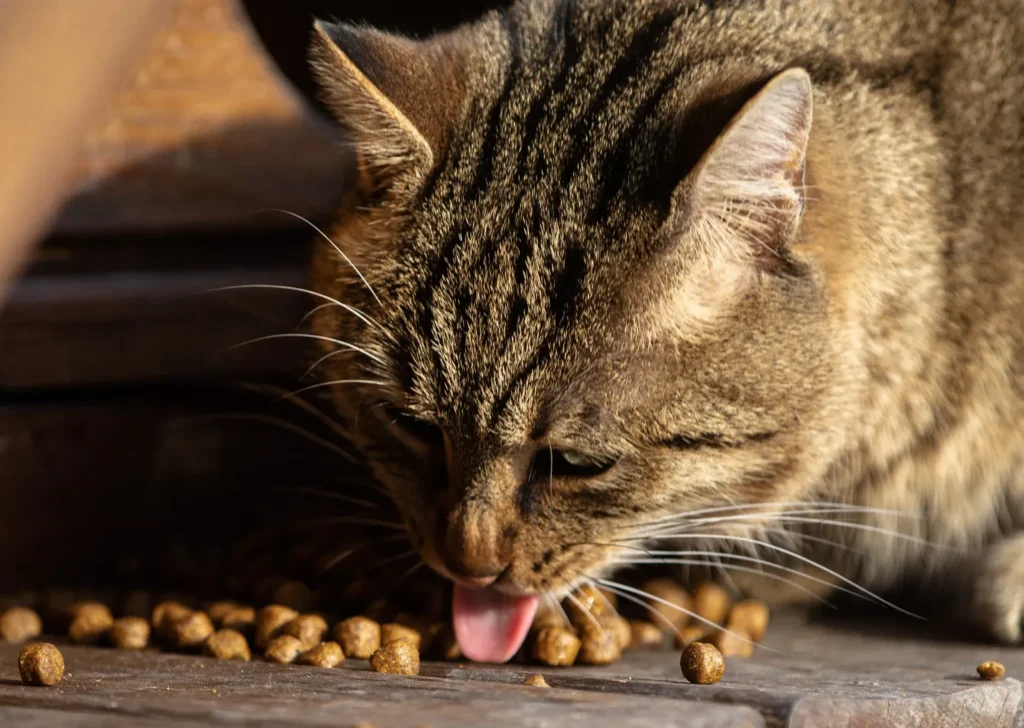
One of the most likely explanations is an instinct to cover or hide food.
Wild cats may bury or conceal food remains, and some domestic cats retain behaviors that resemble this instinct. When your cat scratches the floor around the bowl, they may be performing a similar motion even though a hard floor obviously cannot cover the food.
You may notice this behavior particularly when there is still food left in the bowl.
2. The Smell of the Food May Be Triggering the Behavior
Cats have a highly developed sense of smell.
After eating, the area around the bowl can still contain food odors. Scratching near the bowl may therefore be part of your cat’s attempt to deal with the scent or the remaining food smell.
This doesn’t necessarily mean your cat dislikes the food.
3. Your Cat May Be Saving Food for Later
Some cats may treat leftover food as something they want to return to later.
Scratching around the bowl can resemble an attempt to hide or protect a resource.
If your cat scratches around the bowl and then comes back to eat later, this behavior may simply be part of their individual feeding routine.
4. It May Simply Be a Learned Habit
Not every behavior has a complicated explanation.
Cats can develop routines around eating, sleeping, playing, and grooming. If your cat has been scratching around the food bowl for a long time and otherwise behaves normally, it may simply have become part of their routine.
If the behavior isn’t causing damage or accompanied by other concerning changes, there may be no reason to try to eliminate it.
5. Your Cat May Be Responding to the Feeding Area
Pay attention to where your cat scratches.
Some cats scratch the floor, wall, mat, or area immediately beside the bowl rather than scratching the bowl itself.
If your cat does this consistently around the feeding area, it may simply be connected to their food-related behavior.
Keeping the feeding area clean can also make it easier to notice whether there are leftover food particles or spills attracting your cat.
6. Your Cat May Have an Individual Preference
Cats don’t all behave the same way.
Some cats scratch after almost every meal, while others never do it.
A cat may also scratch before eating, after eating, or both. A behavior that looks strange to us can still be completely normal for an individual cat.
The most useful thing is to compare the behavior with your cat’s usual routine.
7. A Sudden Change May Deserve Attention
Scratching after eating is usually not a medical problem by itself.
However, if this behavior suddenly appears or changes significantly, look at what else is happening.
For example, contact your veterinarian if your cat also has:
- A significant change in appetite
- Repeated vomiting
- Diarrhea
- Weight loss
- Obvious difficulty eating
- Drooling
- Signs of pain
- Unusual hiding or withdrawal
- Major changes in normal behavior
The scratching itself doesn’t tell you what is wrong. Other changes are much more important when deciding whether your cat needs veterinary attention.
Is It Normal for a Cat to Scratch the Floor After Eating?
Usually, yes.
Scratching around food can be a normal instinctive behavior in cats, particularly when it happens occasionally and your cat otherwise appears healthy and behaves normally. Veterinary-reviewed sources describe floor scratching as a natural feline behavior with several possible explanations.
You generally don’t need to punish your cat for doing it.
Instead, observe when it happens and whether anything else has changed.
Why Does My Cat Scratch Around the Food Bowl?
If your cat specifically scratches the floor right next to the food bowl, an instinctive attempt to cover or hide food is one possible explanation.
This behavior can occur even when there is no loose material for the cat to actually cover the food with.
It’s similar to other instinctive feline behaviors where the cat performs an action even though the domestic environment doesn’t require it.
Should I Stop My Cat From Scratching After Eating?
If your cat is healthy and the behavior isn’t causing a problem, you usually don’t need to stop it.
Avoid yelling at or punishing your cat. Scratching is a normal part of feline behavior, and punishment can create unnecessary stress.
Instead, focus on practical solutions if the scratching is damaging your floor.
For example, you can:
- Keep the feeding area clean
- Use an easy-to-clean feeding surface
- Observe whether the behavior happens with particular foods
- Keep the food and water area comfortable
- Provide appropriate scratching surfaces elsewhere in the home
The goal isn’t necessarily to eliminate every natural behavior—it’s to make sure your cat and your home can coexist comfortably.
What If My Cat Scratches Before Eating?
Some cats may scratch around their food area before eating rather than afterward.
This can still be part of normal food-related behavior.
The exact reason can vary between individual cats, so it’s better not to assume that every cat is doing it for exactly the same reason.
If your cat eats normally and shows no other concerning changes, the scratching itself is usually not a reason for alarm.
When Should You Contact a Veterinarian?
Scratching around the food bowl by itself is generally not an emergency.
However, contact your veterinarian if the behavior is accompanied by noticeable changes in your cat’s health or behavior.
Pay particular attention to:
- Refusing food
- Difficulty chewing or swallowing
- Repeated vomiting
- Significant weight loss
- Excessive drooling
- Signs of pain
- Sudden major behavioral changes
- Unusual lethargy
If your cat appears seriously ill or is having difficulty breathing, seek veterinary care promptly.
Frequently Asked Questions
Why does my cat scratch the floor after eating?
The behavior is often related to normal feline instincts, including behaviors that resemble covering or hiding food. Some cats simply develop the habit as part of their feeding routine.
Why does my cat scratch around her food bowl?
Scratching around the food bowl can be an instinctive food-related behavior. Cats may perform the motion as if they were trying to cover or hide food.
Does scratching after eating mean my cat doesn’t like the food?
Not necessarily. Scratching does not by itself prove that your cat dislikes the food. Look at the bigger picture, especially whether your cat is eating normally and maintaining their usual behavior.
Why does my cat scratch the floor but there is nothing there?
Cats can perform instinctive scratching motions even when there is nothing they can actually cover. The behavior can persist because of natural instincts or individual habits.
Should I worry if my cat suddenly starts scratching around the food bowl?
The scratching itself may still be harmless, but a sudden behavioral change is worth observing. If it occurs together with appetite changes, vomiting, weight loss, pain, drooling, or other unusual symptoms, contact your veterinarian.
Final Thoughts
If your cat scratches the floor after eating, don’t panic.
For many cats, this is simply an unusual-looking expression of normal feline behavior. Scratching around food can be related to instinctive attempts to cover or hide food, while some cats may simply develop the behavior as an individual routine.
The most important thing is to look at your cat’s overall health.
If your cat is eating normally, behaving normally, and showing no other concerning signs, the scratching is usually not something you need to worry about.
If the behavior suddenly changes or appears alongside other symptoms, speak with your veterinarian.
Important: This article provides general educational information and is not a diagnosis or substitute for veterinary care. If you are concerned about your cat’s health, consult a qualified veterinarian.