
Here’s the uncomfortable truth about guinea pigs: by the time one looks sick, it has usually been sick for a while. They’re prey animals, wired to mask weakness until they can’t anymore. But there’s one signal they can’t fake, and it shows up weeks before the lethargy, the puffed-up coat, or the empty food bowl.
Their weight.
A guinea pig that is quietly losing weight is telling you something is wrong — often before any other symptom exists. That’s why experienced owners and rescues treat a cheap kitchen scale as the single most important health tool in the house, more useful than any supplement. If you’re wondering why is my guinea pig losing weight, this guide covers the 5 most common causes of weight loss, the weekly weigh-in routine that catches trouble early, the exact thresholds that mean “watch,” “worry,” and “vet now,” and what to do the moment the numbers start sliding.
The weekly weigh-in: your early-warning system
If you take one habit from this article, make it this: weigh your guinea pig once a week, same time of day, and write it down.
The routine is simple. Put a bowl or small container on a digital kitchen scale, tare it to zero, set the pig in, and record the number. Morning before breakfast gives the most consistent readings — otherwise you’re weighing unknown amounts of food, water, and poop inside the pig rather than the pig itself. A basic kitchen scale that reads in grams is ideal; human bathroom scales aren’t sensitive enough for a one-kilogram animal.
Why weekly? Because weight loss in guinea pigs is almost always gradual at first — 10 grams here, 15 there — and completely invisible to the eye until it’s severe. A written log turns those invisible grams into a visible trend line. GuineaLynx, the long-running cavy health reference, recommends weekly weighing for healthy pigs and daily weighing for any pig that’s already ill. Owners who weigh weekly routinely catch dental problems, infections, and other issues a week or two before the pig shows a single outward symptom. That head start is often the difference between a routine vet visit and an emergency.
Keep the chart somewhere you’ll actually look at it — a notebook by the cage, a phone note, a spreadsheet. The format doesn’t matter. The habit does.
How much weight loss is dangerous? The ounce rule
So the number is dropping. When do you worry? The cavy community’s long-standing rule of thumb, attributed to GuineaLynx, works in ounces (one ounce is roughly 28 grams):
- 1 ounce lost — no problem. Normal fluctuation.
- 2 ounces — start watching carefully. Weigh more often, check appetite and droppings.
- 3 ounces — time to worry. Something is wrong; investigate actively.
- 4 ounces — go to the vet. Don’t wait for more symptoms.
Treat this as a community guideline, not a veterinary diagnostic — but it’s proven its worth over decades of use because it forces action before the pig looks sick. A steady downward trend over two or three weeks matters even if no single week hits a threshold. And any sudden drop — 50+ grams in a few days — skips the queue straight to the vet.
You can also assess body condition by hand: a healthy guinea pig feels solid and well-covered. If you can easily feel the ribs, spine, or pelvis through the coat, or the coat looks rough and puffed up, that’s an underweight pig regardless of what the scale says.
Now, the five causes — in rough order of likelihood.
1. Dental disease (the number one cause)
Ask any exotics vet what causes most guinea pig weight loss and you’ll get the same answer: teeth. Guinea pig teeth grow continuously throughout life, and they depend on the grinding action of hay to wear down evenly. When the alignment goes wrong — from genetics, jaw trauma, or a low-hay diet — the molars and premolars overgrow, develop sharp spurs, and start injuring the tongue and cheeks. Vets call it malocclusion; owners usually notice it as “slobbers,” the wet fur under the chin from constant drooling.
Here’s the cruel part: it happens gradually, and pigs show minimal signs of mouth pain. They keep eating — just less, and more slowly — because chewing hurts. The result is progressive weight loss that owners often attribute to pickiness or age. By the time the pig stops eating entirely, the dental disease is usually advanced.
Warning signs: drooling or a wet chin, dropping food while chewing, eating very slowly, preferring soft vegetables over hay, weight loss despite apparent appetite. But the definitive check requires a vet with proper instruments — only a veterinarian can examine the back molars, and correction (filing under anesthesia) is a routine procedure. This is not a wait-and-see situation: dental pigs need professional treatment, and the sooner the better.
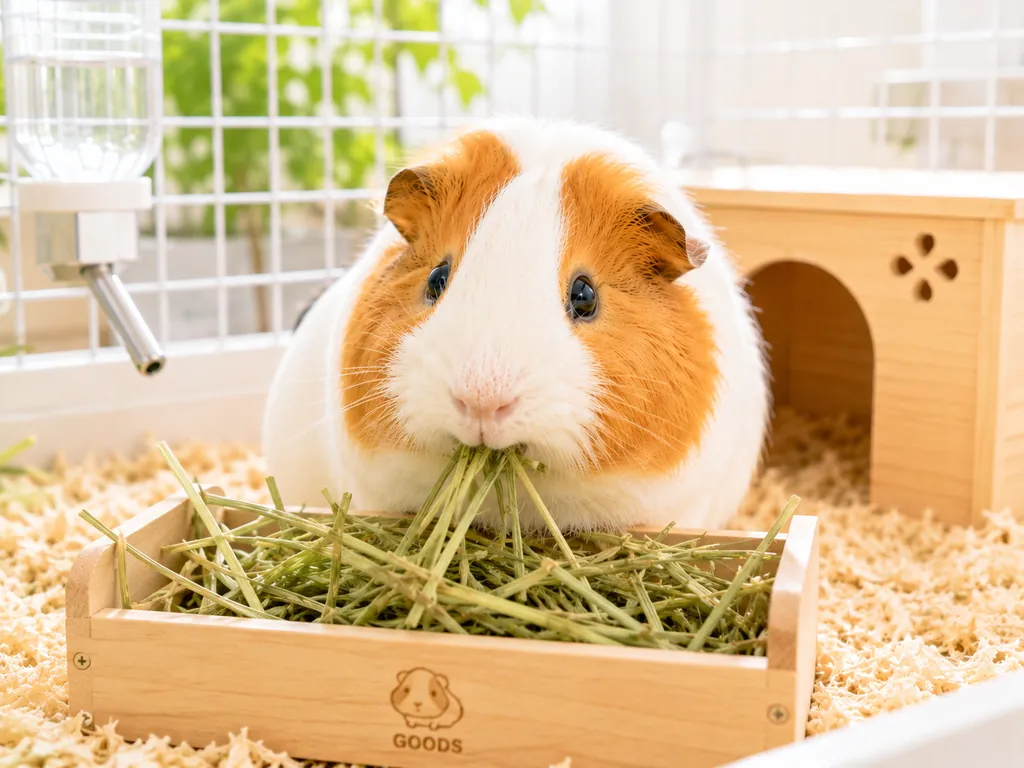
Prevention is mostly dietary: unlimited grass hay — timothy, orchard, or meadow — is what keeps the grinding surfaces wearing correctly. Pellets and vegetables don’t do the job.
2. Hidden illness (eating, but still losing)
This is the scenario that confuses owners most: the pig is eating normally — sometimes enthusiastically — yet the scale keeps sliding down. When intake is fine but weight drops, the problem is usually absorption or metabolism, and the list of suspects is a vet’s differential, not a home diagnosis.
The common ones: upper respiratory infections (a respiratory infection — burns energy and suppresses appetite in subtle ways before the obvious symptoms appear), urinary tract infections, and in unspayed sows, ovarian cysts — very common in females over two or three years old, and a classic cause of gradual weight loss paired with hair thinning along the flanks. Older pigs face the age-related set: kidney disease, liver problems, heart disease, tumors. Internal disease can also mean the gut isn’t absorbing nutrients properly even when food goes in.
The key point: “eating but losing weight” is more urgent than it looks, not less. It means something systemic is happening, and the workup — vet exam, possibly bloodwork, x-rays, a full oral exam — is how you find it. Don’t try to fix this one with extra treats.
3. Parasites and gut trouble
Internal parasites are an underappreciated cause of weight loss, especially in pigs that came from pet stores, rescues, or outdoor housing. The tell-tale pairing is weight loss plus abnormal droppings — soft, mushy, misshapen, or visibly abnormal stools. A vet can check a fecal sample and prescribe the right dewormer; don’t guess with over-the-counter products dosed for other species.
Broader gut problems cause the same pattern. A low-fiber diet (too many vegetables, not enough hay) leads to poor digestion and gradual weight loss — and paradoxically, too many high-calorie “junk” treats can unbalance the digestive system enough to cause weight loss rather than gain. Diarrhea of any origin — dietary or infectious — needs attention fast in a small animal that dehydrates quickly. Constipation, often from low fiber or illness, is the other direction and equally vet-worthy.
If droppings have changed alongside the weight, bring a fresh sample to the vet appointment. It saves a step.
4. Vitamin C deficiency (scurvy)
Guinea pigs can’t manufacture their own vitamin C — one of the few animals that share this quirk with humans — so they’re entirely dependent on diet. Chronic deficiency causes scurvy: weakness, joint pain, rough coat, reluctance to move… and weight loss, partly from the vitamin C deficiency itself and partly because a pig with a sore mouth and aching joints eats less.
Scurvy weight loss tends to be gradual and is often misread as “just getting old,” especially in senior guinea pigs. The fix is dietary — daily vitamin C-rich vegetables like bell pepper, plus fresh (not stale) pellets — not vitamin C drops in the water bottle, which degrade fast and can put pigs off drinking. If deficiency is suspected, a vet should confirm it; by the time scurvy is obvious, the pig often needs more support than diet alone.
5. Stress, bullying, or simply old age
Not every cause is medical. Guinea pigs are sensitive, hierarchical animals, and social stress burns calories. A pig being bullied away from the food bowl by a cage mate will lose weight while technically having “access” to food — watch who actually gets to eat, not just what’s in the rack. Loud environments, constant handling, recent moves, or a lost companion can all suppress appetite through stress. The fix is environmental: more space, separate feeding stations, a calmer routine.
And then there’s age. Senior pigs (4+ years) naturally lose some condition, and age brings the dental problems, arthritis, and organ issues from cause #2. The line between “normal aging” and “treatable illness” is exactly what the weight chart helps you draw: a slow, steady decline in a 6-year-old is different from a sharp drop in a 2-year-old, but both deserve a vet’s eyes. Never write off weight loss as “just old age” without checking.
What to do right now: the triage
If your pig is losing weight, here’s the order of operations:
- Weigh daily, same time, and log it. You need to know whether this is continuing, stabilizing, or reversing. Daily weights on an ill pig; weekly once stable.
- Audit the basics today. Unlimited hay available? Fresh pellets? Daily vitamin C vegetables? Clean water? Any bullying at the food bowl? Fix the obvious husbandry gaps immediately.
- Check the mouth you can see. Drooling, wet chin, dropping food, avoiding hay — any of these points at teeth and moves the vet visit up.
- Support feeding if appetite is dropping. A pig that’s eating less needs calorie-dense support — vets commonly recommend syringe-feeding a recovery food (Oxbow Critical Care is the standard) to bridge the gap until the underlying cause is treated. Ask your vet for guidance on amounts.
- Book the vet on the ounce rule. 3 ounces down and still dropping, or any sudden large loss — don’t wait for the pig to look sick. Bring your weight log; it’s the most useful diagnostic data you own.
Preventing the next slide
Most chronic weight loss in guinea pigs traces back to husbandry, which means most of it is preventable:
- Unlimited grass hay, always. It’s the dental plan, the fiber plan, and the calorie foundation in one.
- Weekly weigh-ins, logged. The cheapest diagnostic test in existence.
- Daily vitamin C vegetables. Bell pepper is the workhorse; rotate leafy greens.
- Enough space, enough stations. One food bowl per pig, minimum, plus hay in multiple spots — no pig should have to compete to eat.
- Annual vet checks with a dental look. For pigs over three, ask specifically about the molars.
Weight is the one health metric your guinea pig can’t hide from you. The owners who catch problems earliest aren’t the ones with the best instincts — they’re the ones with a scale, a notebook, and the two-minute habit.
Frequently asked questions
My guinea pig is eating but losing weight — what does that mean?
It usually means the problem is absorption or metabolism rather than appetite: dental pain making chewing inefficient, internal parasites, or systemic illness like a respiratory infection, ovarian cysts, or organ disease. “Eating but losing” deserves a vet visit, not a diet change — the workup (exam, possibly bloodwork or x-rays) is how the cause gets found.
How often should I weigh my guinea pig?
Once a week for a healthy pig, same time of day (morning before breakfast is most consistent), logged in a notebook or phone note. Weigh daily if the pig is ill, losing weight, or recovering — that’s when you need to see the trend in real time. Use a digital kitchen scale that reads in grams; bathroom scales aren’t sensitive enough.
How much weight loss is an emergency in a guinea pig?
The community rule of thumb (from GuineaLynx): 1 ounce (~28g) is normal fluctuation, 2 ounces means watch closely, 3 ounces means worry and investigate, 4 ounces means vet now. Any sudden large drop — 50+ grams in a few days — skips straight to the vet regardless of the thresholds.
Can stress really cause weight loss in guinea pigs?
Yes. Bullying at the food bowl, loud environments, excessive handling, moves, or losing a companion can all suppress appetite enough to move the scale. If the pig is otherwise healthy, add feeding stations, separate a bully at mealtimes, and calm the routine — then watch the chart recover.
What should I feed a guinea pig that is losing weight?
Keep the foundation (unlimited hay, fresh pellets, daily vitamin C vegetables) and add calorie support: vets often recommend syringe-feeding a recovery formula like Oxbow Critical Care as a bridge. Alfalfa hay is higher in calories than timothy and can help short-term. But food is support, not treatment — find and fix the cause with your vet.
Weight loss is a symptom, not a diagnosis. This guide covers the most common causes so you know what to check and when to act — it doesn’t replace an exotics vet’s examination. When the scale keeps sliding, call the vet.