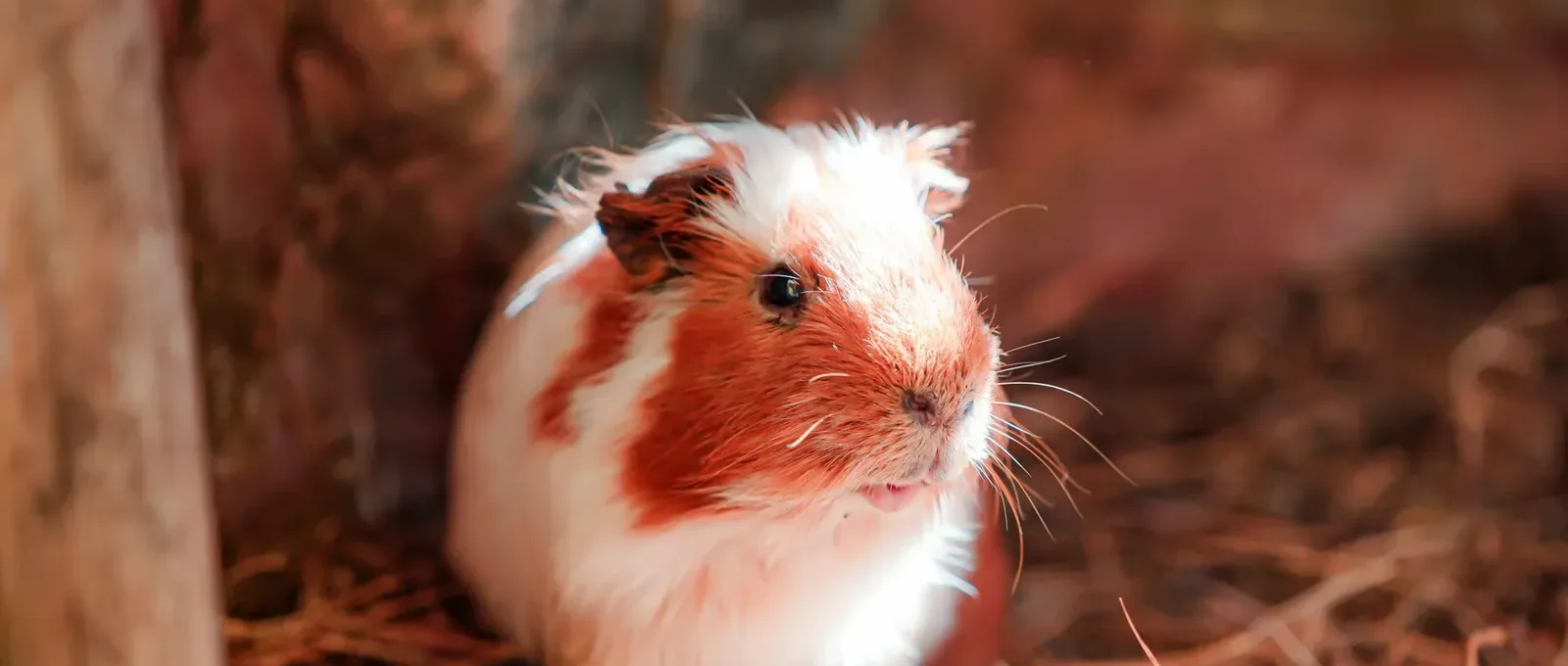

Walk into almost any pet store and you’ll see cages labeled “for guinea pigs” that are barely bigger than a laundry basket. Here’s the uncomfortable truth the packaging won’t tell you: most of them fail every major welfare standard. The Dakin Humane Society says it outright — most small-animal housing sold in pet stores is too small for guinea pigs — and urges owners to measure before they buy. The San Diego Humane Society says the same: most cages sold for guinea pigs in pet stores do not meet the recommended size.
This guide gives you the actual numbers — the RSPCA and Humane Society minimums, the size-by-herd table rescues use, and the honest rundown on which cage types are worth your money and which belong in the bin.
The short answer: minimum cage size for 1–4 guinea pigs
| Guinea pigs | Minimum floor space | Comfortable size | Example dimensions |
|---|---|---|---|
| 1 | 7.5 sq ft | 10.5 sq ft | 30″ × 36″ → 30″ × 50″ |
| 2 | 7.5 sq ft | 10.5 sq ft | 4′ × 2′ (120 × 60 cm) → 30″ × 50″ |
| 3 | 10.5 sq ft | 13 sq ft | 30″ × 50″ → 30″ × 62″ |
| 4+ | 13 sq ft | 16+ sq ft | 30″ × 62″ → 30″ × 76″+ |
Treat the “minimum” column as a hard floor, not a goal. Every welfare organization agrees on one thing: bigger is always better, and a cage that’s merely “big enough” still leaves your pigs with no room to be pigs. Note that guinea pigs shouldn’t live alone — they’re herd animals — so in practice you’ll almost always be shopping for the two-pig row and up. Pairs also need the extra space to get away from each other when they want alone time, which is essential for keeping bonded pigs bonded.
The minimums above are a practical synthesis of the published standards: where sources disagree, we’ve taken the higher (safer) figure. The RSPCA’s widely cited minimum is 7.5 sq ft for two pigs — about 4′ × 2′ (120 × 60 cm). The Humane Society’s figures, as commonly cited, run 10.5 sq ft for two pigs, 13 for three, and 16 for four. GuineaLynx, the long-running vet-reviewed care resource, recommends at least 7.5 sq ft for one pig, adding 2–4 sq ft per additional pig — and stresses providing as large a cage as you possibly can.
What the welfare organizations actually recommend
It helps to see where the numbers come from, because the guinea pig community checks receipts:
- RSPCA (UK): minimum 7.5 sq ft for two guinea pigs — roughly 4′ × 2′. The Royal Veterinary College’s care sheet cites the RSPCA figure as 120 cm × 60 cm of floor space with about 45 cm (~18″) of height.
- Humane Society (US): minimum 10.5 sq ft for two guinea pigs, 13 sq ft for three, 16 sq ft for four.
- GuineaLynx: “as large a cage as possible” — at least 7.5 sq ft for one pig, plus 2–4 sq ft per additional pig. GuineaLynx also notes that a larger cage needs less frequent cleaning and gives pigs room for play, toys, and exercise, and that many owners report “happily popcorning pigs” when their pets move into spacious quarters.
- Dakin Humane Society: 6.5 sq ft minimum for one pig (a 30″ × 36″ footprint), 6.5 minimum but 10.5 preferred for two (30″ × 50″), and 8 minimum but 13 preferred for three (30″ × 62″).
- RSPCA Worcester branch: goes further than the national minimum — 6′ × 2′ for two pigs, and 7′ × 2′ for a pair of males or a trio.
The RSPCA’s Worcester branch also explains why the number matters: guinea pigs sleep only a few hours a day in short naps, so they’re awake and active nearly around the clock — and they need room to express fundamental behaviors like popcorning, zoomies, hiding, foraging, and lying fully stretched out. A cage that denies them those behaviors isn’t just boring; it’s a welfare problem. Housing quality also affects health directly: the Royal Veterinary College notes that many guinea pig diseases trace back to poor housing, including pododermatitis (bumblefoot) from hard flooring and obesity, and respiratory infections from poor cage hygiene and ventilation.
Why floor space beats height
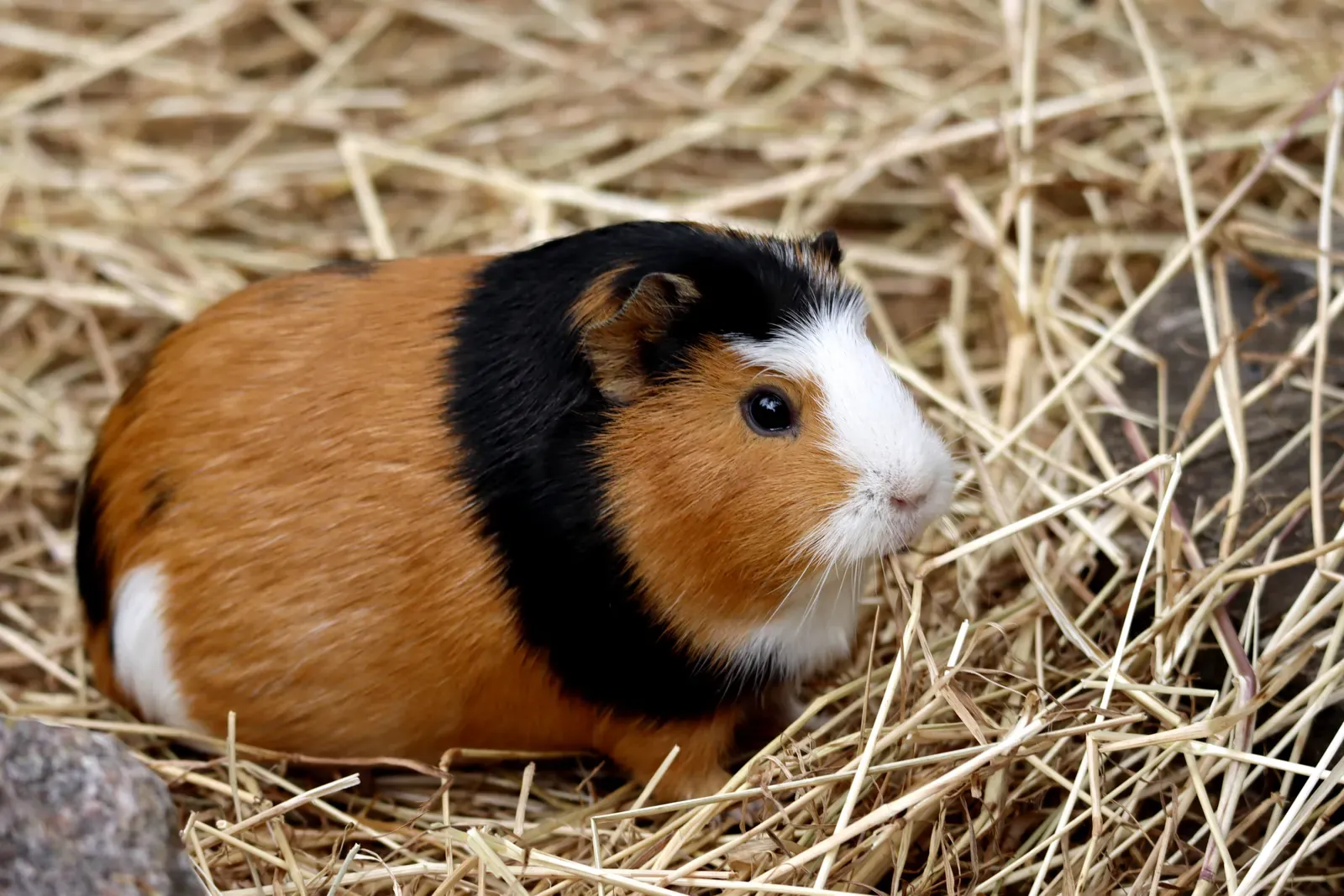
Guinea pigs are ground dwellers, not climbers. They’re stocky, short-legged animals built for running laps on flat ground — not for scaling ramps or perching on platforms. That means vertical inches in a cage are mostly wasted space, while every square inch of flat floor gets used.
This is why tall, narrow cages marketed for “small animals” — the ferret- and rat-style towers with multiple levels — are a poor fit. The Dakin Humane Society is explicit: guinea pigs need horizontal ground space, and cages that go up and down do not work well for them. Purdue University’s veterinary school adds a safety warning: guinea pigs don’t handle heights well, so if a cage does have multiple levels, they must sit close together to prevent serious injuries from falls. In practice, most guinea pigs ignore upper levels entirely. Buy floor, not height: a single-level cage with maximum unbroken flat space is always the better choice.
Height only matters for containment — walls around 14–18 inches high keep pigs in and let you reach in easily. Everything above that is irrelevant to the animal.
Why most pet-store cages are too small
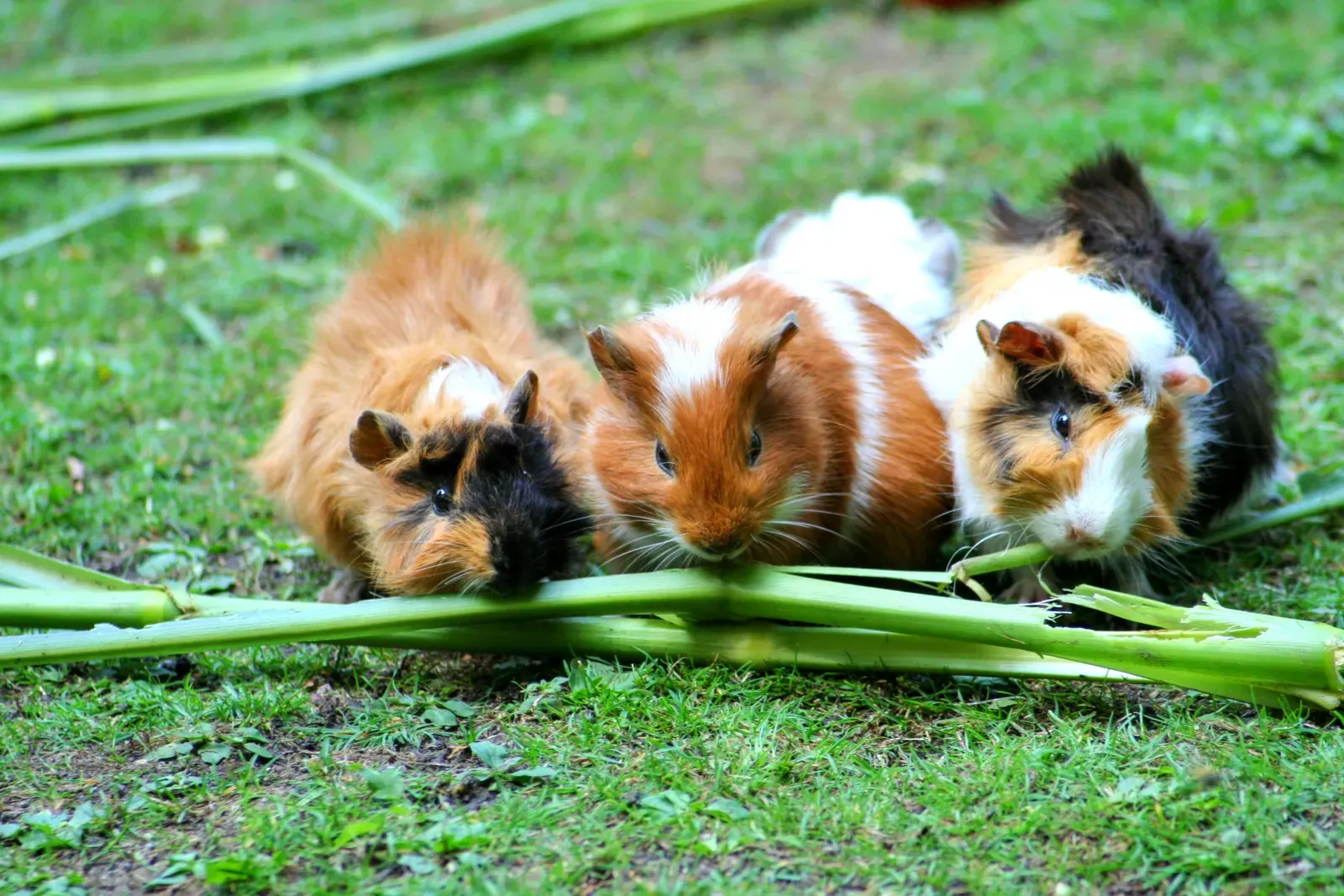
The math is simple and damning. The RSPCA minimum for two pigs is 7.5 sq ft — a 4′ × 2′ footprint. The Dakin Humane Society flatly states that most small-animal housing sold in pet stores is too small, and tells adopters to measure their housing and confirm it meets requirements before bringing pigs home. The San Diego Humane Society likewise warns that most cages sold for guinea pigs in pet stores do not meet the recommended size.
Before you buy, do what the rescues tell adopters to do: measure the interior floor — length × width in inches, divided by 144 — and compare it against the table above. Don’t trust the box, which may count a loft level or measure the exterior. If the number comes in under 7.5 sq ft for a pair, it’s not a guinea pig cage; it’s a carrying case with marketing.
C&C cages: the community’s gold standard
Ask experienced guinea pig owners what they’d buy, and most will say the same thing: build a C&C cage. “C&C” stands for cubes and Coroplast — wire storage grids for the walls, corrugated plastic sheeting for a waterproof base tray. GuineaLynx has recommended this approach for years, pointing owners to C&C plans as a creative, attractive, and affordable way to hit proper cage sizes.
Why they dominate:
- Size for the money. A standard 2×4-grid C&C gives an interior of about 27″ × 56″ — 10.5 sq ft, the full Humane Society recommendation for two pigs — for a fraction of what a commercial cage of the same size costs. Each standard grid is 14″ × 14″, so sizing is simple math: a 2×3 (28″ × 42″, ~8.2 sq ft) is the minimum for one or two pigs, a 2×4 suits two to three, and a 2×5 handles three to four or a boar pair.
- Modular. Need more room? Add grids. Want a kitchen area or a divided section? Reconfigure in minutes.
- Easy to clean. The smooth Coroplast base wipes down, and the open top gives you full access — no reaching through a tiny door.
You can buy the grids and a sheet of Coroplast at most hardware stores and assemble a cage in well under an hour, or buy a ready-made C&C kit online if you’d rather skip the DIY. Either way, it’s the most space per dollar in guinea pig housing.
A solid ready-made option
If you’d rather buy than build, the MidWest Guinea Habitat Plus is one of the few commercial cages that clears the bar: it measures 47″ × 24″ × 14″, giving 8 sq ft of floor space — above the RSPCA’s 7.5 sq ft minimum for a pair. It comes with a leak-proof, washable PVC-lined canvas bottom (solid underfoot, which matters — see below), a folding wire top panel to keep other pets out, and a divider panel for separating a kitchen or litter area. Two units can also be joined to expand the footprint as your herd grows.
Petsofweb is reader-supported. When you buy through links on our site, we may earn an affiliate commission.
Cages to avoid
Some housing types aren’t just too small — they’re actively harmful. Rule these out entirely:
- Wire or grated floors. This is the big one. Oxbow Animal Health names wire-bottom cages as one of the most common causes of bumblefoot (pododermatitis): the grates irritate the foot pads with every step, and sores can develop into open wounds and deep infection. Purdue’s veterinary school warns that guinea pigs can catch their feet and legs in mesh flooring, losing toes or breaking legs. GuineaLynx’s care guide is blunt: select a smooth-bottomed cage — no wire bottom. If a cage you like has a wire floor, it needs a solid covering, full stop.
- Aquariums and plastic tubs. GuineaLynx lists these as not recommended: they’re nearly always too small and have poor ventilation, which lets ammonia build up fast. Purdue agrees — large glass aquariums make poor guinea pig habitats for exactly these reasons, plus they retain heat.
- Tall multi-level “starter” towers. Built for climbing species, wrong for a ground dweller, and a fall hazard on top.
- Exercise wheels and balls. Camp Cavy Rescue notes that guinea pigs’ spines are simply not equipped to run on wheels or in balls — packaging claims notwithstanding. Floor space is their exercise equipment.
- Anything marketed as a “starter kit” that you haven’t measured. If the interior floor is under 7.5 sq ft, it’s a starter kit for a hamster, not a guinea pig.
Do two boars need more space?
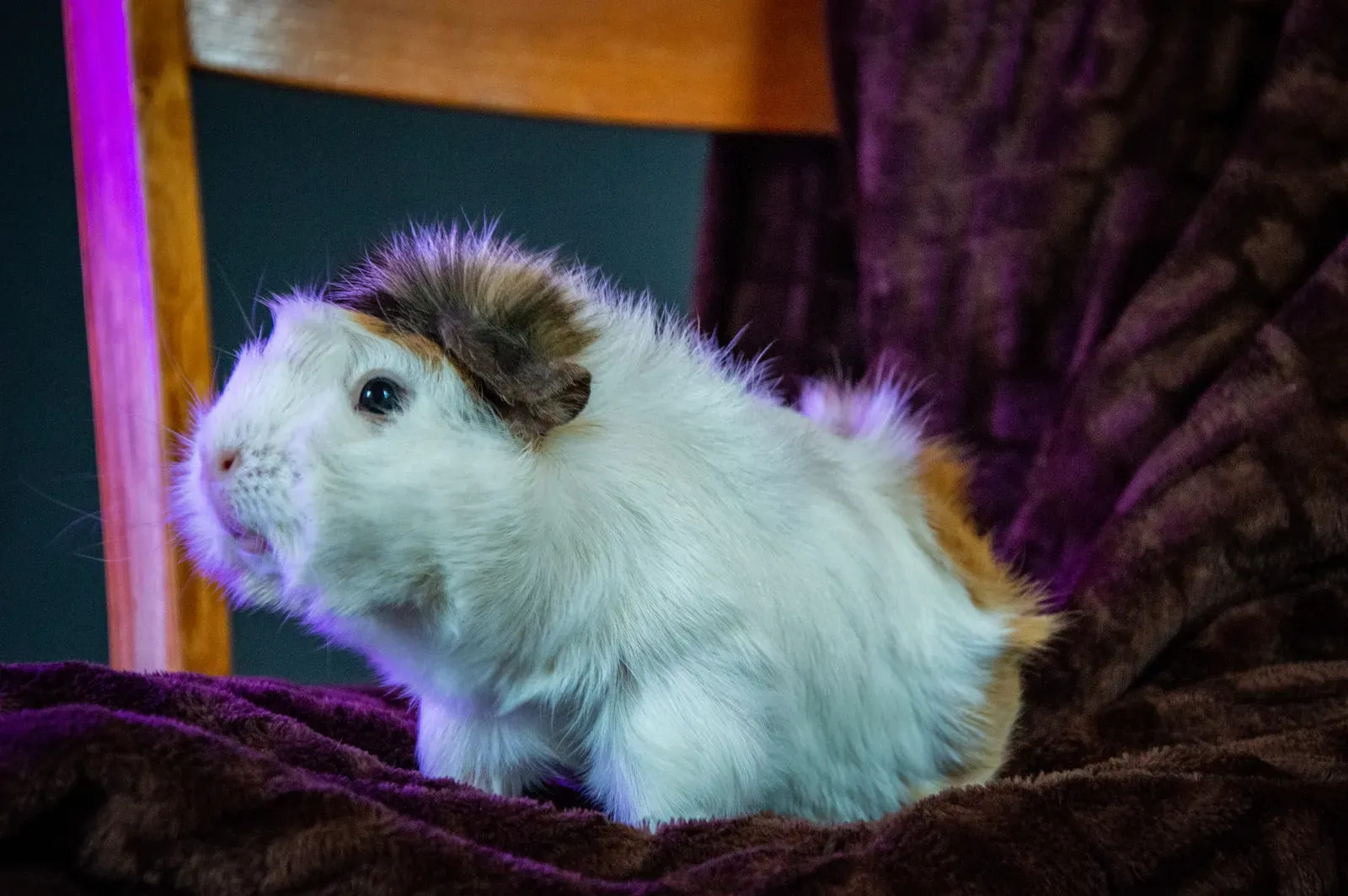
Generally, yes — plan for the next size up. Males tend to be more territorial, and bonded boar pairs do best with extra room to establish separate zones and retreat from each other. The RSPCA’s Worcester branch recommends 7′ × 2′ for a pair of males (versus 6′ × 2′ for a female pair), and Camp Cavy Rescue recommends a 2×5 C&C — about 27″ × 70″ of living area — for two males, compared with a 2×4 for two females. If you’re housing boars, don’t squeeze them into the minimum; the extra square footage is cheap insurance against dominance disputes.
Frequently asked questions
How do I measure my cage?
Measure the interior floor — length × width in inches — and divide by 144. That’s your square footage. Ignore lofts, ramps, and exterior dimensions; welfare minimums are about usable flat floor.
Is a 2×4 C&C cage big enough for two guinea pigs?
Yes. At roughly 27″ × 56″ of interior space (10.5 sq ft), it meets the Humane Society’s recommended figure for a pair, with room for a hay rack, hideouts, and lap-running.
Can a second level count toward the minimum?
No — count only flat floor space. A loft is bonus enrichment, not a substitute for the footprint minimums, and most guinea pigs use upper levels far less than the main floor anyway.
Does daily floor time make up for a small cage?
It helps, but it doesn’t replace proper housing. Guinea pigs sleep only a few hours a day in short naps and are active nearly around the clock — including overnight, when they’re locked in. The cage is their 24-hour home; floor time is a supplement, not a fix.
Will a bigger cage really make a difference?
The rescues and vets say yes. GuineaLynx reports owners seeing “happily popcorning pigs” when their animals move into spacious quarters, and notes bigger cages stay cleaner longer. The Royal Veterinary College ties common guinea pig diseases directly to poor housing. And since good housing supports how long guinea pigs live, the cage is one of the highest-leverage purchases you’ll make.
The bottom line
Buy the biggest single-level, smooth-floored cage your space and budget allow — 10.5 sq ft for a pair is the number to beat, and more is always better. Measure before you buy, skip wire floors and aquariums entirely, and remember that a C&C build gets you rescue-grade space for less money than most pet-store cages. Your pigs will repay you with zoomies.
This guide is for general information only and isn’t a substitute for veterinary advice. If your guinea pig shows signs of foot sores, breathing trouble, or behavior changes, see an exotics veterinarian.



Leave a Comment