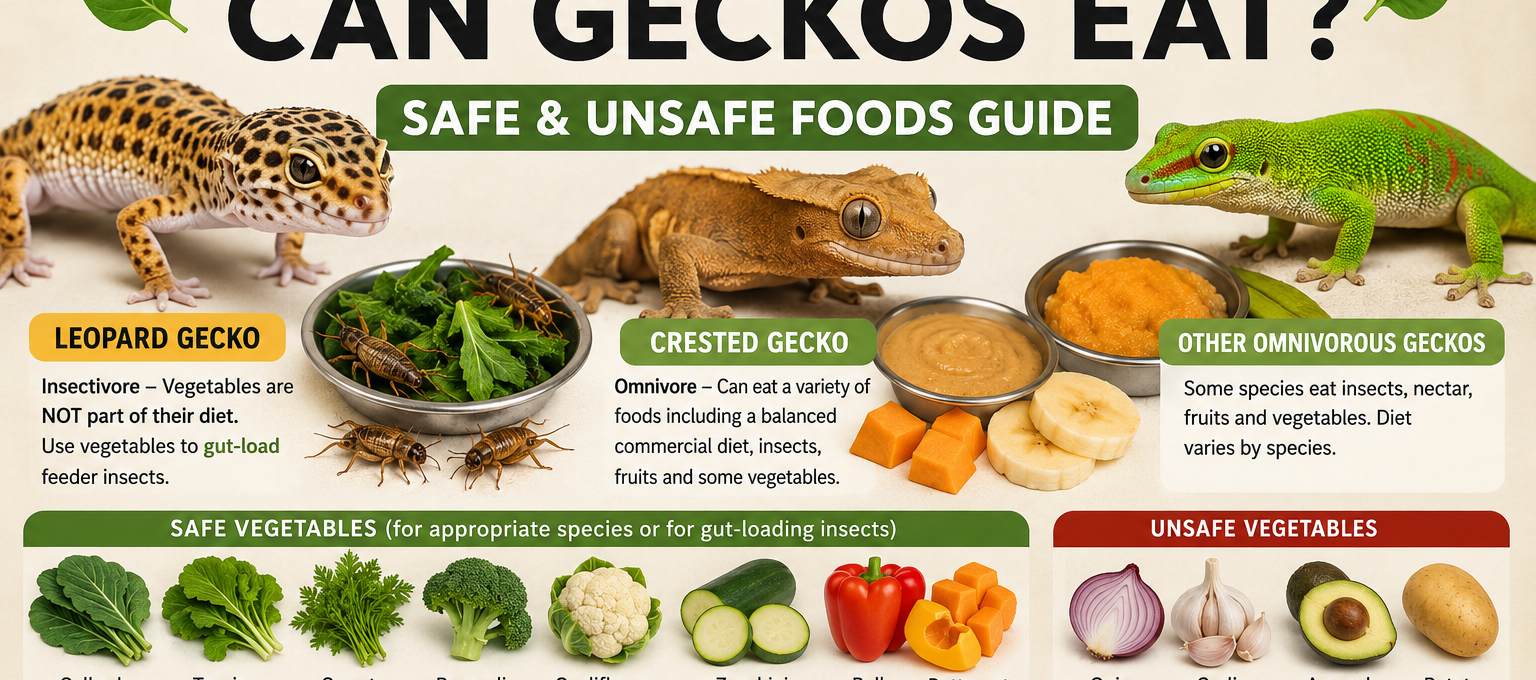

If you have a pet gecko, you may have wondered: What vegetables can geckos eat?
The answer depends heavily on the species of gecko.
This is important because geckos do not all have the same nutritional needs. Leopard geckos, for example, are primarily insect-eaters, while crested geckos and several other species have more varied diets.
So before offering vegetables, identify your gecko’s species.
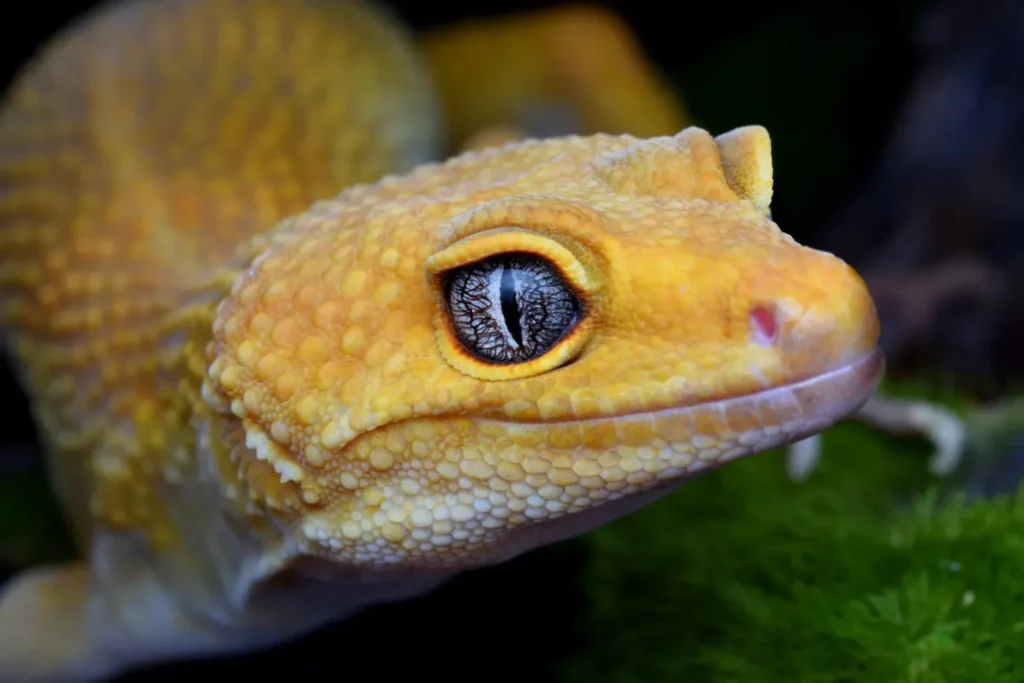
Can Geckos Eat Vegetables?
Some can, but not all geckos should be fed vegetables.
Leopard geckos are insectivores and should not be treated like herbivorous or omnivorous reptiles. Their normal captive diet is primarily live insects, with appropriate calcium supplementation.
Other species, including some omnivorous geckos, can consume plant-based foods as part of a properly balanced diet. However, the exact diet depends on the species.
That’s why searching for a generic list of “vegetables for geckos” can be misleading.
1. Leopard Geckos: Vegetables Are Not Their Main Food
If you have a Leopard Gecko, don’t make vegetables part of its regular diet.
Leopard geckos are insectivores. Appropriate foods include commercially raised crickets, silkworms, dubia roaches, mealworms, superworms, waxworms, and other suitable live insects.
Vegetables can, however, be used to gut-load feeder insects. VCA notes that fresh greens and vegetables such as turnip greens, collard greens, parsley, carrot tops, broccoli, and cauliflower can be fed to crickets and mealworms to improve their nutritional value before those insects are offered to the gecko.
So there’s an important distinction:
Vegetables for the feeder insects ≠ vegetables for the Leopard Gecko.
2. Crested Geckos Have Different Nutritional Needs
Crested geckos are omnivorous and naturally consume foods such as fruit and insects.
For captive crested geckos, a nutritionally complete commercial crested gecko diet (CGD) can provide the foundation of their nutrition. ReptiFiles lists several established complete-diet options and recommends feeding according to the product and the gecko’s age.
Fresh produce shouldn’t simply replace a balanced commercial diet.
If you’re considering adding any new food, make sure it’s appropriate for your specific species.
3. What About Other Gecko Species?
There are many different gecko species, and their diets can vary considerably.
For example, some day geckos are omnivorous and eat insects along with nectar and fruit-based foods.
Leachie geckos are also omnivorous and require a combination of plant- and animal-based nutrition.
This means the safest approach is:
Identify the species first → check its dietary requirements → then choose appropriate foods.
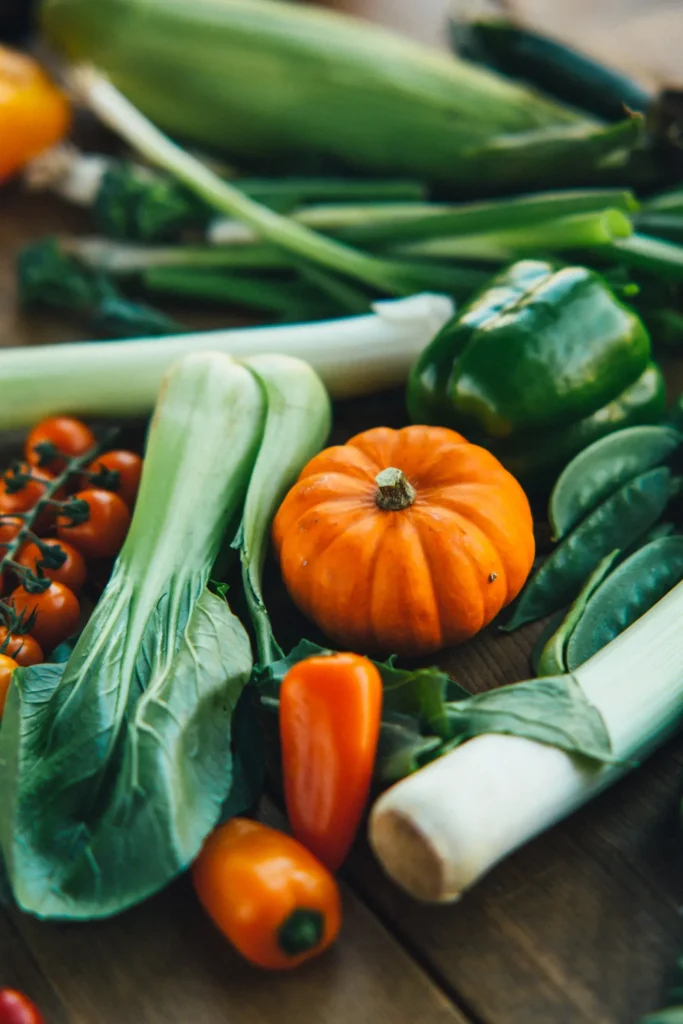
4. Vegetables That May Be Used for Feeder Insects
If you keep a Leopard Gecko, one useful way vegetables can enter the feeding routine is through gut-loading feeder insects.
VCA specifically mentions vegetables and greens including:
- Turnip greens
- Collard greens
- Parsley
- Carrot tops
- Broccoli
- Cauliflower
These can be offered to suitable feeder insects before they are fed to the gecko.
The purpose is to improve the nutritional value of the insects rather than feeding the vegetables directly to the Leopard Gecko.
5. Should You Feed Your Gecko Vegetables From Your Kitchen?
Don’t assume that a vegetable that is healthy for humans is automatically appropriate for your gecko.
The nutritional needs of reptiles are different from ours.
Before introducing a new food, consider:
- Your gecko’s species
- Age and life stage
- Existing diet
- Nutritional balance
- How often the food should be offered
- Whether the food is intended for direct feeding or gut-loading
If you’re unsure, ask a veterinarian experienced with reptiles or exotic pets.
6. Why Species Matters So Much
One of the biggest mistakes new reptile owners can make is treating all geckos as if they eat the same foods.
They don’t.
Merck Veterinary Manual notes that lizards have highly diverse feeding patterns, including insectivorous, carnivorous, omnivorous, and herbivorous species.
That’s why a feeding recommendation that works for one gecko can be inappropriate for another.
For example:
Leopard Gecko: primarily insects.
Crested Gecko: omnivorous, with a balanced crested gecko diet and appropriate insect feeding.
Some Day Geckos: insects plus plant-based foods such as nectar and fruit.
7. What Should You Do If Your Gecko Won’t Eat?
If your gecko suddenly stops eating, don’t automatically try to solve the problem by offering vegetables or random new foods.
Changes in appetite can have many possible causes.
Look at the bigger picture:
- Is your gecko otherwise active?
- Is its weight changing?
- Are its droppings normal?
- Is it shedding normally?
- Are the enclosure temperature and humidity appropriate?
- Has anything recently changed in the enclosure?
If your gecko has a persistent appetite change or appears unwell, contact a reptile-experienced veterinarian.
8. Don’t Forget Calcium and Proper Nutrition
For insect-eating geckos, feeding the right insects is only part of good nutrition.
VCA recommends calcium supplementation for Leopard Geckos and notes that feeder insects should be appropriately gut-loaded before being offered.
Merck also notes that insects generally have an unfavorable calcium-to-phosphorus balance for insectivorous lizards, which is why calcium management is important.
This is another reason not to replace a species-appropriate diet with vegetables.
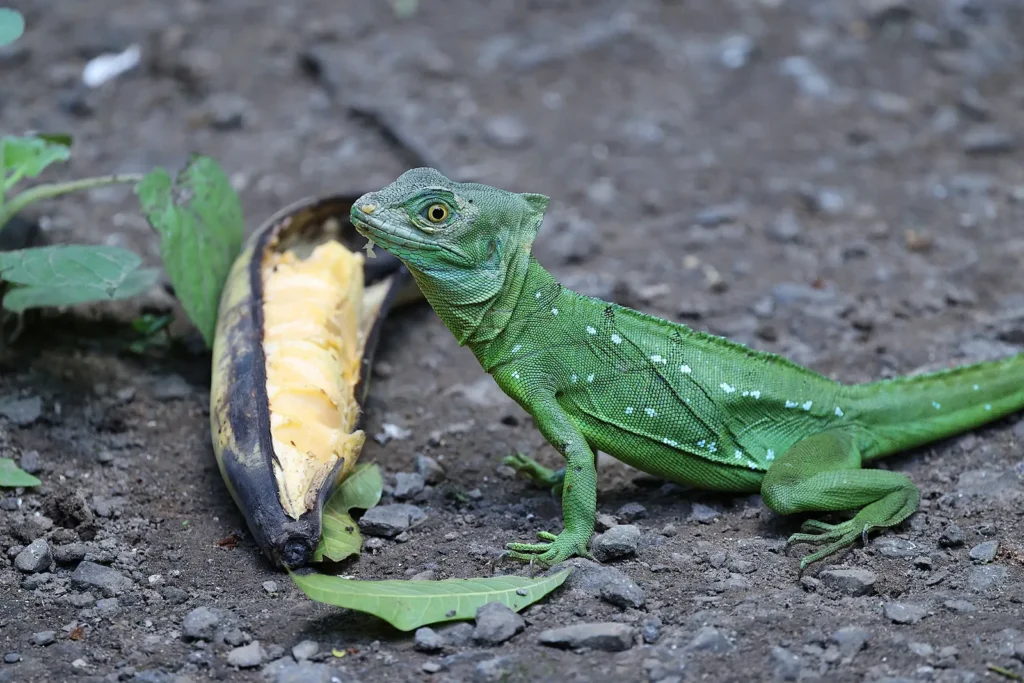
9. What Foods Should You Avoid?
The safest general rule is:
Don’t feed a vegetable simply because someone says it’s “safe for geckos.”
First determine whether your species should eat vegetables at all.
Avoid:
- Replacing an insectivore’s normal diet with vegetables
- Using vegetables as the main food for a Leopard Gecko
- Making sudden major diet changes
- Feeding unknown plants collected outdoors
- Assuming every gecko species has the same nutritional requirements
For species that do eat plant-based foods, follow a diet specifically designed for that species.
Frequently Asked Questions
Can Leopard Geckos eat vegetables?
Leopard geckos are primarily insectivorous and should not be fed vegetables as a normal part of their diet. Vegetables can instead be used to gut-load feeder insects.
Can Crested Geckos eat vegetables?
Crested geckos are omnivorous, but their captive diet should be properly balanced rather than relying on random vegetables. A nutritionally complete crested gecko diet is commonly used as a dietary foundation.
What vegetables can I give my Leopard Gecko?
You generally shouldn’t offer vegetables directly as a regular food. Instead, vegetables such as collard greens, turnip greens, parsley, carrot tops, broccoli, and cauliflower can be used for gut-loading appropriate feeder insects.
Can all geckos eat the same food?
No. Gecko diets vary by species. Some are primarily insectivorous, while others are omnivorous and consume plant-based foods.
What is the best food for a gecko?
There is no single food that is best for every gecko. The correct diet depends on the species, age, and individual needs of the animal.
Can I give my gecko vegetables instead of insects?
Not if you have an insectivorous species such as a Leopard Gecko. Its diet should remain based on appropriate insect prey.
Final Thoughts
The answer to “What vegetables can geckos eat?” starts with another question:
What species of gecko do you have?
That’s because gecko diets vary significantly.
Leopard geckos are primarily insectivores and should not be fed vegetables as a substitute for their normal insect-based diet. Vegetables can instead be useful for gut-loading feeder insects.
Crested geckos and some other omnivorous species have different dietary requirements and can use properly formulated diets alongside appropriate animal-based foods.
If you’re unsure about your gecko’s diet, identify the species and consult a veterinarian who works with reptiles before making major dietary changes.
Important: This article is for general educational purposes and isn’t a substitute for veterinary advice. If your gecko has persistent appetite changes, weight loss, digestive problems, or other signs of illness, consult a qualified reptile veterinarian.