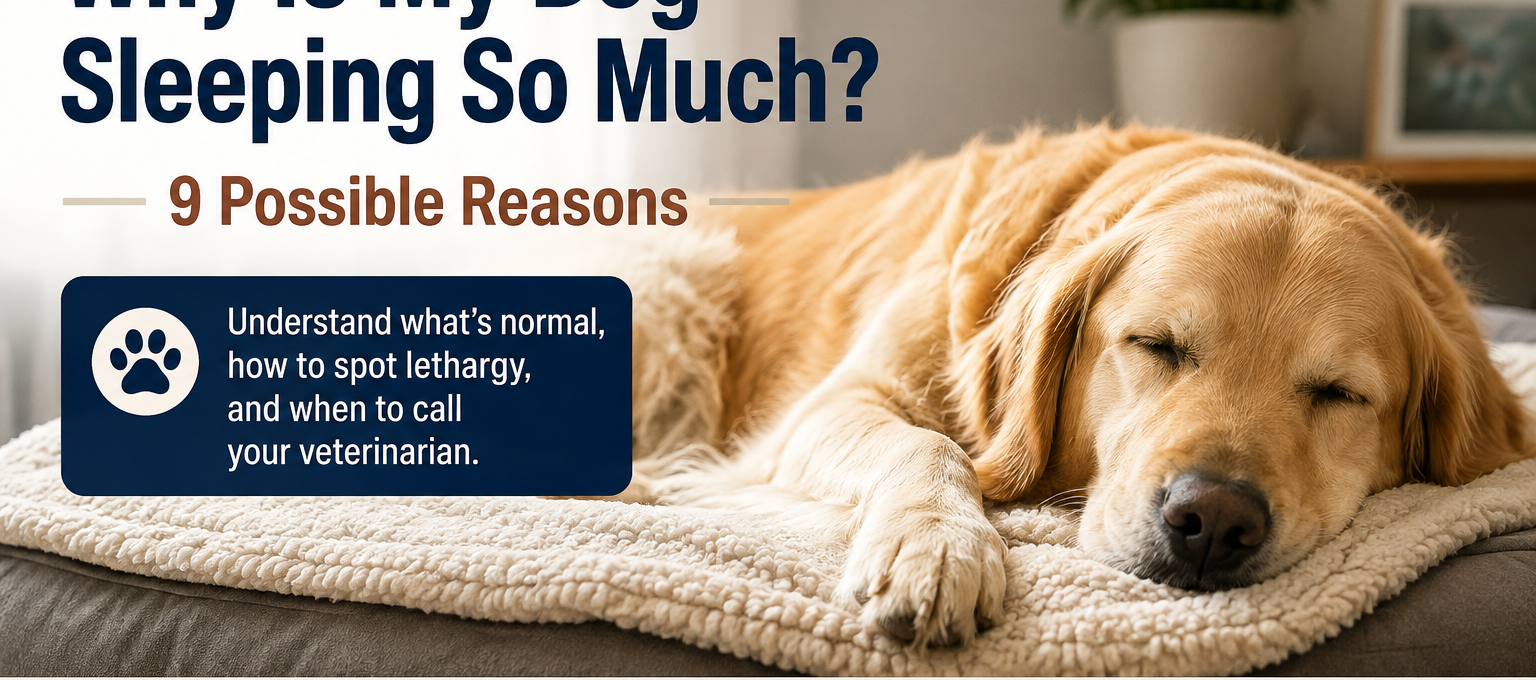

Dogs spend a lot of time sleeping and resting, so seeing your dog take frequent naps is not necessarily a reason to worry.
But what if your dog is suddenly sleeping much more than usual?
The answer depends on your dog’s age, breed, activity level, health, and normal routine. Most dogs sleep roughly 12–16 hours per day, although individual needs can vary. Puppies often sleep considerably more, and senior dogs may also need additional rest.
The most important thing is not simply counting your dog’s sleeping hours. Pay attention to whether your dog’s behavior has changed from their normal routine.
Here are nine possible reasons your dog may be sleeping more than usual and the signs that deserve attention.
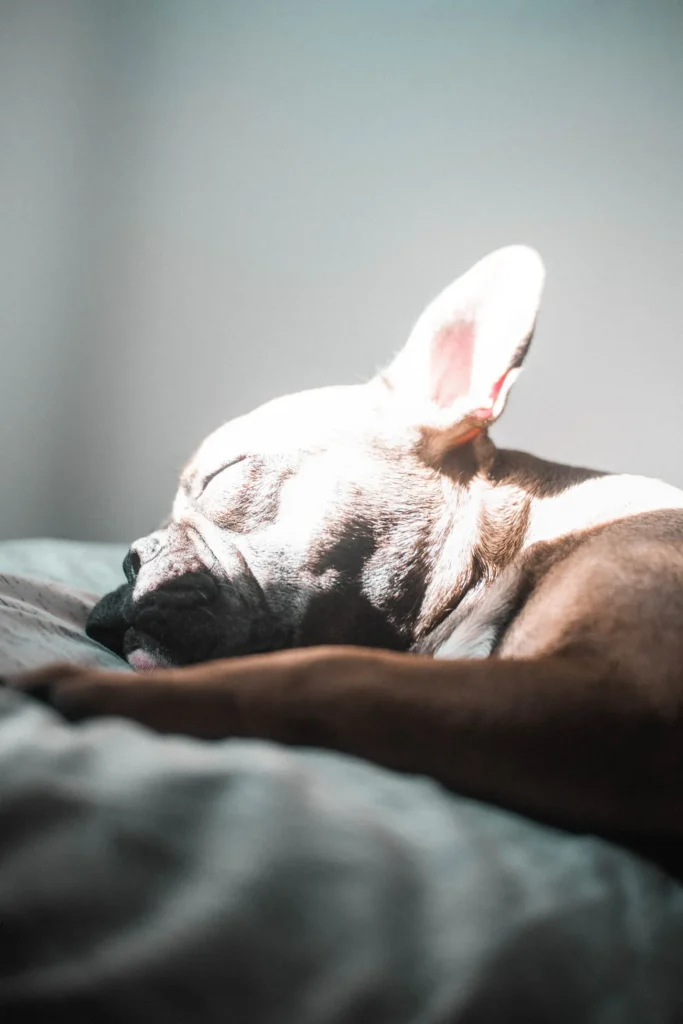
1. Your Dog May Simply Need More Rest
Sometimes, sleeping more is completely normal.
Dogs may need additional rest after a particularly active day involving:
- A long walk
- Running or playing
- Training
- Visiting a new place
- Socializing with other dogs
- Other unusual physical or mental activity
Dogs also have different sleep needs depending on their age, breed, lifestyle, and individual personality. Some dogs naturally spend much of the day sleeping or resting.
If your dog wakes normally, eats normally, wants to go outside, and behaves like themselves when awake, extra sleep may simply be part of their normal routine.

2. Your Puppy May Need a Lot of Sleep
Puppies can sleep far more than adult dogs.
According to the American Kennel Club, puppies commonly sleep around 18–20 hours per day. Sleep supports their growth and development, and puppies use a lot of energy while learning, playing, and exploring their environment.
It is therefore normal for a puppy to play intensely for a short period and then suddenly fall asleep.
However, excessive sleep should not automatically be assumed to be normal if your puppy also shows a significant change in behavior.
Contact your veterinarian if your puppy becomes unusually difficult to engage, stops eating, seems weak, or develops other concerning symptoms.
3. Your Dog Is Getting Older
Senior dogs often need more rest than younger adult dogs.
The American Kennel Club reports that many geriatric dogs sleep around 12–15 hours per day, although individual dogs vary. As dogs age, their energy levels can naturally decrease and they may tire more easily.
However, a noticeable change in your senior dog’s normal sleeping pattern should not automatically be dismissed as aging.
Changes in sleep and activity can occur alongside health problems such as pain, arthritis, heart disease, kidney disease, hypothyroidism, or cognitive decline.
If your older dog suddenly sleeps much more, becomes less interested in food or activities, or behaves differently, speak with your veterinarian.
4. Your Dog Had a Very Active Day
A tired dog may simply need more sleep after using a lot of physical or mental energy.
For example, your dog may sleep longer after:
- A long hike
- A busy day at daycare
- An extended play session
- A training class
- Traveling
- Spending time in a stimulating environment
Temporary tiredness after activity is different from persistent lethargy.
If your dog rests and then returns to their usual behavior, the extra sleep may simply reflect their increased activity. If your dog also pants heavily at night, read why dogs pant at night.
5. A Change in Routine May Affect Your Dog
Dogs often become accustomed to predictable routines.
Changes such as moving home, traveling, introducing a new pet, or changing the household schedule can affect a dog’s behavior.
A change in routine may result in temporary changes in activity or sleep. However, it is important not to assume that a major decrease in energy is caused by stress alone.
If your dog continues to behave differently or seems unwell, a veterinarian can help determine whether there is an underlying medical cause.
6. Pain or Discomfort Could Reduce Your Dog’s Activity
Pain can cause a dog to become less active.
A dog experiencing discomfort may spend more time lying down, avoid activities they normally enjoy, hesitate to move, or seem reluctant to get up.
Possible causes of pain include joint problems, arthritis, injuries, dental problems, and other medical conditions.
However, sleepiness by itself cannot tell you whether your dog is in pain or what is causing the problem.
If you notice a sudden change in your dog’s activity together with signs of discomfort, contact your veterinarian.
7. Your Dog May Be Lethargic Rather Than Simply Sleepy
This distinction is important.
A sleepy dog will usually wake up and return to normal behavior after getting enough rest.
A lethargic dog has a noticeable decrease in their normal activity or behavior. They may move slowly, stay in their bed, avoid walks or play, or show little interest in activities they normally enjoy.
For example:
Normal sleep:
Your dog sleeps for several hours, wakes up when you call, eats normally, wants to go outside, and behaves normally.
Possible lethargy:
Your dog sleeps much more than usual, remains unusually inactive after waking, does not want to walk or play, and seems different from their normal self.
Lethargy is a nonspecific sign. It does not identify one particular disease, which is why a veterinarian may need to investigate the underlying cause.
8. Medication, Vaccination, or Recent Treatment May Affect Energy
Some dogs can become temporarily tired after certain veterinary treatments, vaccinations, medications, or procedures.
If your dog has recently received a vaccine, started medication, undergone surgery, or received another veterinary treatment, ask your veterinarian whether the change in energy is expected.
Do not change or stop prescribed medication without veterinary advice.
If the tiredness seems severe, persists, or is accompanied by other concerning symptoms, contact your veterinarian.
9. An Underlying Health Problem Could Be Involved
In some cases, increased sleeping or reduced activity can occur alongside an underlying health problem.
Lethargy is a nonspecific sign associated with many possible causes, including pain, disease, infection, medication effects, and other conditions.
For this reason, it is not possible to determine the cause of excessive sleeping from sleep duration alone.
Look at the bigger picture.
Has your dog also experienced:
- Reduced appetite?
- Vomiting or diarrhea?
- Difficulty walking?
- Unusual weakness?
- Changes in drinking or urination?
- Loss of interest in normal activities?
- A noticeable change in behavior?
If several changes occur together, contact your veterinarian.
How Much Should a Dog Sleep?
There is no single number that is correct for every dog.
PetMD reports that most dogs sleep approximately 12–16 hours per day, with age, breed, activity level, and individual circumstances affecting the amount of sleep a dog needs.
Puppies commonly sleep around 18–20 hours per day, while many senior dogs sleep approximately 12–15 hours per day.
The best comparison is often your dog’s own normal routine.
For example:
Probably normal:
Your dog usually sleeps 14 hours, wakes easily, eats normally, enjoys walks, and behaves normally.
More concerning:
Your dog normally sleeps 14 hours but suddenly spends most of the day sleeping, refuses normal activities, and remains unusually tired after waking.
The second situation is more important than the exact number of hours your dog sleeps.
How Can You Tell If Your Dog Is Sleepy or Lethargic?
A simple way to think about it is to observe what happens after your dog wakes up.
A normally sleepy dog may:
- Wake up when called
- Respond to familiar sounds
- Show interest in food
- Want to go outside
- Play or interact normally
- Return to their usual behavior after resting
A lethargic dog may:
- Have noticeably less energy than usual
- Move more slowly
- Stay in their bed or crate
- Avoid walks or play
- Show less interest in normal activities
- Continue acting unusually tired after resting
Veterinary guidance emphasizes that lethargy is a change from the dog’s normal level of activity and behavior.
When Should You Contact a Veterinarian?
If your dog is sleeping more than normal and is also behaving differently, it is appropriate to contact your veterinarian for advice. VCA specifically recommends veterinary evaluation when a pet is sleeping more than normal or is no longer acting like themselves.
Seek urgent veterinary attention if your dog:
- Is unusually difficult to wake
- Cannot get up or walk normally
- Has a major change in energy
- Is unable to participate in normal activities
- Appears seriously unwell
VCA advises emergency care when a pet is difficult to wake or cannot get up and walk when prompted.
If your dog is experiencing severe symptoms or you believe they may be having an emergency, contact an emergency veterinary service immediately.
What Should You Monitor at Home?
If your dog is sleeping more but otherwise seems well, pay attention to their normal routine.
Monitor:
Sleep
Is your dog sleeping slightly more, or has the change been dramatic?
Appetite
Are they eating normally?
Water intake
Have you noticed a significant change in drinking?
Activity
Do they still want to walk, play, and explore?
Mobility
Are they getting up, walking, climbing stairs, or jumping normally for them?
Behavior
Are they interacting with you in their usual way?
Bathroom habits
Are urination and bowel movements normal for your dog?
Keeping track of these changes can give your veterinarian useful information if an examination becomes necessary.
Frequently Asked Questions
Why is my dog suddenly sleeping so much?
Dogs may sleep more after increased activity, and puppies and senior dogs naturally have higher sleep needs. However, a sudden or persistent change in sleep combined with reduced activity or other symptoms can indicate that your dog should be evaluated by a veterinarian.
Is it normal for a dog to sleep 12–16 hours a day?
Yes. Many dogs sleep approximately 12–16 hours per day, although individual needs vary according to factors such as age, breed, activity, and lifestyle.
Why does my puppy sleep all day?
Puppies need substantial amounts of sleep for growth and development. The American Kennel Club reports that puppies commonly sleep around 18–20 hours per day.
Why is my senior dog sleeping more?
Senior dogs often need more rest as their energy levels decrease with age. However, a noticeable change in sleeping patterns can sometimes occur alongside health problems, so a significant change should be discussed with a veterinarian.
How do I know if my dog is lethargic?
Lethargy means a noticeable decrease from your dog’s normal activity or behavior. A lethargic dog may move slowly, avoid normal activities, remain in bed, or show less interest in walks, play, or food.
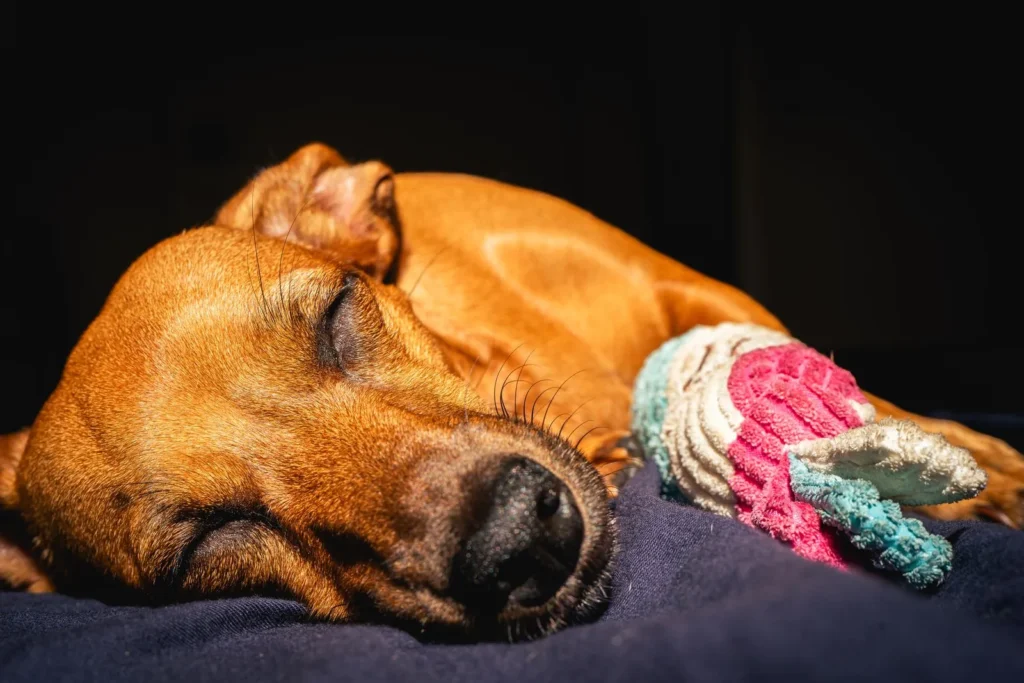
Should I wake my dog if they are sleeping a lot?
There is generally no need to repeatedly wake a dog that is sleeping normally and otherwise behaving normally. What matters is whether your dog can wake and return to their usual behavior. If your dog is unusually difficult to wake, seek emergency veterinary care.
Final Thoughts
So, why is your dog sleeping so much?
Sometimes, the answer is simply that your dog needs more rest. Puppies, senior dogs, and dogs recovering from an unusually active day can naturally sleep for long periods.
But a sudden or persistent change from your dog’s normal routine deserves attention, especially when it comes with reduced appetite, low activity, difficulty moving, or other unusual behavior.
Rather than looking only at the number of hours your dog sleeps, pay attention to how your dog behaves when awake.
If your dog is significantly different from normal, contact your veterinarian. If your dog is difficult to wake or cannot stand or walk normally, seek emergency veterinary care.
Important: This article provides general educational information and is not a diagnosis or substitute for veterinary care. If you are concerned about your dog’s health, consult a qualified veterinarian.
Leave a Comment