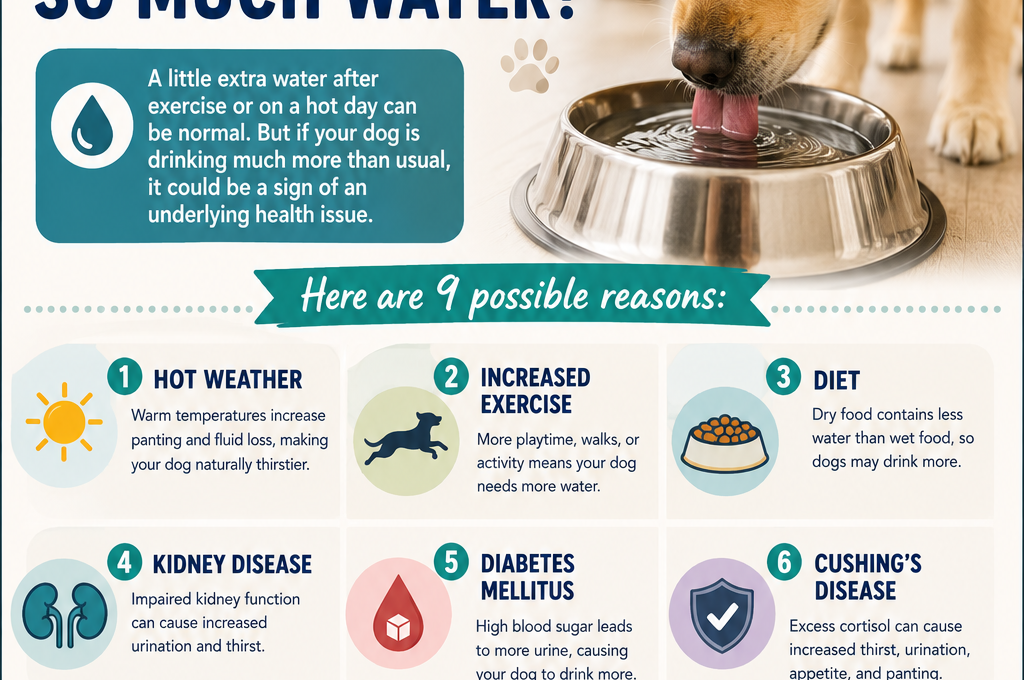

If your dog suddenly starts drinking much more water than usual, it is worth paying attention to the change.
Drinking more after exercise or during hot weather can be completely normal. However, persistent excessive thirst can sometimes be a sign of an underlying medical problem, especially when it is accompanied by increased urination, weight loss, vomiting, changes in appetite, or low energy.
Here are nine possible reasons why your dog may be drinking more water than usual.
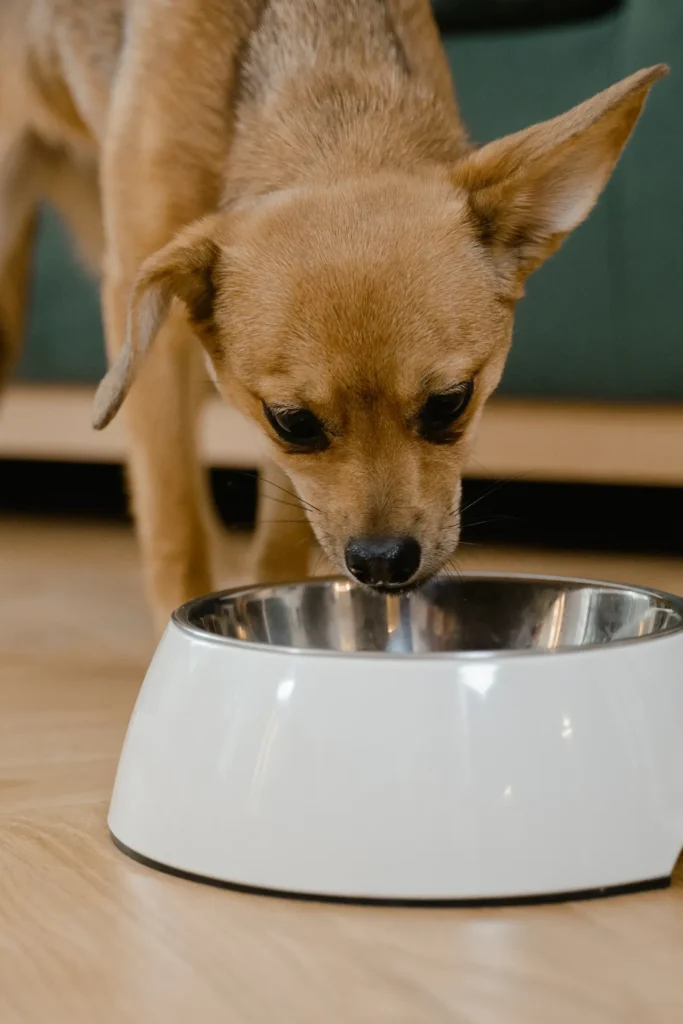
How Much Water Does a Dog Normally Drink?
There is no single amount that is normal for every dog. Water requirements can vary with body size, diet, activity, temperature, and health.
As a general veterinary reference, drinking more than about 100 mL of water per kilogram of body weight per day is commonly considered excessive thirst (polydipsia). However, a significant increase from your dog’s usual drinking pattern can also be important even if the amount does not reach that threshold.
For example, a 20 kg dog drinking around 400–800 mL in a day can have different needs depending on circumstances. The pattern over time matters more than one isolated day.
1. Hot Weather
Hot temperatures can naturally make dogs drink more.
Dogs may pant more in warm weather, increasing their need for fluids. If your dog drinks more after spending time outside on a hot day but returns to its normal drinking pattern afterward, the increase may simply reflect normal hydration needs. If your dog also pants heavily at night, read why dogs pant at night.
However, heavy panting combined with weakness, confusion, vomiting, collapse, or other signs of heat illness requires urgent veterinary attention.
2. Increased Exercise
A dog that has recently been running, playing, hiking, or exercising more than usual may naturally drink more water.
This is particularly noticeable after strenuous activity or outdoor exercise in warm weather.
If the increased thirst continues even when your dog’s activity returns to normal, it is worth monitoring more closely.
3. Diet
Your dog’s food can influence how much water they drink.
Dogs eating dry food generally obtain less water from their meals than dogs eating wet food, so their bowl intake can be higher.
A recent change in diet can therefore change drinking habits without necessarily indicating disease.
4. Kidney Disease
The kidneys help regulate water and electrolyte balance and are responsible for concentrating urine.
When kidney function becomes impaired, some dogs produce larger amounts of urine and consequently drink more to replace the lost fluid. Increased thirst and urination can therefore be signs of kidney disease.
Other possible signs include weight loss, reduced appetite, vomiting, lethargy, or dehydration.
A veterinarian may use blood tests and urinalysis to investigate kidney function.
5. Diabetes Mellitus
Diabetes mellitus is an important cause of increased thirst and urination in dogs.
When blood glucose remains too high, glucose is passed into the urine. This causes additional water to be lost through urination, which can make the dog drink more to compensate.
Other common signs can include:
- Increased urination
- Increased appetite
- Weight loss
- Reduced energy
Persistent excessive thirst combined with these signs should be evaluated by a veterinarian.
6. Cushing’s Disease
Cushing’s disease, also called hyperadrenocorticism, occurs when a dog’s body is exposed to excessive cortisol.
Increased thirst and urination are common signs. Other possible symptoms include increased appetite, excessive panting, hair loss, skin changes, reduced energy, and a rounded or pot-bellied appearance.
Because several different conditions can produce similar symptoms, diagnosis requires veterinary testing.
7. Addison’s Disease
Addison’s disease, or hypoadrenocorticism, occurs when the adrenal glands do not produce enough important hormones.
Possible signs include lethargy, reduced appetite, weight loss, vomiting, diarrhea, dehydration, increased urination, and increased thirst.
Severe Addison’s disease can become a medical emergency, particularly if a dog develops profound weakness, collapse, repeated vomiting, or other serious symptoms.
8. Medications
Some medications can cause increased thirst and urination.
Corticosteroids such as prednisone are a well-known example. Increased thirst, increased urination, increased appetite, and panting can occur during treatment.
If your dog’s drinking increased after starting a medication, speak with your veterinarian. Do not stop a prescribed medication on your own.
9. Other Medical Conditions
Excessive thirst has many possible causes, so the nine reasons listed here are not a complete diagnostic list. For help recognizing other warning signs, see our pet symptoms guide.
Veterinarians may also investigate conditions involving the liver, urinary system, hormones, elevated blood calcium, infections, and other disorders. In unspayed female dogs, pyometra, a potentially serious uterine infection, can also cause increased thirst and urination.
A rare condition called diabetes insipidus can also cause a dog to produce very large amounts of dilute urine and drink correspondingly large amounts of water.
This is why excessive thirst should not be used to diagnose a specific disease at home.
Signs Your Dog May Need Veterinary Attention
Contact your veterinarian if your dog’s increased drinking is persistent or clearly different from their normal pattern, especially if you also notice:
- Much more frequent urination
- Accidents in the house
- Unexplained weight loss
- Changes in appetite
- Vomiting
- Diarrhea
- Lethargy or weakness
- Excessive panting
- Hair or skin changes
- Other unusual behavior
These symptoms can have many different causes, so a veterinary examination is the safest way to determine what is happening.
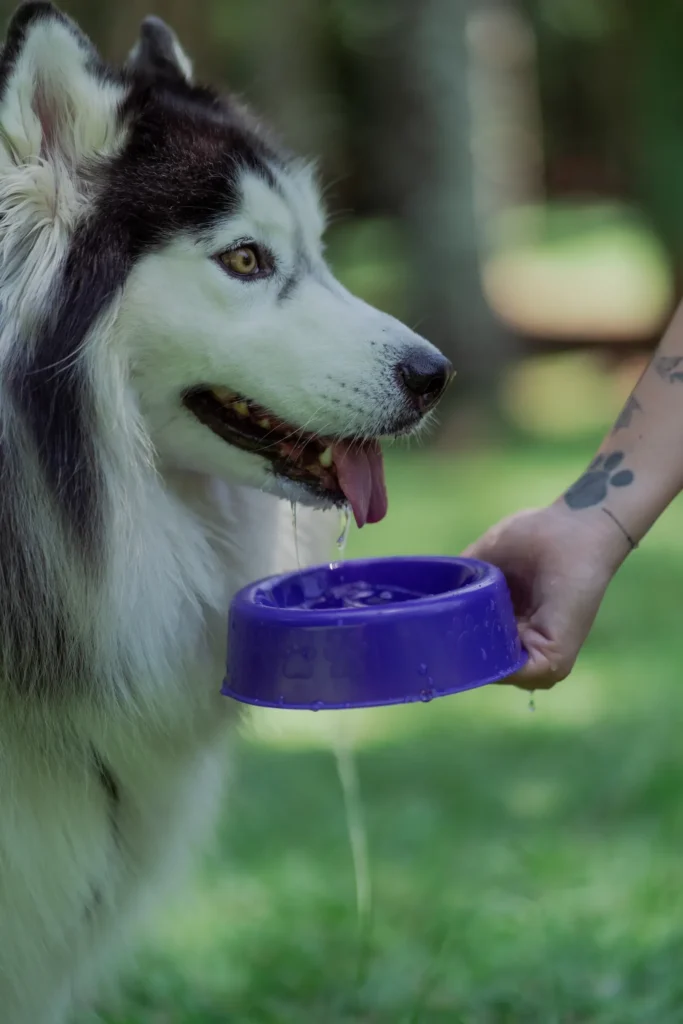
How Can You Tell If Your Dog Is Drinking Too Much?
One of the easiest things to notice is that you are filling the water bowl more frequently than usual.
If you want to monitor the situation, record approximately how much water your dog drinks over 24 hours. Also note:
- How frequently your dog urinates
- Any accidents indoors
- Changes in appetite
- Changes in weight
- Energy levels
- Recent exercise
- Weather and temperature
- Any new medications
- Changes in diet
This information can be very useful when speaking with your veterinarian.
How Do Veterinarians Find the Cause?
Because increased thirst can result from many different conditions, veterinarians usually begin with your dog’s history and a physical examination.
Depending on the situation, initial testing may include:
- Complete blood count (CBC)
- Blood chemistry testing
- Urinalysis
Additional tests may be recommended depending on the initial results and your dog’s symptoms.
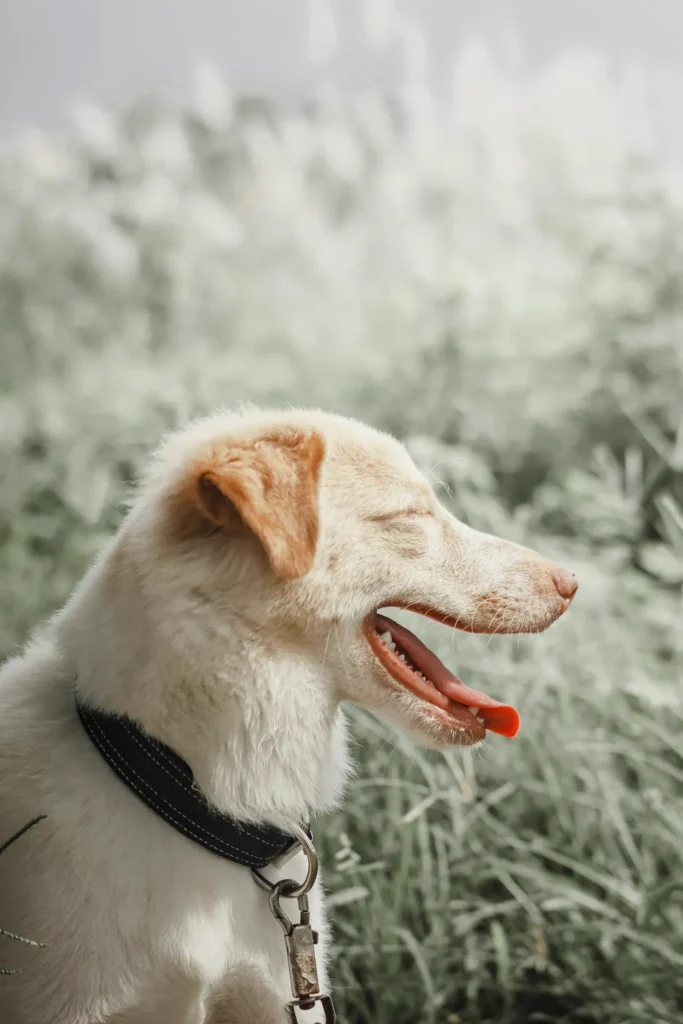
Should You Limit Your Dog’s Water?
No. Do not restrict your dog’s access to water unless your veterinarian specifically tells you to.
A dog drinking excessively may be trying to replace water being lost through increased urination. Restricting water without veterinary supervision can lead to dehydration and other complications.
Always provide access to clean, fresh water.
One Important Exception
Dogs can also become dangerously overhydrated in unusual circumstances, such as repeatedly swallowing large amounts of water while swimming or playing with a hose.
Signs of potentially serious water intoxication can include lethargy, vomiting, loss of coordination, bloating, dilated pupils, seizures, or difficulty breathing. This is an emergency and requires immediate veterinary care.
Final Thoughts
If your dog drinks more water after exercise or during hot weather, the change may be completely normal.
But if your dog is consistently drinking much more than usual, particularly together with increased urination, weight loss, appetite changes, vomiting, or low energy, don’t ignore it.
Persistent excessive thirst can occur with conditions such as kidney disease, diabetes mellitus, Cushing’s disease, Addison’s disease, pyometra, and other medical disorders. Only a veterinarian can determine the underlying cause.
The best approach is to monitor the change, keep fresh water available, record your dog’s drinking and urination habits, and contact your veterinarian if the change persists or other symptoms appear.
Disclaimer: This article is for general educational purposes only and is not a substitute for professional veterinary diagnosis, advice, or treatment.
Sources
- VCA Animal Hospitals — Testing for Increased Thirst and Urination
- AKC — Why Is My Dog Drinking So Much Water?
- Merck Veterinary Manual — Kidney and Urinary Disorders in Dogs
Leave a Comment