
Short answer: Dogs can safely share plain, skinless, boneless turkey and plain pumpkin, green beans, sweet potato, carrots and apple, but turkey bones and skin, stuffing, gravy, grapes, chocolate and anything with xylitol must stay on your plate.
- Never: cooked turkey bones — they splinter and can puncture the gut.
- Never: stuffing and gravy — they hide onion and garlic, which damage red blood cells.
- Never: grapes, raisins, chocolate, alcohol, raw dough, or xylitol in sugar-free desserts.
- Watch the fat: skin, drippings and rich scraps can trigger pancreatitis, a painful emergency.
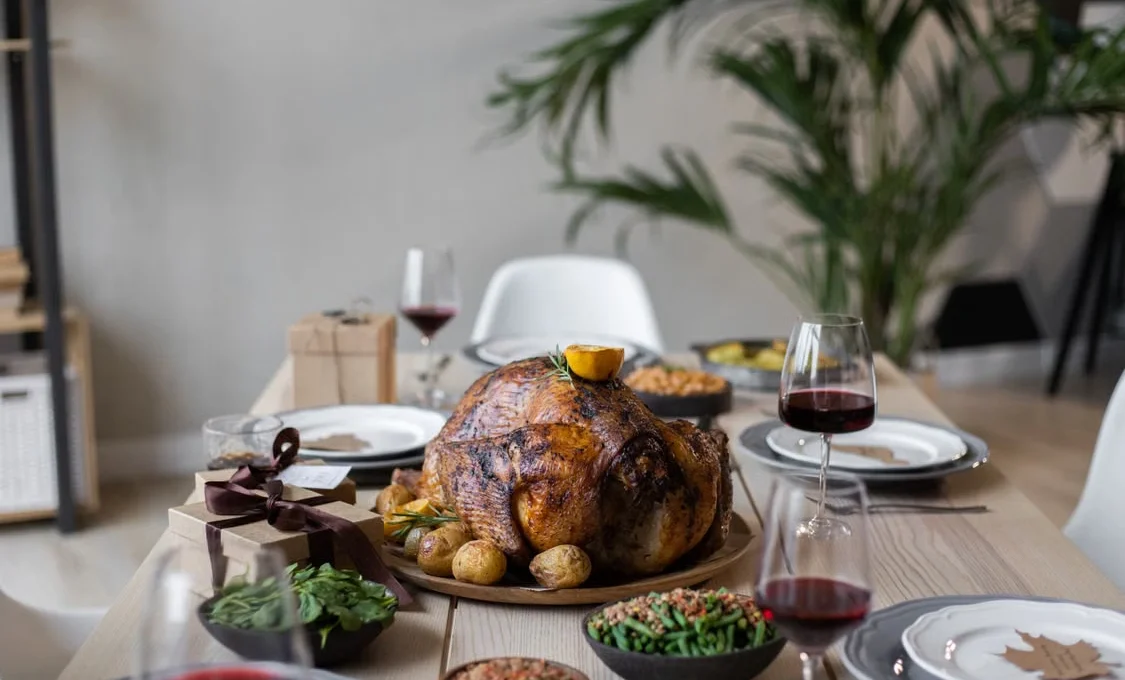
Thanksgiving revolves around the table, and your dog knows it. Between the carving, the side dishes and guests slipping scraps, it is one of the busiest times of year for emergency vets — the AKC notes Thanksgiving brings an increase in emergency vet visits across the U.S., largely because of unsafe human food dogs end up eating.
The good news: your dog does not have to miss out. Several classic Thanksgiving foods are safe to share if plain, unseasoned and served in small amounts. Others — including some of the most traditional dishes — can cause anything from a night of vomiting to kidney failure or a perforated intestine. For the year-round version of the danger list, see the foods-to-never-feed table in our homemade dog food guide.
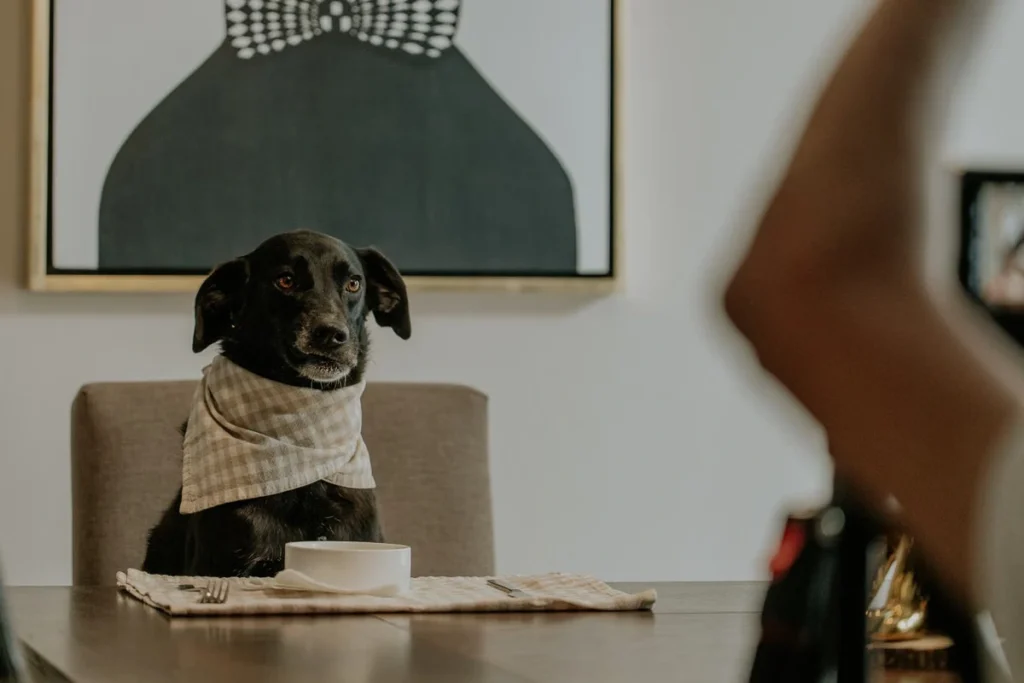
Thanksgiving Foods Dogs Can Eat (Plain and in Moderation)
The rule for everything in this section is the same: plain, fully cooked, unseasoned, and small. PetMD suggests thinking of turkey as a treat rather than a meal, keeping treats to no more than about 10% of a dog’s daily calories.
- Turkey meat. Plain, fully cooked, skinless, boneless turkey is safe and a good source of lean protein; white meat is leanest. Remove all skin and fat, check for small bones, and skip anything seasoned or basted. As a guide, PetMD gives about 1.5 ounces of plain white meat for a 25-pound dog.
- Plain canned pumpkin. One hundred percent pumpkin puree is gentle on digestion and often used for mild constipation or loose stools. It must be plain canned pumpkin — never pumpkin pie filling (see the danger list).
- Plain green beans. Fresh, frozen or canned green beans are a low-calorie, filling snack if unsalted and unseasoned. Set a portion aside before they go into the casserole, which adds onions, cream and fat.
- Plain sweet potato. Cooked sweet potato — baked, boiled or steamed, served plain — provides fiber and vitamins. Skip casseroles with marshmallows, brown sugar or syrup.
- Carrots. Raw baby carrots in small pieces, or cooked carrots, are a safe crunchy treat; cutting reduces choking risk for smaller dogs.
- Apple slices. A healthy treat in moderation. Wash the fruit, cut out the core and remove every seed first — apple seeds contain cyanide compounds, and the core is a choking hazard. Apple pie is not the same thing: it brings sugar, butter and spices.
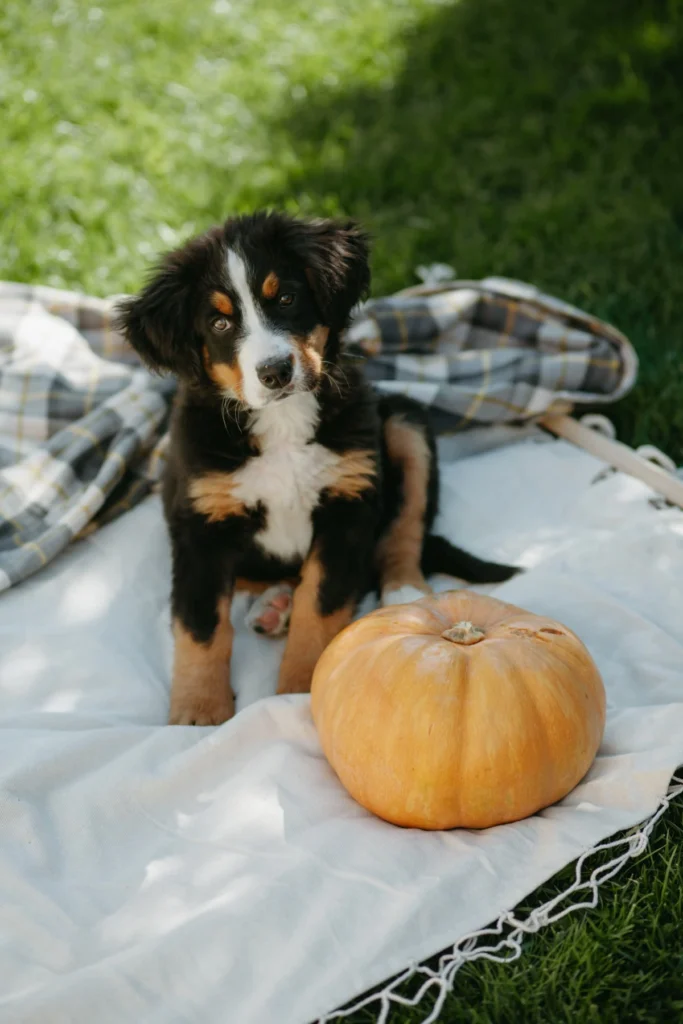
Thanksgiving Foods Dogs Can’t Eat
Everything in this table stays on human plates — and in a trash can your dog cannot raid afterwards.
| Food | Why it is dangerous |
|---|---|
| Cooked turkey bones | Cooked poultry bones turn brittle and splinter when chewed. Sharp fragments can injure the mouth and throat, cause choking, block the intestines or puncture the digestive tract — injuries that can need emergency surgery. |
| Turkey skin, drippings and fatty scraps | Skin is concentrated fat, usually coated in butter, oil and seasoning. A sudden fat load can trigger pancreatitis, a painful inflammation of the pancreas that often needs hospital care. |
| Stuffing and dressing | Typically made with onions and garlic, and often raisins — all toxic to dogs. |
| Onions, garlic, chives and leeks | All members of the Allium family. According to the ASPCA, Allium species cause gastrointestinal irritation and red blood cell damage, which can lead to anemia. They hide in stuffing, gravy and mashed potatoes. |
| Gravy | High in fat and sodium, and frequently made with onion and garlic. There is no dog-safe version. |
| Grapes and raisins | The ASPCA states that grapes and raisins can lead to kidney damage in dogs, and no safe amount is established. |
| Xylitol (birch sugar) | A sweetener in sugar-free gum, candy, baked goods and some nut butters; labels may call it xylitol, birch sugar or wood sugar. In dogs it triggers rapid insulin release and a dangerous drop in blood sugar — within 10 to 60 minutes, per the FDA — and larger amounts can damage the liver. |
| Chocolate | Contains methylxanthines (theobromine and caffeine), which can cause vomiting, diarrhea, abnormal heart rhythm, tremors, seizures and death. Darker chocolate is riskier; baking chocolate and cocoa powder are most concentrated. |
| Alcohol | Alcoholic drinks and foods containing alcohol can cause vomiting, diarrhea, incoordination, difficulty breathing, tremors, coma and death. |
| Raw yeast dough | Unbaked dough keeps rising in a dog’s stomach, causing painful bloating that can twist the stomach — and the yeast produces alcohol as it ferments, adding alcohol poisoning. |
| Macadamia nuts | Toxic to dogs: the ASPCA lists weakness, incoordination, depression, vomiting, tremors and overheating, usually within 12 hours. |
| Pumpkin pie and pumpkin pie filling | Not the same as plain pumpkin. Pie and filling contain sugar and spices including nutmeg, whose myristicin can cause increased heart rate, high blood pressure, abdominal pain and seizures in dogs (AKC) — and sugar-free versions may contain xylitol. |
| Corn cobs | Kernels off the cob are fine; the cob itself is indigestible, a choking hazard that can block the intestines, especially in smaller dogs. Watch for repeated vomiting, appetite loss, lethargy and diarrhea if a cob goes missing. |
The Fat Problem: Pancreatitis Season
Not every Thanksgiving emergency is a poisoning. Rich, fatty food — skin, drippings, gravy, butter-laden sides, ham — can overwhelm a dog’s pancreas, and a dog that wolfs scraps down in seconds is at more risk than one that eats slowly. If your dog inhales food, serving their safe portion in one of the best slow feeder bowls for dogs stretches the meal out. Repeated vomiting, diarrhea, bloating, a hunched or painful belly, or unusual tiredness after a fatty feast warrants a vet call the same day.
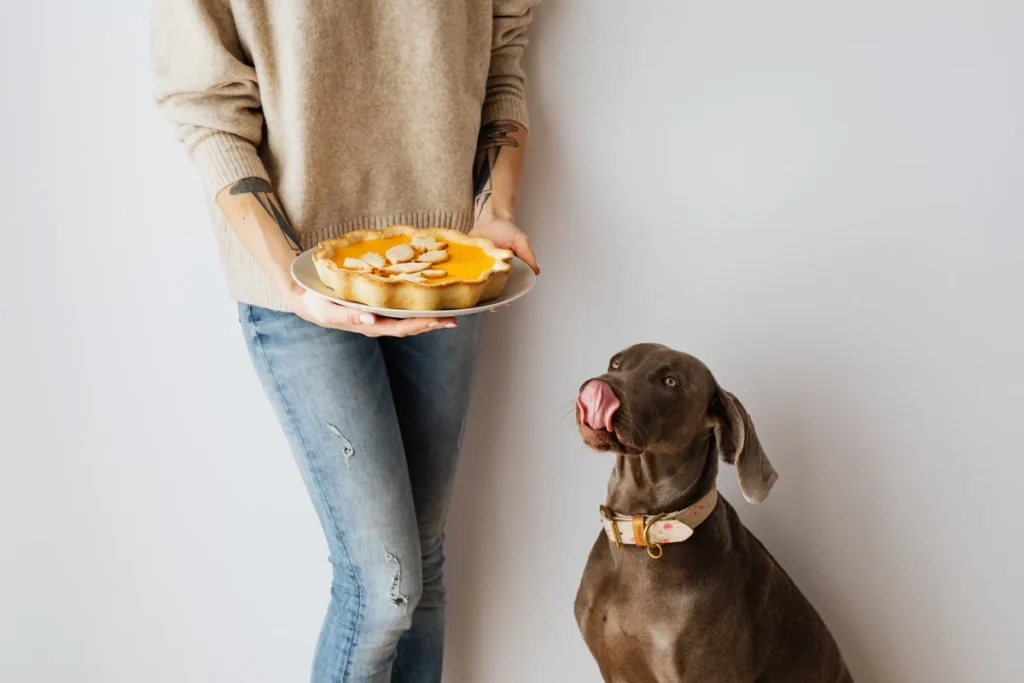
If Your Dog Already Ate It
Act first, and do not wait for symptoms if the food is one of the toxic ones. Signs of many poisonings — and of pancreatitis or a blockage — can take hours to appear, and xylitol can drop blood sugar within the hour.
- Remove access. Move the food and trash out of reach. Note what was eaten, how much, and when.
- Call your vet or an emergency clinic immediately if it involves chocolate, grapes or raisins, xylitol, a quantity of onion or garlic, cooked bones, alcohol, raw dough, or a corn cob. Do not make your dog vomit unless a vet tells you to.
- Call ASPCA Animal Poison Control at (888) 426-4435 — available 24 hours a day, 365 days a year. In the ASPCA’s own words, “A consultation fee may apply.” Note the amount ingested before you call; their experts will ask.
- Watch for warning signs over the following hours: vomiting, diarrhea, lethargy, appetite loss, excessive thirst or urination, drooling, incoordination, tremors or seizures. Any of these after a risky food means emergency care now.
Holiday vet visits are rarely cheap, and Thanksgiving night is peak time. Our guide to whether pet insurance covers emergency vet visits explains what a typical policy does with this kind of visit, and the complete guide to pet insurance costs shows what coverage runs beforehand.
Keeping Your Dog Safe on the Day
- Brief your guests: no feeding the dog from the table, and no exceptions for “just one bite” of anything dangerous.
- Give your dog their own safe plate of the plain foods above, served away from the table.
- Use a lidded trash can or take scraps straight outside — cooked bones in an open bin are the classic route to trouble.
- Clear plates promptly, and keep desserts, coffee and drinks off low tables.
- Save the spoiling for the sales: our Black Friday pet deals roundup is a safer way to treat your dog this weekend than anything on the table.
Frequently Asked Questions
Can dogs eat turkey on Thanksgiving?
Yes — plain, fully cooked turkey meat with skin removed and no bones is safe in small amounts. The problems come from how holiday turkey is usually prepared: seasoning, butter, skin, drippings and bones. Offer a little plain white meat as a treat, not a meal.
Can dogs eat stuffing or gravy?
No. Stuffing typically contains onions and garlic, which damage a dog’s red blood cells, and sometimes raisins, which can damage the kidneys. Gravy is high in fat and sodium and often contains onion and garlic too.
Is pumpkin pie safe for dogs?
No — but plain pumpkin is. One hundred percent canned pumpkin puree is a healthy, digestion-friendly treat. Pie and canned pie filling contain sugar and spices including nutmeg, which is toxic to dogs, and sugar-free versions may contain xylitol. Check the can: “pumpkin puree” and “pumpkin pie filling” sit side by side on the shelf.
What should I do if my dog eats a cooked turkey bone?
Call your vet or an emergency clinic straight away and describe what was eaten. Cooked bones splinter, and fragments can injure or block the digestive tract. Watch for gagging, drooling, vomiting, abdominal pain, appetite loss or straining over the following days — and do not wait for symptoms if your vet advises coming in.
Can dogs eat mashed potatoes or sweet potato casserole?
Plain cooked potato or sweet potato on its own is fine in small amounts. The Thanksgiving versions usually are not: mashed potatoes typically carry butter, cream, salt and sometimes garlic or onion powder, and sweet potato casserole adds marshmallows and sugar.
Sources
- ASPCA — People Foods to Avoid Feeding Your Pets: https://www.aspca.org/pet-care/animal-poison-control/people-foods-avoid-feeding-your-pets
- ASPCA — Poison Control (fee wording): https://www.aspca.org/pet-care/animal-poison-control
- PetMD — What Food Can Dogs Eat on Thanksgiving?: https://www.petmd.com/dog/food-and-nutrition/what-food-can-dogs-eat-on-thanksgiving
- PetMD — Can Dogs Eat Pumpkin?: https://www.petmd.com/dog/nutrition/can-dogs-eat-pumpkin
- PetMD — Can Dogs Eat Corn?: https://www.petmd.com/dog/nutrition/can-dogs-eat-corn
- AKC — Which Thanksgiving Foods Can Dogs Eat?: https://www.akc.org/expert-advice/advice/thanksgiving-foods-for-dogs/
- AKC — Can Dogs Eat Turkey?: https://www.akc.org/expert-advice/nutrition/can-dogs-eat-turkey/
- AKC — Can Dogs Eat Nutmeg?: https://www.akc.org/expert-advice/nutrition/can-my-dog-eat-nutmeg/
- FDA — Paws Off! Xylitol Is Dangerous for Dogs: https://www.fda.gov/consumers/consumer-updates/paws-xylitol-its-dangerous-dogs