
Introduction
Does your dog inhale dinner in ninety seconds flat? Fast eating isn’t just messy — it’s a genuine health risk. Dogs that gulp their food swallow excess air, which contributes to bloating, and rapid eating is associated with a higher risk of gastric dilatation-volvulus (GDV, or “bloat”), a life-threatening emergency where the stomach fills with gas and can twist. Deep-chested breeds — Great Danes, German Shepherds, Standard Poodles — are at highest risk. (Read our bloat emergency guide to know the warning signs — a slow feeder is prevention, not treatment.)
A slow feeder bowl uses ridges, mazes, or obstacles to force your dog to work around them for each bite. The good ones slow eating by 5–10x, turning a 90-second inhale into a 10-minute meal. They’re cheap ($10–30), dishwasher-safe, and one of the simplest health upgrades you can buy.
This post contains affiliate links. Petsofweb is reader-supported — when you buy through links on our site, we may earn a commission at no extra cost to you.
How We Compared These (No Fake Testing Claims)
We did not run feeding trials. We compared published manufacturer specifications — materials, capacity, maze design, dishwasher safety, and breed-suitability guidance — against what multiple 2026 review roundups consistently report. Every pick below is BPA-free or food-safe per its manufacturer, and every pick is a real product you can buy today.
The 5 Best Slow Feeder Bowls for Dogs
1. Outward Hound Fun Feeder Slo Bowl — Best Overall
The consensus best overall across nearly every 2026 roundup. The maze-like ridges come in multiple patterns and difficulty levels, and the manufacturer claims it can slow eating by up to 10x compared to a standard bowl. It’s made from BPA-free, food-safe plastic, has a non-skid base wider than the bowl (hard to tip), and is dishwasher safe.
Available in multiple sizes covering small to large breeds. The one consistent criticism: smart dogs eventually learn the maze pattern, so very clever dogs may need the harder difficulty levels — which Outward Hound sells.
Best for: most fast-eating dogs; the default first pick. Capacity: multiple sizes; check the listing for your dog’s meal size.
2. LickiMat TUFF Buddy Slow Feeder Mat — Best for Anxious Dogs
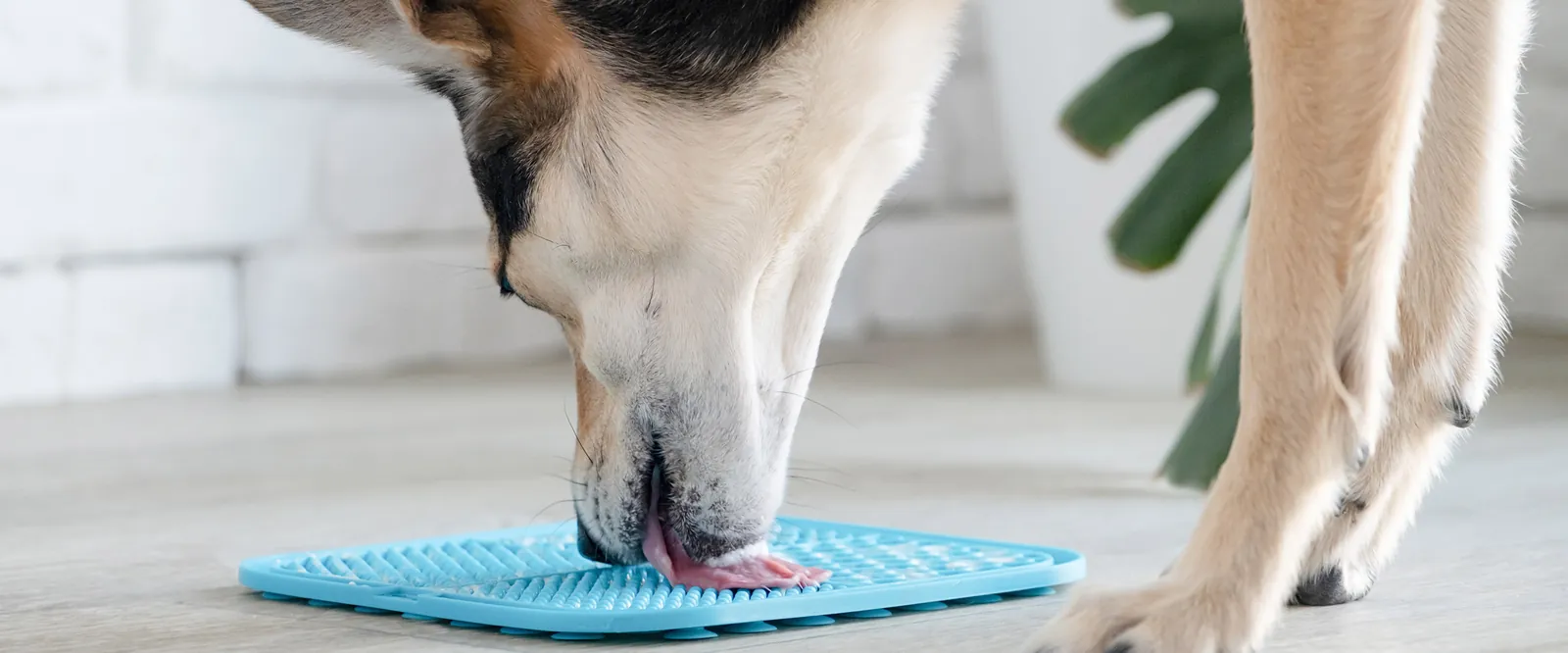
A different approach: a textured rubber mat rather than a bowl. You spread wet food, yogurt, or peanut butter across the textured surface, and the dog licks it off slowly. The licking action itself is calming — review consensus highlights it for anxious dogs, crate training, and bath-time distraction.
The TUFF version is made from chew-resistant TPR rubber (a step up from the original LickiMat’s softer material), and it’s freezer-safe and dishwasher-safe. Freezing the spread makes it last even longer. Limitation: it needs spreadable foods — it won’t work for dry kibble.
Best for: anxious dogs, enrichment feeding, wet-food meals. Material: TPR rubber; freezer and dishwasher safe.
3. Neater Pets Adjustable Slow Feeder Double Diner — Best Premium Pick
The premium option: an elevated double diner with a slow-feeder bowl on one side and a water bowl on the other, adjustable from 2 to 4.5 inches in height. The slow-feeder portion is wide and shallow rather than deep — which makes it one of the few slow feeders genuinely suitable for flat-faced breeds (Pugs, Bulldogs, Frenchies) that struggle with deep mazes.
Made from dishwasher-safe polypropylene. It’s the most expensive pick here, but it replaces both the food and water bowl in one unit.
Best for: flat-faced breeds; owners who want an elevated feeder. Capacity: 2.5-cup slow feeder side + 8.5-cup water side.
4. Frisco Bone Shaped Ridges Slow Feeder — Best Value
The budget pick that review roundups keep recommending: a simple bone-ridged bowl at a fraction of the premium price. Dishwasher safe, non-skid base, sturdy plastic, available in two colors. It holds around 2–3 cups — enough for most medium dogs’ meals.
It won’t challenge a genius dog the way a complex maze will, but for the average fast eater it does the job at the lowest price on this list.
Best for: budget buyers; trying slow feeding for the first time. Capacity: ~2–3 cups.
Note: Frisco is Chewy’s house brand, so this one is sold at Chewy rather than Amazon.
5. SodaPup eBowl — Best for Wet and Raw Food
A silicone slow-feeder bowl designed for wet, raw, and fresh foods — the gap the plastic maze bowls don’t cover well. Deep grooves slow down wet food, and the silicone is freezer-safe, so you can prep frozen enrichment meals ahead of time. Dishwasher safe.
Silicone also suits aggressive chewers better than thin plastic — it’s harder to crack a chunk off. If you feed homemade dog food or raw, this is the pick designed for your meals.
Best for: wet, raw, and homemade food diets. Material: silicone; freezer and dishwasher safe.
Comparison Table
| Product | Best for | Material | Dishwasher safe | Approx. capacity |
|---|---|---|---|---|
| Outward Hound Fun Feeder | Most dogs | BPA-free plastic | Yes | Multiple sizes |
| LickiMat TUFF Buddy | Anxious dogs / enrichment | TPR rubber | Yes (freezer too) | Spreadable foods |
| Neater Pets Double Diner | Flat-faced breeds | Polypropylene | Yes | 2.5-cup feeder side |
| Frisco Bone Ridges | Budget | Plastic | Yes | ~2–3 cups |
| SodaPup eBowl | Wet/raw/homemade | Silicone | Yes (freezer too) | Check listing |
Slow Feeders and Bloat: What the Evidence Says
Slow feeders reduce eating speed — that part is well established, with manufacturers and reviewers consistently reporting 5–10x slower meals. The bloat connection: rapid eating causes dogs to swallow air (aerophagia), and excess swallowed air contributes to gastric distension, which is a factor in GDV.
What slow feeders don’t do: eliminate bloat risk. GDV has multiple risk factors — deep chest conformation, genetics, exercise around meals, and eating from elevated bowls are all studied factors. A slow feeder addresses one of them. Think of it as one layer of prevention, not a guarantee. Know the signs of bloat regardless of what bowl you use — it’s a minutes-count emergency.
Portion-Size Guidance
A slow feeder doesn’t fix overfeeding — it just slows it down. Use the portion on your dog food’s label as a starting point (adjusted for your dog’s weight and activity), and measure with an actual measuring cup, not a scoop-guess. For multi-dog households, feed dogs separately: the fastest eater will finish first and move to the slower dog’s bowl, slow feeder or not.
If you’re switching to homemade food, our homemade dog food recipes include portion guidance — and a slow feeder is the ideal serving bowl for those meals. For the rest of your new-dog setup, see our dog gear buyer’s guide.
Frequently Asked Questions
Do slow feeder bowls really work?
Yes — for their stated purpose. Maze and ridge designs consistently slow dogs’ eating by several multiples versus a flat bowl, per both manufacturer claims and reviewer consensus. What they do is buy time: slower eating means less swallowed air and less post-meal vomiting in dogs that gulp.
Can slow feeders prevent bloat (GDV)?
They may help reduce one risk factor — swallowed air from rapid eating — but they cannot prevent bloat on their own. GDV has multiple risk factors including breed conformation and genetics. A slow feeder is a sensible precaution, especially for deep-chested breeds, not a guarantee. Learn the warning signs no matter what bowl you use.
Are slow feeder bowls safe for puppies?
Yes, with supervision. Choose a shallow design (not a deep, complex maze) for young puppies, and always supervise — puppies chew, and no plastic bowl is indestructible. Remove the bowl when the meal is done rather than leaving it as a chew toy.
My dog figured out the maze. Now what?
This is the most common complaint with the popular maze bowls. Options: switch to a different maze pattern (Outward Hound sells multiple difficulties), try a lick mat instead (different mechanism — licking vs. nosing), or freeze wet food in the bowl to add difficulty.
Can I put a slow feeder in the dishwasher?
All five picks above are marketed as dishwasher safe. Remove rubber feet or non-dishwasher-safe parts first where the manufacturer says so (the Neater Pets diner’s rubber feet, for example). When in doubt, hand-wash — it takes a minute.