
Introduction
If you’ve ever asked “why does my dog lick me constantly?” — a slobbery kiss when you walk in the door is one thing. But when your dog licks your hands, face, feet, and furniture on a loop, it’s natural to wonder what’s going on. The truth is that licking is one of the richest communication tools dogs have — it can mean affection, anxiety, instinct, or a medical problem, and the difference is in the context.
Here are the 7 reasons, from the most common to the ones worth a vet visit.
Reason 1: Affection and Bonding
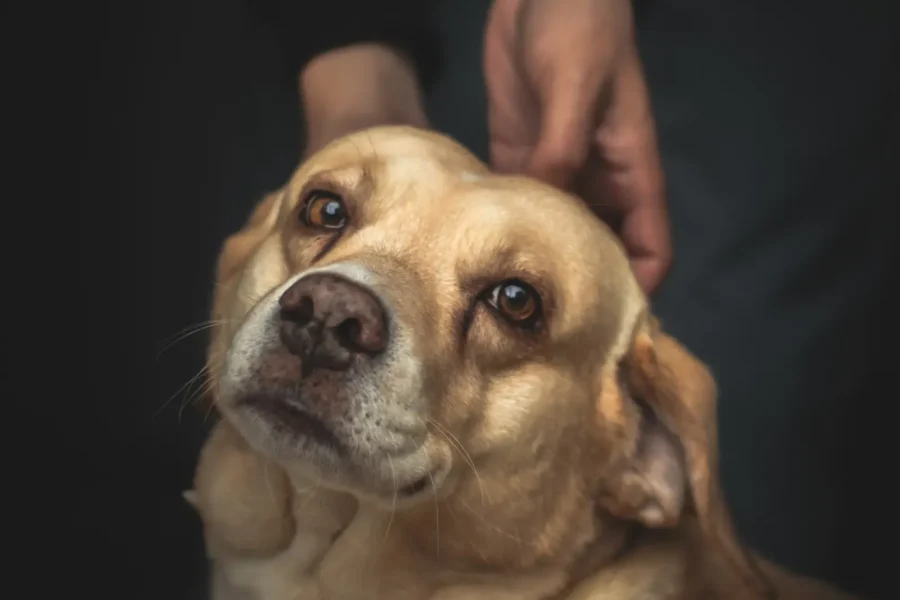
The most common reason, especially for the classic face lick. Licking releases endorphins in dogs — it literally feels good and strengthens the social bond. Puppies licked by their mothers grow into dogs who lick the people they love. If the licks are soft, loose-bodied, and paired with a wagging tail, it’s love.
Reason 2: You’re Delicious
Your skin is salty, and you drop crumbs. Dogs are opportunists with 300 million scent receptors — they can smell the sandwich you ate an hour ago on your fingers. Foot licking is especially common because feet have a high concentration of sweat glands. Less romantic than it looks, but harmless.
Reason 3: Attention-Seeking (Because It Works)
Dogs repeat what works. If licking you has ever earned a laugh, a push, a scolding, or even eye contact, your dog learned that licking is a reliable attention button. Even negative attention counts — pushing them away while talking to them is still engagement. If you want less licking, the fix is boring consistency: withdraw attention calmly when the tongue comes out, and reward calm non-licking moments.
Reason 4: Instinct — It’s How Puppies Start Life
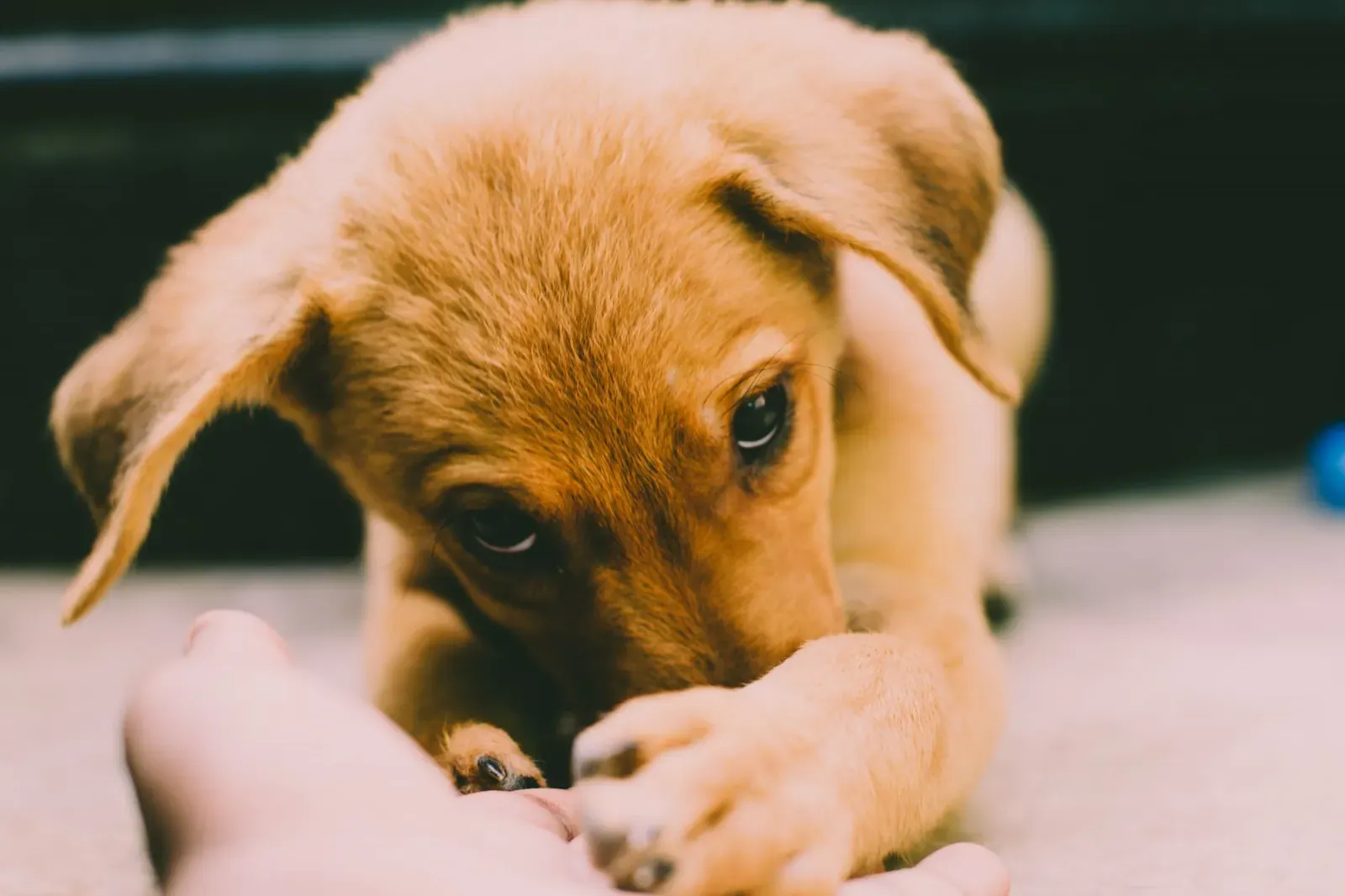
Newborn puppies are licked by their mothers to stimulate breathing and digestion, and wild canid pups lick their mother’s muzzle to prompt regurgitated food. Licking is literally a dog’s first language. Some of that early wiring never leaves, especially in dogs that were well-socialized as puppies.
Reason 5: Anxiety or Stress
This is where licking shifts from cute to concerning. Dogs lick to self-soothe — it’s a displacement behavior, like humans biting their nails. Stress licking often comes with other signals: lip licking when no food is present, yawning, panting, pacing, or a tense body. Common triggers include visitors, loud noises, routine changes, or being left alone.
If the licking clusters around specific triggers, address the trigger: more exercise, a predictable routine, a safe retreat space. Persistent anxiety-driven licking deserves a conversation with your vet or a certified behaviorist.
Reason 6: Boredom and Under-Stimulation
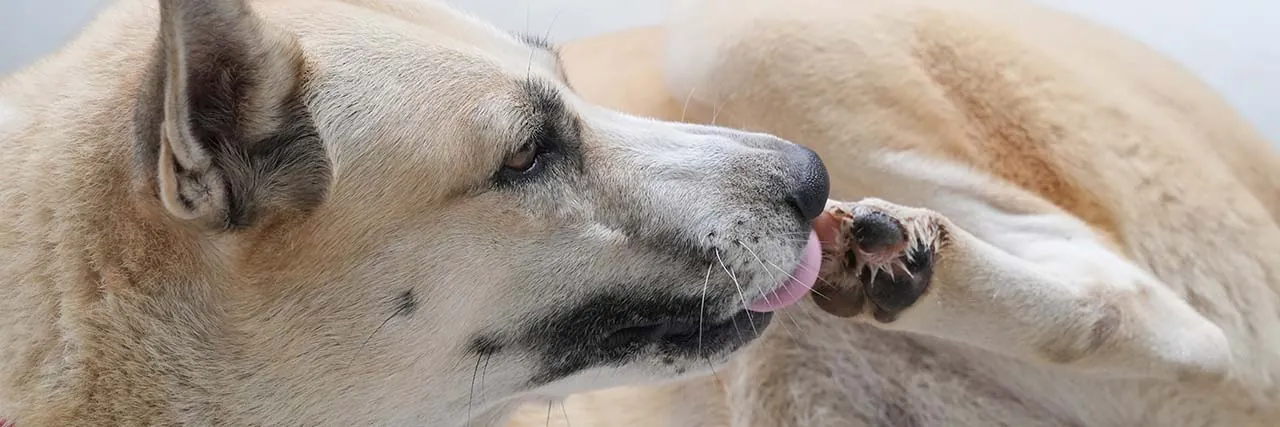
A dog with nothing to do will invent a job, and licking is an easy one. Under-exercised dogs often develop repetitive licking of people, floors, or themselves. The fix is rarely about the licking itself — it’s about the day: more walks, sniff time, puzzle feeders, and training sessions that engage the brain.
Reason 7: Medical Causes
Excessive licking — especially licking that starts suddenly, fixates on one spot, or targets the dog’s own body — can signal pain, allergies, nausea, or skin problems. Dogs nauseous from gastrointestinal upset often lick the air, their lips, or surfaces. Dogs with arthritis may lick the aching joint obsessively.
Why Does My Dog Lick Me? When It Becomes a Vet Visit
“Excessive licking becomes concerning when it causes physical damage such as bald spots, redness, sores or open wounds. If a dog keeps licking one particular spot, it may indicate underlying pain, allergies or skin infection. Early intervention helps prevent secondary infections and identifies whether the cause is behavioural or medical.”
— Dr Sharma, veterinarian (via The Indian Express)
Call your vet if you see any of these:
- Licking that causes injury: bald spots, hot spots, sores, or raw skin — on you is annoying, on them is medical.
- Sudden behavior change: a dog who never licked much and suddenly won’t stop needs a checkup, not a training plan.
- Fixation on one spot: repetitive licking of one paw, joint, or area of the body often points to localized pain or allergy.
- Can’t be interrupted: if your dog seems “zoned out” and can’t be redirected, that compulsiveness warrants professional evaluation.
- Paired with other symptoms: appetite changes, lethargy, vomiting, or limping alongside new licking behavior.
Teaching an Alternative to Licking
Understanding the “why does my dog lick me” question is step one; giving them something better to do is step two —
If the licking is attention-seeking rather than medical, give your dog something better to do with their mouth:
- Teach a “settle” on a mat. Reward your dog for lying on a designated mat with a chew. A dog actively chewing a Kong isn’t licking you — the behaviors are incompatible.
- Install a greeting ritual. When you come home, ask for a sit before any petting. The sit becomes the new “hello” instead of the tongue.
- Rotate enrichment daily. A snuffle mat on Monday, a frozen lick mat (used appropriately, not excessively) on Tuesday, a training session on Wednesday. Novelty prevents the boredom-licking loop from forming.
- Exercise before affection. A dog who’s had a good walk is physically less driven to lick. Many owners find the evening lick-fest disappears entirely once the dog gets a proper evening walk.
The principle across all four: licking fills a need — attention, occupation, or soothing. Meet the need another way and the licking fades on its own.
A Note on Dogs and Children
Teach children never to run screaming from a licking dog — the chase is thrilling and guarantees more licking. Instead, kids should “be boring”: stand still, arms crossed, look away. And supervise closely with toddlers: a big dog’s enthusiastic tongue can knock a small child over, and face licks should be redirected to hands or avoided for very young children whose immune systems are still developing.
Common Mistakes When Dealing With Licking
Most owners asking “why does my dog lick me” make at least one of these —
Punishing the lick. Scolding or pushing your dog away gives them exactly what attention-seeking licking was designed to get: engagement. Punishment also can’t fix anxiety-driven or medical licking — it just adds stress on top.
Treating all licking as a training problem. Reaching for training techniques when the real cause is allergies, pain, or nausea wastes weeks. Rule out medical causes first when licking is new, intense, or fixated.
Inconsistency. Laughing at licks on Monday and scolding them on Tuesday teaches your dog that licking is a lottery — and lotteries are addictive. Everyone in the house responds the same way, every time.
Ignoring the enrichment deficit. Trying to train away boredom licking without adding walks, play, or puzzle toys is like mopping without fixing the leak. The behavior returns because the need is still there.
How to Reduce Attention-Seeking Licking
For the common, non-medical kind: don’t punish the lick — remove its payoff. When the tongue lands, stand up calmly, turn away, and disengage for 10 seconds. When your dog is lying calmly without licking, that’s when the petting and treats happen. Most dogs figure out the new economics within a week or two.
Add enrichment to cover the boredom angle: a frozen Kong, a snuffle mat, or a 15-minute training session does more for licking than any correction ever will.
FAQ
Why does my dog lick my feet?
Feet are salty from sweat glands, and dogs find the taste appealing. It’s normal — though if it bothers you, redirect with a toy and reward calm behavior instead.
Is it okay to let my dog lick my face?
Occasional face licks are low-risk for healthy adults, but dog mouths carry bacteria — avoid letting dogs lick open cuts, and be cautious with infants, elderly, or immunocompromised people.
Why does my dog lick the air?
Air licking can signal nausea or gastrointestinal discomfort, and occasionally a neurological issue. If it’s new or frequent, see your vet rather than assuming it’s a quirk.
How do I stop my dog licking me so much?
Withdraw attention calmly when licking starts, reward calm non-licking behavior, and add daily enrichment. If the licking is compulsive or can’t be interrupted, consult your vet first.
Do dogs lick to show dominance?
No — that’s outdated thinking. Licking is affiliative (bonding) or self-soothing behavior, not a power move. Modern behavioral science doesn’t support dominance-based interpretations.
Got a new puppy? Training takes time, but vet bills happen overnight. Find out what pet insurance would cost for your breed with our free calculator: https://petsofweb.com/pet-insurance-cost-calculator/