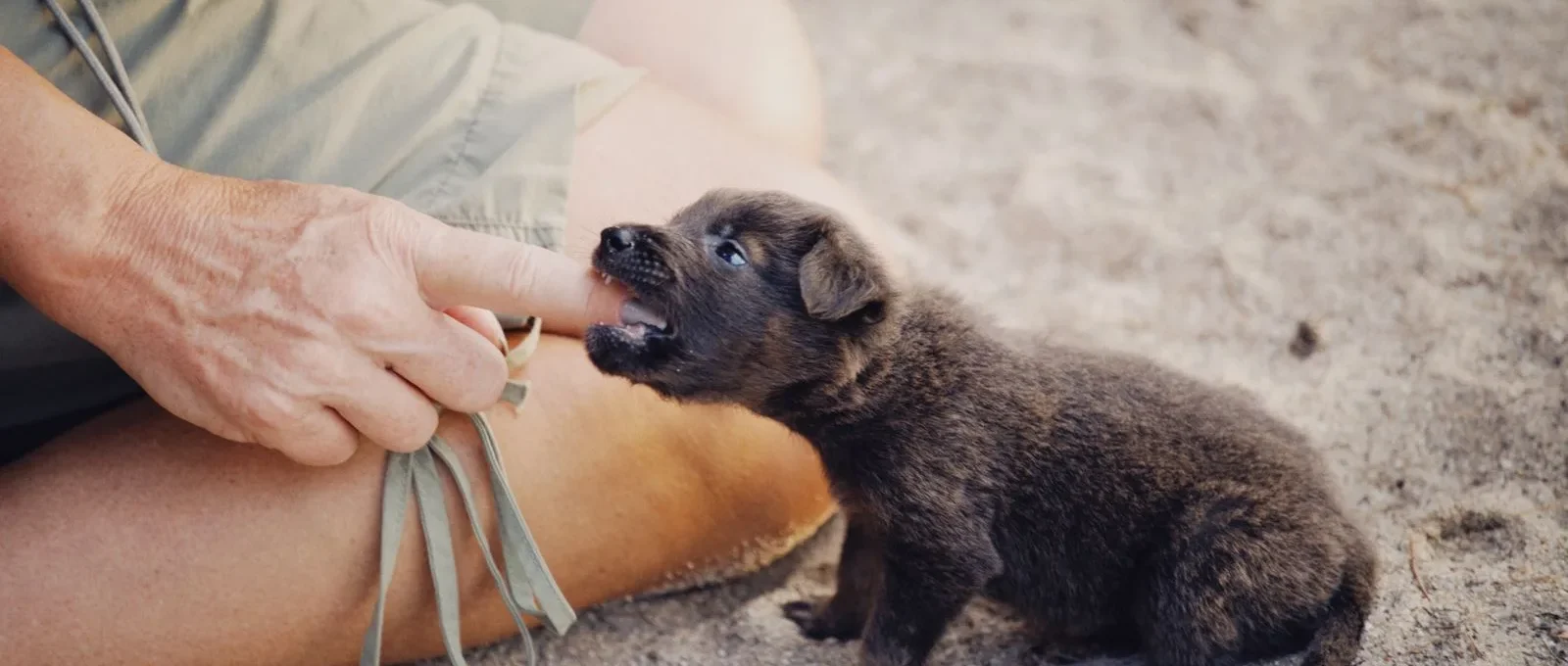

If you’re wondering how to stop puppy biting, you’re not alone. Those needle-sharp puppy teeth hurt — and when your puppy treats your hands, sleeves, and ankles as chew toys, it’s maddening. Biting and mouthing are among the most common puppy complaints, and they’re also completely normal developmental behavior. Puppies explore the world with their mouths, and they learn how hard is too hard through feedback.
The good news: you don’t need punishment, spray bottles, or dominance tricks. What you need is a consistent protocol that teaches bite inhibition — your puppy’s ability to control the force of their mouth. Here’s the 5-step method, in order.
Step 1: Give Feedback the Way Another Puppy Would
When your puppy bites too hard during play, yelp — a short, high-pitched “ouch!” — the way a littermate would. Then immediately stop all interaction for 20–30 seconds: turn away, tuck your hands under your arms, become boring.
This is how puppies learn bite inhibition from each other in the litter. A hard bite ends the fun. Your puppy doesn’t need a lecture; they need a consequence they understand: hard mouth = play stops.
Step 2: Redirect to a Toy — Every Time
After the brief pause, offer an appropriate chew toy. The rule is simple: teeth on skin = boring; teeth on toy = party. When your puppy takes the toy, praise warmly and keep playing.
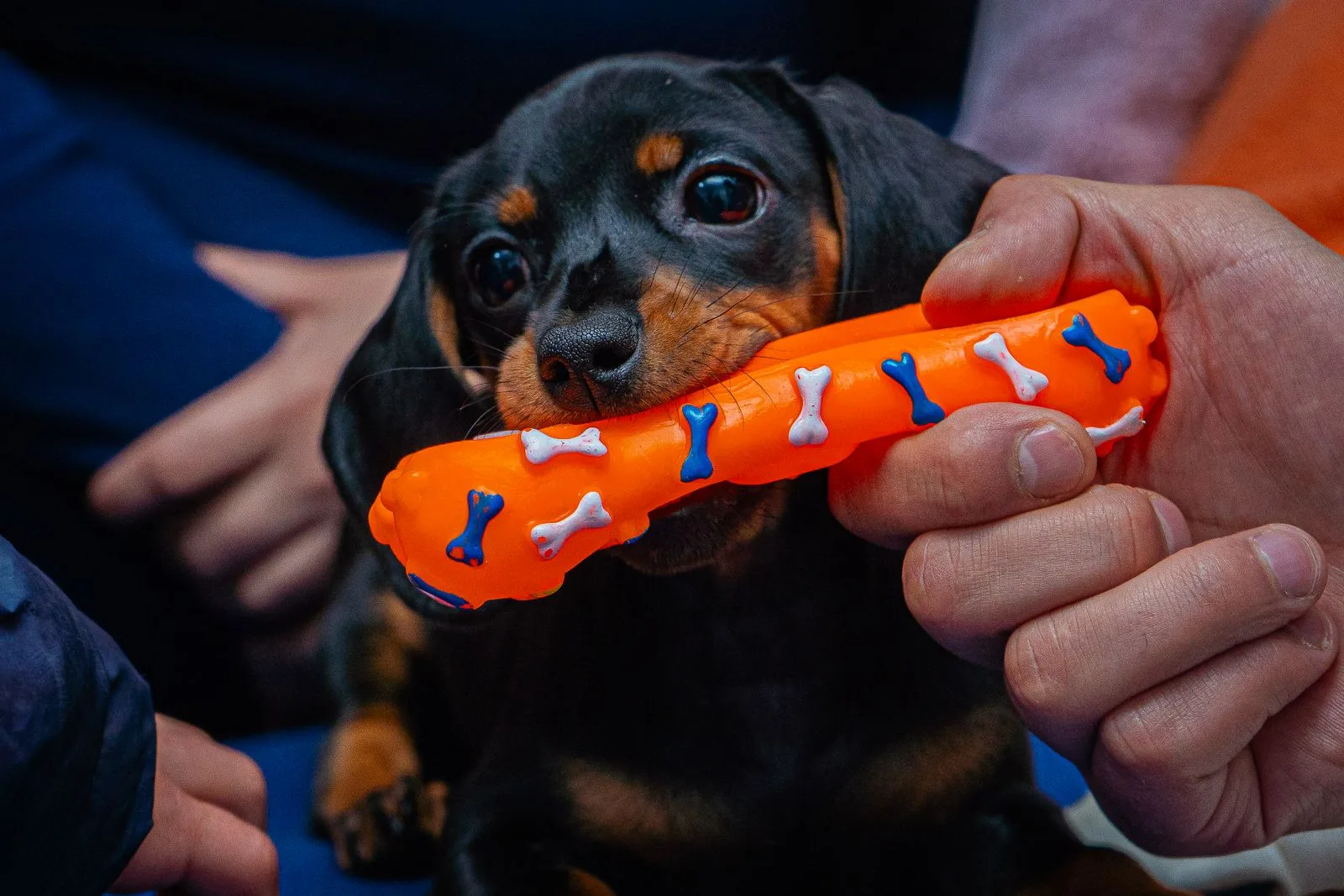
Keep toys stashed in every room for the first few months. The redirect only works if the toy is within arm’s reach the instant you need it.
Step 3: Enforce Naps (The Step Everyone Skips)
An overtired puppy bites significantly more. Puppies need 18–20 hours of sleep per day, and an exhausted puppy loses all impulse control — the evening “witching hour” of wild biting is almost always a tired puppy, not a bad one.
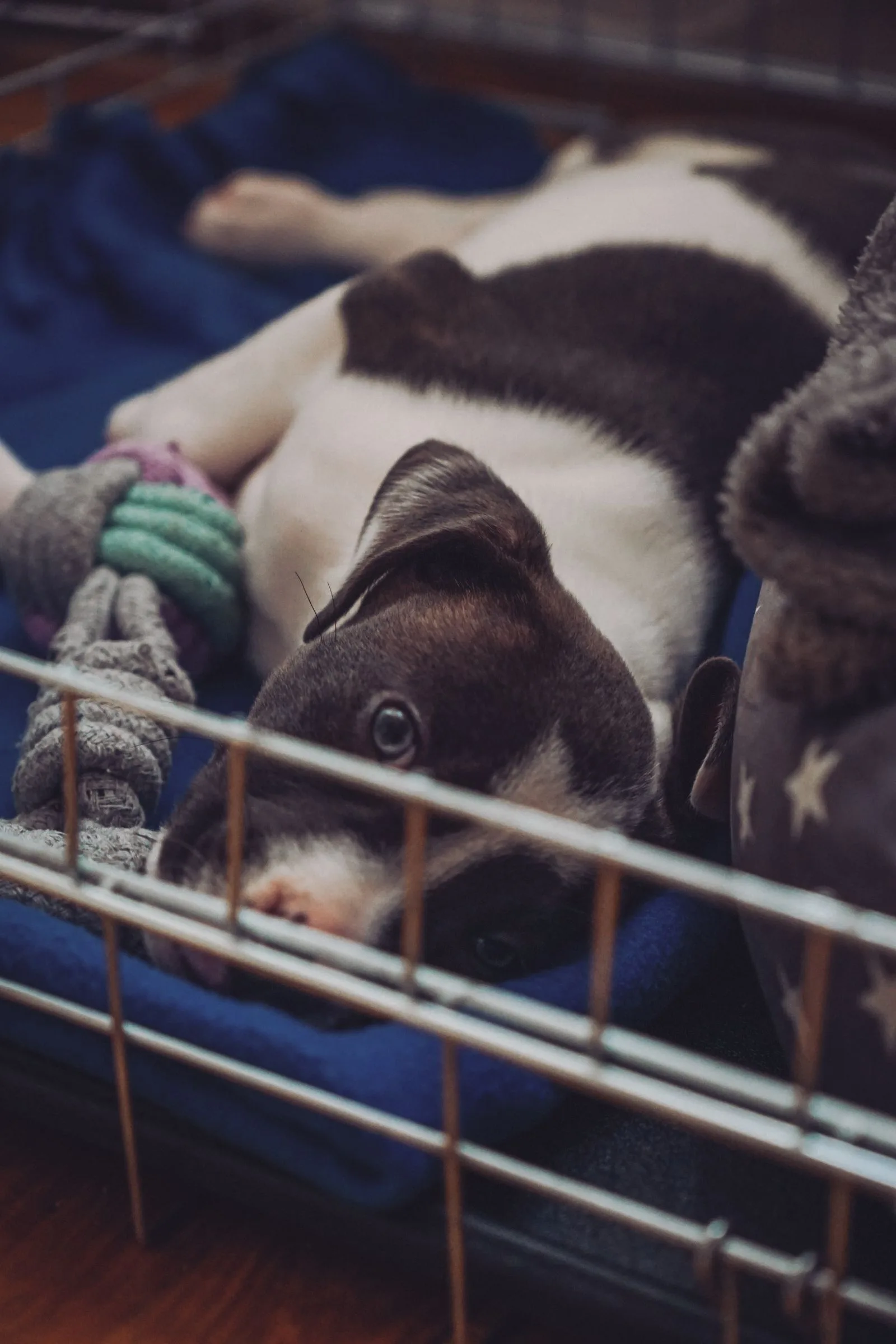
Build a nap schedule: after every 45–60 minutes of awake time, crate or pen your puppy for a nap in a cozy rest space. Don’t wait until they’re already feral.
Step 4: Use Timeouts Correctly
If steps 1–3 aren’t cutting it in the moment, use a brief timeout. Calmly lead your puppy to a boring, safe space for 30–60 seconds. No scolding, no drama. Then let them rejoin. The timeout isn’t punishment — it’s a reset.
Step 5: Reward Calm Mouth Behavior
Catch your puppy being gentle: licking instead of biting, chewing a toy, settling with a chew. Mark it with a calm “yes” and a treat. This is the step that builds a dog who chooses gentleness as an adult.
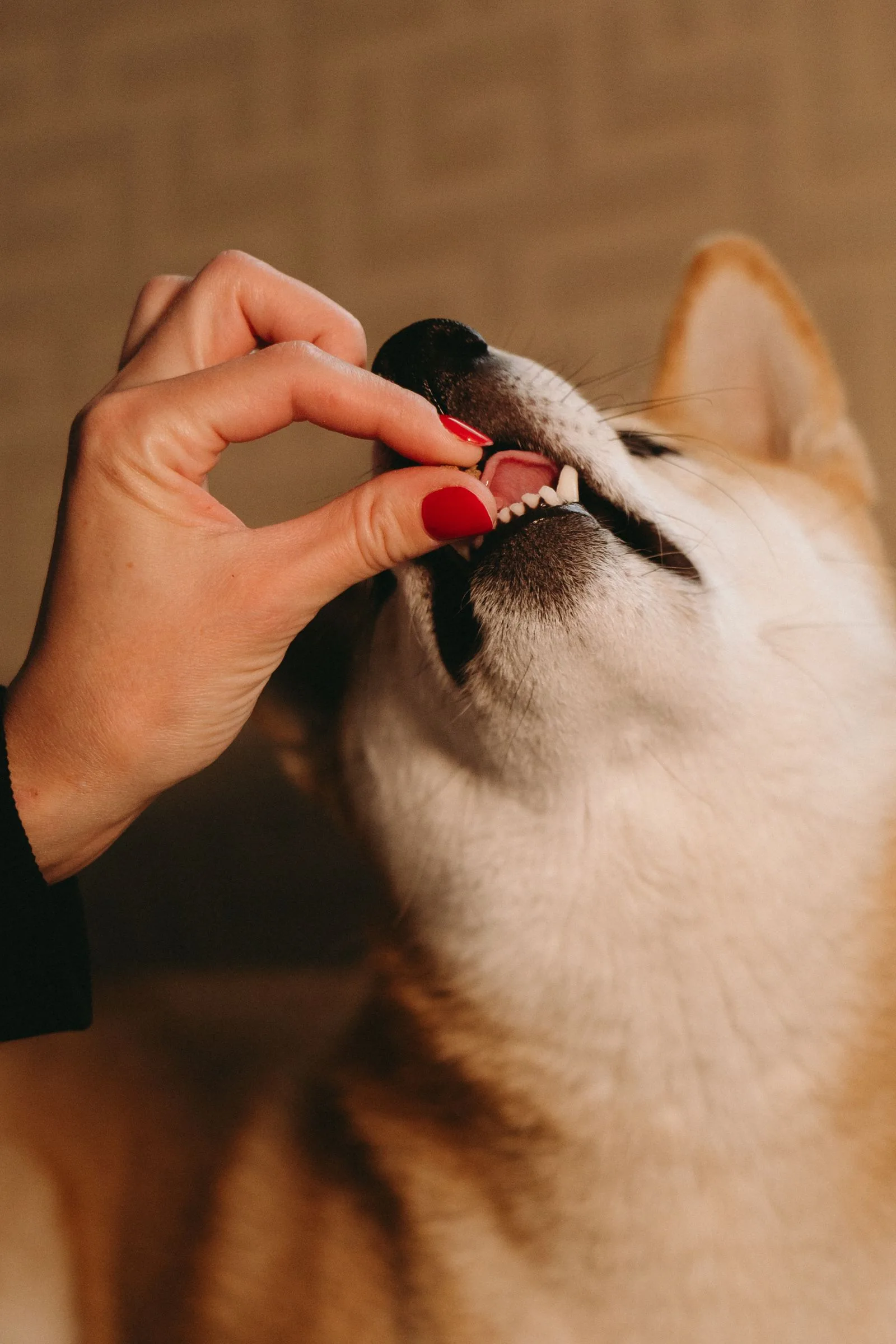
How to Stop Puppy Biting: What a Veterinary Behaviorist Says
“Using physical correction can cause a fear response and can result in the puppy’s using aggression in an escalating fashion. A better approach is to both address the biting at the time it occurs and prevent biting as an option for the pup.” — Dr. John Ciribassi, DVM, DACVB, board-certified veterinary behaviorist
Common Mistakes That Make Biting Worse
If you’re searching for how to stop puppy biting, make sure you aren’t making these mistakes first. Punishing the bite. Hitting or holding the mouth shut teaches your puppy that hands near the face are scary — which can turn playful nipping into defensive biting.
Playing rough with your hands. Wrestling with bare hands teaches your puppy that hands are toys. Always have a toy between your hands and the puppy’s mouth.
Inconsistency between people. If one family member allows mouthing while another corrects it, your puppy learns nothing. Everyone follows the same rules.
Expecting it gone in a week. Bite inhibition develops over weeks. Most puppies improve markedly by 5–6 months as teething ends.
Skipping exercise and mental work. A bored, under-exercised puppy has one outlet: their mouth.
When Biting Isn’t Normal
Talk to your veterinarian or a certified behaviorist if: the biting is accompanied by growling with a stiff body (not play growls), your puppy breaks skin regularly and doesn’t respond to feedback over several weeks, or the behavior appears suddenly in an older puppy. To tell the difference between normal mouthing and a real problem, read the ASPCA’s guide to mouthing and nipping — and if you simply need a reliable plan for how to stop puppy biting at home, the five steps above will get you there.
What to Expect: The Biting Timeline
- 8–12 weeks: Peak mouthiness. Highest-effort training phase.
- 12–16 weeks: Baby teeth fall out; chewing increases but directed biting often improves — frozen carrots and frozen stuffed Kongs help.
- 4–6 months: Adult teeth come in. Many owners report a noticeable drop around month 5.
- 6+ months: Biting should be rare and soft. If hard biting persists past 7 months, consult a certified professional.
Frequently Asked Questions
Is puppy biting normal?
Yes. Mouthing is how puppies explore and how they learn bite inhibition from littermates. It’s a developmental phase, not a character flaw — but it does need consistent training so it fades instead of hardening into adult habit.
When do puppies stop biting?
Most puppies improve significantly by 5–6 months as adult teeth come in, with steady training. Without training, some dogs carry mouthy habits into adulthood.
Should I punish my puppy for biting?
No. Physical punishment risks fear and escalating aggression, according to board-certified veterinary behaviorists. Withdrawal of attention, redirection, and timeouts teach the same lesson without the fallout.
Why does my puppy bite more at night?
The evening “witching hour” is usually overtiredness. Puppies need 18–20 hours of sleep daily; enforce naps before the wild phase starts rather than reacting to it.
What if my puppy bites my kids?
Supervise all child-puppy interactions, teach kids to “be a tree” (stand still, arms folded) when the puppy gets mouthy, and give the puppy structured nap times. Never leave young children unsupervised with a mouthy puppy.
Got a new puppy? Training takes time, but vet bills happen overnight. Find out what pet insurance would cost for your breed with our free calculator: https://petsofweb.com/pet-insurance-cost-calculator/