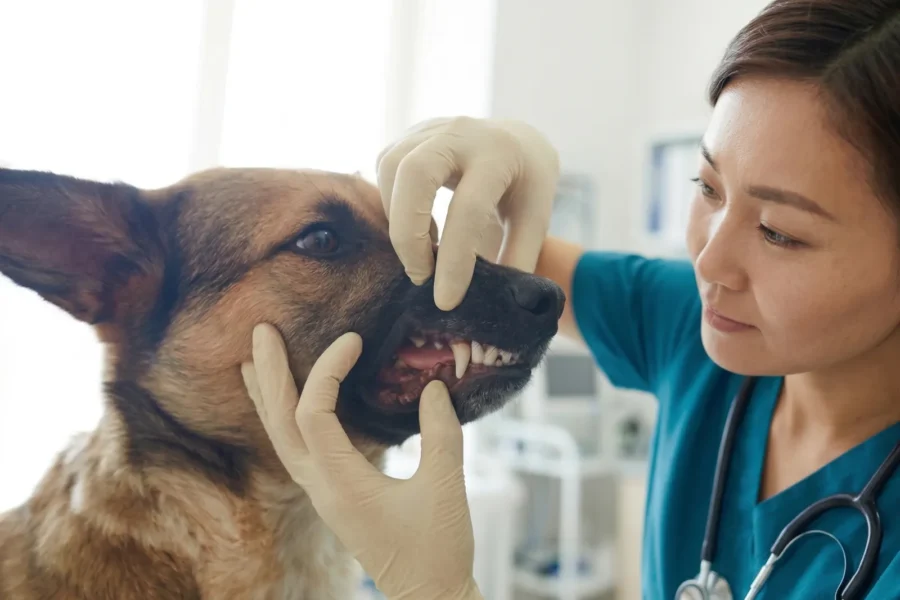

Finding the best pet insurance for senior dogs feels very different from insuring a puppy. Your dog is 7, 9, or even 12 years old now — the grey muzzle, the slower stairs, the lump the vet wants to “keep an eye on.” You love this dog, and you also know that a single emergency at this age can cost $3,000 to $8,000. That’s exactly when insurance matters most — and exactly when it’s hardest to get.
Here’s the honest truth: many insurers limit enrollment for older dogs, premiums climb steeply with age, and the pre-existing condition rules hit harder because seniors have longer medical histories. But a good senior policy is absolutely worth having if you choose it with eyes open. This guide compares the plan types, explains the fine print that matters for dogs age 7 and up, and gives you a framework for deciding whether a policy makes sense for your dog.
Educational only — not financial advice. Pet insurance terms, prices, and eligibility rules vary by insurer and state, and they change often. Treat this guide as a starting point, then read the actual sample policy (not just the marketing page) before you buy.
How much would pet insurance cost YOUR senior dog?
Get a personalized monthly estimate in 30 seconds with our free pet insurance cost calculator — no email needed to see your price range.
Why Insuring a Senior Dog Is a Different Game
With a puppy, you buy insurance against an uncertain future. With a senior, you buy insurance against a near-certain present. The math reflects that.
Statistics from veterinary claims data consistently show that dogs over 8 are 2–3 times more likely to need a claim than dogs under 3. Arthritis, dental disease, heart murmurs, kidney changes, benign and malignant masses — these are the bread-and-butter of senior veterinary care, and they drive costs. A routine senior dental with extractions often runs $800–$2,000. A cruciate ligament repair — common in aging large breeds — can cost $3,000–$5,000. Cancer treatment at a referral hospital can reach $6,000–$12,000.
Insurers know all this. Their responses vary, which is why this guide exists:
- Age cutoffs: Some insurers cap new enrollments at 10, 12, or 14; a few have no maximum age at all. Once a policy is in force, most insurers don’t drop a dog for aging out — but the premium keeps rising.
- Steep premiums: A senior policy typically costs $50–$100+/month for comprehensive coverage, compared to roughly $25–$50/month for a young adult. Large breeds skew higher.
- Deductibles and waiting periods: Often higher and longer for older dogs — some insurers apply 6- or 12-month waiting periods for orthopedic conditions in seniors.
- Pre-existing conditions: This is the big one. A 9-year-old dog simply has more history — ear infections, a limp in 2022, a treated UTI — and any condition noted before enrollment is generally excluded.
None of this means you shouldn’t insure a senior. It means you should compare policies on senior-specific terms, not just the headline monthly price. Our complete guide to pet insurance costs in 2026 covers the general pricing landscape; this article zooms in on what changes after age 7.
Plan Types Compared: What’s on the Table for Senior Dogs
Most pet insurers offer the same three building blocks regardless of age. How each one serves a senior dog is where they differ. If you’re still getting up to speed on the fundamentals, start with our complete pet insurance guide.
1. Accident-only plans. These cover injuries — broken bones, lacerations, foreign-body ingestion, car accidents — but not illness. They’re the cheapest option (illustrative range: roughly $15–$40/month) and easy to get approved for since almost nothing is excluded. The catch: the most common senior vet bills are illnesses, not accidents. Arthritis meds, heart disease, dental work, and cancer all fall outside accident-only coverage. This plan type makes sense if your senior is healthy for their age and you mainly want catastrophic-injury protection on a budget — but it’s rarely the best fit as a primary strategy for an aging dog.
2. Accident + illness (comprehensive) plans. This is the real senior-dog workhorse. It covers accidents plus illnesses: cancer, infections, hereditary conditions, arthritis, diagnostics, surgeries, and medications. It’s also the most expensive, with typical ranges of roughly $50–$110/month for a senior dog depending on breed, age, location, and chosen deductible and reimbursement levels. If you’re buying insurance specifically to protect against the big bills of an aging dog — and that’s most buyers — this is the category to compare.
3. Wellness add-ons (preventive care riders). Sold as an add-on to accident+illness plans, these reimburse routine care: annual exams, vaccines, bloodwork, dental cleanings, flea/tick prevention. Here’s the thing about seniors: many vets recommend twice-yearly checkups after age 7–8, with senior blood panels and sometimes chest x-rays. A wellness add-on that reimburses $250–$650/year of preventive care can pay for itself if it covers those senior screenings — but only if the add-on’s reimbursement ceiling is high enough to cover two exams plus labs, not just one basic annual visit. Read the schedule of benefits, not the brochure.
4. Wellness-only plans. A few providers sell standalone preventive-care plans with no accident/illness coverage. For seniors, these function more like a discount membership than insurance. They don’t protect you from the $5,000 emergency — which is usually the entire point of insuring an older dog.
The verdict on plan types: For most senior dogs, an accident + illness plan is the one that actually does the job, with a wellness add-on evaluated on the math for your dog’s vet schedule. Accident-only is a budget fallback, not a strategy.
Enrollment Age Limits: Read This Before You Fall in Love With a Plan
This is the single most important fine-print item for senior dog owners. Insurers set maximum enrollment ages — the oldest age at which you can start a NEW policy:
- No maximum age: A handful of insurers will enroll a dog of any age. These are the natural first stop for owners of 12–14-year-old dogs.
- Cap at 10 or 12: Several well-known insurers cut off new illness coverage (or all new enrollments) at age 10 or 12, sometimes offering accident-only beyond that. If your dog is 11 and the insurer caps illness enrollment at 10, you’re out — no matter how healthy they are.
- Tiered by age: Some insurers enroll seniors but with reduced benefits — lower annual limits, longer waiting periods, or curable pre-existing conditions only.
Two more rules that often surprise owners. First, the cap applies to new policies: if you enroll at 8 and the insurer’s cap is 10, you’re not dropped at 10 — you’re grandfathered in, though premiums will keep rising. Second, a dog enrolled young and renewed continuously faces no re-enrollment age test. The takeaway is blunt: the older your dog gets, the fewer doors are open, so don’t let a good policy lapse. A lapse at age 11 can mean starting over in a market with far fewer options.
Which Pet Insurers Will Still Enroll a Senior Dog?
Not every insurer will take a 12-year-old — but several major ones will, and naming them directly is more useful than generic advice. Based on insurers’ published eligibility pages (checked October 2026; rules change, so confirm on the quote form):
- Spot — no upper age limit for new enrollments. A healthy 12-year-old can still get accident + illness coverage, though anything already in the vet record before enrollment is excluded.
- Pumpkin — no upper age limit. Also notable for holding joint conditions to the same 14-day waiting period as everything else, instead of the 6–12 month orthopedic waits some competitors impose.
- Figo — no hard age cutoff for enrollment, with customizable plans. Premiums rise steeply with age, so price the senior premium, not the puppy teaser.
- Embrace — enrolls dogs for full accident + illness coverage under age 15; at 15 and older, new enrollments are accident-only. Also one of the few that can restore coverage for curable pre-existing conditions after 12 months symptom-free.
The pattern: “no maximum age” doesn’t mean “no exclusions.” Every insurer above still excludes pre-existing conditions documented before enrollment, and senior premiums run 2–3× puppy prices. But if your dog is 10+ and healthy, these four are where to start quoting — before the next vet visit creates a new exclusion.
How Premiums Rise With Age (and What to Budget)
Pet insurance isn’t like term life insurance with a locked-in rate. Premiums are recalculated at every renewal, and age is the heaviest factor. Here’s what that looks like in practice.

For a medium-sized mixed-breed dog on a typical accident+illness plan with an 80% reimbursement rate and a $500 annual deductible, owners commonly see something like this across a dog’s life (illustrative ranges, not quotes — your numbers will differ):
- Age 1–3: roughly $25–$45/month
- Age 5–7: roughly $40–$65/month
- Age 9–11: roughly $55–$95/month
- Age 12+: roughly $80–$130+/month
Breed size bends these numbers hard. Giant breeds (Great Danes, Mastiffs) and breeds with heavy hereditary risk often pay the top end — or higher — while small breeds (Chihuahuas, Miniature Poodles) sit at the low end. Location matters too: vet costs in high-cost metro areas push premiums up.
Want your dog’s number, not a range? Run the free pet insurance cost calculator — 30 seconds, breed + age + state.
That age curve is why two strategies matter for seniors:
- Compare at the senior premium, not the puppy teaser. Some insurers advertise low starting prices that balloon 30–50% at the first renewal after age 8. When you get quotes, ask (or model) what the premium looks like at your dog’s age and beyond — several insurers show sample quotes by age. A policy that’s $48/month at 8 but $110/month at 12 may lose to one that’s $62/month at 8 and $85/month at 12.
- Don’t chase the cheapest premium into thin coverage. A $35/month senior policy with a $1,000 deductible, 70% reimbursement, and a $5,000 annual limit can be worse value than a $65/month policy with a $500 deductible, 90% reimbursement, and a $15,000 limit — because the expensive years are exactly when you hit limits. If you’re comparing cheap options, our roundup of the cheapest pet insurance for dogs explains which corners are safe to cut and which aren’t.
Deductible vs. Reimbursement: The Trade-Offs That Matter Most for Seniors
Every plan has two main levers: the annual deductible (what you pay out of pocket before coverage starts) and the reimbursement rate (the percentage of covered costs the insurer pays after the deductible — usually 70%, 80%, or 90%). For seniors, these choices matter more than for young dogs because you are more likely to use the policy every year.
Deductible strategy. Options typically range from $100 to $1,000. A lower deductible ($100–$250) means coverage kicks in fast — useful for seniors who will almost certainly have multiple vet visits a year. The trade-off is a higher monthly premium. A higher deductible ($500–$1,000) lowers the premium but means you absorb more per year. For a senior with chronic needs, a low deductible usually wins the math: if your dog’s arthritis meds and twice-yearly bloodwork alone total $900/year, a $250 deductible is recovered quickly.
Reimbursement strategy. The jump from 80% to 90% reimbursement can add 15–30% to the premium. For young, healthy dogs, 80% is often the sweet spot. For seniors facing potential $5,000–$10,000 surgeries, that extra 10% can be worth $500–$1,000 on a single bill. If you can afford the premium, 90% reimbursement is the senior-friendly choice for exactly the scenarios you’re insuring against.
Annual limit. This is the maximum the insurer pays per year — commonly $5,000, $10,000, $15,000, or unlimited. Seniors are the dogs most likely to blow through low limits. A cancer case that needs surgery plus chemo can pass $8,000 easily. For a senior dog, think twice before choosing anything under $10,000; unlimited limits exist and are worth pricing.
One honest framing: insurance for a senior is not a savings vehicle — it’s a volatility shield. You’ll probably pay more in premiums over the policy’s life than a healthy senior would cost out of pocket. The value is that a $9,000 emergency doesn’t become a financial crisis. If your budget genuinely can’t absorb a surprise $5,000+ vet bill, the policy is doing its job.
Hereditary Conditions and Bilateral Exclusions: The Fine Print That Bites
Senior dogs don’t just get old — they develop the conditions their breeds were always prone to. Two coverage concepts decide whether those conditions are actually covered.
Hereditary and congenital conditions. These are conditions a breed is predisposed to: hip dysplasia in Labradors and German Shepherds, heart disease in Cavaliers, intervertebral disc disease in Dachshunds, certain cancers in Boxers and Golden Retrievers. Good policies cover hereditary conditions as standard. Some cheaper plans exclude them entirely, or cap them. For a senior dog — where hereditary issues are most likely to manifest — a hereditary exclusion can gut the policy’s value. When comparing, confirm hereditary coverage is included and check whether there are per-condition sub-limits.
Bilateral exclusions. This one catches owners off guard. A “bilateral condition” is one that can affect both sides of the body — the classic examples are cruciate ligament tears and hip dysplasia. Some policies contain a clause saying: if one side was affected before enrollment (or during the waiting period), the other side is excluded too — forever. So a 9-year-old Lab who had a right-knee cruciate repair at age 7 would have any future left-knee cruciate tear excluded under a bilateral clause. Other insurers explicitly do NOT have bilateral exclusions. For senior large breeds, where bilateral orthopedic issues are common, this clause alone can decide between two otherwise similar policies.
Waiting periods for orthopedic conditions. Related to the above: many insurers impose extended waiting periods (6–12 months) specifically for cruciate ligament and other orthopedic conditions. If your senior is showing early stiffness, a 12-month orthopedic waiting period means a cruciate tear in month 8 isn’t covered. Factor this into timing — enrolling sooner is always better.
This is also where pre-existing condition rules hit hardest. Any symptom noted in the vet record before the policy’s effective date — the limp, the heart murmur, the “mild tartar” that later needs a dental — can become an exclusion. Some insurers distinguish curable pre-existing conditions (an ear infection treated and symptom-free for 12 months may become eligible again) from incurable ones (arthritis, diabetes, allergies are generally excluded permanently). For a senior, assume every documented issue is permanent unless the policy says otherwise in writing.
How to Pick the Best Pet Insurance for Senior Dogs: Buyer’s Checklist
When you’re comparing actual policies, run each one through this list. These are the items that separate a policy that protects a senior from one that just collects senior premiums:
- Maximum enrollment age — Can your dog’s current age actually start a new policy? If your dog is 12+, this filters the market first.
- Hereditary condition coverage — Included as standard, or excluded/capped?
- Bilateral exclusion clause — Present or absent? Critical for large and giant breeds.
- Orthopedic waiting periods — Standard 14 days, or 6–12 months for knees and hips?
- Annual limit — At least $10,000 for a senior; unlimited is worth pricing.
- Dental coverage — Does illness coverage include dental disease treatment (extractions), or only accidents? Dental disease affects most dogs over 3 and worsens with age.
- Alternative therapies — Acupuncture, hydrotherapy, laser therapy, and rehab are increasingly prescribed for senior arthritis. Some policies cover them; many don’t.
- Prescription food and medications — Chronic senior conditions (kidney disease, heart disease) often mean prescription diets and daily meds. Confirm these are covered.
- Exam fees — Some policies exclude the vet’s exam fee from every claim, which adds up with twice-yearly senior visits.
- Rate-increase history — Ask for sample premiums at older ages, or search owner reviews for renewal spikes. A cheap year one that doubles at age 10 is a trap.
A final practical note: enroll before the next vet visit if you can. Every new symptom documented between your quote and your effective date becomes a potential pre-existing condition. The policy should be active before the vet writes anything down.
Is Pet Insurance Worth It for a Senior Dog?
Honest answer: it depends on your dog’s health record and your finances — not on age alone. If you share your home with more than one dog, compare our roundup of the best pet insurance for multiple pets — multi-pet discounts can take the edge off senior premiums.

Insurance is usually worth it when: your dog is relatively healthy for their age with a clean or light medical history, you couldn’t comfortably absorb a $5,000–$10,000 emergency, and you can find a comprehensive policy with hereditary coverage, no bilateral exclusion, and a $10,000+ annual limit at a premium you can sustain for years.
It may not be worth it when: your dog already has multiple chronic, incurable conditions that would all be excluded — at that point you’re paying senior premiums to cover only genuinely new problems, which narrows the value considerably. Similarly, if enrollment-age caps leave you with only accident-only options, the math rarely works for a dog whose risks are mostly illness.
The middle path: If comprehensive coverage is priced out of reach or exclusions gut it, consider a dedicated savings approach instead — auto-transferring the would-be premium ($60–$90/month) into a separate “vet fund.” It won’t cover a $9,000 emergency in year one, but it’s honest money rather than a policy that excludes everything your dog is likely to need. Some owners do both: a mid-tier accident+illness policy plus a small vet fund for the deductible and excluded items.
Whatever you choose, decide with the vet-record reality in front of you. Pull your dog’s last two years of records before you apply — you’ll see exactly what an insurer will see, and you won’t be surprised by exclusions.
Frequently Asked Questions
What is the best age to get pet insurance for a senior dog?
The best age is as early as possible — ideally well before 7. But if your dog is already a senior, the best time is now: every month you wait, premiums rise and new vet-visit notes become pre-existing conditions. Dogs 7–10 still have broad options; options narrow significantly after 12.
Can you get pet insurance for a 14-year-old dog?
Yes, but options are limited. A small number of insurers have no maximum enrollment age, while most cap new illness policies at 10–12. At 14, expect higher premiums, and any documented conditions will be excluded. Accident-only plans are usually available regardless of age.
How much does pet insurance cost for a senior dog?
Illustrative ranges for comprehensive accident+illness plans: roughly $50–$95/month at ages 8–10 and $80–$130+/month at 12+, depending on breed, size, location, deductible, and reimbursement level. Small breeds cost less; giant breeds and high-cost metro areas cost more. These are typical ranges, not quotes — get actual quotes for your dog.
Does pet insurance cover arthritis in older dogs?
A comprehensive policy started before arthritis is diagnosed will generally cover arthritis treatment — medications, joint supplements prescribed by the vet, rehab, and sometimes alternative therapies like laser or hydrotherapy. If arthritis was documented before enrollment, it’s typically excluded as a pre-existing condition. Bilateral exclusion clauses can also affect joint conditions.
Will my senior dog’s premium keep going up every year?
Almost certainly, yes. Pet insurance premiums are re-rated at renewal based largely on age, and the steepest increases typically happen between ages 8 and 13. When comparing policies, look at projected premiums at older ages, not just the first-year price.
Is accident-only insurance enough for a senior dog?
Usually not. Accident-only plans are cheaper and easier to qualify for, but the most common senior vet expenses — arthritis, dental disease, heart conditions, cancer, kidney disease — are illnesses, not accidents. Accident-only makes sense only as a budget fallback or alongside a dedicated vet savings fund.
Choosing the best pet insurance for senior dogs comes down to timing, fine print, and honesty about your dog’s health. Enroll while options are still open, compare on the senior-specific terms in this guide — enrollment age, hereditary coverage, bilateral clauses, annual limits — and pick the policy that keeps care decisions about your dog’s health, not your bank balance.
Educational content only — not financial or insurance advice. Policy terms, eligibility rules, premiums, and availability vary by insurer and by state, and they change over time. Always read the full sample policy and confirm details directly with the insurer before purchasing.
For the beds, joint supplements and other senior-dog essentials mentioned in this guide, see our Black Friday pet deals hub to catch them at their lowest prices of the year.