
You found another one on the rug this morning — that familiar wet coughing sound at 3 a.m., followed by a damp tube of matted fur. Hairballs are the least glamorous part of cat ownership, and while the occasional one is normal, frequent hairballs mean your cat’s grooming routine is overwhelming their digestive system. The good news: cat hairball remedies are mostly simple habit changes, and these seven vet-approved fixes can cut hairballs dramatically within a few weeks.
Petsofweb is reader-supported. When you buy through links on our site, we may earn an affiliate commission.
Why Cats Get Hairballs
Cats are obsessive groomers. Their tongues are covered in tiny backward-facing barbs (papillae) that work like a comb, pulling loose fur out of the coat — and most of that fur gets swallowed. Normally it passes through the digestive tract without incident. But when a cat swallows more fur than their system can move along, it compacts in the stomach into a hairball, which the cat then vomits up.
Long-haired breeds, heavy seasonal shedders, and cats that over-groom due to stress or skin irritation are the worst offenders. Indoor cats can be worse too, since they groom more out of boredom. Occasional hairballs — say, one every week or two — are usually nothing to worry about. Daily hairballs, or hairballs paired with other symptoms, are your cue to act.
The 7 Cat Hairball Remedies
Start with fix #1 (it does the most work) and layer the rest on. Most owners see a real difference within two to three weeks.
1. Brush Your Cat Daily — The #1 Fix
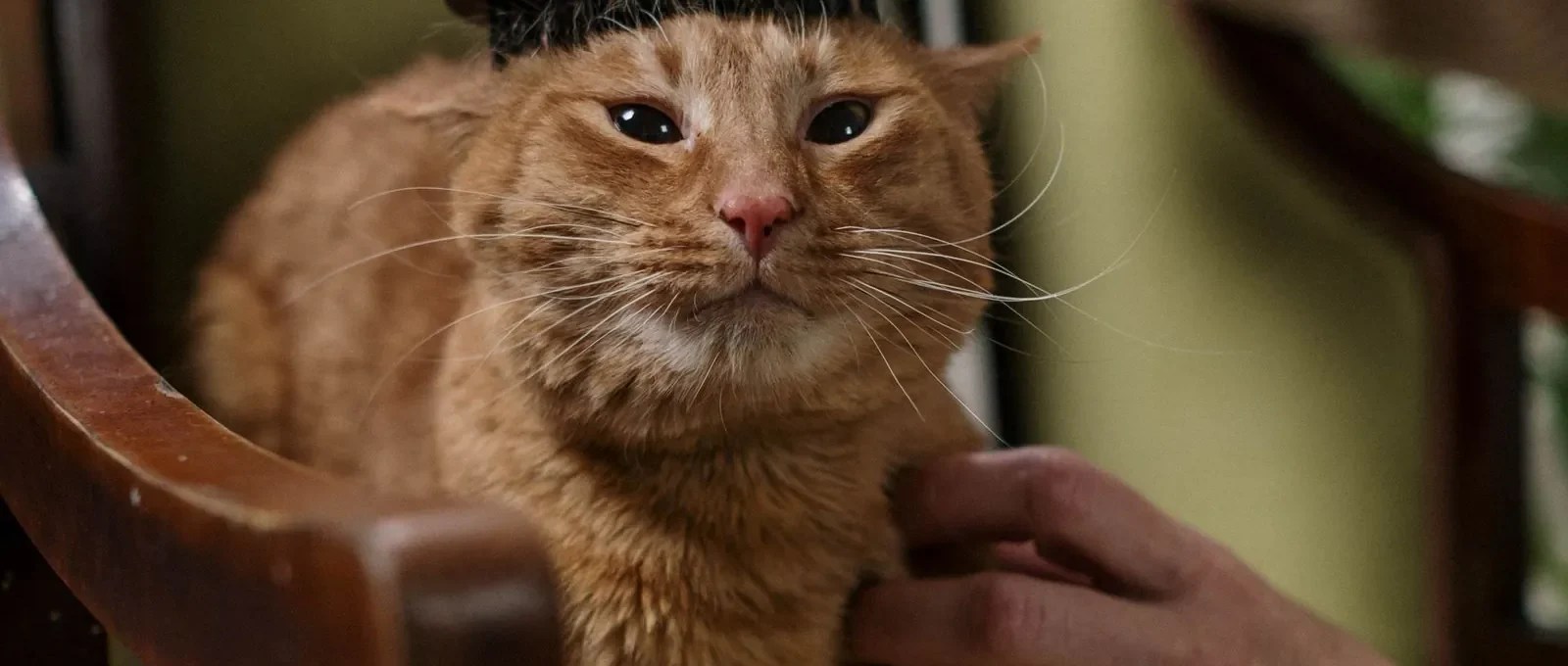
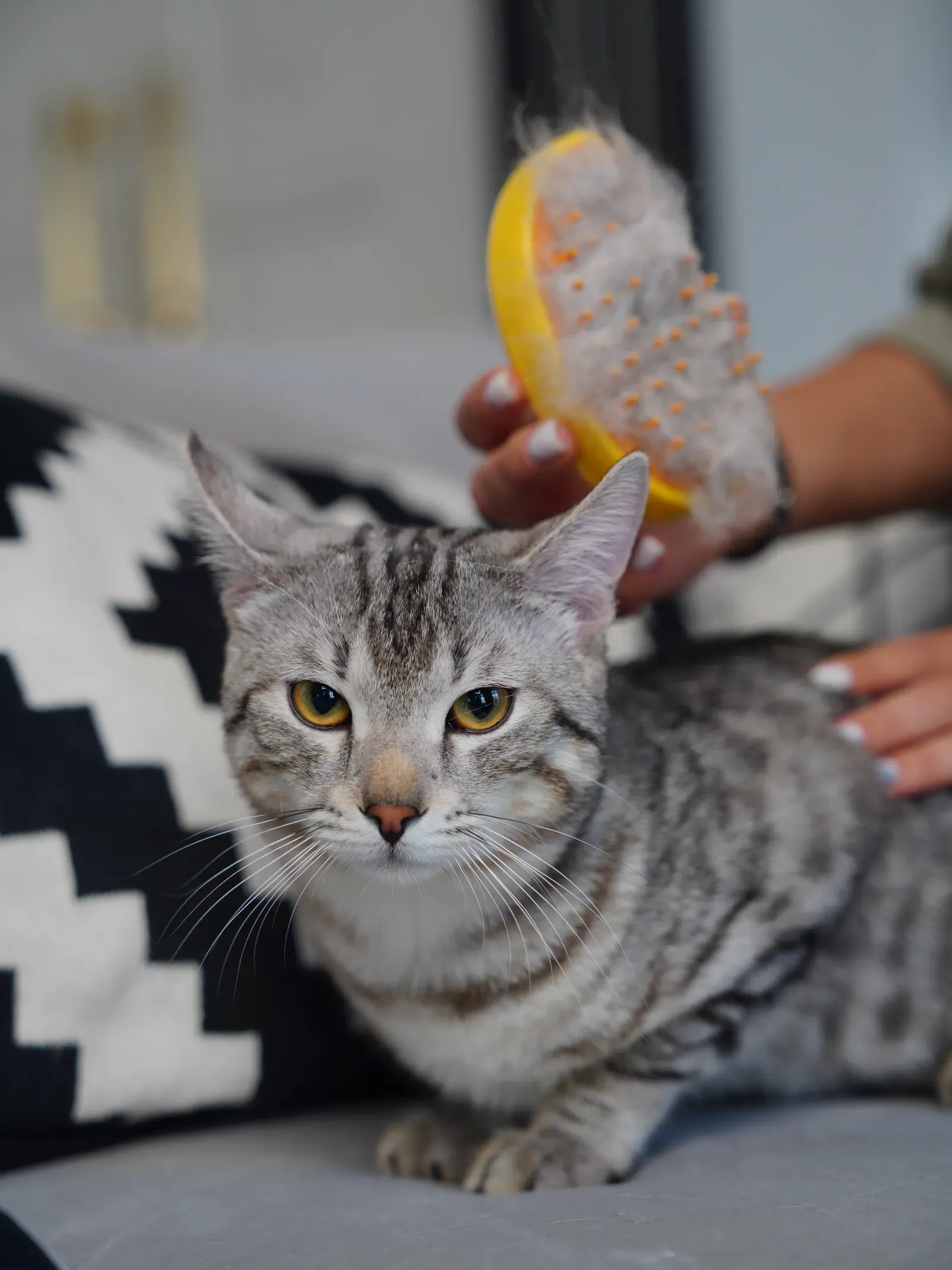
Every bit of loose fur you remove with a brush is fur your cat doesn’t swallow. This single habit prevents more hairballs than everything else on this list combined. For short-haired cats, a rubber grooming mitt or soft bristle brush for two minutes a day is enough. Long-haired cats need a steel comb or slicker brush, working in the direction of the fur, and a quality deshedding brush like the FURminator for Cats makes daily sessions faster — the Small short-hair version suits most cats, with larger and long-hair variants available. paying special attention to the belly, armpits, and behind the ears where mats form. Make it pleasant: brush before meals so your cat associates grooming with dinner, and stop before they get irritated. Daily brushing also lets you spot lumps, fleas, or skin changes early.
2. Switch to a Hairball-Control Diet
Several major pet food brands make hairball-control formulas, and they’re worth trying for chronic cases. These diets work two ways: added fiber helps swallowed fur move through the digestive tract instead of compacting, and omega fatty acids improve coat health so less fur sheds in the first place. Transition gradually over 7–10 days, mixing increasing amounts of the new food with the old to avoid stomach upset. Give it a full month before judging results — coat and digestion changes take time. If your cat is a grazer, the formula matters less than consistency: pick one and stick with it.
3. Try a Hairball Paste or Laxative Gel
Petroleum-based hairball pastes (malt-flavored gels sold at every pet store) coat swallowed fur and help it slide through the intestines. A pea-sized amount a few times a week is the typical approach — many cats will lick it straight off your finger, and for picky cats you can dab it on a paw so they groom it off. Shop Tomlyn Laxatone Hairball Remedy Gel when you run low — a long-standing, widely available option. Follow your vet’s guidance on frequency and amount, especially for kittens, seniors, or cats on medication, since these products can interfere with nutrient absorption if overused. They’re a tool, not a substitute for brushing.
4. Boost Hydration: Wet Food and Water Fountains
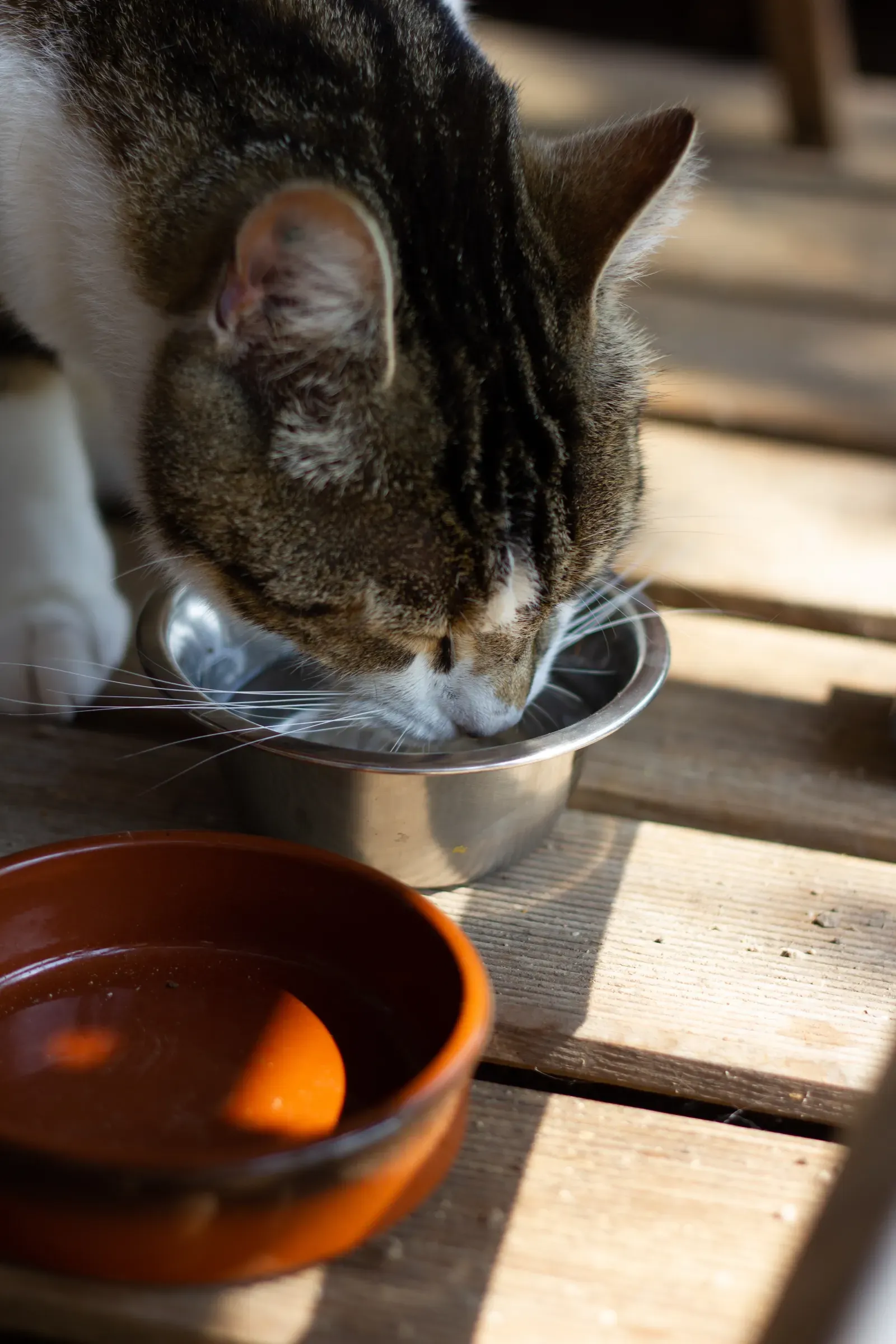
Dehydration slows everything in the digestive tract, including the movement of swallowed fur. Cats are notoriously bad drinkers — their desert-animal ancestors got most of their moisture from prey — so many cats on dry-food-only diets run mildly dehydrated. Adding wet food (even as half the diet) significantly increases water intake. A cat water fountain also helps: cats prefer running water and tend to drink more from fountains than still bowls. Place water away from food bowls — cats instinctively avoid water near their “kill” site — and keep bowls clean and filled.
5. Add Omega-3s for Coat Health
A healthier coat sheds less, which means less fur swallowed during grooming. Omega-3 fatty acids (from fish oil supplements formulated for cats) support skin and coat condition from the inside out. Use only cat-specific products at the labeled dose — human fish oil capsules are the wrong concentration and often the wrong form. You’ll typically notice a softer, less flaky coat within three to four weeks. As a bonus, omega-3s support joint and cognitive health, which matters for senior cats. Ask your vet which product and dose suit your cat, particularly if your cat takes other supplements or medications.
6. Get Regular Vet Checkups to Rule Out Over-Grooming Causes
Sometimes excessive hairballs aren’t a grooming problem at all — they’re a symptom. Cats that over-groom due to fleas, food allergies, dry skin, or stress swallow far more fur than normal, and no amount of brushing fixes the root cause. If your cat is licking bald patches, chewing their paws, or grooming obsessively, that’s worth a vet visit rather than another hairball paste. Your vet can check for parasites, skin infections, and allergies, and discuss whether anxiety (new pet, move, schedule change) might be driving the behavior. Treating the underlying cause often resolves the hairballs as a side effect.
7. Consider a Lion Cut for Severe Long-Haired Cases
For long-haired cats with chronic, severe hairballs that don’t respond to the fixes above, a professional lion cut — clipping the body coat short while leaving the head, paws, and tail fluffy — dramatically reduces the fur available to swallow. This is a groomer or vet-clinic job, not a DIY project: cat skin is paper-thin and tears easily with clippers in inexperienced hands. Most cats need it once or twice a year, timed before heavy shedding seasons. It’s not the right choice for every cat (some find the process stressful), so discuss it with your vet or a certified cat groomer first.
When Hairballs Turn Dangerous
Most hairballs are a nuisance. But retching or gagging without producing anything, especially when paired with lethargy, constipation, loss of appetite, or a swollen belly, can signal a gastrointestinal blockage — fur compacted so tightly it can’t move on its own. This is uncommon but serious, and it won’t resolve with home remedies.
Call your vet promptly if: your cat strains to vomit repeatedly with nothing coming up, stops eating for more than 24 hours, becomes unusually lethargic or hides, or hasn’t passed stool in over two days. These are the same red-flag patterns covered in our pet symptoms guide — when a cat’s behavior changes sharply, early action matters more than a perfect diagnosis from home. Cornell University College of Veterinary Medicine (vet.cornell.edu) and VCA Animal Hospitals (vcahospitals.com) both emphasize that persistent vomiting or appetite loss in cats always warrants professional evaluation, since cats can develop fatty liver disease quickly when they stop eating.
Your Weekly Prevention Routine
Five minutes a day beats an hour of crisis management. Tape this to the fridge:
- Daily: 2-minute brushing session (before dinner works best)
- Daily: Fresh water in a clean bowl — plus check the fountain filter weekly
- 3x per week: Pea-sized hairball paste (per your vet’s guidance)
- Weekly: Quick coat check while brushing — look for mats, flakes, fleas, or bald spots
- Ongoing: Hairball-control diet or omega-3 supplement as part of the regular routine
- Monthly: Weigh your cat — gradual weight loss alongside hairball issues deserves a vet mention
Is your cat sneezing too? See our cat sneezing
Feeding questions? See our homemade cat food
How do I stop my cat from getting hairballs?
Daily brushing is the single most effective step, since it removes loose fur before your cat swallows it. Layer on a hairball-control diet or omega-3 supplement, boost hydration with wet food or a fountain, and use a hairball paste a few times a week for stubborn cases. Most owners see improvement within two to three weeks of consistent routine.
Are hairballs dangerous for cats?
The occasional hairball is normal and not dangerous. They become concerning when they’re frequent (daily), when your cat retches without producing anything, or when they’re paired with lethargy, appetite loss, or constipation — possible signs of a blockage. When in doubt, ask your vet rather than waiting it out.
What food helps reduce hairballs in cats?
Hairball-control formulas with added fiber help swallowed fur pass through the digestive tract instead of compacting. Wet food also helps by improving hydration, which keeps digestion moving. Transition to any new food gradually over 7–10 days, and give it about a month before judging results.
Can I give my cat coconut oil for hairballs?
Coconut oil is sometimes suggested as a natural lubricant, but there’s limited evidence it helps with hairballs, and too much can cause diarrhea or add unnecessary calories. Petroleum-based hairball pastes made for cats are the better-studied option. As always, check with your vet before starting any home remedy.
When should I take my cat to the vet for hairballs?
See your vet if hairballs are daily, if your cat gags repeatedly without producing anything, stops eating for 24 hours, becomes lethargic, or shows constipation or a swollen belly. Also book a visit if your cat is over-grooming to the point of bald patches — that often signals fleas, allergies, or stress that needs treating at the source.
Do hairball treats actually work?
Hairball treats with added fiber or lubricants can help mildly as part of a broader routine, but they’re not powerful enough to solve a real hairball problem on their own. Think of them as a supplement to brushing, diet, and hydration — not a replacement. The treats won’t hurt, but don’t expect them to do the heavy lifting.
Medical disclaimer: This article is for educational purposes only and is not veterinary advice. Hairball symptoms can overlap with other conditions, and only a licensed veterinarian who examines your cat can diagnose what’s going on. If you’re ever unsure, call your vet — early action saves lives.
Enjoyed this guide? Join the Petsofweb newsletter for one practical pet-care tip every week — grooming routines, nutrition advice, and symptom checklists, with no spam. Sign up free on petsofweb.com/ and keep your cat comfortable year-round.