
Introduction
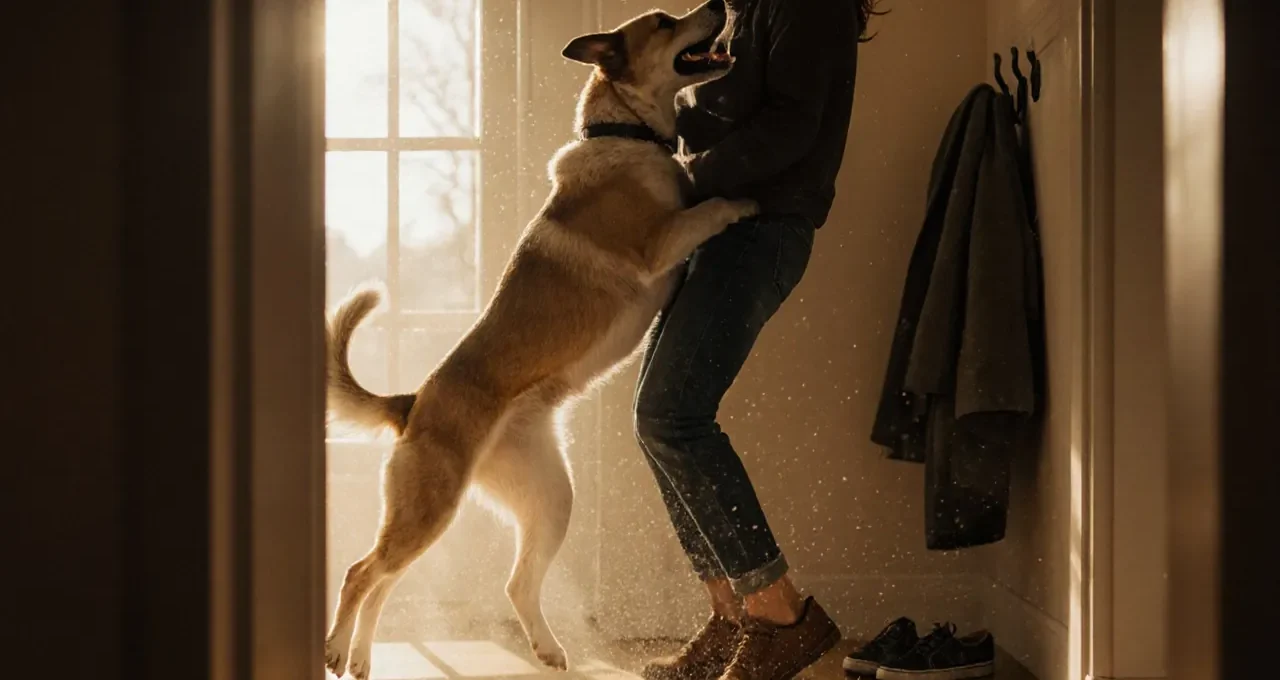
If you need to know how to stop dog jumping, start here: few behaviors embarrass owners faster than a dog launching at guests like a furry missile. Jumping is normal dog greeting behavior — in dog language, getting face-to-face is polite. In human language, it’s muddy paws on clean clothes and a knocked-over toddler.
The fix isn’t punishment. It’s teaching your dog that keeping four paws on the floor is the fastest way to get what they want: your attention. Here’s the protocol.
How to Stop Dog Jumping: Why Dogs Jump (Know the Enemy)
Dogs jump because it works. Every jump that has ever earned eye contact, laughter, petting, pushing, or even a scolding taught your dog that launching upward is an excellent social strategy. Puppies are the worst offenders because humans reward it most: a tiny puppy jumping is adorable, so we pet them — and accidentally train the exact behavior we hate in a 70-pound adult.
Step 1: Manage the Environment First
Before training starts, stop rehearsals. Every successful jump strengthens the habit, so set up management:
- Leash on for greetings during the training phase — indoors too.
- Baby gates between your dog and the front door when guests arrive.
- Treat station by the door so rewards are always in reach.
Management isn’t cheating — it’s what makes training possible.
Step 2: Teach the Incompatible Behavior (Sit)
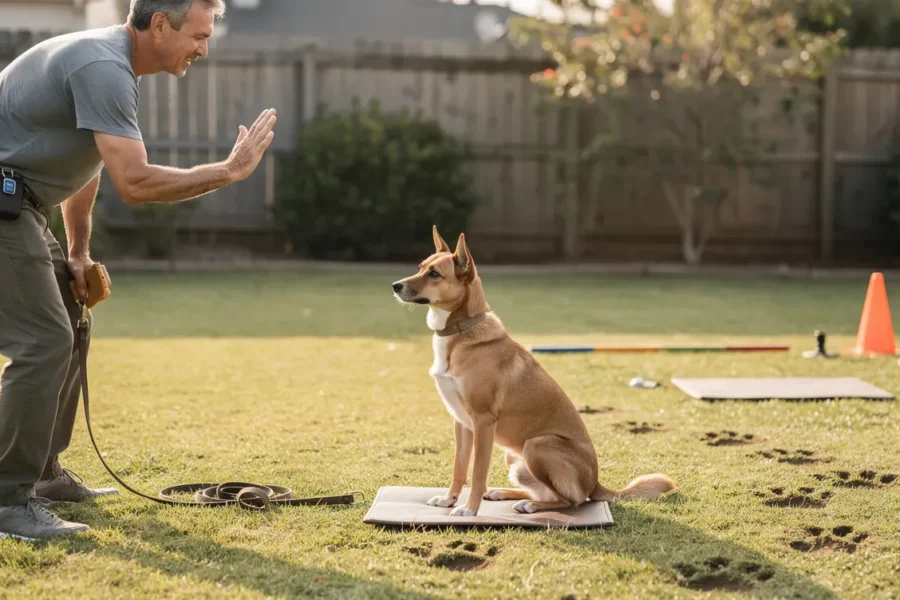
A dog can’t sit and jump at the same time. Train a rock-solid sit first, away from distractions:
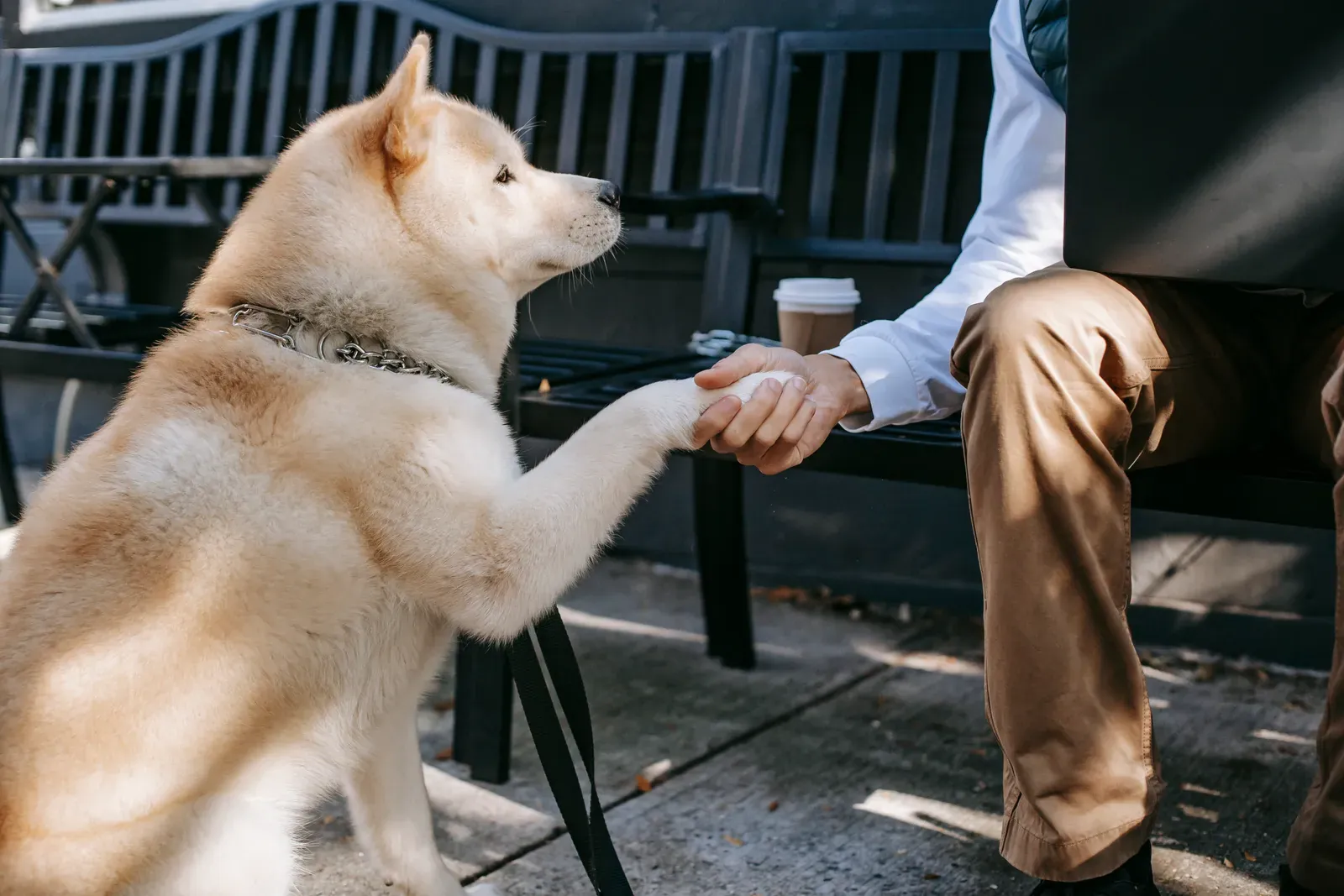
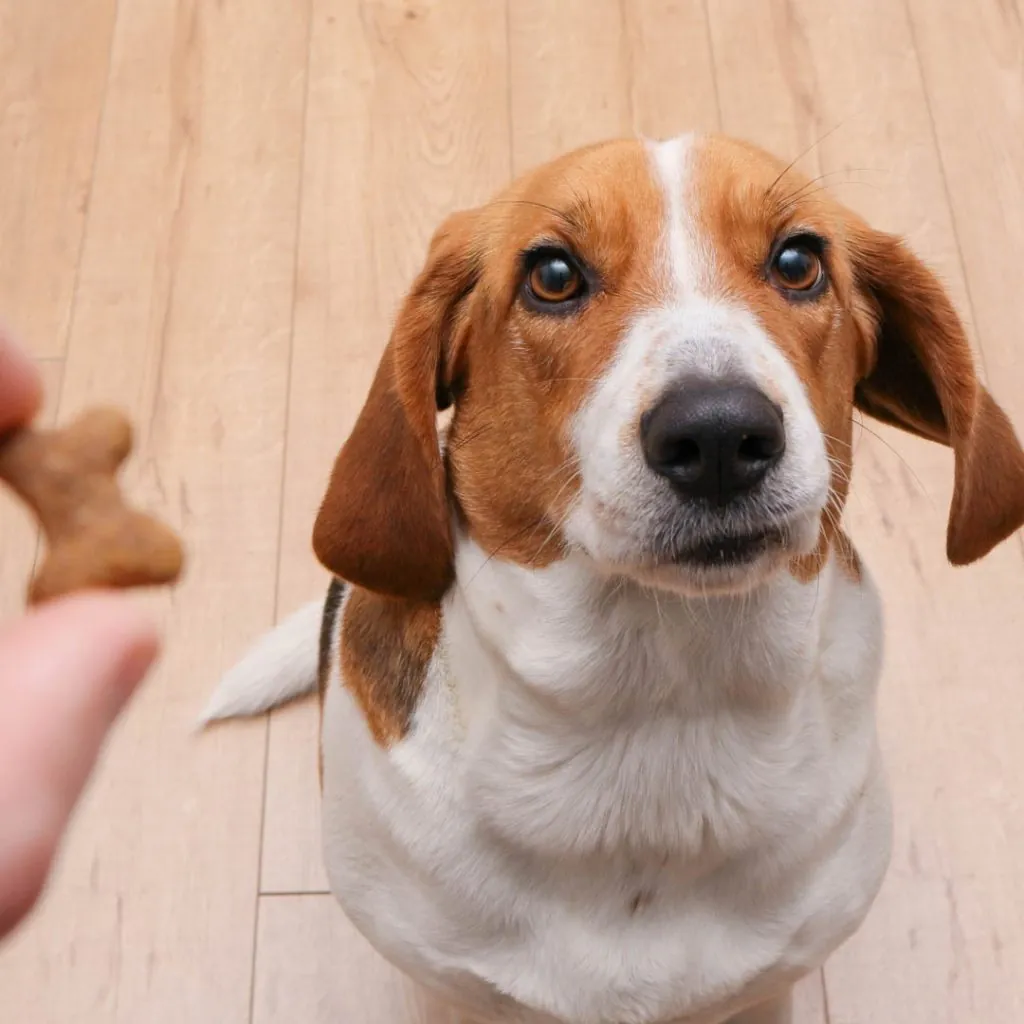
- Lure with a treat from nose to forehead — the rear drops naturally.
- Mark (“yes!”) and reward the instant the rear touches floor.
- Add the word “sit” only once the motion is reliable.
- Practice in 5-minute sessions, several times daily, until your dog sits on first ask.
Step 3: Rehearse Greetings at Low Excitement
With a helper: have the person approach calmly from 10 feet away. Ask for a sit when they’re 6 feet out. If your dog holds it, the helper greets calmly and you treat. If your dog breaks, the helper turns and walks away — no scolding, just a reset.
Repeat until boring, then add excitement gradually: faster approaches, higher voices, the doorbell.
Step 4: The Real-Doorbell Drill
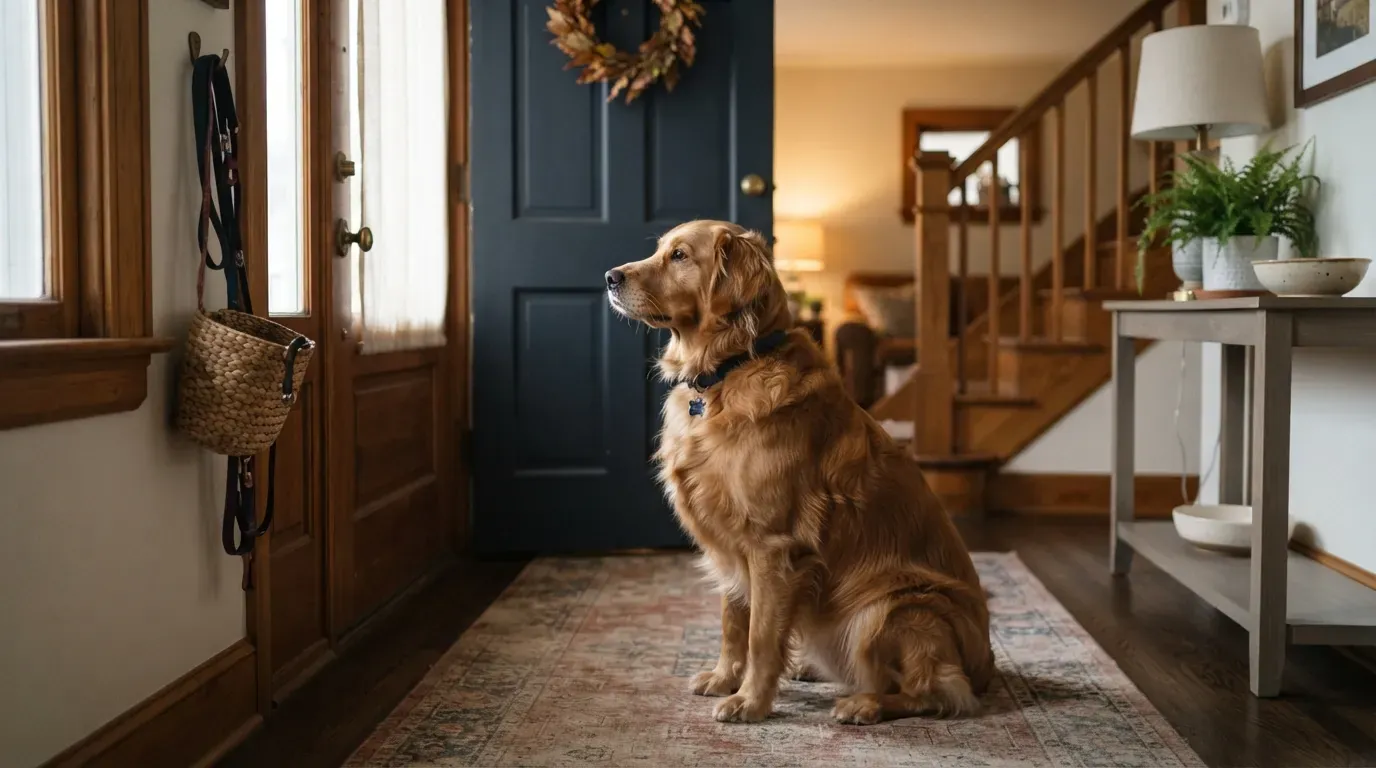
Have a friend ring the bell. Leash your dog, ask for a sit a few feet from the door. Open the door only while the sit holds. If paws leave the floor, close the door calmly and retry. The first successful calm greeting through a real doorbell is the breakthrough moment — mark it big with praise and treats.
Step 5: Generalize and Fade Treats
Practice with different people, in different places — the park, the vet lobby, a friend’s house. Once reliable, switch from treating every success to intermittent rewards. Behaviors on intermittent reinforcement are more durable than ones treated every time.
What a Certified Trainer Says
“If your puppy puts their paws on you and then you pet them, or worse, pick them up and cuddle them, they really enjoy that. They just learned jumping up or pawing you is the way to get that.”
— Robin Bennett, CPDT-KA, Certified Professional Dog Trainer (via FidoseofReality)
This is the core insight: jumping is a trained behavior, and your household trained it. The good news is that anything trained can be retrained — with the same consistency in the other direction.
Common Mistakes That Keep Jumping Alive
Everyone researching how to stop dog jumping should avoid these —
Kneeing or pushing the dog off. To an excited dog, hands and knees are attention — exactly what they wanted. Pushing teaches nothing except that jumping gets physical contact.
Inconsistent rules. If jumping is fine with Dad but not with guests, your dog learns nothing except confusion. Every human in the house follows the same protocol, and you brief every guest: “Please ignore her until she sits.”
Greeting while excited. Bending down cooing “who’s a good boy?!” while your dog is mid-launch rewards the launch. Greetings happen only when all four paws are down.
Only training when guests come. If the only practice is high-stakes real greetings, your dog never gets reps at an intensity they can handle. The helper drills in Step 3 are where the learning happens.
Expecting overnight results. Jumping rehearsed for months takes weeks to undo. Most owners see real improvement in 2–4 weeks of consistent practice — and regression when they get lazy about the rules.
Your First 2 Weeks: The Training Calendar
This is how to stop dog jumping on a schedule —
Week 1 — Foundation (no guests yet):
- Days 1–2: Train sit to fluency in a boring room. Set up management (leash, gates, treat station).
- Days 3–4: Helper drills — calm approaches, sit, reward. 3 sessions of 5 minutes daily.
- Days 5–7: Add mild excitement (faster approach, happy voice). Brief every household member on the rules.
Week 2 — Real world:
- Days 8–10: Doorbell drills with a friend. Leash on, sit required before the door opens.
- Days 11–12: Practice in a new location (friend’s house or quiet park corner).
- Days 13–14: First real guest greeting with the full protocol. Keep the leash on as a safety net.
Track progress in your phone’s notes app: date, scenario, success rate. Seeing “3/10 sits on Monday → 8/10 on Friday” keeps you motivated through the flat middle days when it feels like nothing is changing.
What About Small Dogs?
Small-dog owners get a free pass from society — a jumping Chihuahua is “cute,” not dangerous. Train them anyway. Small dogs who jump develop the same frustration behaviors as big dogs, and they’re more likely to be picked up mid-jump (which rewards it hugely) or accidentally stepped on when they launch underfoot. The protocol is identical; the only difference is you’ll bend a little further to reward the sit.
Special Case: Jumping on Kids
Kids are prime targets — they’re face-height for medium dogs and they squeal, which is exciting. Until training is solid: manage with leashes and gates when kids visit, teach kids to “be a tree” (stand still, arms crossed, look away), and never punish the dog for excitement around children. If your dog has ever knocked a child over, keep them separated during greetings until the sit-for-greeting is reliable.
FAQ
Should I knee my dog when they jump?
No. Kneeing, pushing, and alpha-style corrections give the dog attention — the very thing they’re jumping for — and risk injury and fear. Withdrawal of attention plus rewarding four-on-the-floor works without the fallout.
Why does my dog only jump on some people?
Because those people reward it. The visitors who squeal, pet, and bend down are reinforcing the jump; the ones who stand still get skipped. Brief every regular visitor on the protocol.
Will my puppy grow out of jumping?
Almost never without training — jumping is self-rewarding, so it strengthens with age, not fades. The cute 10-pound jumper becomes the embarrassing 70-pound jumper on the same trajectory.
How long does it take to stop jumping?
With consistent daily practice, most owners see major improvement in 2–4 weeks. Dogs with years of rehearsed jumping take longer. Consistency across all humans matters more than total training time.
What about jumping on furniture or counters?
Same principle: manage (remove access), teach an incompatible behavior (a “place” cue on a mat), and reward the alternative. Counter-surfing specifically is best solved by never leaving food within reach during training.
Got a new puppy? Training takes time, but vet bills happen overnight. Find out what pet insurance would cost for your breed with our free calculator: https://petsofweb.com/pet-insurance-cost-calculator/